



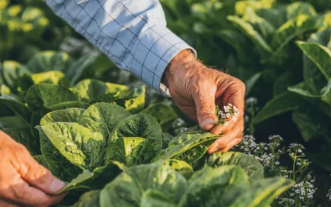
Farming is all about biology. It always has been. It always will be.
With an expanding industry portfolio of biological products going to market, each with the hope that there’s a place for its utility and an industry looking for viable solutions to growing environmental, regulatory and consumer pressures, the movement in biologically cohesive systems is advancing. Growers are navigating biological complexities with dexterity and modesty, recognizing that these systems play by their own rules and still hold mysteries to be solved. Exploring the art and science of farming is a journey every grower has to take, but they have each other and industry support from organizations like Western Growers to help move them forward.
“A farm is part of the environment it sits in,” said Joe Pezzini, Senior Director of Ag Operations at Taylor Farms. “So there’s always this interaction of the surrounding environment. That goes both ways. We are trying to integrate biological systems to grow plants, to grow a crop, to its maximum potential, to feed us, to feed the world. We are dealing with biological systems to begin with, so it is all about biology. What’s emerging now is more of a focus on how to enhance that biology. Not just with nutrients, but really understanding the science, bacteria and fungi and the inner relationship and interaction of how to stimulate a really healthy crop.”
In 2023, Western Growers Center for Innovation and Technology co-hosted the Salinas Biological Summit with Wharf42. The inaugural event sold out. The collective conversation that included growers, business leaders, government representatives, investors, universities and startups explored the needs and goals of the many to synchronize the goal. Knowing that staying focused and effective would take more than an annual two-day event, Western Growers and Wharf42 launched Platform 10. Jeana Cadby, Director of Climate and Sustainability for Western Growers, is one of the experts participating in guiding the program.
“There has been a lot of momentum since the previous Biological Summit,” Cadby said, “and we are so excited to share the progress that has been made in this space. Last year, Western Growers launched Platform 10, an international, multi-year collaboration to accelerate promising biologicals, rigorously assess products, enhance grower confidence and facilitate market development and adoption. The objective is to establish a global trial network to connect the Science to the Farmers.”
At the 2023 Summit, many attendees shared their perspective on the need for implementing more biological products in growing fresh produce. For the growers who took the stage, they made it clear that not only are they open to the opportunities, they’re also looking for them. But the products have to work, and they have to be integrated into the growing process in a way that makes sense.
Agricultural operations dare used to adapting to environmental and regulatory pressures, but every hurdle vaulted often reveals another. “Growers are up against mounting challenges due to climate change, cost of production and diminishing availability of traditional tools,” Cadby said. “We see biologicals as an opportunity to address existing and anticipated gaps in pest management, crop resilience and yield efficiency, nutrient availability, and sustainability to ensure that our growers are properly equipped with the tools to address these challenges.”
Overcoming these challenges with creativity and diligence is a daily priority for growers, especially if the grower operation is producing on 25,000 acres of farmland, 19,000 acres of which is organic. Taylor Farming is embracing biological and sustainability practices throughout its operations, melding the science and the art of farming: “Meshing the technology, the biologicals, with the ability to produce this competitively can be a challenge, for sure, but we feel like we’re up for that,”Pezzini said.
As an example of some of the ways Taylor Farming is doing that, Pezzini shared that they’re “using biological products to enhance root development, mycorrhiza fungi. We use a number of seaweed products to help control plant development, and there are products that will help stimulate uniform flowering. For example, for green beans, we’ll use that product to try to set all the beans all at the same time so we can mechanically harvest them.”
In another way, they’re working with products and processes to enhance the microbiome of the soil. As a driver of the biological resources that have been added to the agricultural toolset, understanding the complexity of the microbiome in the soil is unveiling itself more and more every day with data analysis and scientific research.
“There’s an entire emerging science around the biology of the soil and soil health,” Pezzini said. “That’s critically important in all farming, but especially in organics. We’re trying to study the soil, and there are a lot of companies [working on] understanding what the microbiome of the soil is – What are all the bacteria in the soil? What are the good ones…How do you stimulate that?”
Along with riding out the process of research and development of these products, understanding how and when to use them also takes the same kind of attentiveness and patience. While the inputs may seem similar to traditional treatments on the surface, they’re different. “You may use a biological in one instance and for some reason it doesn’t have the performance that you expected but in another setting it might work really well. It takes time to figure all that out,” Pezzini shared. “I think that’s one of the challenges with biologicals is that you do have to be somewhat patient with them and you have to become kind of a student of them as well to really understand how to use them effectively.”
Identifying the details of what works, how, and in what way and circumstance is a gained knowledge that Taylor Farms and others within agriculture have a strong commitment to learning and sharing within the industry. Collective communication and alignment is what can lead to a healthier industry and population. Practices and beliefs about what’s best for different operations may vary, and opinions may differ on the details, but events like the Salinas Biological Summit provide space for those conversations and conveyance of information to stay free flowing.
The 2024 Western Growers Biological Summit is set for June 25-26 in Salinas, Calif. “We received very positive feedback from our grower members that the event was well worth attending,” said Dennis Donohue, CIT Director. “We placed a premium on useful information and sufficient time to network. “Confirmed speakers for the upcoming event include Dave Puglia, President & CEO of Western Growers; Secretary Karen Ross, Secretary of the California Department of Food and Agriculture; Don Cameron, Vice President and General Manager of Terranova Ranch; Stuart Woolf, President & CEO of Woolf Farming & Processing; Guy Kawasaki, marketing specialist, author and Silicon Valley venture capitalist; and many more.