



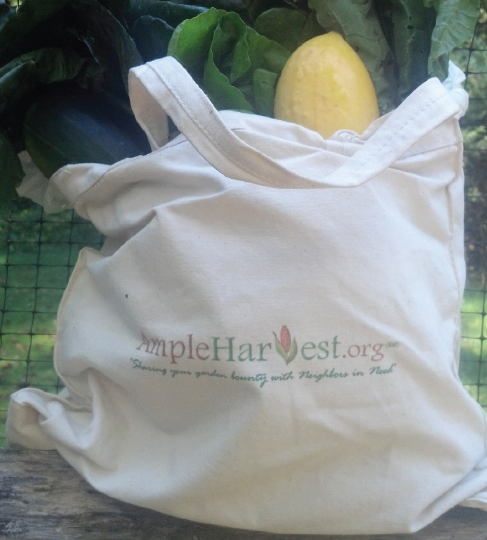
What if every home gardener in America knew they could donate their surplus produce to a local food pantry? The impact would be transformative. Although achieving 100 percent awareness may not be realistic, even a fraction could move the needle on hunger and health in this country.
Today, an estimated 62 million Americans grow food at home. If more of their surplus harvests found their way into food pantries, the ripple effects would be significant, especially in public health.
Enter AmpleHarvest.org, a one-of-a-kind, nationwide initiative operating in over 5,600 communities across all 50 states. The New Jersey-headquartered nonprofit connects nearly 8,300 food pantries with surplus produce from home gardeners, creating a simple, seamless way to turn surplus harvest into vital food donations.
“In the fight against hunger, AmpleHarvest.org is revolutionizing fresh food access, much like Uber and Lyft transformed transportation,” said CNN Hero and World Food Prize nominee Gary Oppenheimer, Founder and Executive Director of AmpleHarvest.org.
Founded 16 years ago with a simple yet powerful mission—to ensure no homegrown food goes to waste—AmpleHarvest.org quickly proved its value. When the 2010 BP oil spill devastated Gulf Coast communities, Oppenheimer realized the model could be adapted to respond to disasters. With local fisheries shut down and thousands of shrimp fishermen out of work, many families suddenly faced food insecurity. AmpleHarvest.org stepped in.
In the aftermath of the spill, Gary reached out to Louisiana food banks to ask how he could help. The answer was clear: With fishing bans in place, thousands of shrimp fishermen—many of them Vietnamese immigrants—would be out of work for at least a year. This economic ripple effect meant that many families who once made their living from the Gulf waters would now be turning to food pantries for support. And it wasn’t just Louisiana—communities across the Gulf Coast, from Texas to Florida, would feel the impact.
Recognizing that the increased demand would put a heavy strain on food pantries, Gary developed a model tailored to
the unique challenges of the crisis. The response worked. By mobilizing gardeners and volunteers and updating donation logistics in real time, AmpleHarvest.org demonstrated that with determination and collaboration, fresh food can reach those in need, even under the most extreme conditions.
Today, that same model continues to evolve and serves as a vital link between home gardeners and food pantries, ensuring that fresh, nutritious food reaches those who need it most.
A Model for Disaster Response
AmpleHarvest.org has become more than a food donation platform—it’s now a model for disaster response. In the immediate aftermath of a crisis, agencies like the government and the Red Cross are on the front lines. But once those first-responders leave, long-term recovery begins—and families are often left struggling to put food on the table.
After the devastating tornadoes that struck Tuscaloosa, Ala. and Joplin, Mo. in 2011, AmpleHarvest.org sprang into action. The organization worked to determine which food pantries were still operational, temporarily relocated or destroyed. Volunteers called every pantry in the system to update records, ensuring that home gardeners had accurate, up-to-date donation locations. Oppenheimer took a similar approach after Houston’s catastrophic floods, allowing a steady stream of fresh produce to reach affected families.
Most recently, the organization has extended its support to Los Angeles in the wake of severe wildfires. Volunteers contacted more than 60 local food pantries to confirm which ones were open and accepting donations. Once verified, AmpleHarvest.org launched a wide-reaching outreach campaign using Google ads, social media and partnerships with community organizations to inform home gardeners within a 100-mile radius how they could help. Thanks to L.A.’s mild climate, recovery efforts began quickly.
“Gardeners can plant crops like radishes, which are ready to harvest in just three weeks,” said Oppenheimer. “As the season progresses, even more growers will be able to donate surplus fruits and vegetables to nourish their communities.”
Even the food pantry clients themselves are encouraged to participate. If they have a small garden at home, they too can give back—contributing not just as recipients, but as part of the solution.
“The whole point of this is to get healthy, fresh food to people,” said Oppenheimer. “Especially after a crisis, when stress weakens the immune system, good nutrition becomes even more critical. The healthier the food, the healthier you are.”
The Measure of Success
Unlike traditional food programs that measure success by pounds or truckloads, AmpleHarvest.org takes a different approach. Its impact isn’t calculated in crates or calories but in awareness and access.
“In the food industry, donations are typically measured in pounds or units. But how do you compare a watermelon to a bag of parsley? One is heavier, but the other may provide more frequent use in meals. This highlights the challenge of applying standard measurement practices to AmpleHarvest.org’s mission,” Oppenheimer said.
“The counterintuitive part about AmpleHarvest.org is that we’re not about the food,” said Oppenheimer. “Food is the outcome of what we do, but our real focus is making sure people know they can donate—and that they’re able to do so. That awareness is the heart of our education outreach.”
Because AmpleHarvest.org relies on millions of home gardeners, tracking exact donations would be nearly impossible. Just as thrift stores don’t log every shirt or pair of shoes dropped off, gardeners aren’t counting zucchinis. They give simply because they care.
That’s why the organization focuses on three key indicators: how many gardeners know they can donate, how many food pantries are available to receive those donations and how many communities nationwide benefit.
While the initiative has grown tremendously, its mission is far from finished. AmpleHarvest.org is continuing to expand its reach town by town, region by region, working toward a future where every gardener is within driving distance of a food pantry.
And the ripple effects go well beyond feeding families today. Children raised in homes with access to fresh produce are more likely to value nutritious food as adults. Indeed, an analysis from an outside Harvard trained economist concluded that if every gardener in America knew they could donate freshly harvested produce, the nation’s healthcare cost would drop by $58 billion thanks to reductions in diet related diseases such as diabetes, obesity and hypertension.
“We’re not just tackling hunger,” said Oppenheimer. “We’re teaching communities about sustainability, nutrition and even how to prepare produce they may not be familiar with. It’s about dignity, health food sovereignty and self-reliance.”
For more information, visit www.ampleharvest.org.