



The Specialty Crop Block Grant Program (SCBGP), a multi-year initiative funded by the California Department of Food and Agriculture (CDFA) and spearheaded by Western Growers, has officially concluded.
The program funded by the grant, called the Next Gen Ag Worker program, launched in January 2022 with an initial award of $746,291. It was bolstered by an additional $150,000 in July 2023. The program set out to build a robust pipeline of talent for California’s specialty crop industry by connecting students, educators and employers through cutting-edge agtech training and career pathways.
One of the cornerstone accomplishments of the Next Gen Ag Worker program was the development of 10 agricultural technology educational modules designed to teach critical industry skills. The curriculum has been widely adopted; more than 25 colleges and several high schools have integrated the modules into their programs, and more than 2,000 students have received training through these resources.
The program also supported a robust internship reimbursement program, providing a $3,000 per intern reimbursement to employers who hired college students for at least 12 weeks, easing the cost of bringing young talent into agtech roles. In the summer of 2023, 26 internships were reimbursed, and by summer 2024, that number jumped to 68 internship reimbursements. In summer 2025, the program supported only 21 of 45 internships that took place, due to the limited funds left in the grant. That’s a total of $345,000 in internship reimbursements to employers!
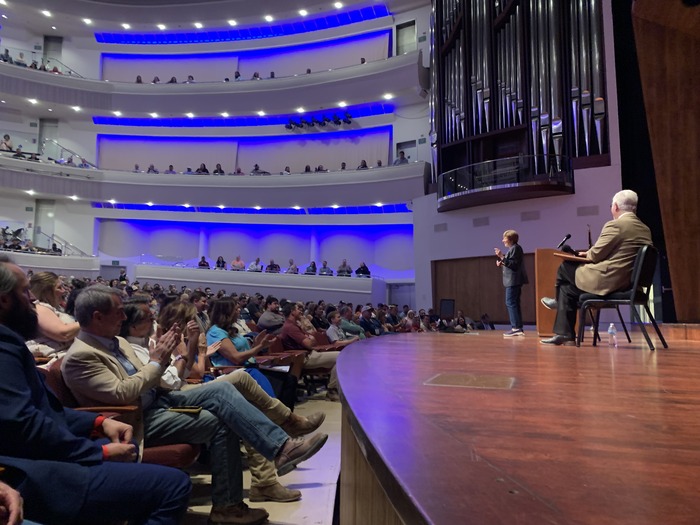
In addition, the Next Gen Ag Worker program hosted 15 Ag Tech X Ed events across California, with panels at each event featuring a combined total of more than 100 industry representatives. Each meeting began with a panel of industry representatives who discussed the skills gaps they observe in both their current workforce and in prospective hires.
There was a second panel of educators who discussed how they partnered with industry representatives, as well as how they could use assistance in building these partnerships and ensuring the curriculum was covering the crucial skills needed in the agtech workplace.
A third panel of industry leaders discussed the “big-ticket topics” that kept them up at night and how they could best use the support of the college faculty and staff to ensure a robust pipeline of highly qualified potential employees as they graduated from these academic institutions. Finally, CDFA Secretary Karen Ross would deliver a “Fireside Chat” where she would discuss key issues facing the CDFA, share her personal journey in agriculture, and explore ways to strengthen partnerships between academic institutions and specialty crop industry leaders to prepare the next generation of ag employees.
These events also secured a platform at the California Ag Teachers Association Summer Conference for two consecutive years, reaching more than 1,000 ag educators and building a statewide network of 728 ag teachers who now receive regular updates on educational resources.
At most of these Ag Tech X Ed events, day one featured a workforce development meeting, followed by day two’s “Breakfast with the Secretary,” where Western Growers hosted Secretary Ross for a meal with students from the host college and local feeder high schools’ FFA Leadership Teams. The students highlighted their recent achievements and shared plans for future activities to promote agriculture.
The program also launched LinkedAg, a dynamic app that connects students, faculty, internship coordinators and employers. LinkedAg not only helps facilitate internships and track student success after graduation, but it also offers a career exploration hub featuring nearly 50 agricultural careers, videos, salary data and links to local programs.
The program has earned recognition beyond its initial scope. Bank of America highlighted the initiative and provided an additional $45,000 in unrestricted funding to extend its reach.
As the Next Gen Ag Worker program wraps up, industry leaders reflect on how these efforts are already shaping the next generation and why sustained support for initiatives like this remains critical.
Karen Ross, CDFA Secretary:
“Agriculture is not just about our past—it is a vibrant and essential part of our future. If we make smart investments in research, educational support and real-time trials of concepts for solutions with practical applications, we can grow agriculture’s economic and cultural contribution to California’s hard-earned reputation for innovation and problem solving to meet the headwinds of so many challenging issues facing us.”
Stuart Woolf, WG Board Chair and President and CEO, Woolf Farming & Processing:
“It’s critical to develop capable successors to ensure long-term sustainability. That begins with awareness—fueled by knowledge and experience. Block Grants have helped build awareness of the opportunities in specialty crop agriculture with teachers and their students – opportunities with technology and innovation, resource management, health and wellbeing, food safety, marketing and distribution, public policy, advocacy, etc. A thriving specialty crop sector that attracts future generations benefits all and is worthy of public support and investment.”
Ron Ratto, President, Ratto Bros.:
“The CDFA block grant allowed Western Growers to develop a program to re-connect students and faculty to current agriculture technology and real-world farm businesses with actual learning experiences in many disciplines within agriculture. I hope the program participants and college students have been inspired by what they have learned, and that it serves as a base from which they can further pursue their personal interests, whether within or outside of agriculture. But I hope within. Young minds are a necessary source of new ideas while questioning old ideas. California agriculture is built on individuals trying new things and building on what they started with,” said Ron Ratto, Ratto Bros. President.
Mike Way, CEO, Prime Time:
“The Specialty Crop Block Grant Program has helped remind administrators and students of the employment opportunities available in agriculture. There are many people who can benefit from a hands-on, technical education that is affordable and allows them to live successfully in their communities. The farming industry needs to maintain this connection as a means to attracting a strong workforce.”
Tom M. Nunes, President, The Nunes Company:
“The Nunes Company clearly sees the educational value of its internship program collaborating with Western Growers. The program benefits both the company and the intern. The interns see the deep commitment of the agricultural community to food safety, sustainability, stewardship of the land and community. The company benefits by the energy and ideas of the next generation. It is a win-win.”
Looking ahead, Western Growers anticipates launching a new grant-supported effort in October that will include a college speaker series, pairing Western Growers members with local educators to bring real-world ag career stories directly into classrooms and create a lasting library of career exploration videos.