


A Sheep, a Pig and a Calf
Lesa Eidman and a New Era of Ag Leadership
When Cameron Boomgaarden arrived at Fresno State College on the morning of Oct. 11, 2024, he climbed out his car in the parking lot, instantly identifying other suited professionals likewise clambering out of their cars. “Hey, are you here for Ag Leadership?” they would ask one another.
Class 54 of the California Agricultural Leadership Program was arriving for their first weekend seminar in a rigorous, extremely well-regarded 17-month fellowship program. “There was a mix of excitement and uncertainty—wondering if I was in the right place, if I was early or late, and what to expect as the weekend began. Everyone seemed to arrive with the same quiet curiosity, scanning the area, double-checking directions and looking for small cues that reassured us we belonged there,” Boomgaarden said.
Likewise, on the executive leadership front, change was brewing at the helm of Ag Leadership. As Boomgaarden and Class 54 were celebrating their inauguration and attending their first seminars, Dwight Ferguson, who had served as the foundation’s President and CEO since October 2020, had announced his departure. The search for his successor had quietly begun.
The California Agricultural Leadership Foundation (CALF) and its flagship fellowship program are well known in all circles of agricultural business professionals in California and beyond—certainly to our readers here. Celebrating 55 years of operations this year, the leadership development program has built decades of longstanding, powerful relationships and partnerships in the industry, pinned by sacred values of trust and integrity. Boasting one of the greatest alumni networks in America, one must only throw a stone at any ag event to find an Ag Leadership alum.
When one becomes familiar with Ag Leadership, they notice a convention used by proud alumni: a simple parenthetical after the name, indicating class year.
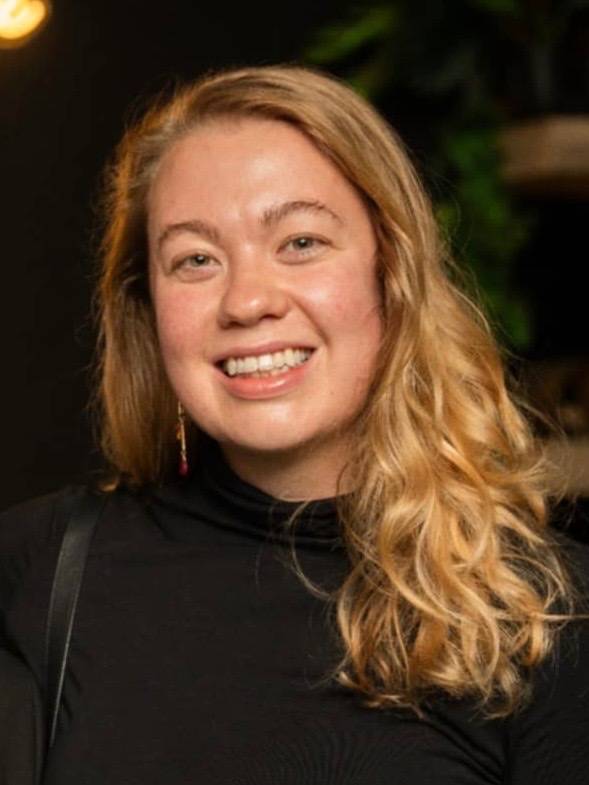
When I met Lesa Eidman (Class 49) at Galante Vineyards in Carmel-by-the-Sea, we ponied up to the bar and got to know our welcoming host. At some point in our early conversation, a large printout or magazine page was displayed in front of us, where our host traced regions known for California wine production and agriculture. I thought to myself: He does not know that this person is a chief executive of one of the finest agricultural business programs in the nation. That wasn’t my identifying factor to tell, and I watched as Lesa nodded, followed along, and asked questions.
In industry press releases, Lesa Eidman’s bio goes like this:
Eidman is a third-generation agriculturist with a family heritage rooted in education and production agriculture. She earned a bachelor’s degree in agricultural business and management from Fresno State and a master’s degree in agricultural and resource economics from UC Davis. From 2003 to 2015, she served as the Executive Director of the California Wool Growers Association
(CWGA) and the California Pork Producers Association (CPPA). From 2015-2025, she was a Director and later Vice President
of Sales at Superior Farms, North America’s top processor and marketer of lambs.
Beyond line items on a resume, Eidman’s story is one of profound California agricultural landscapes, family enterprise and business acumen, and a deep and abiding love for California production. From her professional career, one can quickly observe a sort of signature style: audaciousness set in a balanced cross with integrity. Eidman has built a career out of engineering new paths and paving new roads while maintaining, as first order, an unshakeable reverence for tradition and legacy.
Eidman grew up in Grass Valley, Calif. In nearby Marysville (and later Penn Valley), her grandparents owned and operated Live Wire Products: a California-based business that sells electric fencing supplies throughout the U.S. Like many young kids in ag and ag-adjacent industries, she worked summers for the family business; inheriting and quietly metabolizing the work ethic and business mindset of the people and operation before her. In Eidman’s eyes, her grandparents epitomized “bootstrapped entrepreneurs”—never afraid to take a risk and try something new. She watched as they worked alongside each other to grow the business, noticing how their success was supported by the lifelong relationships and partnerships they cultivated.
Her work experience is an industry gold standard—that is, unrelenting from early adolescence and built on the farm. She raised cattle and sheep through Future Farmers of America (FFA) projects, managing the full cycle from budgeting and care to showing and outcomes. She and her siblings helped raise livestock and farm Midwest crops when they lived in Kansas for a period growing up; she worked in a shoe store, the irrigation district and always at the grandparents’ business. (A nascent element on the sheep side of Eidman’s formative years: her paternal grandfather was deeply involved in the wool industry, ran a sheep ranch in Willows, Calif., and worked with ranchers across the U.S. He would one day even create a breed of sheep.)
“I learned to think in systems—how people, operations, finances and long-term outcomes are connected—and to take ownership rather than wait for direction. Leadership has always felt less about titles and more understanding the whole picture, asking good questions and making thoughtful decisions that serve both people and the organization,” she said.
At Fresno State, she held roles across the university farm units, including the beef unit, sheep unit, meat lab and dairy processing, along with marketing work for a tractor dealership and working as the student manager of the campus farm store. At Davis, she was a research assistant and again returned to work at the family business. Unbeknownst to her, this quiet preparation would be enough to position her for her first role, and the immediacy and vision required of executive leadership.
“I had just finished my last exam at UC Davis as part of graduate school when I received a call from my grandma,” she said. “She had opened the California Wool Growers Association newsletter and noticed a job announcement for their Executive Director. Knowing I hadn’t yet landed a position, she suggested I consider applying. Working in agricultural policy was already on my radar, and the opportunity to work with an industry I had grown up in was definitely a plus. I applied and was ultimately offered the position.”
Straight out of college, Eidman would begin her professionalized pathway as an executive director of not one but two California trade associations simultaneously.
“The California Pork Producers Association had a management agreement with CWGA, so I was also managing their association during that same period. This was a particularly complex time, as it coincided with Proposition 12 and several other policy issues that significantly impacted the industry.”
In the next 12 years, she secured grant funding for research programs, built relationships with universities throughout California and represented the industry through policy engagement and consumer-focused marketing efforts. Then, in 2015, Eidman accepted the role of Director of Producer Resources at Superior Farms. With the aggressiveness and execution that private industry more readily enables, Eidman began pioneering a major strategic initiative: Flock54, the sheep industry’s version of 23andMe.
Like her grandparents before her, Eidman identified an area where the sheep industry was lagging behind others: the need to better understand and improve genetics. She knew the expertise and tools existed, and that they had just not yet been deployed on sheep. She set to work gathering a masterful consortium of researchers from Utah State University, the University of Idaho and UC Davis, together with producers from across the industry. Led by Eidman, the think tank identified the genetic traits most important to producers and aligned them with traits that had strong research backing.
Today, Flock54 is used globally with a significant industry presence—providing producers with valuable data to make more informed breeding decisions, retain animals with desired genetics, improve meat quality and ultimately deliver a better eating experience for consumers.
By 2020, Eidman had risen to Vice President of Sales at Superior Farms. She worked alongside the sales team to develop relationships with national retailers, food service distributors and international markets; strategies that brought lamb to more consumers’ plates. This further ignited the desire to show consumers what it takes to deliver products to store shelves and to their plates; and to share with those consumers the incredible stories about the people who grow and raise our food.
Eidman once again felt the calling to do something bigger and broader for the entire agricultural industry.
“I loved every minute of working at the end of the supply chain, but my deepest passion for this industry has always been for the people with boots on the ground who put in the work each day to provide food and fiber for people across the globe. Ultimately, being able to work in a space that touches and elevates every part of the food and agriculture industry is a dream—and that is what truly makes my time at Ag Leadership feel like a homecoming,” Eidman said.
February 2026 will mark her one-year anniversary with CALF, and just as a young Eidman moved unit to unit at Fresno State, or continued to refine processes at her grandparents’ shop, the first year reinforced and sharpened her vision of the foundation’s horizon.
“Stepping into this role has been both energizing and humbling, and in many ways, even more meaningful than I imagined. As an alum of the program, I came in with a deep appreciation for what CALF meant to me personally, but I didn’t fully anticipate just how deeply this organization is connected to people’s identities, relationships and leadership journeys. That has made leading it both a responsibility and a privilege,” she said.
The foundation is now a team of seven leadership-driven individuals who all share a commitment to strengthening California agriculture. This includes Dane White, Director of Education; Judy Sparacino, Program Manager; Anna Nicholson, Alumni Engagement and Event Manager; Jessica Lara, Marketing and Communications Manager; Maria Angulo, Financial Controller; and Mia Mirasou, Office Manager. As has been the case for all of its history, CALF’s Board of Directors is extremely supportive, embracing new ideas while also honoring the foundation’s history and legacy.
One new initiative Eidman has planned for 2026 is the formation of the Strategic Expansion and Engagement Design (SEED) team, which comprises nine individuals from alumni and broader industry networks. Eidman will once again engage a consortium of experts to thoughtfully chart a path forward for CALF—not just for the next five years, but 10, even 50 years ahead.
As for the relationship with Western Growers, Eidman remarks: “Western Growers has been a longtime supporter of CALF, and that support shows up in so many ways beyond just financial investment. WGA employees have gone through the Ag Leadership Program,
as well as board members and many WG growers and members. From my perspective, the relationship is built on shared values and a genuine belief in investing in people. On a very practical level, it’s also a partnership I truly value. Knowing I can pick up the phone, ask a question, or get help making a connection, and rely on the great team at Western Growers, means a lot. That kind of collaboration strengthens our work and ultimately the industry we all care about.”
In the time since beginning his fellowship in 2024, Boomgaarden was made Director of Farming Operations at Vann Brothers—one of California’s leading almond producers, where he has worked since 2018. Reflecting on his experience, Boomgaarden said, “The relationships built within Class 54 have been one of the most meaningful parts of the experience. Spending time with people from diverse backgrounds and viewpoints reinforced the importance of trust, empathy and shared responsibility. Many of the most impactful conversations didn’t happen in formal sessions, but in the in-between moments—on buses, over meals and during moments of reflection.”
This last year, Eidman has likewise felt more impacts and shifts than what the chief executive role itself lends. After decades inland, and growing up in the mountains, she never imagined she would be living near the beach and at sea level.
“What I love most about this part of the state is the proximity to the Salinas Valley and being surrounded by some of the most productive fruit and vegetable fields in the country. That stretch of my drive is always the best part of my day—seeing the crops being grown and the people who make it all possible. I’m still adjusting and settling into the area, but I can say without hesitation that I’ve come to love Monterey weather, especially in June, when it’s 100-plus degrees in the valley and cool and sunny here on the Central Coast.”
Sixty years in, the story of the California Agricultural Leadership Foundation and Ag Leadership Program is still being written—expertly and proudly by a network of about 1,500 alumni, a very engaged Alumni Council, and passionate industry supporters and stakeholders. As felt and embodied by so many who work in our industry, the mission statements of Western Growers and California Agricultural Leadership Foundation orient us toward an unflinching dedication to the stewardship and endurance of California agriculture; to connect sound policy decisions that aid in the protection of agriculture with the leaders confident enough to shepherd these changes; flocking together, a dynamic as ever-evolving as it is familiar.