



Extended Producer Responsibility (EPR) for Fresh Produce Packaging
For more information about EPR and fresh produce, register for the Town Hall: Navigating EPR in California: Source Reduction Plans & SB 54 Reporting Requirements
What is EPR?
Extended Producer Responsibility (EPR) is a policy approach that shifts the financial and operational responsibility of packaging waste management from municipalities to producers. These policies aim to address growing concerns about plastic pollution and strained recycling streams.
Under EPR, producers are required to fund and support the collection, recycling, and disposal of packaging materials. In most cases, this is done through participation in a Producer Responsibility Organization (PRO), which manages compliance on behalf of its members.
The definition of “producer” varies by state or region but generally refers to the entity responsible for introducing packaged products into the marketplace. This can include brands, licensees, importers, distributors, growers, packers, or shippers. Because definitions differ across jurisdictions, companies operating in multiple states may face varying compliance obligations.
Where is EPR Active in the U.S.?
While there are currently no federal EPR policies, at least seven states have enacted EPR laws for packaging, including California, Oregon, Colorado, Maine, Minnesota, Maryland, and Washington. Each of these states requires producers to join a PRO, report materials data, and begin paying fees that fund recycling infrastructure and waste management.
In addition, more than a dozen other states have proposed or are actively considering similar legislation, signaling continued expansion in the near future.
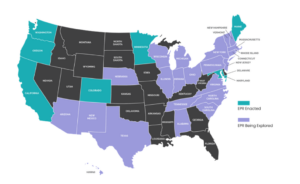
Figure 1. EPR adoption in the United States. Source: OPLN EPR Readiness Circle
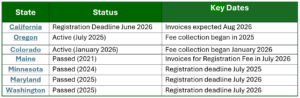
While all EPR programs share a similar framework, implementation timelines and requirements vary significantly.
Table 1. State-by-state snapshot of packaging EPR programs in the United States, illustrating differences in legislative status, rollout timing, and program requirements.
Important Deadline
June 1, 2026 – Deadline to register as a Producer under SB 54.
Additional Guidance & Resources
Guidance for EPR policy in California
For more information about EPR and fresh produce, register for the Town Hall: Navigating EPR in California: Source Reduction Plans & SB 54 Reporting Requirements