



A peer-reviewed article published in January 2026 in the Journal of Food Protection compared the efficacy of hand-washing durations and application methods for alcohol-based hand sanitizers (ABHSs). The article is authored by scientists from consulting firms, private laboratories, Chick-fil-A, RFG Environmental, and Rutgers University.
Currently, the food industry generally follows the hand-washing guidelines stipulated by the FDA Food Code, which require a series of steps, including thoroughly rinsing hands with water, using foaming agents, rubbing hands for at least 10 to 15 seconds, and performing handwashing after events such as using the toilet, when working with ready-to-eat food, and after handling soiled equipment, among others. ABHSs are intended for use only after thorough washing, not as a substitute.
The authors suggest that the current approach may be impractical because it is too time-consuming, and previous assessments have identified low compliance levels among food handlers. Instead, the authors encourage the food industry to rethink this approach and follow guidance established for the healthcare industry by the CDC and the WHO, which promote handwashing when hands are visibly soiled. Additionally, the authors note that, while handwashing duration is considered a critical factor influencing microbial reduction, evidence is mixed, and that the quality of the technique should also be considered.
For the study, the researchers assessed the impact of lathering duration during handwashing and the effectiveness of ABHSs as a substitute for handwashing in direct food handling. Briefly, an in vivo experiment was conducted where participants’(n=) hands were contaminated with Escherichia coli, and two hand hygiene techniques were evaluated: the Handwashing for Life (HFL) “Core Handwashing” and the SaniOnce procedure (Figure 1). The study evaluated different variables for each technique. Three lathering times (5, 15, and 20 S) for handwashing, and two-dose applications for the SaniOnce procedure. After handwashing/ sanitizer application, researchers evaluated bacterial load reduction and transfer onto melons.
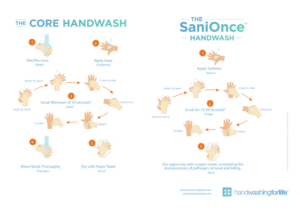
Figure 1. The CORE Handwashing vs the SaniOnce Handwash, source: Arbogast et al. 2026.
Key Findings:
- For the core handwashing technique, no significant differences were identified among lathering scrub times (5, 15, and 20 seconds).
- ABHS resulted in higher microbial reduction compared to hand washing, with one dose achieving a log reduction of 4.06, and a higher log reduction (5.00) when applied as two doses combined with a paper towel.
- Hand washing technique resulted in higher microbial transfer to melons compared to alcohol-based hand sanitizers.
- In instances where hand washing might not be accessible or practical, the use of alcohol-based sanitizers can maintain hand compliance and reduce the risk of food contamination, particularly when hands are not visibly soiled.
To learn more about the findings of this study, click here.
Reference:
Arbogast, J. W., Comstock, C., Beausoleil, C. M., Buckley, D. A., Lyon, S. A., Marsden, J., & Schaffner, D. W. (2026). Comparative Efficacy of Hand Wash Lather Times of 5 to 20 Seconds vs. Alcohol-Based Hand Sanitizer Application Approaches by an In Vivo Cross-Contamination Test Method. Journal of Food Protection, 100698.