



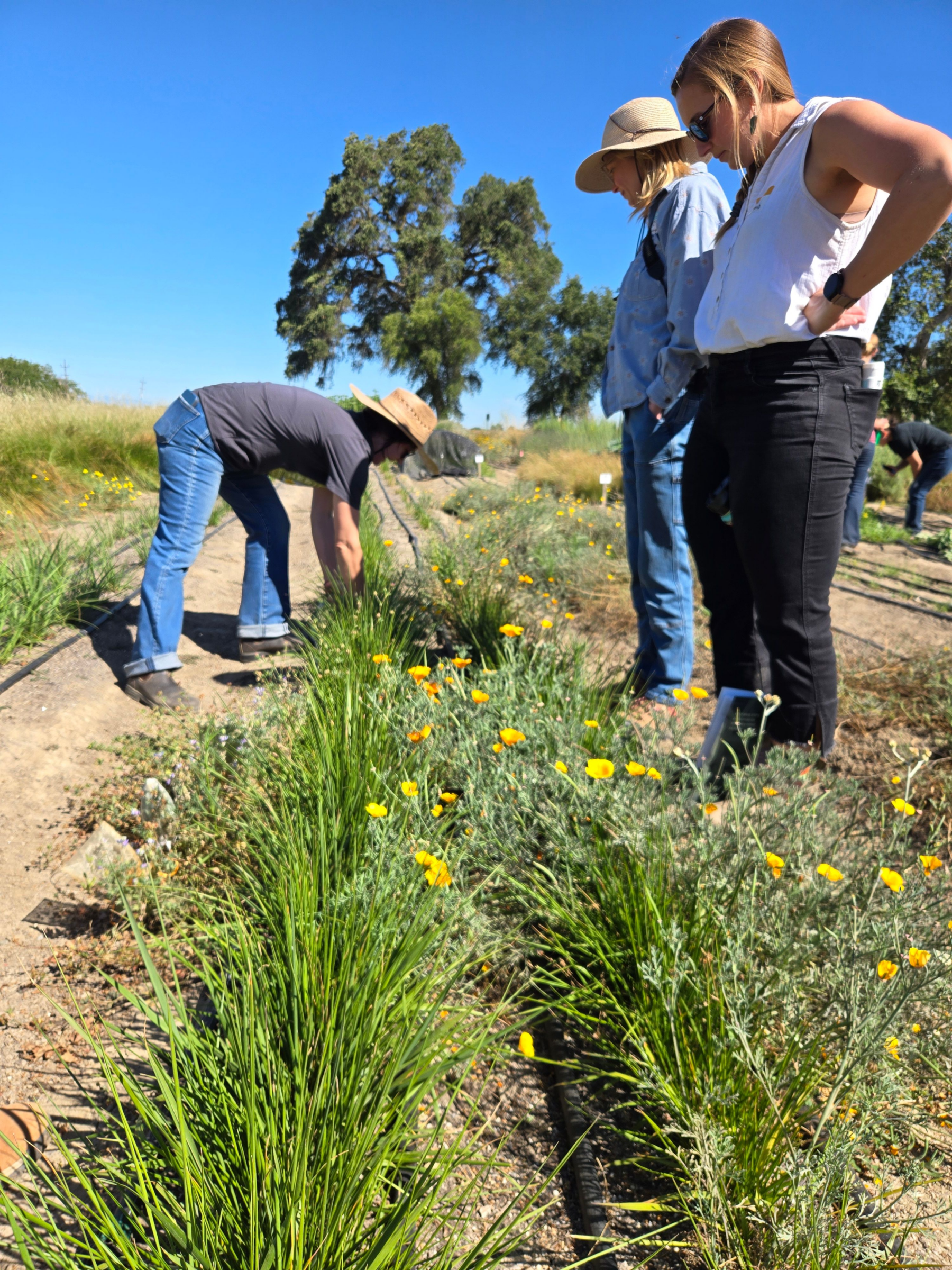
It’s not every day you see perfectly neat rows of native plants, prime and waiting for harvest as an old 1980s combine rattles by. Stretched across the Heritage Growers farm in Colusa, Calif., fields have been planted with hand collected seeds for production at scale, a painstaking trial and error process, one step in the mission to restore native habitat in California.
Heritage Growers is a Northern California-based nonprofit native seed and plant supplier founded by restoration experts connected to River Partners, the nonprofit known for restoring river corridors and rebuilding wildlife habitat across the state. The team grows source-identified native seed, or seed collected from known locations and grown out for the purpose of restoring native California landscapes.
The effort is led by Pat Reynolds, General Manager of Heritage Growers and a restoration ecologist with more than 30 years of experience designing, implementing and monitoring habitat restoration projects. Reynolds has spent his career helping restoration professionals use native seed effectively, and at Heritage Growers that expertise is being applied to one of the biggest barriers facing the field: supply.
“Currently the seed is not available in the quantities that we need to be able to restore things at scale,” Reynolds said. “So, what we are doing here is to break that bottleneck, get this material grown and available, so that at the end of the day we can create high value, resilient habitats throughout California.”
That bottleneck is significant. California’s ambitious conservation and restoration goals depend on native plants that can support pollinators, stabilize soils, improve habitat and build climate resilience. Unlike most agricultural crops, these native plants are not bred for uniformity or easy harvest. Some germinate unpredictably, and others mature unevenly or require specialized timing, irrigation, equipment and seed-cleaning methods. “We are one of only three native seed farms in all of California that is growing native seeds at scale,” Reynolds said.
The playbook is still being written, and much of the team’s work involves experimentation. Staff test how different species grow, when they flower, agronomic needs, how seeds are maturing and harvesting methods that provide the highest yields. In some cases, a crop may yield a tiny volume of seeds due to poor initial seed quality, environmental factors that don’t match the needs of the plants or even an unexpected flock of birds coming through the area. The process requires the collaboration and knowledge of restoration ecologists, seed collectors, farm managers and warehouse specialists working together from collection through cleaning and storage.