



A major barrier to learning from data is not always the absence of evidence. Sometimes the learning is clear, but the culture is not ready to accept it.
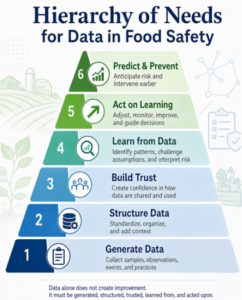
For academics, subject matter experts and industry groups that are advising industry, developing best practices or recommending how learnings should be applied, this raises a deeper responsibility. The legal concept of duty of care is useful here: are we acting reasonably, based on what is knowable at the time, to help reduce foreseeable risk?
Food safety systems have often treated uncertainty, understandably, as a reason for inaction when considering changes to programs, systems or practices. New data, models or trends may be dismissed as “just math,” “not enough information,” or “not definitive enough to act on.” But once data are structured to provide more contextualized learning, and those learnings begin to clarify risk or improve decision-making, ignoring them may no longer be a neutral or advisable choice.
The real question is whether the data improves the quality of the decision compared with the status quo. A learning system must help the community move from “we do not know enough” to “we now know enough to adjust, monitor, and improve.” That responsibility is anchored in the role of the advising group: to ensure that emerging learnings are adequately discussed, interpreted and translated into guidance for the community they are intended to serve.