



When it comes to food safety regulations, what happens in the United States does not stay in the United States. Companies that want to sell into the U.S. market must comply with U.S. regulations—regardless of where they operate. That is why the FDA’s Food Traceability Rule under FSMA 204 has global significance.
Why This Matters for International Operations
Traceability requirements will not be limited to U.S. farms, packers, or distributors. International suppliers that ship to the U.S. will also need to meet the same recordkeeping and reporting requirements. In other words, advancing awareness and readiness is critical not only for domestic businesses but also for international operations that may not yet realize they are within scope.
How This Impacts Fresh Produce Entities
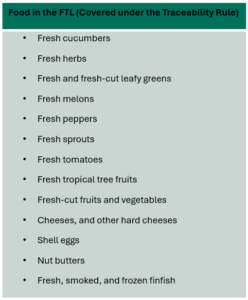
The FDA’s Food Traceability List (Table 1) includes many produce items subject to the FDA’s Traceability Regulation.
Given that produce markets are more global, imports of key produce commodities have increased in the U.S. For example, cucumbers—one of the commodities on the list—are imported at rates as high as 92 percent. See the graph below regarding the percentage of total supply imports for several key commodities. This diversity of sourcing underscores the need for global compliance.
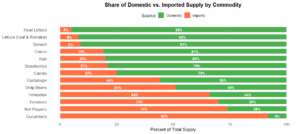
Source: Based on data from USDA ERS summary tables for vegetables and fruits. Data from 2023 was used when 2024 data was not available.
Preparing Through Training and Resources
The good news is that resources are becoming available. FSMA 204 Training is nearing launch, with industry training sessions anticipated in the coming months. We continue to monitor updates on the official launch. In the meantime, industry stakeholders are encouraged to stay engaged and start evaluating their traceability systems against the new expectations. See the story on Global Compliance, click here. See efforts supported by the Partnership for Food Traceability (PFT).
The Takeaway
Traceability regulation is not just for domestic operations. If you look at the Food Traceability List, you’ll quickly see that compliance extends across borders and supply chains.