



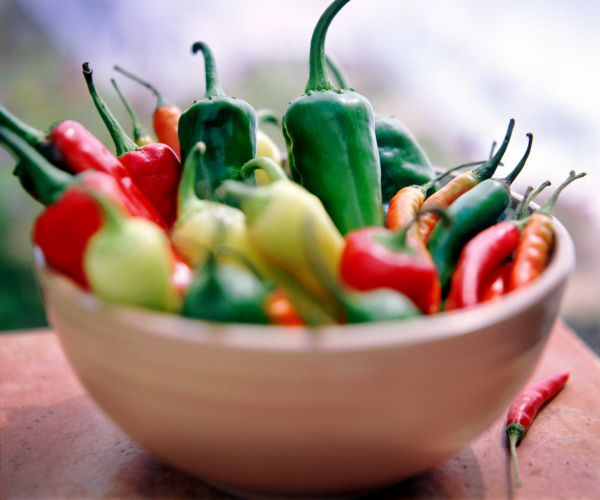
Few crops define a region like chile does New Mexico—and for nearly two decades, the New Mexico Chile Association (NMCA) has worked to protect, promote and advance the farmers behind it. In a state that proudly calls itself the “Chile Capital of the World,” the love for chile runs so deep, it even inspired the official state question: “Red or green?”
Founded as a nonprofit organization, NMCA was created to reinstate the region as a global leader in chile production, processing and innovation. Its members—growers, processors, producers and other related businesses—are united in their commitment to preserving and elevating the state’s iconic chile industry.
At the helm are President Edward Ogaz and Executive Director Kari Dominguez. Both are rooted deeply in New Mexico agriculture and share an unwavering passion for protecting the chile legacy.
You could say Ogaz is a man who has chile running through his veins. He comes from a long line of Hatch Valley farmers dating back more than 100 years. His father and grandfather helped co-found the now-world renowned Hatch Chile Festival, an event that draws over 30,000 visitors each year. Through his company, Seco Spice, Ogaz carries on his family’s tradition of chile farming.
Dominguez, also a New Mexico native, comes from a family of farmers and knows firsthand the importance of advocating for growers. She describes NMCA as not just an industry group, but a vital voice for chile farmers at both the state and federal level. It’s also a gateway to programs like the New Mexico Certified Chile program, which she says is more than just a marketing advantage.
“It’s a meaningful way to protect the authenticity and heritage of our state’s most iconic crop,” Dominguez explained. “The certification helps ensure that only true New Mexican grown chile carries the name, giving members a unique opportunity to build consumer trust, celebrate regional pride and stand out in a competitive marketplace. For NMCA members it connects their products to the quality, culture and the unmatched flavor that only New Mexico chile can offer.”
With the mounting challenges chile farmers face today, it’s imperative they have access to the help and support they need to navigate this complicated climate. And one of the most pressing issues? Water rights.
New Mexico is currently entangled in a longstanding legal dispute with Texas over Rio Grande River water allocations, a fight with profound implications for chile growers. As surface‐water allowances for irrigation continue to shrink, producers must make up the difference by pumping groundwater at a steep cost. These added pumping costs create economic strain for all farmers, especially those operating on smaller acreage.
“These farmers are the heart and soul of chile production in New Mexico,” he said. “They’ve spent decades perfecting their craft and keeping our history alive.”
Chile acreage has fallen significantly in recent decades—from 34,000 acres in the early 1990s to around 8,000 today, according to the New Mexico Department of Agriculture.
But there’s a reason the state is known as the Land of Enchantment. “You can’t find chiles like this anywhere else in the world,” said Ogaz. The hot days and cool nights— often swinging as much as 30 degrees in a single day—along with high-elevation desert terrain and volcanic, mineral-rich soils, yield a chile with a perfectly balanced heat-to-sweetness ratio that’s nearly impossible to replicate elsewhere.
However, new regulations threaten to make the industry’s path forward even steeper. Ogaz voiced concerns about the state’s proposed Heat Illness and Injury Prevention (HIIP) Rule, warning that while well-intended, it could place additional strain on an already challenged labor system and increase operational costs for growers.
Another major focus is gaining a deeper understanding of what makes New Mexico chile unique through genetics and scientific research. NMCA continues its longstanding partnership with New Mexico State University’s Chile Pepper Institute, one of the only research centers in the world solely dedicated to chile, to help validate the crop’s distinct DNA and scientifically demonstrate why it deserves recognition and protection.
Ogaz and Dominguez say their ultimate goal is to unite chile farmers from every corner of New Mexico around shared priorities—strengthening the local workforce, investing in the next generation and keeping the industry rooted in the state. “We want the industry to stay here and thrive,” Ogaz said. “That means creating more opportunities for people in our communities.”
For NMCA’s leadership, it all comes down to preserving a sacred legacy and ensuring New Mexico’s chile industry continues to grow, innovate and endure for generations to come.