
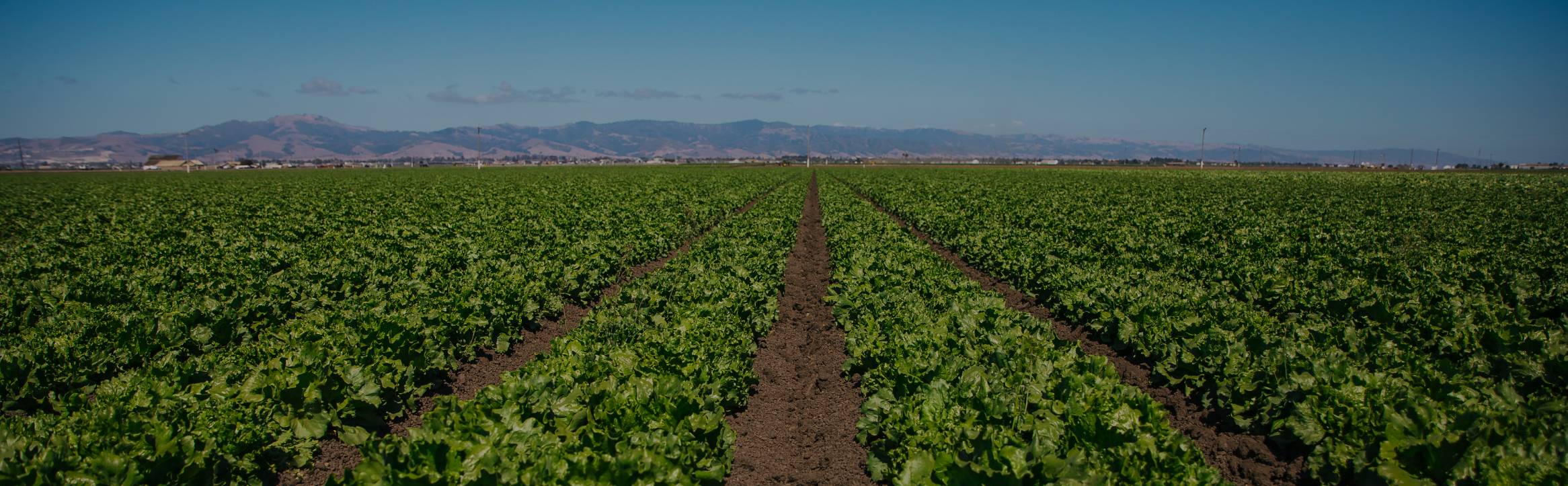
Adjacent Land Use
Adjacent land use is important because produce safety extends beyond individual field boundaries and is influenced by activities occurring on neighboring lands.
Environmental pathways, such as shared water sources, drainage patterns, air movement, wildlife activity and routine agricultural operations can create interactions between adjacent land uses and produce fields that affect food safety risk. These interactions are highly context-dependent, shaped by local conditions and management practices, making collaboration between neighboring operations essential. Proactive communication and coordination across adjacent lands support more accurate risk assessment, more effective mitigation strategies and a shared responsibility for protecting the safety of fresh produce within a connected agricultural landscape.
Resources Developed by Western Growers
Environmental Risk Factors in the Human Pathogen Transmission Pathways Between Animal Operations and Produce Crops
Access here:
This review summarizes research on how zoonotic human pathogens can move from animal operations to unharvested produce, emphasizing that transmission risk is shaped by factors like proximity, animal type/density, management practices, and weather, and that water, inputs, airborne particulates, wildlife, and insects may act as vectors— while plant and environmental conditions influence pathogen survival on crops.
Appendix G: Considerations for Evaluating Potential Contamination Risk Related to Concentrated Animal Feeding Operations
Access Here:
This guidance outlines risk factors and assessment approaches for evaluating food safety hazards posed by concentrated animal feeding operations (CAFOs) near leafy greens production, noting that pathogen presence and off-site transport risks are influenced by CAFO characteristics, environmental conditions, and management practices.
Appendix F: Considerations for Addressing the Effects of Weather Conditions on Environmental Sources of Human Pathogens
Access Here:
This guidance focuses on how weather and associated environmental conditions can influence the presence and movement of human pathogens in leafy green production environments, emphasizing that abnormal or acute conditions.
Lunch and Learn Webinar: Livestock Facilities Operation and Environmental Controls
Watch here:
Webinar in collaboration with the California Cattlemen’s Association.
External Resources
FDA Southwest Agricultural Region Environmental Microbiology Study (2019 – 2024)
Access here
Center for Produce Safety: The Center for Produce Safety (CPS) funded a project led by principal investigator Dr. Trevor Suslow that looked at the relevance of seasonality in outbreaks. This effort resulted in five Issue Briefs released in February 2022.
- CPS STEC Issue Brief 1 – Hypothesis Risk Matrix Access here
- CPS STEC Issue Brief 2 – Leafy Green Production Patterns and Practices Access here
- CPS STEC Issue Brief 3 – Regional Cattle Management Profile Access here
- CPS STEC Issue Brief 4 – Genomics and SNPs Access here
- CPS STEC Issue Brief 5 – Bioaerosol Risk and Crop Setback Distances Access here
California Agricultural Neighbors (CAN): In June 2022, the California Agricultural Neighbors (CAN) effort produced a report addressing adjacent land use, specifically to reduced risks of pathogen contamination based on a collaborative approach.
- CAN – Neighbor-to-neighbor best practices Access here
- 2024 California Agricultural Neighbors (CAN) report Access here
FDA: Adjacent and Nearby Land Use and its Impact on Produce Safety
Access here:
Official FDA fact sheet on how adjacent and nearby land conditions (e.g., animal operations, septic systems, recreation areas, waste storage) can introduce pathogens to produce via water, animals, wind, people and equipment, and how these considerations tie into the FSMA Produce Safety Rule requirements.
CONTACT: “Adjacent Land Use: Done Talking About It? Ready To Do Something?”
Access here:
Summary of a food safety webinar outlining the complexities and knowledge gaps in understanding and managing adjacent land risks, including aerosols, animal intrusion, runoff/flood potential, human activity, hydrogeology and vector behavior, and calling for industry–government–academic research collaboration.
Current Initiatives
The Sustainable Alliance for Food Ecosystems (SAFE) Think Tank
Information here:
The overarching goal of SAFE is to bring together subject matter experts in government, industry and academia in a collaborative think tank setting to identify research gaps and to develop research to identify and disseminate sustainable mitigation strategies that will protect public health and agricultural interests.
Latest News
Join Us for a Cantaloupe and Netted Melon Pilot Training in Indiana

From Our Members
The WG science, technology and food safety team are continuously meeting the expectations of their members in developing resources, guidance, and solutions in an ever-changing and increasingly complex regulatory environment.
Jake Odello
The Nunes Company, Salinas, CA