Driscoll’s CEO Soren Bjorn Joins Western Growers Board of Directors

December 12th, 2024

Western Growers is pleased to announce the appointment of Soren Bjorn, CEO of Driscoll’s, to the Western Growers Board of Directors. Bjorn will be representing District 10, which includes Watsonville, Gilroy, Hollister and Santa Cruz. He succeeds Eric Reiter, who has stepped down due to a realignment of his professional responsibilities and time commitments.

Bjorn brings a wealth of experience and leadership to the board, having been at the helm of Driscoll’s, a global leader in fresh berries, for several years. His expertise in the fresh berry sector is expected to be a valuable asset to Western Growers as they continue to advocate for the interests of the fresh produce industry.

Western Growers extends its gratitude to Eric Reiter for his six years of dedicated service and contributions during his tenure on the board. The organization looks forward to the fresh perspectives and continued leadership that Bjorn will bring to District 10.

California Legislation is Back with a New Two-Year Session

December 9th, 2024

Sometimes when I think of new beginnings, I am haunted by the game of Sorry!, where I have gotten so close to winning, only to have my last piece sent back to the start. I’d like to say I took those losses with no hard feelings.

New two-year sessions certainly evoke a sense of fresh starts with new legislators bringing with them the potential for new perspectives and approaches. On Dec. 2, 2024, 23 new Assembly Members and 12 new Senators were sworn in. The Capitol and swing space were full of laughs and smiles, bustling with the new members’ friends and family. And on their special day among them were the Governor, other executive leaders, current members, past members, lobbyists and the press.

Legislative Process Sees Refinement

In 2023, California saw 2,632 bills introduced, which was, at the time, a record high in over a decade. By the end of the 2024 session, that number  was 4,821.

As of Dec. 2, each legislator is now limited to introducing 35 bills in the two-year session. Both the Speaker of the House Robert Rivas and the Senate President pro Tempore Mike McGuire agreed that lowering the limit will allow for a stronger focus on the main issues. The Pro Tempore was quoted saying this decrease was to, “…focus on more commonsense legislation…” With that said, there is still the potential for a total of 4,200 bills over the next two years. Only time will tell if the desired increase in quality will come from the decrease in quantity.

Many of the same legislative challenges our industry faced in previous years remain regardless of the new session. Some of the previously defeated challenges will show up again under the guise of “new,” and we are prepared.

And this session, just like Sorry!, will have wins and positive outcomes, and maybe, just maybe, those cool slides that give you that extra five space lead.

DPR Releases 2024-2028 Strategic Plan for Sustainable Pest Management and Transparency

December 11th, 2024

The California Department of Pesticide Regulation (DPR) released its final 2024-28 Strategic Plan last week, which outlines measurable goals and objectives to support increased access to sustainable pest management alternatives, improved timelines for evaluating pesticide risks, strengthened statewide enforcement and increased transparency into the department’s priorities and decision-making.

According to a press release, the plan outlines how the department will advance four key commitments:

  • Increasing access to safe, effective and sustainable pest management.
  • Tracking, evaluating and enforcing safe pesticide use.
  • Fostering engagement, collaboration and transparency.
  • Promoting organizational excellence and innovation.

To read the full 2024-2028 strategic plan, click here.

To read a full version of the DPR press release, click here.

Organic Grower Summit 2024 Highlights

December 10th, 2024

Western Growers members and staff played a pivotal role at the 2024 Organic Grower Summit in Monterey, Calif. last week. The event commenced with a panel discussion titled “Will Agtech Make Organic Farms More Profitable?” Moderated by Walt Duflock, SVP of Innovation for Western Growers, the panel featured insights from Bartley Walker, Daniel Bernstein and Larry Jacobs.

Another notable panel, “Organic, Regenerative, or Both: What Does the Market Want?” included Ann Marie Hourigan, Larhea Pepper and Thaddeus Barsotti, and was moderated by Eric Morgan of Braga Farms.

The second day of programming included an important discussion on the Strengthening Organic Enforcement (SOE) rule issued by the USDA in March 2024. Presenters John Foster, Jenny Tucker, Connie Karr, Meredith Kiser and John McKeon (Taylor Farms) led this critical discussion. These panels also offered continuing education credits accredited through the Certified Crop Advisor program.

The summit concluded with a special presentation by Secretary of the California Department of Food and Agriculture, Karen Ross, who emphasized the importance of the organic market and the state’s support for farmers transitioning to organic practices. Ross introduced Dave Puglia, CEO and President of Western Growers, who led a keynote discussion on the future of the organic market. Panelists for this discussion included Thaddeus Barsotti, Victor Smith (JV Smith Companies), Colby Pereira (Braga Farms) and Jennifer Lester Moffitt, with Smith and Pereira representing the organic grower perspective.

The day concluded with the announcement of the 2024 Organic Grower of the Year, Dick Peixoto, owner of Lakeside Organic Gardens. Peixoto, the seventh recipient of this annual award, was selected for his commitment to organic farming, sustainability and leadership. The program concluded with the audience singing ‘Happy Birthday’ to Peixoto, as he was awarded on his birthday.

The full agenda for the 2024 Organic Grower Summit is available here.

The full list of speakers and presenters is available here.

You can find additional information on the 2024 Organic Grower of the Year award here.

Fish and Wildlife Service Proposes Endangered Species Act Protection for Monarch Butterfly; Urges Increased Public Engagement to Help Save the Species

December 10th, 2024

The U.S. Fish and Wildlife Service is proposing protection for one of the nation’s most beloved species — the monarch butterfly — and is encouraging the public to be part of its recovery. The Service is seeking public input on a proposal to list the species as threatened with species-specific protections and flexibilities to encourage conservation under section 4(d) of the Endangered Species Act (ESA). Public comments will be accepted on the proposal until March 12, 2025. The Service will then evaluate the comments and any additional information on the species and determine whether to list the monarch butterfly.

“The iconic monarch butterfly is cherished across North America, captivating children and adults throughout its fascinating lifecycle. Despite its fragility, it is remarkably resilient, like many things in nature when we just give them a chance,” said U.S. Fish and Wildlife Service Director Martha Williams. “Science shows that the monarch needs that chance, and this proposed listing invites and builds on unprecedented public participation in shaping monarch conservation efforts. Providing monarchs with enough milkweed and nectar plants, even in small areas, can help put them on the road to recovery. Working together, we can help make this extraordinary species a legacy for our children and generations to come.”

For more than 50 years, the ESA has been an effective catalyst for on-the-ground collaborative conservation, promoting the recovery of wildlife and conserving the habitats upon which they depend. This proposed rule will help build on and enhance monarch conservation efforts while balancing activities in support of economic growth.

With its notable orange and black markings, the monarch butterfly is one of the most recognizable insects in the world. In North America, monarchs are grouped into two long-distance migratory populations. The eastern migratory population is the largest and overwinters in the mountains of central Mexico. The western migratory population primarily overwinters in coastal California. In the 1980s, over 4.5 million western monarchs flocked to overwintering grounds in coastal California. In the mid-1990s, an estimated 380 million eastern monarchs made the long-distance journey to overwintering grounds in Mexico, completing one of the longest insect migrations in the world.

Today, the eastern migratory population is estimated to have declined by approximately 80%. The western migratory population has declined by more than 95% since the 1980s, putting the western populations at greater than 99% chance of extinction by 2080. During this same period, the probability of extinction for eastern monarchs ranges from 56 to 74%, according to the Service’s most recent species status assessment.

Threats to monarchs include loss and degradation of breeding, migratory and overwintering habitat; exposure to insecticides; and the effects of climate change . Although many people have already helped conserve the butterfly, additional habitat and protections are needed to ensure the species is conserved for future generations.

To assist with monarch conservation efforts, the Service is also proposing critical habitat for the species at a portion of its overwintering sites in coastal California. Overwintering habitat provides an essential resting place for monarchs during the cold winter months and helps them prepare for breeding in the early spring. In total, the Service is proposing 4,395 acres of critical habitat for the western migratory monarch population across Alameda, Marin, Monterey, San Luis Obispo, Santa Barbara, Santa Cruz and Ventura counties in California. A critical habitat designation imposes no requirements on state or private land unless the action involves federal funding, permits or approvals.

The Service collaborates closely with Tribes, federal and state agencies, academic institutions and non-government organizations to carry out conservation efforts for the monarch butterfly. Many partners across the monarch’s range are involved in surveys, monitoring and habitat improvements. Much of this work takes place on private lands with the support of local landowners.

The proposal to list the monarch butterfly, and designate critical habitat, will publish in the Federal Register on December 12, 2024. A 90-day comment period will open on December 12, 2024, and will close on March 12, 2025. Information about how to submit comments can be found on regulations.gov by searching for docket number FWS-R3-ES-2024-0137. This docket also includes information about how to attend two virtual public information meetings, and associated public hearings, about this listing proposal.

Everyone can play a role in saving the monarch butterfly. Because of the species’ general habitat use and wide distribution, all sectors of society have an opportunity to participate in a broad range of conservation efforts throughout the butterfly’s range. For more information about the monarch listing proposal, and how to help conserve monarch butterflies, please visit: https://www.fws.gov/monarch.

WHAT THEY ARE SAYING

“State agencies and their partners have taken monumental steps to create and restore thriving ecosystems and habitats for the monarch butterfly,” said Judy Camuso, Commissioner of the Maine Department of Inland Fisheries and Wildlife and President of the Association of Fish and Wildlife Agencies. “Cooperation across government entities and private partners is central to all conservation efforts but is even more critical with keystone species. We thank the Service for recognizing the need for these partnerships and are committed to working with them to account for the many complexities at stake in ensuring healthy and robust pollinator populations.”

“Beginning in 1982, the mission of Pheasants Forever and Quail Forever has been to restore grassland ecosystems for the benefit of pheasants, quail, and other wildlife. When you consider the web of life, it’s no coincidence our millions of wildlife habitat projects have delivered tremendous benefits for pollinating insects and monarch butterflies at the same time we’ve delivered habitat improvements for game birds,” said Marilyn Vetter, President and CEO of Pheasants Forever and Quail Forever. “Moving forward, our commitment is continued focus on the intersection between private and public lands, with myriad private and public partners, for the conservation of America’s grasslands. Likewise, our organization will continue to advocate for voluntary, incentive-based grasslands-focused programs for landowners, farmers, ranchers, and hunters as the number one strategy for recovering monarch populations.”

“The members of the National Alliance of Forest Owners use sustainable forest management to provide forest products and jobs in a way that cleans our air and water and provides abundant wildlife habitat for the long term,” said Dave Tenny, President and CEO of the National Alliance of Forest Owners. “Sustaining wildlife is as foundational to the modern culture of private forest owners as sustaining rural communities. We need both, and we view them as mutually dependent. This stewardship ethic is especially beneficial to monarch butterflies and other pollinators, because we intentionally provide the habitat they need as an essential part of our businesses. By managing our forests in this way, we do our part to help monarchs thrive while helping people take pride in knowing they are part of a conservation solution.”

“The monarch butterfly and its remarkable multi-generation migration are marvels of the natural world. This science-based decision is a national call to action for all Americans to save this majestic species by joining forces to plant native milkweed and nectar plants all across the nation – our yards, schools, parks, rights-of-way, businesses, places of worship, working lands, and so much more. By working collaboratively, we will recover and safeguard this iconic species for future generations.” – Collin O’Mara, president and CEO, National Wildlife Federation

“Monarch butterflies are not only a symbol of resilience but also a force that brings people together to protect our natural world. As their populations continue to decline, proactive conservation is essential to secure their future. We look forward to continuing our collaboration with the U.S. Fish and Wildlife Service and other partners to ensure monarchs thrive for generations, inspiring communities and sustaining the ecosystems we all depend on.”
– Wendy Caldwell, Executive Director, Monarch Joint Venture

“Economic prosperity and ecological health go hand in hand,” said Lesli Allison, Chief Executive Officer of the Western Landowners Alliance. “Working lands, which provide the food, fiber and energy on which people depend also provide essential habitat for the majority of wildlife species, including monarch butterflies. Pollinators are an integral part of our ecosystem and it is incumbent upon all of us to do what we can to ensure these species can survive and thrive. We look forward to learning the details of the proposed rule and working with the U.S. Fish and Wildlife Service to design partnership-based solutions which benefit both people and pollinators.”

“Monarch butterflies epitomize simple beauty, grace, strength and determination. They are one of our most beloved and recognizable ambassadors for biodiversity. With their extraordinary long-distance migration and widespread cultural significance, they represent hope, resilience and interconnectedness,” said Dan Ashe, President and CEO of the Association of Zoos and Aquariums. “The Service’s listing decision is an acknowledgement of their precarious status, and a clarion call for communities, landowners, and organizations to come together. The Association of Zoos and Aquariums and its 251 accredited members is committed to joining this effort and helping save this amazing species from extinction.”

“Western Growers is a non-profit agricultural trade association that represents family farmers growing fresh produce in Arizona, California, Colorado and New Mexico. We are proud to work with the U.S. Fish and Wildlife Service to collaborate and contribute to conservation of the iconic monarch butterfly. Our members have demonstrated that agriculture and pollinator conservation work hand in hand, and Western Growers is grateful for the U.S. Fish and Wildlife Service support of the agriculture industry. We look forward to continuing our work together as we develop and implement positive solutions to meet our shared goal — thriving pollinator conservation and feeding the world.” – Jeana Cadby, Environment and Climate Director at Western Growers

“As a longtime monarch conservation partner enrolled in the Monarch CCAA, which has resulted in 1.1 million acres of habitat conservation, this issue is highly important for NiSource and our commitment to sustainability and biodiversity,” said William Jefferson, Executive Vice President and Chief Operating and Safety Officer, NiSource Inc. “We look forward to closely reviewing the proposed rule and will remain focused on supporting paths for preserving monarch butterflies.”

“Farmers for Monarchs is proud to continue our partnership with U.S. Fish and Wildlife Service and many other conservation partners who have been collaborating for a decade to advance practices on agricultural lands that support the monarch butterfly,” said Matt Mulica, Senior Project Director with the Keystone Policy Center and lead facilitator of Farmers for Monarchs. “The monarch butterfly is an iconic species that requires a collaborative, multi-sector approach to ensure its survival. Productive agriculture and monarch conservation can thrive together as the species migrates across millions of acres that sustain our food, fuel, and fiber. By fostering monarch habitat development, supporting pesticide stewardship and Integrated Pest Management, and preserving existing milkweed and other native plants, we can help this species recover. Farmers for Monarchs will work to ensure that farmers have a meaningful voice in the ESA process to ensure that any final decision is implemented efficiently and effectively.”

Media Contact:

Melissa Clark
Senior Public Affairs Specialist
Office Communications, U.S. Fish and Wildlife Service
(612) 491-7263

Reminder: CDFA Pre-Proposals for 2025 FREP Grant Cycle Closes Soon

December 9th, 2024

The California Department of Food and Agriculture (CDFA) is accepting pre-proposals for the 2025 Fertilizer Research and Education Program (FREP) grant cycle until Monday, Dec. 16, 2024.

Pre-proposal submissions must align with at least one of the designated priority research areas and use the provided pre-proposal template. Detailed information about the 2025 FREP grant cycle, including timelines, priority research areas and required templates, can be found on the program’s grant webpage here.

All pre-proposals will be reviewed by the Fertilizer Inspection Advisory Board’s Technical Advisory Subcommittee (TASC). Applicants whose pre-proposals are selected by TASC will be invited to develop full proposals.

About FREP

FREP’s competitive grant program funds proposals that advance fertilization and irrigation practices and minimize environmental impacts of fertilizing materials. The 2025 request for pre-proposals (RFP) includes several initiatives put forth by the department to help effectively manage irrigation water and fertilizing materials in California agriculture.

Since 1990, the FREP Grant Program has funded more than 270 projects, investing over $31 million in research, outreach and education projects focusing on irrigation and nutrient management practices in California. A database of completed and ongoing research is available on the FREP Research web page at www.cdfa.ca.gov/go/FREPresearch. For more information, please send email inquiries to [email protected].

Western Growers Endorses Rep. Jim Costa for Ranking Member of House Ag Committee

December 10th, 2024

IRVINE, CALIF. (Dec. 10, 2024) – In response to Rep. Jim Costa’s (CA-21) campaign for Ranking Member of the House Agriculture Committee, Western Growers President and CEO Dave Puglia issued the following statement:

“We urge Rep. Jim Costa’s colleagues to select him as Ranking Member of the House Agriculture Committee for the 119th Congress. A third-generation San Joaquin Valley farmer, Rep. Costa has faithfully represented the interests of production agriculture and rural America for two decades.

“Rep. Costa has long been a champion of specialty crop producers as he has helped craft four Farm Bills. He has served as a conference negotiator, working across the aisle to find common ground and enact bipartisan, robust agriculture policy. Having served on the House Agriculture Committee since his first day in office, Rep. Costa has been chair and ranking member of numerous subcommittees, bringing the type of seasoned leadership required to get the next farm bill done.

“We are proud to support Rep. Costa as the lead Democrat on the House Agriculture Committee.”


For more information, please contact:

Ann Donahue

(949) 302-7600

[email protected]


About Western Growers:

Founded in 1926, Western Growers represents local and regional family farmers growing fresh produce in California, Arizona, Colorado and New Mexico. Western Growers’ members and their workers provide over half the nation’s fresh fruits, vegetables and tree nuts, including half of America’s fresh organic produce. Connect and learn more about Western Growers on Twitter and Facebook.

###

USDA Launches New Marketing Assistance Program for Specialty Crop Producers – Apply Now

December 9th, 2024

The U.S. Department of Agriculture (USDA) Farm Service Agency (FSA) has introduced a new program that could benefit your organization. The Marketing Assistance for Specialty Crops (MASC) program offers $2 billion in funding to help specialty crop producers expand markets and address rising costs. Applications are open Dec. 10, 2024 through Jan. 8, 2025.

What is MASC?

Funded by the Commodity Credit Corporation, MASC was announced in November alongside the $140 million Commodity Storage Assistance Program for facilities impacted by 2024 natural disasters.

MASC covers the following specialty crops:

  • Fruits (fresh, dried);
  • Vegetables (including dry edible beans and peas, mushrooms and vegetable seed);
  • Tree nuts;
  • Nursery crops, Christmas trees and floriculture;
  • Culinary and medicinal herbs and spices; and
  • Honey, hops, maple sap, tea, turfgrass and grass seed.

MASC provides financial assistance to specialty crop growers to address unique challenges that include:

  • Perishability of specialty crops like fruits, vegetables, floriculture, nursey crops and herbs;
  • Specialized handling and transport equipment with temperature and humidity control;
  • Packaging to prevent damage;
  • Moving perishables to market quickly; and
  • Higher labor costs.

To qualify, growers must have an Adjusted Gross Income limitation of $900,000 or below unless 75 percent of your income is from agriculture in which case the income limitation is waived. FSA will issue MASC payments after the end of the application period. If demand for MASC payments exceeds available funding, MASC payments may be prorated, and the payment limitation of $125,000 may be lowered. If additional funding is available after MASC payments are issued, FSA may issue an additional payment.

There are no other requirements for the money: 1) you have to grow eligible specialty crops as noted above, and 2) meet the income limitations as noted above.

How do I apply?

Eligible established specialty crop producers can apply for MASC benefits by completing the FSA-1140, Marketing Assistance for Specialty Crops (MASC) Program Application, and submitting the form to any FSA county office. When applying, eligible specialty crop producers must certify their specialty crop sales for calendar year 2023 or 2024.

MASC applicants, established and new, must also submit the following information to FSA if not already on file at the time of application:

  • Form AD-2047, Customer Data Worksheet.
  • Form CCC-902, Farm Operating Plan for an individual or legal entity.
  • Form CCC-941, Average Adjusted Gross Income (AGI) Certification and Consent to Disclosure of Tax Information.  
  • Form FSA-942, Certification of Income from Farming, Ranching and Forestry Operations, if applicable, for the producer and members of entities.
  • A highly erodible land conservation (sometimes referred to as HELC) and wetland conservation certification (Form AD-1026 Highly Erodible Land Conservation (HELC) and Wetland Conservation (WC) Certification) for the ERP producer and applicable affiliates.
  • Other Documentation if requested by FSA to support reported specialty crop sales.

Those who are uncertain or want to confirm the status of their forms, or producers who may be new to conducting business with FSA, can contact their local FSA county office.  Further explanation of what is considered by FSA for specialty crop sales as well as an online MASC decision tool and applicable program forms, are available on the MASC program webpage.

Additional information on MASC is available in the Notice of Funding Availability, which went on public inspection in the Federal Register on Dec. 9, 2024.

Don’t miss out on this opportunity to offset costs and strengthen your operation.

Cucumber Food Safety FAQs and Resources

December 4th, 2024

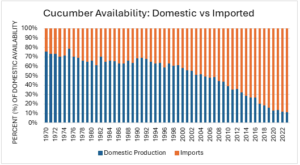
Cucumbers are one of the most popular and important commodities in the U.S. with approximately 2.8 billion pounds being available for consumption every year. Nevertheless, most of the cucumber availability is from foreign origin. In 2023, the U.S. produced approximately 337 million pounds and imported 2.54 billion pounds (89 percent of the cucumbers consumed in the United States). Figure 1 shows the trends in availability by origin; imports have increased, and domestic production has decreased (ERS data).  

In the U.S., cucumbers are mostly produced in Michigan (37 percent), Florida (23 percent), North Carolina (11 percent), Georgia (10 percent), and California (8 percent), (USDA Vegetables 2022 Summary). The U.S. production of cucumbers is seasonal with most production happening in the summer, during the winter, autumn and spring months. Fresh cucumbers are mostly imported (USDA ERS). Origin of imported cucumbers include Mexico (62 percent), Canada (36 percent), the Dominican Republic (1.17 percent), and Honduras (0.77 percent) (BACI data for 2021).  

What pathogens are commonly associated with cucumbers? 

Cucumbers have been linked to several foodborne illness outbreaks, primarily caused by Salmonella. In 2016, the FDA reported a Salmonella incidence of 1.8 percent positivity in nearly 1,600 cucumber samples, where those contaminated were 39.3 percent produced in the U.S., and 60.7 percent imported. Nevertheless, contamination with other pathogens may occur during irrigation, improperly treated soil amendments and animal intrusion (Colorado State University). Below are several notable multistate foodborne illness outbreaks attributed to cucumbers. 

  • November 2024 Outbreak: 68 individuals across 19 states have reported infections from Salmonella Typhimurium linked to cucumbers grown in Mexico. 
  • June 2024 Outbreak: In June 2024, the FDA and CDC investigated a multistate outbreak of Salmonella Africana infections potentially linked to cucumbers. Cucumbers grown in Florida distributed to several states were later recalled after a sample tested positive for Salmonella
  • 2015 Outbreak: In 2015, a significant Salmonella Poona outbreak in the U.S. was traced to cucumbers imported from Baja California, Mexico. The outbreak resulted in 907 reported illnesses across 40 states, including 204 hospitalizations and six deaths. 
  • 2013 outbreak: The Salmonella Saintpaul outbreak was traced to cucumbers imported from Mexico, resulting in 84 illnesses and 17 hospitalizations. On April 24, 2013, the FDA halted cucumber imports and issued an import alert for two trading companies involved in the distribution. 

How are cucumbers grown and harvested? 

Planting: Cucumbers are typically grown in fields or greenhouses with careful attention to soil quality, water management and hygiene to ensure both optimal production and food safety. The process begins with preparing soil that is well-drained and adequate for plant growth. They are planted when soil temperatures exceed 60°F and air temperatures do not fall below 50°F at night. Seeds are planted in adequately spaced rows. (Penn State, UC Davis) 

Irrigation: Irrigation plays a critical role in cucumber growth and food safety, with methods like drip or furrow irrigation commonly used to deliver water directly to the plant roots while minimizing contact with the fruit. Cucumbers need frequent irrigation during the growing period. (UC Davis 

  • Irrigation water can be a source of contamination and could carry microorganisms of public health concern, including Salmonella, pathogenic E. coli and human viruses like hepatitis. A.  The following aspects need to be considered when managing your irrigation water: 
  • Source of water (Surface, Ground, Municipal)  
  • Timing for irrigation (extended time before harvest allows time for pathogen die-off)  
  • Application (overhead (riskier), flood, and furrow, or sub-surface (less risky))  

Timing: Cucumbers are generally harvested 30-46 days from planting. This is widely dependent on the variety and weather conditions. (OSU, UC Davis) 

Harvest: Cucumbers are typically picked by hand or machine once they reach the desired size and maturity. Workers handling the harvest are trained in proper hygiene practices (washing hands and cleaning and sanitizing knives/pruners if used)_ to reduce the risk of cross-contamination. (WKU) Harvesting equipment and containers are also cleaned and sanitized regularly to maintain food safety.  

Greenhouse cucumbers: Cucumbers grown in greenhouses differ in some areas from those in the field. Generally greenhouse cucumbers are of the English verities (covered in plastic). Greenhouse cucumbers are often grown vertically using trellises in high tunnels to increase density. These are generally growing in substrate-based systems. The commonly used substrates are perlite, pine bark, and rock wool. Perlite, a heat-expanded volcanic rock, is lightweight and porous but does not hold nutrients. Pine bark, an organic material milled to about 1/2 inch and aged before use, can retain some nutrients. Rockwool, often used in high-wire systems, comes in cubes or slabs placed on plastic troughs for nutrient drainage. It is also used in seedling blocks for transplant production. Irrigation systems often use drip systems to deliver precise water and nutrients directly to the plant roots.  Most cucumbers produced in Canada are grown in Greenhouses, while those grown in Mexico can be both field cucumbers (39%) or greenhouse cucumbers (61%) (Rural Migration).   

What are post-harvest practices for cucumbers?  

Storage and Holding: Post-harvest, cucumbers are cooled quickly to remove field heat. Methods for cooling harvested cucumbers include hydrocooling with chilled water and forced-air cooling. Cucumbers are held in chill rooms at approximately 50°F. (UC  Davis) 

Washing: Cucumbers are washed, sorted and graded in a packing house after being harvested and transported from the field. The wash system scrubs the cucumbers to remove adhering dirt and residues. To control microbial contamination, the wash water is often treated with sanitizing agents such as chlorine, typically at concentrations between 100 to 150 ppm. Maintaining appropriate water temperature and pH levels is crucial to enhance the efficacy of (FAO) 

What are food safety implications of the waxing process?  

Fresh cucumbers are generally waxed to enhance visual appeal and reduce moisture loss. Cucumbers are waxed with food-grade waxes that are edible and approved by the FDA. These waxes are typically made from plant-based materials or petroleum-based waxes. Waxes are applied by using mechanical brushes. Most cucumbers in the fresh market are waxed except for English cucumbers, which are generally wrapped in plastic.  

The cucumber waxing process has several food safety implications, primarily concerning bacterial survival and the potential for cross-contamination.  

A study conducted in 2021 shows that Salmonella can survive better on waxed cucumbers than unwaxed ones in the short term, although unwaxed cucumbers may retain higher bacterial concentrations by the end of storage. The type of wax applied also influences Salmonella survival, with vegetable-based wax showing a significant decline in bacterial populations, whereas mineral oil and petroleum-based waxes allowed for Salmonella persistence over seven days at various temperatures. The study also highlighted cross-contamination is another critical concern. During the waxing process, Salmonella can transfer from contaminated cucumbers to brushes used for waxing and subsequently to uninoculated cucumbers. 

These findings highlight the need for strict hygiene and sanitation practices during the waxing process to mitigate the risk of Salmonella contamination and ensure food safety in post-harvest handling. 

What are some best practices and food safety considerations for cucumbers? 

Pre-harvest practices:  

  • Assess the water for irrigation to prevent contamination with pathogens like Salmonella and E. coli 
  • Avoid using untreated or poorly treated manure as a soil amendment.  
  • Prevent animals from accessing growing fields to reduce the risk of fecal contamination. Evaluate for evidence of animal intrusion when harvesting and take corrective measures.  

Worker Hygiene:  

  • Train workers in proper handwashing techniques and hygiene protocols. 
  • Ensure access to clean restrooms and handwashing stations in the field. 

Sanitation of equipment 

  • Clean and sanitize tools, harvesting equipment and containers regularly to prevent cross-contamination. 

In the packinghouse 

  • Wash cucumbers with clean water before packaging and conduct monitoring activities of wash water to prevent cross-contamination.  
  • If applying wax coatings, ensure that brushes and equipment used in the waxing process are thoroughly sanitized to prevent cross-contamination. 
  • Cool cucumbers promptly after harvesting to reduce microbial growth.  
  • Conduct cleaning and sanitation activities of equipment and develop an environmental monitoring program (EMP).  

Resources 

Jury Hits Employer with $2.17 Million Jury Award in Sexual Harassment Case

December 5th, 2024

A federal jury awarded $2 million in punitive damages and $170,000 for emotional harm against SkyWest Airlines to settle an Equal Employment Opportunity Commission (EEOC) sex discrimination lawsuit. 

According to the EEOC, multiple coworkers and at least one manager made extremely crude sexual comments to parts clerk, Sarah Budd, including the suggestion that she should make money via prostitution. Male co-workers also solicited Budd to perform demeaning sex acts and made frequent jokes and remarks about rape and rape victims, including the statement that women who report rape do so for attention. The jury agreed that Budd, herself a survivor of sexual assault, experienced physical and intense mental anguish because of her work environment. 

According to EEOC documents, her supervisor did nothing in response to Budd’s complaints. When Budd reported the harassment to SkyWest’s employee relations department, the employee relations manager did not interview many of the employees identified as witnesses or participants in the harassment, nor did they ask obvious follow-up questions. As a result, the investigation failed to uncover the full extent of the harassment alleged. Although remedial measures such as the disciplining of participating coworkers and department-wide training were promised, the discipline was superficial, and the training was canceled after Budd retired. Training was conducted three years later, and only in response to litigation. 

What Does it Mean 

Employers can learn several important lessons from SkyWest’s failures in addressing the reported conduct. 

  • Inadequate Response to Complaints: SkyWest failed to properly address Budd’s complaints about a sexually hostile work environment. This included ignoring her complaints and conducting inadequate investigations, which in this case, violated Title VII of the Civil Rights Act of 1964. 
    • Whether governed by state or federal anti-harassment laws, employers should always take complaints alleging sexually harassing conduct seriously and give them top priority.  
    • The focus should be on determining whether the report involves behavior serious enough to warrant a formal investigation. If it is not so serious (e.g., an employee’s discomfort with an offhand compliment), then the situation might be resolved by counseling the individual. However, if there are allegations of conduct that, if true, would violate your company’s rules or expectations, the matter should be investigated to make a factual determination about what happened.  
    • Once the investigation is complete, action should be taken based on the factual findings. 
  • Lack of Effective Disciplinary Actions and Training: The company promised disciplinary actions and training to address the hostile work environment but did not effectively implement these measures. This failure contributed to the continuation of the hostile environment.
    • State and federal law make it clear that an employer must take appropriate remedial steps when there is proof of misconduct – the behavior does not need to rise to the level of a legal or policy violation to warrant a remedy. 
    • To meet this obligation, employers should: 
      • Stop behavior before it rises to the level of unlawful conduct, which is why steps should be taken even when the behavior is not yet serious enough to violate the law.  
      • Impose remedial action commensurate with the level of misconduct and that discourages or eliminates recurrence; and 
      • Look at what the company has done in the past in similar situations, to avoid claims of unfair (possibly discriminatory) remedial measures (e.g., training, verbal counseling, one-on-one counseling/training, demotions, rescinding of a bonus, termination or other similar actions aimed at stopping the wrongful conduct).

This case underscores the critical importance of taking immediate and effective action in response to complaints of harassment as a means of lowering overall risk and ensuring a safe and respectful workplace for all employees. 

Wage & Hour Tips for the Holiday Season 

December 5th, 2024

With the holiday season upon us it is important to understand wage and hour obligations associated with holiday pay and the impact of holiday closures.  

California law makes no special provision for holiday pay; holidays, like Saturdays and Sundays, are treated like any other workday. As always, the focus in California is on making sure employees are paid for all hours worked – including overtime – irrespective of the “day” the work is performed. There is no statutory provision mandating an employer provide holiday pay to an employee when a holiday happens to fall on a regularly scheduled workday.i However, there is also nothing that prevents an employer from offering holiday pay as a benefit or though the collective bargaining process.  

The same applies in other of our member states (Arizona, Colorado, and New Mexico) where the focus is also on assuring payment of wages for all hours worked and the correct calculation of overtime.ii  

It is also important to note that holidays can impact the timely payment of wages. Under California law, if the holiday falls on the company’s regularly scheduled payday, employers may shift the payment of wages to the next business day after the holiday. The California Secretary of State’s website provides a listing of state holidays. Bank holidays can vary from state to state. Employers outside of California should check which Bank holidays may impact the payment of wages in their states. 

Update: New Employment Laws Impacting Colorado Employers

December 5th, 2024

The Colorado legislature has been active throughout 2024 passing various laws impacting employers and their businesses. This article highlights a few significant changes, including a couple that took effect in June 2024. Understanding and preparing for these changes will assist in mitigating risk and strategic planning for the year ahead.  

Effective June 3, 2024: 

  • It is an unlawful employment practice for any Colorado employer to discriminate or retaliate against employees who are or become organ donors. The law specifically focuses on the period extending 30 days before and 90 days after the employee is or becomes a living organ donor. 
  • Existing law under Colorado’s CROWN Act was amended to prohibit discrimination based on hair length. 

Effective January 1, 2025: 

  • Colorado joins 29 other states in prohibiting the use of hand-held mobile devices while driving. The new law expands existing bans on using cellphones beyond just texting to include holding or manually using a cellphone or other mobile device for voice calls or any other reason. Beginning January 1, 2025, drivers using a cellphone or mobile device while driving must use a hands-free accessory. Penalties start with a $75 fine and two license suspension points, with repeat offenders receiving even higher fines and more points.  

Effective July 1, 2025: 

  • The Colorado Privacy Act will require employers to obtain consent from employees or prospective employees before collecting and processing their biometric data. Employers may require consent as a condition of employment to: 1) permit access to secure physical locations and secure electronic hardware and software applications; 2) record the beginning and end of an employer’s full work day, including meal breaks and rest breaks in excess of thirty minutes; 3) for workplace safety reasons based on an employee’s job description; and 4) based on a prospective employee’s reasonable background check, application, or identification requirements. 
  • Under the state’s Job Application Fairness Act, employers will be prohibited from including age-related inquiries on initial job applications, including age, date of birth, and dates of attendance or dates of graduation from an educational institution. An employer may, however, require certifications and transcripts at the time of the initial application, so long as the employer notifies the individual that they may redact the prohibited identifying information.  

Employers also may require candidates to verify compliance with bona fide occupational qualifications relating to public or occupational safety and federal or state laws or regulations, provided they do not require disclosure of the specific age, date of birth, or other prohibited information. 

To effectively navigate these legal updates, consider the following: 

  1. Update Policies and Procedures: Review and revise all company policies and procedures impacted by the new legal requirements set out above. For example, the company’s anti-harassment/discrimination policy should be updated to reflect new protections for hairstyles and donor activities. Likewise, the company’s driving policy should reflect new state requirements that all drivers use hands-free accessories.  
  2. Training: Training sessions should be initiated for management and HR teams to ensure they are aware of the new changes. Each session should include instructions on how these changes should be communicated to all direct reports.   
  3. Strategic Planning: If you haven’t already, consider developing a strategic plan for implementing annual changes in a timely and effective manner. Having a system in place will ensure a smooth transition with minimal disruption to business operations.  

Western Growers Releases Second Agtech Case Study

December 3rd, 2024

The Western Growers Center for Innovation and Technology (WGCIT) has published its second of an ongoing series of case studies, analyzing financial and operational impacts of various agtech equipment.

In this case study, the CIT collaborated with Triangle Farms to share quantifiable data of the financial value of Stout Industrial Technology Inc.’s Smart Cultivator for the removal of weeds. Triangle Farms is a 10,000-acre conventional and organic specialty crop farm based in Salinas, Calif. It is part of JV Smith Companies, which has a total of 40,000 acres of farms throughout California, Arizona, Colorado, New Mexico and Mexico.

The case study analyzes real grower data based on a 32-week growing season and a three-year depreciation schedule for the Stout Smart Cultivator and also covers the operational impacts of using the Smart Cultivator at Triangle Farms.

Triangle Farms integrated the Stout Smart Cultivator with hand weeding in 2020 and noted a $477, 784 reduction in total cost compared to 2018-2019 labor expenditures.

You can find the Western Growers Stout Case Study here.

The CIT is offering an investment assessment for any operation interested in the ROI of automation equipment. For more information or to ensure notification of future CIT case studies, reach out to the innovation team at [email protected].

Exploring Wastewater Monitoring for Foodborne Illness Detection 

December 4th, 2024

A recent article highlights an emerging use of wastewater monitoring and microbial detection to assess the true impact of foodborne illnesses in our communities. Wastewater monitoring has long been a component of public health monitoring; however, this type of community monitoring increased in use during the COVID-19 pandemic as a means for public health officials to help curtail rising cases of illness in the community. With early identification, swift action was taken to identify outbreak clusters, implement controls (e.g., masks, isolation) to curtail spread and ultimately offer a means for health officials to minimize risk and disruptions to society. 

In food safety, early identification and more accurate monitoring offer the potential to improve outbreak investigations, understand supply chain weaknesses and speed up threat removals within commerce. The technology and equipment invested in during the pandemic, including improved laboratories and microbial sequencing technologies, are now available for new use cases and applications. Foodborne illness and pathogen sequencing would be a natural progression in how food safety and illness management may evolve over time, and these new resources and infrastructure may unlock and accelerate solutions in our efforts to reduce the burden of illness from foodborne pathogens. 

More information can be found here.

What Has Your Data Done for You Lately?

December 2nd, 2024

A tree falls in a forest, and no one is around to hear it. Does it make a sound?

When thinking about food safety, we spend an inordinate amount of time thinking about how we improve, and that’s extremely important. Just as important is making sure we design the systems to know whether we did. Blindly implementing and adopting best practices aimed at reducing the risk of foodborne illness is unlikely to lead to risk outcomes that are worse (unlikely, but not impossible). But blind adoption of any and all measures doesn’t mean time and resources will be spent valuably. In an era of competing needs and increasing cost pressure, inefficient allocation of resources should be on the top priority list for any food business, and prioritization of the most efficient food safety measures should occur to protect consumers and companies from adverse events.

One of the challenges in designing systems to measure food safety improvement is that as you start, it may make processes or products appear riskier. Let’s use having your blood work analyzed as an example. A good majority of people go into a routine blood draw and test thinking they are the epitome of health, expecting only acceptable results. As results start rolling in, they may discover cholesterol, triglycerides or blood sugar are not within the acceptable limits, and attitudes about overall health may drastically change. The mental shift that comes from suddenly knowing something, or learning something unexpected, can often lead to some uncomfortable feelings. While beliefs suddenly shifted with the receipt of a result, the reality is that the patient’s health was the same pre-and post-test.

Transitioning back to food safety, one of the first steps in being able to measure improvement requires establishing a baseline to know where you currently are at. As you set out collecting information to build an effective measurement system, be aware that baseline data may be different than expected, and that it may end up identifying unknown hazards or risks. Despite the risk of suddenly knowing, there is far more risk (illness, regulatory, legal) in not knowing. With a better understanding of the overall system, targeted programs can be implemented reducing the risk, but at a minimum, establishing empirical data that supports evidence of clear understanding and food safety control within the existing system.

Strategically designing food safety programs to establish a baseline of what a program currently does, identify the best practices, and quantify risk mitigation measures is essential in the development of a sustainable food safety program.

Western Growers has a growing set of resources and tools to assist members in designing value and protection in their food safety programs. Intentional data collection is essential to document current control systems and offers the opportunity to improve existing systems to reduce risk as prudently as possible.

Ready to take your process to the next level? We’re here to help – reach out to the Science team to get started at [email protected].

What’s your data done for you lately?

Sustainability Expert Gina Colfer Joins WGCIT for November Lunch and Learn

December 2nd, 2024

The November Lunch and Learn event at the Western Growers Center for Innovation & Technology (WGCIT) featured an insightful presentation by Gina Colfer, a licensed Pest Control Advisor (PCA) and Certified Crop Advisor (CCA) with a specialty in sustainability. WGCIT Director Dennis Donohue served as the emcee while Colfer shared her extensive experience and knowledge in organic farming and soil health. The event provided valuable insights into sustainable farming practices and underscored the importance of a holistic approach to agriculture.

Speaker Background

Colfer, an alumna of Cal Poly San Luis Obispo, has over 30 years of experience working in the Salinas Valley. She emphasized the importance of a Whole Systems Approach to farming organically, highlighting the intensive nature of farming in the region, which often involves two- to four rotations per season of leafy vegetable specialty crops. Colfer’s philosophy centers on building soil health as a long-term investment, akin to “putting money in the bank,” to ensure rich soil and high crop yields.

Key Insights

Colfer discussed the critical role of biodiversity on farms, advocating for the presence of specific blooming habitats to support bio control agents. She stressed that adult parasites and most adult predators rely on nectar and pollen, making the planting of flowers essential for effective pest management. Colfer’s approach to farming organically and sustainably integrates sound agronomy practices and a comprehensive systems perspective.

Personal Journey

Colfer’s passion for agriculture stems from her upbringing on her family’s apple farm in Aptos, California. Her father continued farming until the age of 93, and her brothers now manage the family farm. Colfer pursued plant sciences at Hartnell College and Cal Poly SLO, eventually joining Wilbur-Ellis, a family-owned international company founded in 1921. Wilbur-Ellis combines innovative ideas with traditional agricultural practices to serve the North American agriculture and food system.

Practical Advice

During the event, Colfer offered practical advice for growers looking to improve soil health, such as considering cover crops where economically feasible. She acknowledged the challenges of adopting biological solutions due to the lack of financial incentives but emphasized the potential for these solutions to replace traditional inputs. Colfer also highlighted the importance of empowering irrigators through education, as they possess valuable on-the-ground knowledge. She concluded by noting that consumer demand and willingness to pay a premium will ultimately drive the adoption of sustainable practices.

OFLC Responds to Court Orders on Farmworker Protection Rule

December 2nd, 2024

The Department of Labor’s Office of Foreign Labor Certification (OFLC) issued guidance on November 27, 2024, regarding its response to recent court orders impacting the 2024 Farmworker Protection Final Rule. The Farmworker Protection Rule, which ostensibly aimed to improve protections for H-2A temporary agricultural workers, has faced multiple legal challenges since its publication in April 2024. 

Court-Ordered Restrictions on Implementation 

Two preliminary injunctions and a nationwide stay have restricted the enforcement of specific provisions of the rule: 

  1. Eastern District of Kentucky (Barton v. DOL):
    On November 25, 2024, the court enjoined the Department from enforcing provisions related to safety requirements, worker empowerment and guest policies, information collection, and updated minimum pay. This injunction applies to Kentucky, Alabama, Ohio, and West Virginia, as well as several plaintiffs and their member organizations, including the National Council of Agricultural Employers, of which Western Growers is a member, and Western Growers members. 
  1. Southern District of Mississippi (IFPA v. DOL):
    A stay was issued the same day, staying the nationwide implementation of specific worker empowerment provisions (§ 655.135(h)(2) and (m)) pending the resolution of the case. 
  1. Ongoing Kansas v. DOL Injunction:
    As previously announced, a preliminary injunction issued in August 2024 prohibits enforcement of the rule in 17 states and against certain plaintiffs. 

OFLC Guidance for H-2A Applications 

To comply with these orders, OFLC announced that employers must revert to submitting H-2A job orders and Applications for Temporary Employment Certification using forms and standards effective as of June 27, 2024. This guidance applies until further notice. Employers can access the required forms through the Foreign Labor Application Gateway (FLAG) system. 

Next Steps 

The Department of Labor has stated that additional guidance will be forthcoming. Employers navigating H-2A compliance should monitor updates closely. 

For questions about how these developments may impact your operations, please contact the Western Growers H-2A Services team. Our experts are available to assist with navigating these complex regulatory changes. 

Deciphering STEC positives in Molecular Screening Methods for Produce Testing

December 10th, 2024

Shiga-toxin-producing Escherichia coli (STEC) is a group of pathogenic E.coli that has been found to contaminate leafy greens and other fresh produce items. These contamination events contribute to the overall burden of foodborne illnesses and represent a primary challenge in the goal to improve produce food safety.  STEC is a broad and diverse category of E.coli, with an estimated number of over 400 serotypes considered within the STEC group.  

What’s the definition of STEC positive? As with all complicated answers, it begins with “it depends.” Illness caused by shiga-toxin includes symptoms such as cramping, diarrhea (sometimes bloody), and vomiting, and it can lead to the development of the potentially deadly Hemolytic Uremic Syndrome (HUS). However, while an illness from a STEC infection may be easy to define, STEC-positive samples in the food industry often have a more complicated definition.  

The definition of STEC in molecular diagnostic tools has evolved differently across the globe based on regulatory body/regulatory framework, industry standards and available testing technologies. This variability has often led to unintended confusion between stakeholders on the definition of a positive and has created variability within the food industry on what and when to react. The common denominator for most molecular methods (i.e., Polymerase Chain Reaction (PCR)) is to detect STEC positive E.coli containing at least one Shiga toxin gene. There are two main types of Shiga toxin, Shiga Toxin 1 (Stx1) and Shiga Toxin 2 (Stx2), with most severe illness being attributed to Stx2. As with all pathogens, there are usually numerous pathogenicity genes that contribute to overall virulence. These include but are not limited to genes for attachment and adherence, and those that contribute to the organism’s ability to evade host immune responses. One of these STEC attachment genes, intimin (eae), is often included in detection assays for STEC due to frequent presence within strains associated with illness. The eae attachment gene is an important virulence factor that, when present, provides more confidence that a detected STEC would have public health significance. However, eae is not required to cause illness and some STEC strains associated with illnesses and outbreaks have not harbored the eae gene.  

Molecular testing for STEC, especially if numerous gene targets (stx1, stx2 and eae) are used, leads to questions on whether the necessary virulence genes exist within one organism (as opposed to different targets coming from different organisms in the sample), and as a result, whether that STEC detection is an organism that may likely cause illness if consumed. Initial molecular screening for the virulence genes (stx1, stx2, eae) is often taken to secondary confirmation by either molecular or cultural methods. These confirmation steps work to verify that the virulence genes exist in one living organism (i.e., not from dead cell DNA detection), and/or to identify if the virulence genes are contained within specific highly pathogenic O-serogroups (Top 7: O157, O26, O45, O111, O103, O121, O145). 

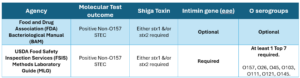
Table 1 captures the positive STEC test outcome requirements for commonly used and referenced US food regulatory methods. Top 7 STEC serogroups are part of the required USDA FSIS Methods Laboratory Guide (MLG) STEC testing definition, while the Top 7 serogroups are not considered required elements for a STEC positive within the FDA Bacteriological Analytics Manual (BAM). When testing for O serogroups, secondary molecular testing is often completed utilizing secondary PCR for the O group genes, and/or, by immunomagnetic capture based on antigen-antibody reactions for the Top 7, O serogroups. After using the immunomagnetic beads, only Top 7 STECs will remain and when coupled with additional PCR for the virulence genes, will provide evidence that the virulence genes are also present with Top 7 serogroups.  

Table 1: STEC positive detection results based on common regulatory methods relevant to US fresh produce

Beyond secondary PCR and immunoassay capture, a newer molecular confirmation method is that of droplet digital PCR (ddPCR). ddPCR is a variant of PCR that is able to confirm that the virulence genes (stx1&/or stx2, eae) are located within one bacterial cell. This emerging technology utilizes PCR performed in millions of partitioned droplets that physically exclude more than one cell into one PCR reaction. Using this technology, presumptive samples can rapidly identify from an enrichment culture whether the toxin gene(s) and attachment gene (eae) are co-located within one cell. 

Finally, a familiar method in food microbiology testing includes cultural confirmations, a process that isolates cells and confirms bacterial identity through their traditional biochemical characteristics (e.g., sugar fermentation, antibiotic resistance, growth conditions). Cultural confirmations have been used for many decades, but cultural methods may be challenging for broad and diverse groups such as STEC given that biochemical tests may present differently dependent on the STEC strain that may be present. The large number of STECs (> 400 serotypes) and their potential to have variable biochemical phenotypes on culture medias/tests may lead to STEC organisms being mischaracterized in the culture confirmation process. The chosen cultural confirmation method is often based on the regulation that a food is produced under – FDA regulated foods following FDA BAM Chapter 4a methods for STEC detection and isolation, and USDA regulated foods using USDA MLG Chapter 5C.03 for STEC confirmation. In some cases, FDA regulated foods may perform MLG methods based on laboratory offerings and expertise. 

STEC is an emerging group of pathogenic E.coli that increasingly lead to outbreaks, illnesses and recalls. When incorporating STEC testing into routine and investigatory testing, it is important to evaluate and determine what a STEC positive is within the testing program and remain transparent in the program design to allow for analysis (i.e., shiga toxin alone, shiga toxin + intimin, shiga toxin + intimin + O serogroups, molecular confirmation, cultural confirmation). This clear characterization is important in developing the risk strategy within a testing program and is critically important when analyzing testing program data. For more information on how to optimize testing data for ongoing analysis and learning, see The Western Growers GreenLink® Best Practices for Sharing Tissue and Water Data Guide.