Ag Groups Call on Senate to Deliver Critical Tax Relief

June 30th, 2025

Western Growers, along with more than 40 agricultural organizations have come together to urge swift Senate action on a new tax package that could bring meaningful relief to farmers, ranchers and rural businesses across the country.

In a letter sent to Senate Majority Leader John Thune, Majority Whip John Barrasso and Senate Finance Committee Chairman Mike Crapo, these groups expressed strong support for provisions in the proposed legislation that would ease estate tax burdens, make key deductions permanent and incentivize crucial investments in farm equipment and technology.

The letter highlights how the proposed measures would help family farms thrive and remain competitive. Stressing the urgency of these reforms to strengthen the agricultural supply chain and sustain rural economies, the coalition called on the Senate to approve the package without delay.

Click here for the full letter.

Lawmakers Support Invasive Species Protections for Specialty Crops

June 30th, 2025

Members of Congress from key agricultural states, led by Congressman Doug LaMalfa (CA-1) have joined together to urge the U.S. Department of Agriculture (USDA) to prioritize protections for America’s specialty crops.

In a joint letter addressed to USDA Secretary Brook Rollins, lawmakers highlighted the urgent need to bolster efforts against invasive pests and diseases that threaten the nation’s supply of fresh fruits, vegetables and tree nuts.

The letter underscores recent outbreaks, from destructive fruit flies in California to crop-destroying thrips in Florida, that have cost farmers millions and put entire industries at risk. The members are calling for continued support for critical USDA programs, including the Animal and Plant Health Inspection Service (APHIS) and Agricultural Research Service (ARS), along with investments in border protection tools like canine teams.

You can read the letter in full here.

Best Practices: Why Employers Should Avoid Using “Fit” to Justify Termination 

June 27th, 2025

“You’re not a good fit.” At first glance, this phrase might seem harmless—an inoffensive way to describe a variety of performance issues or work style differences. But beneath its vague surface lies a multitude of potential interpretations that could expose employers to significant legal and reputational risks. For instance, could “not a good fit” imply bias against someone’s race, gender, age, religion, or disability? 

Without clear context or documentation, such a statement might be construed as a pretext for discrimination or retaliation, as demonstrated in a case decided by the Court of Appeals for the Fourth Circuit titled Lashley v. Spartanburg Methodist College.  In Lashley, a teacher alleged that her former employer’s termination statement that, “we’re not a good fit for each other” masked a retaliatory motive tied to her prior request for a disability accommodation. Although the Court ultimately rejected Lashley’s claim, the case does serve as a cautionary tale for employers. Meaning, a vague justification like “fit” can easily be challenged, leading to costly legal battles or jury trials. 

To reduce these risks, employers should adopt clear, specific, and measurable practices when addressing performance or behavioral issues. Below are three best practices to help employers make termination decisions that are both fair and legally defensible: 

  • Document Specific Performance Issues: Instead of relying on the ambiguous concept of “fit,” employers should keep detailed records of any employee performance or behavior concerns. This documentation should outline: 
    • The specific ways in which the employees’ performance does not meet expectations. 
    • Concrete examples of how the behavior affects team dynamics or organizational goals. 
    • The steps taken to address the issues, such as feedback sessions or performance improvement plans (PIPs). 

By grounding decisions in objective, factual evidence, employers can demonstrate that terminations are based on legitimate, non-discriminatory reasons. 

  • Use Clear and Consistent Language: When discussing performance concerns with employees, use precise language that directly addresses the issues at hand. Avoid euphemisms or vague terms that could be misinterpreted. For example, instead of saying, “You’re not a good fit,” specify the exact problem: “Your approach to project deadlines has caused delays in our deliverables, and despite feedback, the issue has not improved.” Consistency is also key. Ensure that similar performance concerns are addressed uniformly across all employees to avoid perceptions of favoritism or bias. 
  • Provide Opportunities for Improvement: Before making a termination decision, allow the employee an opportunity to correct their behavior or performance. Implement a structured performance improvement plan that: 
    • Clearly defines the areas that need improvement. 
    • Outlines measurable goals and timelines for achieving them. 
    • Includes regular check-ins to provide guidance and support. 

This approach not only demonstrates good faith on the part of the employer but also provides a clear record of efforts to help the employee succeed. If termination becomes necessary, it shows that the decision was made after giving the employee a fair chance to improve. 

While terms like “fit” may seem convenient and benign, they are fraught with legal and ethical pitfalls. Employers should try to prioritize transparency, fairness, and specificity – as much as possible – in their decision-making processes. By documenting performance issues, using clear language, and giving employees opportunities to improve, employers can help protect themselves while fostering a culture of accountability and respect. In today’s increasingly turbulent workplaces, these practices are not just best—they are essential. 

Evaluating the Civil Rights Fraud Initiative, A Federal Equivalent to PAGA? 

June 27th, 2025

On May 19, 2025, U.S. Deputy Attorney General Todd Blanche introduced, via an internal memorandum, the Civil Rights Fraud Initiative (CRFI), representing a significant shift for the Department of Justice (DOJ) in enforcing federal civil rights laws. This initiative leverages the False Claims Act (FCA) to hold organizations that benefit from federal funds accountable for alleged violations of anti-discrimination laws. 

The DOJ is using its CRFI to incentivize the FCA as a means of combating alleged fraud against the federal government. Like California’s Private Attorneys General Act (PAGA), the FCA empowers both the government and private individuals to file lawsuits against entities that allegedly misrepresent compliance with federal laws while receiving federal funds. Known as “qui tam” claims, these lawsuits provide whistleblowers with significant incentivization, offering them up to 30% of recovered damages. Businesses found liable under the FCA face stringent penalties, including treble damages, which can prove financially devastating. 

Under the FCA, any organization that accepts federal funding must certify adherence to anti-discrimination laws. The CRFI specifically targets cases where entities allegedly knowingly fail to uphold these standards while falsely claiming compliance. Such violations include the operation of discriminatory practices or programs that exclude certain protected classes. Notably, this initiative underscores the ongoing scrutiny of federal contractors and grant recipients when it comes to diversity, equity, and inclusion programs. 

Employers receiving federal funds are the focus of this initiative-based compliance push, with the CRFI presenting both risks and safe-harbor opportunities for organizations seeking to maintain compliance with anti-discrimination standards. Below are two critical takeaways for employers: 

  • Conduct Comprehensive Policy Audits: To mitigate risks, employers receiving federal funds should conduct thorough audits of their policies, training programs, and workplace practices to ensure compliance with federal anti-discrimination laws (e.g., Title VII of the Civil Rights Act of 1964). This type of audit involves assessing areas such as recruitment, promotions, and employee access to resources, ensuring that no protected class faces exclusion or disadvantage. Policy audits and policy reviews can significantly reduce an employer’s vulnerability to whistleblower claims under the FCA. 
  • Review Contracts and Certifications with Legal Counsel: Employers should consult with legal counsel to ensure that declarations of compliance with anti-discrimination laws associated with the receipt of federal funds are accurate and fully supported by their practices. Misrepresentation, whether intentional or inadvertent, can lead to severe financial and reputational consequences under the FCA. 

The CRFI marks a significant escalation in enforcement of the current Administration’s executive orders focusing on equity and inclusion within federally funded organizations. Impacted employers must act decisively to align with anti-discrimination laws, thereby minimizing exposure to FCA claims and fostering a workplace built on fairness and compliance. By prioritizing policy audits and contract reviews, organizations can navigate this complex legal landscape effectively lowering the risk of becoming involved in what has the potential to become an incentivized litigation trend.  

Data 101: Data Visualization 

June 26th, 2025

Data visualization sits at the heart of compelling data storytelling. Clear charts and thoughtfully designed figures are often the difference between insights that resonate with our audience or something that is just noise and gets no interests. As my PhD advisor reminded many times, the highest quality visualizations speak for themselves, they should be clear and intuitive that words are not needed.  

In this article, I’ll share practical tips and tricks for choosing the right types of plots for different kinds of data. With the right approach, your visualizations won’t just display information, they’ll provide insights and tell a story. 

Step 1: Understand your data 

Before choosing a plot, take a moment to understand the structure and goal of your data.  

  • Is it categorical (e.g. South Region, Central Region, North Region or Jan, Feb, March) or numerical (e.g. 1,1.1,6.5, 7.8) 
  • Does it go overtime or across groups? 
  • Do you want to highlight trends over time, compare different groups, see relationships between two variables, or overall compositions 

Once you understand what you are working with, selecting the right plot becomes much easier.  

Boxplots for science post on data visualization

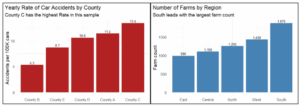
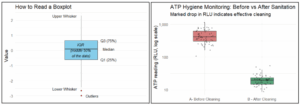
Boxplots: Boxplots are another great way to compare categories especially when you are trying to understand the distribution, spread and potential outliers of numerical variables. While boxplots are a little more complicated to read, they are simple to understand. Below is a figure highlighting how to read a boxplot. For more information on distribution and summary statistics read my previous post. Some examples useful for boxplots are: 

  • Looking at the distribution of daily precipitation for each month of the year 
  • Looking at the distribution of ATP counts before and after cleaning and sanitation 

Goal: Trends over time 

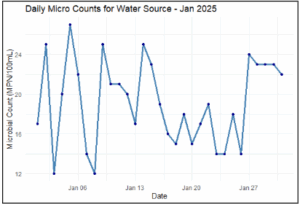
Line Charts: When you have chronological data line charts can reveal patterns or seasonality easily. They are great for tracking change over time and spotting times of interest. Some examples of effective use include 

  • Daily tackling: plotting your daily micro counts for a water source 
  • Long term tracking: tracking your annual positivity rate for two different locations throughout the year.  

Goal: Show Distributions 

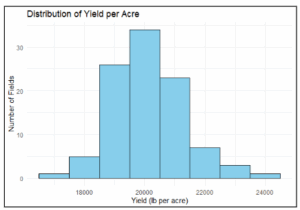
Histograms and Boxplots: To explore how values spread, peak, or skew, histograms display frequency while boxplots condense that story into quartiles and outliers. Together, they give both intuitive and statistical perspectives. Histograms specially can provide you with the distribution of continuous numerical data where the continuous numerical data gets split into bins, and the y-axis tells you the frequency for these bins. Some examples of using histograms include: 

  • Examining the frequency of yield per acre for your fields 

Goal: Show Relationships 

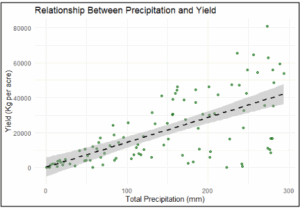
Scatterplots: When you need to assess the correlation, or lack thereof, between two numerical variables, scatter plots are the go-to plot. In addition, you can add a trend line to make direction and strength clear. Examples of effective use: 

Correlation: plotting total precipitation vs yield to demonstrate positive association between precipitation and yield 

Outliers: could show areas that are out of the norm (low yield even though precipitation was high) 

Clusters: Potentially show areas where precipitation is high, but UV is low therefore yield may follow a different pattern 

Goal: Showing parts of a whole 

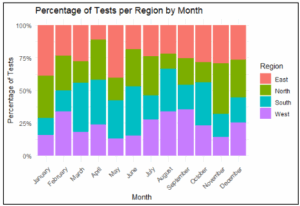
Stacked Bar charts or 100% stacked charts: These shows can give a sense of how different categories make up a whole. Come examples can be. 

  • Total Availability of Fruits and Vegetables that come from domestic vs foreign origin 
  • Percentage of tests per region per time of the year. 

DOL Suspends Enforcement of 2024 Farmworker Protection Rule

June 26th, 2025

On June 20, 2025, the U.S. Department of Labor’s (DOL) Wage and Hour Division (WHD) announced it is suspending enforcement of the 2024 Farmworker Protection Rule (FWPR), effective immediately.

This suspension is welcome news for H-2A employers, who have been navigating significant legal uncertainty since the FWPR’s implementation. The 2024 rule introduced expansive new requirements related to:

  • Worker housing access and occupancy;
  • Progressive discipline standards;
  • Disclosure of wage rates and job terms; and
  • Protections for union activity and concerted action.

Multiple federal court injunctions had already blocked portions of the rule, leaving agricultural employers uncertain about which standards to follow. The WHD’s new guidance brings clarity and consistency by formally pausing enforcement and instructing its staff to:

  • Discontinue all enforcement activities related to the 2024 Final Rule;
  • Revert to the prior H-2A regulations that were in effect as of June 27, 2024; and
  • Refer case-specific questions to the DOL National Office for guidance.

This pause in enforcement will remain in place until further notice, while litigation proceeds and the Department evaluates whether additional rulemaking is warranted.

Western Growers will continue monitoring developments and will notify members if further guidance or regulatory changes are issued.

For questions about how this affects your operation, please contact the Western Growers H-2A Services Team.

The Risk of Arbitrary Food Safety Limits

June 24th, 2025
I’ll take your 1-mile setback and raise you 3. 

Balancing Science and Assumptions in Food Safety 

First attempts are rarely the best. That applies to just about everything—including writing and food safety practices. This document has been edited many times, and that doesn’t make the first version wrong or useless—it’s simply part of the iterative process of finding the best way to communicate a message. The same principle holds true in food safety. 

In produce food safety, we often manage “known unknowns.” Environmental conditions change constantly, usually beyond the control of the grower. Decisions are made based on the best available information at the time—what we might call educated guesses. While well-intentioned, these guesses can resemble hopeful assumptions more than science-based risk management. 

The solution? Invest in research and data collection to better understand the risks and refine practices accordingly. It’s a natural progression: we start with a best guess, we collect data, we reassess. But what happens when new evidence contradicts that original guess? 

That’s where things get complicated. If the original guess aligns with new data, it’s easier to validate and formalize. But more often, early assumptions fall short. This introduces a challenge: how do we justify changing an accepted industry standard that was originally based on a guess? 

This is the danger of “the first requirement”. By being “first,” it becomes the default, and soon it’s embedded in systems, policies, and contracts. Over time, it gains weight that may outweigh newer, more accurate information. Even if new research data shows the original approach was flawed or incomplete, shifting away from it becomes difficult. As a result, tension grows between established practices and emerging science. 

This situation is particularly visible in the fresh produce sector, where food safety risks are both serious and extremely complex. One example is the management of risks from adjacent land uses—animal operations, composting facilities, and wildlife habitat. These areas are known sources of microbial pathogens like Salmonella and pathogenic E. coli. Setback distances (buffers) are established to manage the potential for contamination, sometimes based on data, but often grounded in the logic that “more distance must be better.” 

But are those distances really effective? Maybe—but maybe not. And each year, the market tendency towards continuous risk reduction is to increase setback distance requirements, reinforcing the idea that more distance must be better. However, growing research shows that while distance matters, it is far from the only factor that matters, and many other factors, often unique to a specific location, are interacting that drive heightened risk.  

Recent work by Dr. Mohit Verma at Purdue University, funded by the Center for Produce Safety, measured fecal indicators, Bacteroidales, in air samples taken in fields near animal operations. The findings showed that setback distance alone could only predict airborne contamination with Bacteroidales from animal operations with 12–54% accuracy. That’s a very wide and uncertain range. The takeaway here isn’t that setbacks are unnecessary—but that setback distances alone are insufficient to effectively manage risk. In short, on the topic of setback distances, the appropriate setback distance is very much “IT DEPENDS!”  

So, what should the industry do? 

We need to listen, understand and appropriately apply the science to drive pragmatic food safety requirements specific to certain locations. Risk is multifactorial. Distance is only one part of the equation. Rather than defaulting to single-variable design requirements, we should be developing strategies that account for the full range of contributing factors for a site. That’s not easy, but it’s necessary. 

When best guesses harden into standards without reassessment, they can slow progress. They consume resources, create ineffective systems to manage, and limit exploration of more sustainable or effective solutions. Continuing to support research, collecting high-quality data, and being willing to revise practices when the evidence points to a better path—this is how we must move forward.  

The true cost of sticking with flawed assumptions is stagnation and creating non-sustainable food safety systems. We owe it to growers, consumers, and the broader food system to stay open to change and invest in better ways to manage risk. Let’s listen to the science and use it to drive targeted, customized risk management solutions appropriate for each situation and site.  

CPS Report Release: 17 Years of Research Insights

June 23rd, 2025

The Center for Produce Safety (CPS) aims to fund research, find solutions and fuel change in fresh produce food safety. Since 2007, CPS has funded 236 research projects across 49 institutions worldwide, investing over $43 million in food safety advancements. This week, CPS announced the release of a research report regarding 17 years of research findings. The report addresses the following areas:

  • Domestication and Wild Animals and Pathogen Transference
  • Environmental Pathogen Control
  • Process Control Part 1: Produce Wash Systems
  • Process Control Part 2: Compost and Soil Amendments
  • Pathogen Detection Methods and Microbial Tools
  • Agricultural Water Management
  • Pathogen Persistence and Movement on the Farm
  • Pathogen Persistence on Fruits and Vegetables
  • Controlled Environment Agriculture

To access the full report on 17 years of research insights, click here.

CFWC Executive Director Mike Wade to Step Down After 26 Years

June 24th, 2025

The California Farm Water Coalition (CFWC) announced that longtime Executive Director Mike Wade will be stepping down in February 2026. Wade has led the organization since 1998 and has played a pivotal role in expanding public education and outreach efforts around the importance of reliable water supplies for California agriculture.

“It has been exciting to see the growth and success the Coalition has achieved over the years, thanks to the leadership of our current board and prior leaders who had the vision to create this unique organization. None of what we do would be possible without the generosity of our members who provide the support for our activities,” said Wade in a press release. “The talented people who work here, now and in the past, have helped the Coalition achieve what its founders envisioned over 35 years ago.”

The CFWC’s Board of Directors has begun the search for a new executive director, with Wade staying on to support a smooth transition. Requests for applications can be found here.

You can read the press release in its entirety here.

FDA Opens New Method for Ranking Chemicals in Food Supply for Public Comments 

June 24th, 2025

On June 18, 2025, the U.S. Food and Drug Administration (FDA) released its proposed method for ranking chemicals in food supply for public comments.  

“This method provides a transparent, systematic, and science-based approach to determine which chemicals the agency would prioritize for post-market assessments through the agency’s post-market chemical review program,” FDA said in a statement. “It will allow the FDA to allocate resources more efficiently, ensuring that the agency focuses on food chemicals that may present the greatest potential public health risk, including risk to sensitive populations, and are of high public concern.” 

The method released on June 18 uses Multi-Criteria Decision Analysis (MCDA) to determine a score for each chemical based on evaluating the information about a chemical against a pre-determined set of criteria, says the FDA.  

“The method is similar in approach and criteria to one that the U.S. Environmental Protection Agency uses for prioritizing chemicals, but the FDA’s method takes into account factors specific to exposure from food and uses a scoring method similar to the FDA’s Risk Ranking Model for Traceability,” FDA said. 

The FDA encourages the public to comment in docket FDA-2025-N-1733 in response to the questions listed in Section 4 of the method description document. The last day to submit comments on the method is July 18, 2025.  

For more information, visit the FDA website. 

CA Labor Commissioner Reinforces Worker Protections Amid ICE Enforcement Concerns 

June 20th, 2025

Amid rising concerns over increased Immigration and Customs Enforcement (ICE) enforcement actions within the state, the California Labor Commissioner issued an important reminder to all employers; that California’s labor laws protect every worker in the state, regardless of immigration status. 

In California, workers do not need to disclose their immigration status when filing wage claims, retaliation complaints, or exercising other protected rights. Immigration-related threats in response to an employee exercising a legally protected right are also prohibited. Additionally, the Labor Commissioner’s Office does not inquire about the immigration status of individuals seeking assistance or protection under California labor law.   

A Few Key Reminders for Employers.  

An employer may not: 

  • Refuse to honor authorization documents that appear genuine. 
  • Threaten to call immigration authorities. 
  • Report an employee or their family’s immigration status or engage in any other immigration-related practice in response to the employee exercising protected rights. 

In addition, employers must comply with California specific notice provisions, such as informing employees of any immigration enforcement actions at the workplace (e.g., I-9 audits) and, if applicable, notifying their authorized representative of the activity and outcome.  

CA Grown Launches Experience California Agriculture Website to Boost Agritourism

June 23rd, 2025

California Grown, an initiative of the California Department of Food and Agriculture (CDFA), has introduced a new digital platform designed to showcase the state’s diverse agritourism opportunities. Experience California Agriculture connects visitors with California’s rich farming heritage and offers a comprehensive guide to u-pick farms, vineyard tours, farm stays, farm-to-table dining and more, highlighting the state’s role as the nation’s leading agricultural producer.

The site features interactive maps, regional guides and curated directories for farm stands, u-pick orchards, family-friendly activities and educational programs.

“California is a living classroom where food, family, and farming intersect,” said Karen Ross, CDFA Secretary, in a press release. “This website makes it easier to engage with the people and places that grow our food.”

Visitors can explore listings by region or category, with real-time updates on experiences that include coastal farm tours or inland olive oil tastings. The platform also offers seasonal content and tips for responsible agritourism.

CA Localities Once Again Surpass State Minimum Wage Requirements

June 20th, 2025

As of July 1, 2025, minimum wage rates continue to rise in several California localities exceeding the state’s mandated $16.50 per hour; in some instances, by several dollars.  

California employers are required to pay all nonexempt employees in compliance with state, federal and local wage and hour laws. In all cases, employers are required to pay the higher of any applicable federal, state, or local minimum wage. Non-exempt employees must be paid at least a minimum wage for all hours worked including all hours designated as overtime. 

Localities set to increase minimum wage requirements on July 1, 2025, include: 

Alameda 7/1/2023 $17.46 webpage
Berkeley 7/1/2023 $19.18 webpage
Emeryville 7/1/2023 $19.90 webpage
Fremont 7/1/2023 $17.75 webpage
Los Angeles 7/1/2023 $17.87 webpage
LA Co. 7/1/2023 $17.81 webpage
Milpitas 7/1/2023 $18.20 webpage
San Francisco 7/1/2023 $19.18 webpage
Santa Monica 7/1/2023 $17.81 webpage

Employers with workers in these localities must be sure to update minimum wage posters to reflect the new increases. Employers are also reminded that changes to local minimum wage rates do not impact minimum salary calculations for determining exemptions for California workers.  

CRD Updates FAQs on Age Discrimination

June 20th, 2025

The California Civil Rights Department (CRD) has released a new fact sheet on protecting workers against age discrimination in the workplace. In California, age protections in employment begin at the age of 40.  

Under California’s Fair Employment and Housing Act (FEHA), it is illegal for an employer to discriminate against or harass an employee or job applicant based on a range of protected characteristics, including age. California’s FEHA applies to any employer with 5 or more employees. When it comes to harassment based on protected classifications, including age, the FEHA applies to any employer with one or more employees. In the employment context, those aged 40 and older are protected from actual age discrimination as well as perceived age discrimination. Such discrimination occurs when an employer takes an adverse employment action against an employee because of age or on the mistaken belief that the employee is aged 40 or older. According to the AARP, roughly two-thirds of older workers nationwide reported seeing or experiencing age discrimination in the workplace. 

What Does Age Discrimination Look Like? 

Age discrimination can take a variety of different forms. Sometimes it’s obvious, while other times it’s more subtle. A few key examples of age discrimination that employers should be aware of include: 

  • Excluding older people when hiring. This can apply to job postings that express a preference for someone under the age of 40, such as “Looking for someone young and energetic to join the team.” 
  • Asking about a candidate’s age before hiring. For example, an employer generally cannot ask an applicant to share their date of birth on a job application or during an interview. 
  • Giving lower wages or benefits because of age. Employers cannot pay employees aged 40 and older less than other employees doing equivalent work. 
  • Denying a promotion because of age. Employers cannot deny someone a promotion or evaluate them unequally because they are 40 or older. 
  • Making comments, jokes, or insults about age. Age-based harassment can create a hostile work environment, including repeated comments like, “Okay, Boomer” or “Hey, old man.” 

California Takes Age Discrimination Seriously  

Over the last few years, CRD has overseen several high value age discrimination-related settlements: 

  • $40,000 settlement for a truck driver who was allegedly discriminated against because of their age.  
  • $110,000 settlement for alleged discrimination at Southern California assisted living facilities related to sign language interpretation for seniors with disabilities.  
  • $149,000 settlement for five women who worked as food preparers at a deli in Napa Valley who allegedly faced discrimination based on their national origin and age.  

The CRD’s new fact sheet on age discrimination is a good resource for California employers to remain vigilant when it comes to protecting workers from age discrimination including age-related biases and stereotypes. 

Western Growers to Honor Stewart Resnick at 2025 Annual Meeting

June 16th, 2025

IRVINE, CALIF. (June 16, 2025) – Western Growers will present The Wonderful Company Chairman, President and Co-Owner Stewart Resnick with the 2025 Award of Honor at the organization’s 99th Annual Meeting in November. The Award of Honor is Western Growers’ highest recognition of achievement and is given annually to individuals who have contributed extensively to the agricultural community.

With more than $6 billion in annual revenue and a portfolio of leading consumer brands and businesses – including Wonderful Pistachios, POM Wonderful, Wonderful Halos, JUSTIN Vineyards & Winery, and FIJI Water – Wonderful products are found in nearly half of U.S. households.

Resnick held his first job and started his first business at age 13 and later helped pay for his UCLA education by launching a janitorial service. Over more than 50 years, he and his wife, Lynda, have gone on to build, acquire and transform a series of companies, making smaller businesses into household names and turning commodities into global brands.

What began as a hedge against inflation – the purchase of a citrus orchard in the late 1970s – grew to become the center of Resnick’s professional life. Under his leadership and co-ownership with Lynda, The Wonderful Company is the world’s largest grower of tree nuts and the country’s leading citrus producer. Wonderful Pistachios sells and markets 60 percent of all pistachios grown in the United States. Today, the company employs more than 10,000 people around the world, including more than 3,000 in California’s Central Valley, and operates one of America’s largest state-of-the-art logistics centers in Shafter, Calif. – a cleaner, more sustainable hub for commerce that already employs more than 10,000 people is projected to support 50,000 new jobs over the coming decades.

“Though his path to becoming a farmer was unconventional, Stewart Resnick embodies all the admirable qualities we celebrate in agriculture: Laser focus and a determination to beat the odds, resilience and adaptability, business acumen and daring, a willingness to publicly fight the hard fights for the industry, a commitment to do right by his customers and employees, and generosity in giving back to rural communities,” said Western Growers President and CEO Dave Puglia. “As Chairman, President and Co-Owner of The Wonderful Company, Stewart and his wife Lynda have together shown how agriculture can flourish and prosper, and thanks to their generosity they have built a vision of California that is both robust and kind. We are very proud to honor Stewart with Western Growers’ highest accolade, the Award of Honor, this November at our Annual Meeting in Coronado.”

“Stewart Resnick is an exceptional recipient of the Award of Honor,” said Western Growers Board Chair Stuart Woolf, President & CEO of Woolf Farming and Processing. “As a market leader, he not only elevates his own businesses and brands but also those of his fellow growers and competitors. He exemplifies the best of agriculture through his stewardship of land, people, and community. We are so lucky to have such an accomplished farmer/philanthropist in our ranks.”

“I’m deeply honored to receive this recognition from Western Growers—an award that’s gone to so many agriculture leaders I’ve long admired,” said Stewart Resnick, chairman, president and co-owner of The Wonderful Company. “For nearly five decades, agriculture has been the heart and soul of my professional life. It’s been incredibly special to be part of California’s farming community as we do the essential work of feeding a growing world.” 

Under the Resnicks’ leadership, Wonderful is widely recognized for its workplace culture. Wonderful has been named one of Fortune’s 100 Best Companies to Work For® in the United States multiple years in a row and is ranked No. 3 in the nation on PEOPLE Magazine’s Companies That Care list. The Resnicks also are significant global philanthropists, directing more than $2.5 billion toward education, health care, sustainability, infrastructure, community development, and other initiatives, with a strong focus on California’s Central Valley, where so many Wonderful employees live and work. Resnick serves on the boards of UC Davis and Caltech, where, through one of the largest gifts to a university in U.S. history, the Resnick Sustainability Institute at Caltech promotes global research in sustainable science and engineering.

Stewart Resnick’s achievements will be celebrated at the Award of Honor Dinner Gala at the 2025 Western Growers Annual Meeting in Coronado, Calif. on Nov. 9-12, 2025.


Scholarship Application Open for CRARS Regenerative Agriculture TAP Certificate Program 

June 18th, 2025

Chico State’s Center for Regenerative Agriculture and Resilient Systems (CRARS), in collaboration with other project partners, are accepting scholarship applications for the 2025-2026 Regenerative Agriculture Technical Assistance Provider (TAP) Certificate Program. 

The program trains agricultural professionals to deliver systems-based technical assistance in the field, and scholarships are available for those who plan to complete the full course series.  

The deadline to submit this scholarship application is July 25th, 2025. More details on the program and course structure are available here 

APHIS Accepting Proposals for Plant Protection Act Section 7721 Funding

June 18th, 2025

The U.S. Department of Agriculture’s (USDA) Animal and Plant Health Inspection Service (APHIS) is accepting proposals for Plant Protection Act Section 7721 (PPA 7721) funding to protect American agricultural and natural resources from invasive plant pests and diseases. 

  • Plant Pest and Disease Management and Disaster Prevention Program (PPDMDPP): Applicants can submit suggestions for PPDMDPP funding from June 11 through August 6, 2025. Learn more. 
  • National Clean Plant Network (NCPN): The open period to apply for NCPN program funding runs from June 11 through September 3, 2025. Learn more 
  • Funding is available for land-grant universities, non-land-grant colleges of agriculture, State agricultural experiment stations, State and Federal agencies, and non-governmental organizations. 

To learn more about both programs and how to submit a proposal, visit the USDA website. 

PCQI: FSPCA Preventive Controls for Human Food (PCHF) Version 2.0

June 18th, 2025

Since the rollout of the Food Safety Modernization Act (FSMA), the term Preventive Controls Qualified Individual (PCQI) has been part of the food industries’ core language. Under the Preventive Controls for Human Food (PCHF) rule, the PCQI is responsible for developing and overseeing a facility’s food safety plan. This includes identifying hazards, implementing preventive controls and monitoring corrective actions.

In 2024, the Food Safety Preventive Controls Alliance (FSPCA) released an updated curriculum for PCQI training (2.0). The updated curriculum is accepted by the FDA for meeting the requirements of a PCQI under 21 CFR 117.180. While the core curriculum remains the same, a few areas have been updated to offer more clarity, case studies and real-world application.

Does the PCQI training matter for produce operations?

This depends on the type of operation.  Farms that grow, harvest, pack or hold produce are exempt from the Preventive Control Rule, meaning that they are exempt for the PCQI training. However, operations involved in operations handling fresh-cut and processed produce fall under both rules. For these facilities, the PCQI role is not optional.

Nevertheless, even operations exempt from the PCHF rule may still be asked to designate a PCQI-trained individual by buyers. PCQI 2.0 allows companies to provide their food safety teams with additional training opportunities.

If I took the PCQI 1.0 training, do I have to take the 2.0 training?

If your PCQI certificate is based on version 1.0, you are still in compliance with the regulation. FDA does not require retraining. However, retraining may be valuable if your food safety team needs a refresher.

What is the difference between PSR training and PCQI training?

The Produce Safety Rule (PSR) training is designed specifically for produce growers and focuses on on-farm practices that reduce the risk of microbial contamination such as worker hygiene, water use, soil amendments, and postharvest handling. PCQI is meant for facilities subject to the Preventive Controls for Human Food (PCHF) rule and covers how to develop, implement and oversee a written food safety plan that includes hazard analysis, preventive controls and verification activities. While PSR is farm-focused, PCQI is required for facilities especially those handling fresh-cut, or processed produce.

Where can I receive the PCQI 2.0 training

  • IFPTI (International Food Protection Training Institute) Offers virtual and in-person PCQI 2.0 courses. More information here
  • Provision analytics is Hosting a training in Hollister, CA from July 8 – 10, 2025
    8:30 am – 5:00 pm. Western Grower members get $100 off with code WG2025. Register here

New Whitepaper Evaluates Tools to Verify Cleaning of Produce Harvest Bins 

June 17th, 2025

The Western Growers Science team recently completed a real-world study comparing different methods for verifying harvest bin sanitation in produce operations. Their findings are now available in a new whitepaper that looks at how tools like Adenosine Triphosphate (ATP), traditional microbial tests and the CytoQuant® flow cytometer perform under field conditions.  

The paper provides practical insights into what is measurable in the field, and how verification methods can support stronger sanitation programs. Read the full report here.  

Permission for Risk

June 16th, 2025

Risk-based management has been the on-trend phrase of the past decade within the food safety community. Globally, numerous regulations and food safety standards have adopted language that requires food-producing entities to assess their process and product, and then apply risk-based measures appropriate for the risk. This is a logical and scientifically supported theory – it makes complete sense to apply the most time and resources where gaps are identified and where our opportunity to minimize risk is the greatest.

I have spent my academic and industry career chasing, supporting and helping execute this concept, supported by science and the best-informed guesses when available. I am an ardent believer that when risk-based programs are truly developed and implemented, we will find a more manageable and sustainable system of food production.

The transition to risk-based management is a passion, and I work diligently to support the produce and food industry in incorporating those practices. However, one of the observations I have made throughout my career is that risk-based management and measures are straightforward only in textbooks, and the true application of risk-based management for food safety represents a quagmire of scientific and social complexity.

The shift to risk-based regulations and standards has been rapid from a regulation perspective, leading to numerous updates and forms being produced to aid the industry in assessing and documenting their risk to meet compliance requirements. While new forms and checklists were made and training developed, it appears the root cause impeding the shift to true risk-based management is that no concerted effort to shift to a fundamentally different management or regulation style occurred at the same time.

With the introduction of risk-based language in the regulation, the industry acted effectively the same, albeit with more paperwork and different terms used. Customers required the same information and had the same expectations of suppliers while regulators used similar decision-making and actions reminiscent of the prior regulatory era.

In effect, the transition to risk-based food safety happened on paper, but food safety culture remained more-or-less entrenched in an era of zero-hazard tolerance.

The paradigm shift to true risk-based management ultimately requires some amount of risk to be acceptable, and it recognizes that different systems, producers and products will have variable levels of risk.

In a risk-based system, it does/will not matter how many risk assessment forms are completed since risk-based management only truly begins when we permit the food industry and food regulators to recognize that there is some acceptable amount of risk.

Without acknowledging that not all risks can be eliminated or controlled – especially for fresh produce and foods without microbial kill steps – there will continue to be little incentive or benefit for risks to truly be identified. Risk identification and characterization are generally still perceived as evidence of failure rather than evidence of proactive risk management.

One illness is too much, but zero is unrealistic.

Allowing for risk in the food system seems counterintuitive to our goal to reduce foodborne illnesses. The food industry should have a goal of zero risk to consumers, and that must always be the target. However, while one illness will always be too many, zero illness is also unattainable and building systems that only tolerate pass/fail or good/bad outcomes prevents identifying realistic ways to manage risk.

This binary risk outcome is an enormous roadblock in the path to continuous improvement since there is rarely any advantage for a company to characterize its true risks within the system. For example, while we openly discuss and recognize that seasonal or geographic factors may influence risk in fresh produce production, what benefit do individual growers gain from fully characterizing that risk when customers and regulators view such identification in isolation—often discrediting the fact that sufficient efforts and programs may already be in place to manage it at an acceptable level?

In effect, guilt is easy to prove while evidence of control (or innocence) is almost impossible to defend.

Taking a recent real-life event as an example, a pathogen-positive sample originating from a routine sampling event for Salmonella led to a grower losing a multi-million-dollar customer who chose to terminate a contract due to the pathogen finding. This reactive decision was made despite that this positive was in isolation and not associated with any illnesses or process failure evidence. This isolated pathogen result ultimately led to a drastic reaction by the customer and reinforced for the grower that there is little incentive to build systems to identify and monitor for risk. Additionally, there is even less incentive to be transparent with external stakeholders about when risks may be present.

In the prior example, we saw a customer interpret a pathogen detection incompletely and with what seems a disproportionate reaction. It is understandable that no one wants food/systems with risk and would naturally reject it. However, believing that a successful strategy is to sever ties with any supplier, farm, product or process once a positive is found from a random test is misguided. More importantly, it is counterproductive and destructive since it reinforces to the food producer that a smarter strategy would be to build food safety programs that always return negative results, regardless of whether that outcome truly reflects the situation. As with all risk, the scariest type is the type you do not know you have. If we interpret each finding of a pathogen, and sometimes even indicator/index organisms, to be viewed as evidence of systematic/gross/preventable failure, then that only further reinforces that identifying risk to optimize managing it is not a sustainable food safety or business strategy. Conversely, this supports a strategy opposite of risk-based management since we are not allowing food producers to investigate risk to manage it without then using that same information as evidence against them.

Risk-based management requires that we design systems that consistently and efficiently identify risk so that appropriate measures can be implemented to reduce it. Preventing the first step of identification impedes much hope of executing risk-based management across the food industry.
To illustrate what risk-based management and risk permission in food production could look like, here’s a non-food example. We all accept that sharks are a risk to human health when swimming in the ocean. However, our means to manage that risk is not to set out to remove all sharks from the ocean.

Instead, we as a community, have designed education, alerts, monitoring and sometimes physical barriers like nets to protect humans in the ocean environment from a potentially hazardous encounter. Extending the metaphor, we not only authorize the risk to exist, but we design systems to know when the risk is elevated and when too much risk is seen. If sharks are too close, we take measures to get people out of the water and close beaches.

In agriculture, we grow our food where pathogens live and must accept and authorize that occasional encounters with foodborne pathogens are not unexpected. If we build our pathogen monitoring systems appropriately, we will allow for systems to alert food producers when risks are no longer acceptable (i.e., too many sharks) due to current measurements being above what baseline measurements would expect.

Due to the complexity and diversity in agricultural and in food-producing ecosystems, risk is expected to be variable and needs to be monitored per producer and system. Once established, these risk-based monitoring systems must also be recognized and trusted as functional (i.e., we cannot abandon fields/processes simply because a non-zero-risk baseline is established). With understanding and authorization that the status quo has some inherent risk, we permit the establishment of systems being built to be able to identify and manage risks when they elevate.

Once we can understand the increased risk, science can help design appropriate mitigations to reduce risks back to acceptable levels. True risk-based systems offer the ability to allocate resources where risks are elevated and minimize limited resources being applied inefficiently across supply chains.

Transitioning to risk-based management starts with culture. 

As much as this risk-obsessed microbiologist loves the concept and science of microbial risk management, I have come to recognize that the first system to be built to achieve that goal is dependent on individual and societal psychology. As a collective food industry, we must focus efforts on shifting to a culture of risk acceptance if we want to truly usher in a more sustainable means to reduce foodborne illness. While it does sound somewhat counterintuitive to allow for risk when trying to reduce it, the lack of doing so regrettably leads to situations where far more risk remains unknown and unintentionally accepted. Permission to identify risk without fear of losing customers, ranch land and products is a critical first step to designing sustainable risk-based systems in the future.

Culture is discussed frequently both in business and the food safety community, but rarely do we intentionally collaborate to design systems to cultivate it. This is especially true when building culture requires connecting a diverse community representing different stakeholders and geographies. Any culture-building effort, including one for food safety, takes strategic design and constant support.

These efforts will often take more time and be more difficult than the food safety measures themselves. But, as with all great innovations and efforts, the first step is to truly identify the challenge at hand and to socialize the immediate need across all stakeholders.

The unlock for the food industry on real risk-based management starts with these two related and distinct questions:

1. What actions can we take to curate the culture of our broad food safety community to understand the need and adapt behavior to authorize risk identification and management throughout the supply chain?

2. What monitoring systems can we build to effectively evaluate risks within the industry so preventive and proactive actions are taken to remove pathogens from the food system, ultimately reducing risk to consumers?

With a collective commitment across all stakeholders to truly transition to risk-based management, we offer the opportunity to flip strategies, collaborations and mitigations. We can begin to design the monitoring systems we need to optimize both food safety and business outcomes within and across food segments.

A sustainable system of food production is within our grasp, but we must recognize it will not come to us without our collective efforts to build a bridge between two disparate food safety systems – one of hazard management to one of risk management.

The bridge between where we are at, and where we need to go, relies on the collaborative belief that we can change the food safety paradigm. A truly sustainable food safety system is attainable, but we need to choose to constantly cultivate it.