
Carrot FAQs 

November 20th, 2024

Carrots are a widely grown and consumed vegetable in the U.S. with more than 2.4 billion pounds of the carrots consumed produced domestically (83 percent), and 633 million pounds imported (22 percent) (USDA NASS). In terms of production, California leads carrot production with over 80 percent, followed by states such as Washington, Idaho and Wisconsin.   

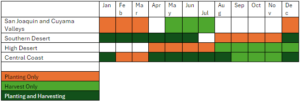
In California, carrot planting and harvesting vary by region.  

  • In the southern San Joaquin and Cuyama Valleys, planting from December to March yields harvests from May to July, while planting from July to September is harvested from November to February.  
  • In the southern desert, planting from August to February results in harvests from December to June.  
  • The high desert sees planting from April to July and harvests from August to December.  
  • On the central coast, planting from December to August produces harvests from April to January. 

Table 1. California Planting and Harvest of Carrots (UC Vegetable Research and Information Center) 
What have been the food safety issues associated with carrots? 

Food safety issues associated with carrots in the United States have been relatively uncommon, below are recent events. 

  • 2024 E. coli Outbreak: In November 2024, an outbreak of E. coli O121 was linked to organic whole and baby carrots. The outbreak has reported 39 cases across 18 states. The Centers for Disease Control and Prevention (CDC) and the Food and Drug Administration (FDA) issued warnings and recall of the contaminated products took place.
  • 2012 Salmonella Recall:  Carrot chips (sliced carrots) were recalled due to Salmonella contamination.  
  • 2019 Listeria Recall: In 2019, various minimally processed vegetables, including carrot sticks, due to potential Listeria monocytogenes contamination. The recall was a preventive measure, and no illnesses were reported. The FDA provided guidance to consumers regarding the recall. 

What are the growing conditions for carrots?  

Carrots are grown in well-drained, sandy soil at optimal temperatures of 60 to 70°F. High temperature can cause bolting, pale color and texture issues. Carrots are generally ready to harvest approximately 70-80 days after planting, however, this depends on weather conditions and regionality.  

What are some best practices to consider before planting carrots? 

Ensuring food safety begins before carrot planting by addressing potential risks in the growing environment. Key practices include assessing land for contamination risks, using safe inputs and preparing soil and water sources to minimize pathogen introduction.  

  • Previous Land Use: Evaluate the historical use of the land for potential contamination risks, such as livestock grazing, use of biosolids or untreated manures. 
  • Adjacent Land:  Assess nearby land uses, such as livestock operations, composting sites or drainage areas, to identify risks of water or soil contamination. 
  • Inputs and Amendments: Food safety risks regarding soil amendments mostly involve raw manure or other untreated animal-based soil amendments. Document the use only properly treated  compost or manure to minimize pathogen risks. 

What irrigation methods are used for carrots? 

A consistent water supply is essential for optimal carrot color and root development. Irregular wet-dry cycles can cause root splitting, while overwatering can hinder color formation and increase the risk of disease. Carrots are typically irrigated using sprinkler irrigation during the entire season. In the California Imperial Valley, growers often switch to furrow irrigation after emergence (more here). The use of surface water without an assessment or treatment is not recommended as surface water may be contaminated and harbor pathogenic bacteria (more here).  

It is important for carrot growers to comply with the updated FSMA Produce Safety Rule (Subpart E), carrot growers should follow these practices for agricultural water management: 

  1. Conduct Annual Assessments: Growers must evaluate water sources and distribution systems annually to identify hazards that could contaminate carrots. Consider factors like water application methods (e.g., drip, furrow or sprinkler) and environmental conditions. 
  2. Implement Corrective Measures based on Assessment Outcomes: If risks are identified, growers must take action, such as discontinuing use and performing corrective measures before resuming use such as treating water using alternative water sources. 
  3. Keep Records: Documentation of water tests, assessments and corrective actions is required for compliance with FSMA and to ensure traceability. 

How are carrots harvested?  

Commercially grown carrots are harvested using self-propelled multirow harvesters. These machines lift the roots, shear off the tops and deposit the carrots into trucks for transport to sheds for washing, grading, sizing and packing. In the California Central Valley, transport distances are short, often to Bakersfield, while desert-grown carrots may be hauled over 300 miles (UC Vegetable Research and Information Center). The University of Colorado Extension highlights that hand harvest of carrots could increase the risk of cross-contamination from field workers to the crop.  

What are water management practices in packing operations? 

Before storage, carrots are typically washed and hydrocooled in clean water with 100 ppm chlorine (pH 6.5–7.5) (UC Vegetable Research and Information Center). The University of Georgia reports that cleaning and cooling water for carrots should be chlorinated at 75–100 ppm of free chlorine, achieved via gas injection systems, bleach or calcium hypochlorite tablets. Chlorination levels should be frequently monitored using chlorine test kits or litmus paper. Maintaining water pH between 6.5 and 7.5 is critical to optimize chlorine effectiveness and prevent excessive chlorine use (UGA Extension). 

What are good practices for managing packinghouse equipment? 

The University of Georgia shares that packinghouse equipment must be kept clean to prevent microbial growth. Residual products on belts, tables and conveyors should be removed by thorough scrubbing during cleaning procedures. When necessary, sanitizing with a chlorine solution can be applied, especially on belt conveyors and other equipment, using hand sprayers for spot treatment. Tools and apparel, such as knives, saws, blades, boots, gloves, smocks and aprons should be cleaned or replaced as required to maintain hygiene standards.  

What are the ideal storage conditions for carrots? 

Ideal storage conditions are 32°F (0°C) with 99% relative humidity, allowing carrots to be stored for over seven months with minimal losses. At slightly warmer conditions (33.8°F, 98% RH), storage duration reduces to five months.  

What are some additional resources related to carrots? 
California State Board of Food and Agriculture to Discuss Regenerative Agriculture on December 3, 2024 

November 26th, 2024

The California State Board of Food and Agriculture will meet on Tuesday, December 3, 2024, to discuss the definition of regenerative agriculture. This meeting will be an important step in the ongoing effort to shape state policies around regenerative farming practices, a process that has been underway for over a year. 


The meeting will take place virtually from 10:00 AM to 1:00 PM PT via Zoom. Please find the meeting details below:

Webinar ID: 853 9302 4696 

Passcode: Board2024! 

Phone Access Passcode: 1460753307 

To join the meeting on December 3rd, please use the following Zoom link: https://us02web.zoom.us/j/85393024696 

For more details, you can view the full CDFA press release here. 


CDFA’s Produce Safety Program Hosting Workshops in December 

November 26th, 2024

The California Department of Food and Agriculture (CDFA) Produce Safety Program (PSP) is hosting in-person PSP Portal Training Workshops in December, offering valuable resources for growers and producers. 

Each session will feature a presentation on the CDFA Produce Safety Program and a live tutorial on navigating the PSP Portal. The first hour will cover the training presentation, with the remaining time dedicated to providing one-on-one technical support. Attendees are encouraged to bring their own digital devices to follow along and register for new accounts. 


The upcoming workshops will be held on: 

December 4th from 9:00 AM – 12:00 PM in Salinas, CA 

December 5th from 9:00 AM – 12:00 PM in Tulare, CA 

December 17th from 1:00 PM – 4:00 PM in El Centro, CA 


No pre-registration is required, the workshops are open to all. 

More information on these workshops can be found on the CDFA’s website here.  

USDA to Invest $14 Million to Strengthen Food Safety Research and Training 

November 26th, 2024

The United States Department of Agriculture’s (USDA) National Institute of Food and Agriculture (NIFA) has announced a $14 million investment to enhance food safety through research, outreach and workforce training. This funding will support efforts to reduce food contamination risks and strengthen the safety of the nation’s food supply. 

A major portion of this investment—$4.5 million—will fund research under NIFA’s Food Safety and Defense Program. This program supports the development of innovative methods and technologies to detect, reduce and mitigate foodborne pathogens, allergens and other hazards in food products. Explore the full list of funded projects here.  

Additionally, NIFA is investing $9.6 million through its Food Safety Outreach Program (FSOP) to provide tailored food safety training and technical assistance to small and mid-sized farms, food processors and underserved producers. See the full list of funded projects here. 

To learn more about USDA’s investment and its impact on food safety, click here.  

WG Joins Panel at 10th Annual Sustainable Agriculture Summit in Minneapolis 

November 25th, 2024

Western Growers facilitated a panel on the Nexus of Food Safety and Sustainability at the 10th annual Sustainable Agriculture Summit in Minneapolis, Minnesota, on November 20-21. This session was selected from over 150 applications, highlighting the interest and importance of this topic in the industry. Joining Western Growers’ Science team members, Jeana Cadby and Joelle Mosso, were Gina Colfer of Wilbur Ellis, Dr. Matthew Grieshop of the Grimm Organic Center and John McKeon of Taylor Farms.  

It’s important to find a balance between achieving alignment between food safety and sustainable practices and create a robust conversation and interaction with the audience. The panel invited the audience into the conversation through relevant first-hand experiences and case studies highlighting key topics and data-related solutions. 

Here are a few key points around the conversation: 

  • Food safety and sustainability require optimizing both, recognizing that risk management in the system is key. 
  • Abilities to co-manage biodiversity on- and near-farm and soil health and inputs requires intentional measurement and monitoring. Establishing high-quality and consistent measurements offers the ability to contextualize risk and authorize the adoption of sustainable food safety practices. New technologies offer an accelerated understanding of systems and the identification of new solutions. 
  • Sustainable Food Safety (SFS) prioritizes the interconnectedness of sustainability and food safety efforts to ensure optimal outcomes leading to the goal of environmental and agricultural resiliency. 
  • While research is needed to better understand the ecosystems and best management practices, individual growers and farms require establishing consistent measurements to monitor and react to risks and ensure proper adoption of practices with crop production.  
  • Ongoing dialogue is essential to educate about SFS, establish clear metrics, align monitoring methods and communicate the true cost of food production to both the agricultural community and society at large. 

For more information, reach out to the Western Growers Science Team. Additionally, to learn more about Sustainable Food Safety, see recent articles in the Western Shipper & Grower magazine here and here 


Farm Labor Survey Previews H-2A Wage Increases for 2025

November 21st, 2024

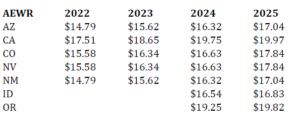
This week, the USDA released results from the Farm Labor Survey.  The Farm Labor Survey (FLS) is used to calculate the Adverse Effect Wage Rate (AEWR) for field and livestock worker occupations (SOC codes: 45-2041, 45-2091, 45-2092, 45-2093, 53-7064, 45-2099). 

The results indicate that California employers can expect to see the AEWR increase from $19.75 to $19.97 per hour. The AEWR paid by Arizona and New Mexico H-2A employers will rise to $17.04, up from $16.32 per hour. Colorado and Nevada H-2A workers will see a jump in pay to $17.84, an increase from the current $16.63 per hour.  

These rates will become official pending publication in the federal register. As seen in the chart below, the coming increase continues the trend of year-over-year AEWR increases in states where Western Growers members typically employ H-2A workers.

Western Growers is actively exploring all potential avenues to ensure stability within the H-2A program. Specialty crop producers are particularly vulnerable to wage increases, as they heavily depend on skilled manual labor. The ongoing rise in AEWR rates puts Western Growers members at a competitive disadvantage compared to their foreign counterparts. 

Federal District Court Vacates U.S. DOL Overtime Exemption Increase

November 21st, 2024

A Texas federal district judge has vacated the U.S. Department of Labor’s (DOL) 2024 rule increasing the minimum salary employers must pay to exempt employees under the Fair Labor Standards Act (FLSA).  

As discussed here and here, a new federal overtime rule raising the salary threshold for overtime exemptions under the FLSA took effect July 1, 2024, with a second phase increase scheduled for January 1, 2025. In the wake of the most recent increase, multiple lawsuits were initiated to challenge the DOL’s authority to increase the minimum salary threshold. 

The district court’s ruling effectively sets aside and vacates the entirety of the 2024 rule, including the initial increase that took effect July 1, 2024, and the pending increase set for January 1, 2025.  

What Does It Mean 

Employers will not be required to comply with the January 1, 2025, increase and, at their discretion, may roll back any increases initiated in accordance with the July 1, 2024, deadline. Thresholds will automatically revert to 2019 requirements as follows:  

  • Salary threshold for executive, administrative, and professional exempt employees: $684 per week, or $35,558 per year. 
  • Highly compensated employee total annual compensation threshold: $107,432 annual compensation. 
  • No automatic updating of these thresholds every three years. 

Employers considering reverting previously adjusted salary or exemption status to 2019 requirements should seek legal counsel to discuss the impact of such changes on employee morale, recruiting and retention.  

It is also worth noting that while an appeal is possible, it is highly unlikely given the recent election results and the changes anticipated with the incoming administration.  

NOTE: State overtime laws are not impacted by the court’s ruling.  

UPDATE: California Proposition 32 Fails

November 21st, 2024

California’s Prop 32, an initiative to raise the minimum wage to $18 an hour, has failed by a very narrow margin (49.2% in favor and 50.8% against).  

The failure of Prop 32 means that the state’s minimum wage will increase in accordance with existing law:  

California Minimum Wage Increase for 2025 

  • Current Minimum Wage: $16.00 per hour 
  • New Minimum Wage: $16.50 per hour (Effective January 1, 2025) 
  • Inflation Adjustment: 3.18% increase based on U.S. CPI-W from July 1, 2023, to June 30, 2024 

Impact: 

  • Minimum Salary for Exempt Employees: 
  • Current: $66,560 per year ($5,546.67 per month) 
  • New: $68,640 per year ($5,720 per month) (Effective January 1, 2025) 

To prepare for the upcoming increase employers should: 

  • Update Payroll Systems: Ensure that payroll systems are adjusted to reflect the new minimum wage rate beginning January 1, 2025. 
  • Budget Adjustments: Review and adjust budgets to accommodate the increased labor costs. 
  • Employee Communication: Be prepared to inform employees about the wage increase and how it will affect their pay by posting updated mandatory notices.  
  • Compliance Check: Verify that all wage-related policies and practices comply with the new minimum wage requirements. 

ALRB Reverses Course on Leasing Space from CAUSE

November 21st, 2024

The California Agricultural Labor Relations Board (ALRB) reversed course and will not lease office space in Santa Maria from the Central Coast Alliance United for a Sustainable Economy (CAUSE), after Western Growers and others raised conflict of interest and transparency concerns. 

As reported here, the ALRB had unanimously voted at its October 30, 2024 meeting to approve establishing a new office in Santa Maria through a sublease agreement with CAUSE, a worker center involved in anti-agricultural industry labor activities on the central coast of California.  

In response to concerns raised by Western Growers’ Vice President of State Government Affairs, Matthew Allen and others, the Board voted during its November 20th meeting to scuttle the leasing arrangement with CAUSE and seek alternative office space. 

CAUSE is the main organization advocating for a $26 minimum wage for farmworkers in Santa Barbara County. 

Stay Informed on STEC: Insights from Recent CPS Webinar

November 20th, 2024

With recent outbreaks of Shiga Toxin-Producing Escherichia coli (STEC), or EHEC, making headlines, food safety professionals are more focused than ever on understanding how these pathogens behave. As with all areas of science, our understanding of STEC/EHEC continues to evolve. Staying ahead of evolving scientific research to support food safety efforts and providing deeper insights into these pathogens are primary priorities.

In the meantime, a recent webinar hosted by the Center for Produce Safety (CPS) presented Quantifying risk associated with changes in EHEC physiology during post-harvest pre-processing stages of leafy green production, features research on STEC physiology. It offers insights into how these pathogens behave and how this knowledge can impact your food safety testing programs. This resource is essential for anyone looking to deepen their understanding of STEC and enhance their food safety practices.

Stay tuned for more updates from Western Growers Science as we continue to share key research and insights.

Specialty Crops Welcome New USDA Initiative

November 19th, 2024

WASHINGTON, D.C. (Nov. 19, 2024) – The Specialty Crop Farm Bill Alliance (SCFBA) issued the following statement in response to the USDA’s Marketing Assistance for Specialty Crops initiative announced today.

“The last four years have been turbulent for the specialty crop industry due to skyrocketing costs of production inputs, especially labor, as well as competition from imports with lower input costs.

This week’s USDA announcement is in direct response to these challenges that have roiled producers and is a step in the right direction. This vital assistance will help growers recover from some of this economic battering, and we are encouraged to see USDA recognizing the unique needs of the specialty crop industry and its role in American agriculture.

While this new initiative is welcome news, we also encourage Congress to enact supplemental relief for growers devastated by the effects of natural disasters and continue to urge the passage of a bipartisan five-year farm bill that includes key, long-term investments for specialty crops. The status quo is not sustainable, and the comparatively modest investments we’ve requested for the farm bill would be transformational to the specialty crop industry.”

SCFBA is a national coalition of more than 200 specialty crop organizations representing growers of fruits, vegetables, dried fruit, tree nuts, nursery plants and other products. In early 2023, the alliance released a set of key policy priorities as part of its Farm Bill recommendations. Specialty crop production, including fruits, vegetables, tree nuts, nursery and greenhouse commodities, contributes significantly to the U.S economy, accounting for $64.7 billion in farm gate value and 30 percent of farm cash receipts for crops.

The SCFBA is co-chaired by Cathy Burns, CEO of the International Fresh Produce Association; Mike Joyner, President of the Florida Fruit & Vegetable Association; Dave Puglia, President and CEO of Western Growers; and Kam Quarles, CEO of the National Potato Council.

# SCFBA #

The Specialty Crop Farm Bill Alliance is a national coalition of more than 200 organizations representing growers of fruits, vegetables, dried fruit, tree nuts, nursery plants and other products. The Alliance was established to enhance the competitiveness of specialty crop agriculture and improve the health of Americans by broadening the scope of U.S. agricultural public policy. For more information, visit farmbillalliance.com.


USDA Announces More than $2 Billion to Strengthen Specialty Crops Sector, Expand Crop Storage for Producers Following 2024 Natural Disasters

November 19th, 2024

Support is available to producers nationwide, and will significantly assist producers of citrus and other specialty crops in the Southeast after Hurricanes Debby, Helene and Milton

WASHINGTON, Nov. 19, 2024 – Today, Agriculture Secretary Tom Vilsack announced the creation of new programs that will help farmers who grow fruits, vegetables, and nuts overcome market barriers for their products, and help producers access necessary pre-market storage for their crops following severe weather events, including recent hurricanes. Specifically, the new Marketing Assistance for Specialty Crops initiative will provide $2 billion to assist specialty crop growers in maintaining a strong domestic supply and expanding market opportunities for their crops.

USDA is also creating the Commodity Storage Assistance Program, which will provide $140 million to help producers gain access to a packinghouse, grain elevator, or other facility necessary for the marketing of agricultural commodities. This program is designed for farmers nationwide due to disaster-related challenges, and USDA anticipates high signup rates in the Southeast due to the devastation caused by Hurricanes Debbie, Helene and Milton.

“From providing high-quality, nutritious, American-grown fruits, vegetables, and nuts to our nation and the world, to serving as economic pillars of their communities, specialty crop producers play a critical role in the success of U.S. agriculture,” said Agriculture Secretary Tom Vilsack. “The Marketing Assistance for Specialty Crops and Commodity Storage Assistance programs will be important for producers in every corner of the United States, but they come at an especially critical time for southeastern farmers, who will face a difficult and long recovery after this season’s devastating hurricanes.”

These programs would complement the disaster assistance package the Biden-Harris Administration has proposed to Congress, which included a request for resources for USDA’s Emergency Relief Program (ERP) and Emergency Livestock Relief Program (ELRP), in addition to nutrition assistance, and rural infrastructure support. The ERP and ELRP provide support for disaster losses for row crop, specialty crop, and livestock producers.

Final details, including eligibility and payment rates will be set forth in a Notice of Funding Availability for each program.

Marketing Assistance Program for Specialty Crops

The Marketing Assistance Program for Specialty Crops will expand markets by helping specialty who typically have higher marketing costs related to the tenderness and perishability of fruits, vegetables, floriculture, nursery crops and herbs; specialized handling and transport equipment with temperature and humidity control; packaging; moving perishables to market quickly; and higher labor costs. USDA anticipates applications will open in December 2024.

This initiative builds on previous investments by USDA under the Biden-Harris Administration to in support of the U.S. specialty crop industry. In January 2024, as part of its new Regional Agricultural Promotion Program (RAPP), a foreign market development and food security initiative announced in October 2023, USDA launched the Assisting Specialty Crop Exports (ASCE) initiative, which is providing $65 million for projects that will help the specialty crop sector increase global exports and expand to new markets. USDA awarded the first $25 million through this initiative in October.

Additionally in August 2023, USDA announced $72.9 million in grant funding available to support the specialty crops industry through the Specialty Crop Block Grant Program (SCBGP), which will fund innovative projects designed to bolster the competitiveness of the expanding specialty crop sector. USDA also announced $72.9 million through SCBGP in 2022. Specialty crop exports totaled $24.6 billion in FY2023, representing 13.8 percent of total U.S. agricultural exports.

Commodity Storage Assistance Program

USDA is creating the Commodity Storage Assistance Program to make available commercial storage facilities such as grain elevators and packinghouses necessary for the orderly marketing of commodities by producers experiencing reduced commercial storage access due to 2024 natural disasters. This program builds on the Emergency Grain Storage Assistance Program which helped producers respond to lost grain storage options after a series of tornadoes, derechos, and flooding in 2021 and 2022.

USDA is making $140 million in Commodity Credit Corporation funds available for this program for a wide range of commodities. Producers will have to show that natural disasters caused a loss in commercial storage or marketing. Applications are expected to be available in December 2024.

USDA Offers Support, Flexibilities in the Aftermath of 2024 Natural Disasters

These investments build on USDA’s wide array of disaster assistance, farm loan, and conservation programs to help agricultural producers impacted by natural disasters. These programs can help producers recover in a number of ways, including land and private forest rehabilitation, fence loss, debris removal, animal mortality disposal and other challenges.

Deadline Extensions

As previously announced, USDA has added flexibilities to a number of disaster assistance programs to help streamline and expedite the recovery process for producers impacted by Hurricanes Debby, Helene and Milton. USDA is providing flexibilities for its programs, including extended signup opportunities. The flexibilities include but are not limited to an extended signup period for the Emergency Conservation Program and Emergency Forest Restoration Program, which is now open at USDA Service Centers and runs through June 1, 2025.

Crop Insurance Indemnities

In total, USDA has issued more than $6 billion in crop insurance indemnities for the 2024 crop year. Of the $6 billion, nearly $1 billion was paid to agricultural producers impacted by hurricanes and tropical storms in 2024. This includes $792 million through the Hurricane Insurance Protection-Wind Index (HIP-WI) endorsement and the Tropical Storm (TS) option.

Visit farmers.gov/hurricane for a full list of available flexibilitiesfrequently asked questions, webinars and other resources.

USDA touches the lives of all Americans each day in so many positive ways. In the Biden-Harris Administration, USDA is transforming America’s food system with a greater focus on more resilient local and regional food production, fairer markets for all producers, ensuring access to safe, healthy and nutritious food in all communities, building new markets and streams of income for farmers and producers using climate smart food and forestry practices, making historic investments in infrastructure and clean energy capabilities in rural America, and committing to equity across the Department by removing systemic barriers and building a workforce more representative of America. To learn more, visit www.usda.gov.

#

USDA is an equal opportunity provider, employer, and lender.

De Ann Davis Highlights Challenges and Opportunities at Cadmium Symposium

November 18th, 2024

On November 14, De Ann Davis, Senior Vice President of Science at Western Growers, delivered insightful remarks at the Symposium on Cadmium in the Food Supply. She addressed the challenges and opportunities in managing cadmium in the food supply and emphasized the importance of collaboration across the industry.

In addition to her keynote statement, De Ann moderated a panel on Mitigation Measures, where experts shared cutting-edge research, success stories and ongoing challenges in addressing cadmium.

This virtual symposium, hosted by leading food trade associations including AFFI, FMI, FPPI, NASDA, NCA, USA Rice and Western Growers, brought together industry leaders to discuss key topics such as mitigation strategies, dietary exposure, risk communication and science-based policy development.

Western Growers is proud to have been part of this important dialogue and remains committed to advancing solutions that safeguard the food supply.

For a link to the video recording of the symposium, click here.

Resources for Mountain Fire Victims and other Disasters  

November 15th, 2024

Whether it’s drought, flood, fire or more, there are resources from government agencies and industry associations to help navigate response before, during and after a crisis event. Western Growers’ emergency resource page is a collection of up-to-date resources in these challenging moments.

If you need immediate support from a Western Growers team member, please email Bryan Nickerson, [email protected]. 

Best Practices: Complying with FLSA Regular Rate of Pay Calculations

November 14th, 2024

The U.S. Department of Labor (DOL) recently issued an opinion letter (FLSA2024-01) addressing the exclusion of daily expense payments for tools and equipment from an employee’s regular rate of pay under the Fair Labor Standards Act (FLSA). This guidance is especially helpful for employers in those industries where employees incur significant expenses for tools and equipment.  

The FLSA requires payment “at a rate not less than one and one-half times the regular rate at which the employee is employed” to all non-exempt employees for all hours worked after 40 hours in a workweek. The regular rate must include “all remuneration for employment paid to, or on behalf of, the employee,” subject to eight statutory exclusions.  

In relevant part, the FLSA permits an employer to exclude from an employee’s regular rate of pay “reasonable payments for traveling expenses, or other expenses, incurred by an employee in the furtherance of [their] employer’s interests and properly reimbursable by the employer,” as well as “other similar payments to an employee which are not made as compensation for [their] hours of employment.” 

According to the DOL, the regular rate of pay must be based on actual work conditions and cannot be agreed upon by the parties.   

Below are five key compliance tips outlined in the DOL’s letter: 

Accurate Expense Reimbursement. Ensure that expense reimbursements are based on actual or reasonably approximate expenses incurred by employees. The DOL emphasizes that only the actual or reasonably approximate amount of the expense is excludable from the regular rate. If the amount paid as ‘reimbursement’ is disproportionately large, the excess amount must be included in the regular rate. Employers should be sure to: 

  • Keep detailed records of expenses incurred by employees. 
  • Ensure that reimbursement amounts closely reflect the actual costs. 

Avoid Artificially Low Hourly Rates. The FLSA prohibits schemes that artificially lower hourly rates to reduce overtime pay obligations. Specifically, tool and expense reimbursement payments cannot be used to artificially reduce employees’ regular rates of pay, in an attempt to reduce the amount an employer must pay its employees for overtime work. To comply employers should: 

  • Ensure that hourly rates reflect the true value of the work performed. 
  • Maintain clear and honest compensation practices. 

Proper Classification of Payments. Employers must correctly classify payments to determine whether they are excludable from the regular rate. The DOL outlines that payments for expenses incurred in the furtherance of the employer’s interests can be excluded, but they must not be compensation for hours worked. Employers should: 

  • Clearly distinguish between payments for expenses and compensation for work. 
  • Regularly audit payment classifications to ensure compliance. 

California employers should be aware that they often face stricter laws regarding overtime pay and reimbursements compared to the FLSA. 

Complying with FLSA regular rate of pay calculations requires careful attention to detail and adherence to DOL guidelines. By accurately reimbursing expenses, properly classifying payments, maintaining comprehensive records, and providing regular training, employers can help ensure they meet FLSA legal obligations and avoid costly penalties.  

CA Court of Appeal Confirms: PAGA Plaintiffs Must Personally Suffer Labor Code Violations 

November 14th, 2024

PAGA allows employees to file lawsuits on behalf of themselves and other employees for labor code violations. However, recent legal interpretations have clarified that only those who have directly experienced a violation can initiate such actions. This requirement aims to prevent frivolous lawsuits and ensure that genuine grievances are addressed. 

In the case at issue a former employee filed a lawsuit against his employer for alleged wage and hour violations and a PAGA action for civil penalties. The PAGA action was stayed pending the outcome of arbitration proceedings. The arbitrator found in favor of the employer and once judgment was entered by the trial court the employer moved for a dismissal of the PAGA action. The motion was granted, and the employee appealed.   

The Appellate Court’s holding found that the elements of issue preclusion prohibited the former employee from bringing his PAGA action. This means that where an arbitrator determines that a plaintiff is not an aggrieved employee and the court confirms that determination and reduces it to a final judgment, a would-be PAGA plaintiff can no longer prosecute non-individual claim(s) due to lack of standing. The clear implication being that arbitral findings have a preclusive effect on standing in a stayed PAGA claim. 

CORRECTION: California Proposition 32 Still Too Close to Call 

November 14th, 2024

We want to clarify our previous message about California Proposition 32, an initiative to raise the minimum wage to $18 an hour. Currently, the vote is undecided, with 48.9% in favor and 51.5% against, based on about 85% of votes counted. 

We apologize for any confusion caused by last week’s article and appreciate your understanding. We will keep monitoring the results and provide updates as they come in.  

Thank you.  

CDFA Releases the California Agricultural Neighbors Report 

November 13th, 2024

On November 13, 2024, the California Department of Food and Agriculture (CDFA) and the Monterey County Farm Bureau jointly released the highly anticipated report, “California Agricultural Neighbors: Building a Proactive Food Safety Culture.” The report addresses food safety challenges where different types of farming operations coexist in close proximity and outlines the next steps for strengthening food safety practices in California’s Salinas Valley, particularly in addressing the risks with E. coli outbreaks linked to leafy greens.

The California Agricultural Neighbors (CAN) initiative, launched in 2021, has been working to bring together diverse stakeholders to improve food safety practices. The new report builds on a 2022 action plan and offers concrete next steps for continued progress. Additional details on these next steps can be found in the full CDFA release here.

As an active participant in the CAN initiative, Western Growers is supportive of efforts that support a One Health approach to promote safe food production practices within complex agricultural systems.

Read the California Agricultural Neighbors (CAN) report here.

For more information about the report and its next steps, visit the CDFA release here.

What is GreenLink®? The Future of Data-Driven Food Safety 

November 13th, 2024

In today’s fast-paced landscape, data is essential for improving food safety risk management and making informed decisions. But how can growers be sure that their data is of high quality, secure and actionable? 

That’s where GreenLink® comes in. 

GreenLink® is a private, confidential data-sharing platform developed by Western Growers to support food safety initiatives and streamline data collection. Designed for collaboration, GreenLink® allows growers and industry stakeholders to share valuable insights in a secure environment, transforming how data is utilized across the food safety sector. 

More than just a platform, GreenLink® fosters a collaborative approach to food safety by connecting participants with actionable data. This not only drives smarter decision-making and improves safety standards but also encourages regulatory compliance, continuous learning and innovation towards food safety within the industry. 

Key Features of GreenLink®: 

  • Data Confidentiality: GreenLink® ensures that grower data remains secure and private while providing full control to participants. 
  • Intuitive Data Dashboards: GreenLink® transforms raw data into easy-to-understand, visual dashboards that provide actionable insights for improved decision-making. 
  • Risk-Based Decision Making: Leverage testing data as a tool for smarter, risk-informed decisions that strengthen your food safety programs. 
  • Growing Knowledge Base: In development, GreenLink® will integrate open-source research and government datasets, adding even more opportunities for learning and collaboration. 

Learn more about GreenLink® here. 

Watch Joelle Mosso, AVP of Science Programs at Western Growers, explain what GreenLink® is all about here. 

De Ann Davis to Speak at Virtual Symposium on Cadmium in the Food Supply – November 14 

November 13th, 2024

De Ann Davis, Senior Vice President of Science at Western Growers, will speak at the Symposium on Cadmium in the Food Supply on Thursday, November 14. During the session, she will deliver a Statement on the Challenges and Opportunities related to managing cadmium in food supply. De Ann will also moderate a panel on Mitigation Measures, where experts will discuss the latest research, success stories and ongoing challenges in this critical area. 

This virtual event, convened by food trade associations that include AFFI, FMI, FPPI, NASDA, NCA, USA Rice and Western Growers, will explore various aspects of cadmium in food, including mitigation strategies, dietary exposure, risk communication and the development of science-based policy. 

Register today to join De Ann Davis and other panelists as they explore how to safeguard our food supply and advance more effective strategies for managing cadmium. 

For full event details, including the agenda and speaker bios, visit the event page here.