Diamondback Moth: Lessons from History and Future Solutions Webinar

February 11th, 2025

Effective DBM Control Series Part 1.

Presented by the Grimm Family Organic Center and Western Growers Science.

1 DPR CEU “Other” approved.

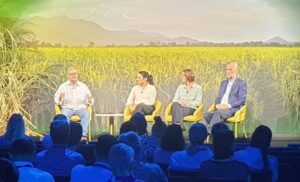
Join us for a discussion about Diamondback Moth (DBM), a significant pest of brassica, and what future options show promise for control of this species. In this webinar, we will explore the history of control options development for Codling Moth, a major pest of apples, assess lessons that can be applied to DBM in cole crops, and introduce novel practices and tools that show promise to growers.

Dr. Matt Grieshop, Director of the Grimm Family Center for Organic Production and Research and entomologist, will present on using Codling Moth control development as a model for DBM control, identifying the barriers and challenges with these species and the role of biological programs to address these pests.

Dr. Ian Grettenberger, Assistant Specialist in CE Entomology at the University of California Davis and entomologist, will present on novel solutions to address DBM and the latest research on biocontrol, farming practices and pest control product development.


Webinar Details:
Thursday, March 27, 2025
11:00 AM to 12:30 PM PT
Online via Zoom

Register Here

New Leader Nominated to Lead OSHA – What to Expect

February 27th, 2025

The Occupational Safety and Health Administration (OSHA) is set to undergo significant changes with the nomination of David Keeling as the new Assistant Secretary of Labor for OSHA. With years of technical expertise and practical understanding of workplace safety, Keeling is expected to receive support from both employers and labor groups  

Under Keeling’s leadership, these key changes are expected based on current federal administration transition trends:  

  • Reduction or Revocation of the ‘Union Walkaround Rule’: The controversial rule allowing third-party representatives, including union officials, to accompany OSHA inspections may be reduced or eliminated. 
  • Pull-back of Heat Illness Prevention Regulations: The current push for a nationwide heat safety standard will likely be paused or significantly revised, with the agency focusing on OSHA’s current “Water.Rest.Shade” program enforced through the General Duty Clause.  
  • Possible Revision of Electronic Injury Reporting Rules: The Biden-era expansion of electronic injury and illness data submission requirements is likely to be scaled back to reduce regulatory burdens. 
  • Ending to Public Data Releases: The practice of releasing comprehensive workplace injury and illness data to the public is expected to cease as a means of reducing public scrutiny of impacted businesses. 
  • Refocus on Inspection and Enforcement Priorities: A more streamlined approach to inspections is expected. A shift in priorities will likely see OSHA increasing its focus on high-risk industries, while reducing the focus on lower-risk sectors. 
  • Increase in State-Level Regulations: Potential rollbacks discussed above will likely result in an increase in state-specific safety programs, rules and regulations. 

What Does it Mean 

Although Keeling’s appointment is still pending Senate confirmation, employers should take proactive measures to prepare for any potential regulatory changes. It is essential to review safety programs to ensure they comply with current federal and state safety regulations. Additionally, training for managers and supervisors should focus on heat safety, injury prevention, and compliance best practices.  

It is also important to monitor regulatory updates to stay informed about OSHA policy changes and state-level initiatives. Additionally, auditing recordkeeping practices is essential for maintaining accurate records that can serve as a defense in legal matters and help manage liability. 

U.S. Court of Appeals Rules State Attorneys General May Challenge Pregnant Workers Fairness Act 

February 27th, 2025

Earlier this week, the U.S. Court of Appeals for the Eighth Circuit ruled that seventeen state attorneys general have standing to challenge the EEOC’s Final Rule interpreting the Pregnant Workers Fairness Act (PWFA).  

As the first federal court to rule on the issue, the Court found that the states have a judicial basis for challenging the Final Rule as they are the “object of the EEOC’s regulatory action.” The PWFA was enacted in 2023 as a means of providing employees and applicants with reasonable accommodations to known limitations related to, affected by, or arising out of “pregnancy, childbirth, or related medical conditions,” unless doing so would cause the employer undue hardship.  

The broad nature of the PWFA and its lack of specificity in defining “related medical conditions” opened the door to even broader EEOC interpretation and guidance. At the heart of the controversy is the fact that the EEOC’s Final Rule includes accommodation requirements for elective abortions, “prompted exclusively by the woman’s choice, where no ‘physical or mental condition related to, affected by, or arising out of pregnancy, childbirth, or related medical conditions…’ exists, but where getting the abortion creates some limitations on the employee’s ability to do her job.” This in turn led several states to challenge the EEOC’s rulemaking authority.   

With the issue of standing resolved, the states will continue to move their case forward.  

No More Headless Horsemen: Court Reins in “headless” PAGA Strategy

February 27th, 2025

In the recent decision, Leeper v. Shipt, Inc., et al., (Leeper), the California Court of Appeal reversed a lower court’s order denying the employer’s motion to compel arbitration in a case brought under the Private Attorneys General Act (PAGA). The case involved allegations that Shipt and its parent company Target, misclassified workers as independent contractors, violating multiple provisions of the California Labor Code.  

In this case, the plaintiff, Christina Leeper, attempted to file a PAGA action without including an individual claim, instead focusing solely on the representative aspect of her PAGA lawsuit (a ‘headless’ PAGA action). Leeper intended to represent other aggrieved employees in seeking penalties for alleged labor code violations by her former employer. However, this approach was unsuccessful, providing the Court of Appeal with an opportunity to clarify that every PAGA action inherently includes an individual PAGA claim. This ruling indicates that even if the plaintiff’s primary intention is to represent other employees, there must still be an individual claim subject to arbitration. Consequently, the Court of Appeal directed the lower court to compel arbitration of the individual PAGA claim and stay the representative PAGA claim portion of the lawsuit pending the outcome of the arbitration.  

What Does it Mean 

Overall, the Leeper Court’s ruling underscores the necessity for employers to be proactive in their legal strategies and compliance efforts to navigate the complexities of PAGA litigation and arbitration effectively. A few key takeaways are set out below: 

  • Clarification of Individual/Representative Claims. The ruling clarifies that every PAGA action must include an individual PAGA claim. This means that even if a plaintiff aims to represent other employees in a PAGA lawsuit, they must still have an individual claim that can be arbitrated. 
  • Right to Compel Arbitration: Assuming the existence of a valid arbitration agreement, employers have the right to compel arbitration of individual PAGA claims, which can potentially stay the representative PAGA claims until the arbitration is resolved. This can be advantageous for employers as it may limit the scope and immediate impact of the lawsuit. 

To assist in mitigating the risks posed by PAGA actions, employers should:  

  • Review and revise their arbitration agreements to ensure they include clear provisions for arbitrating individual PAGA claims.  
  • Recognize that PAGA actions inherently include individual claims and develop robust arbitration agreements that can withstand legal scrutiny.  
  • Regularly review and update employment policies and practices to ensure compliance with the California Labor Code and mitigate the risk of PAGA claims; and  
  • Carefully evaluate worker classifications to avoid disputes related to misclassification. 

WG Celebrates Grand Opening of New Cedar Health Center in Oxnard

February 26th, 2025

On Feb. 18, 2025, Western Growers marked a major milestone with the grand opening and ribbon-cutting ceremony of Cedar Health Center, its premier flagship clinic designed exclusively for Western Growers Assurance Trust (WGAT) and Pinnacle Claims Management members.

This state-of-the-art facility in Oxnard, California, represents a significant advancement in providing accessible, high-quality healthcare tailored to the unique needs of agricultural workers. With a fully bilingual staff, zero-dollar copays, on-site pharmacy and convenient hours, the clinic ensures comprehensive and convenient healthcare for the community.

The grand opening showcased inspiring keynote speeches from Western Growers COO Steve Mangapit, Cedar Health Center Medical Director Dr. Raymond Lopez and Oxnard Mayor Luis McArthur.

The following distinguished guests also joined in celebration and showed their support:

· Gabe Teran, Mayor Pro Tem of Oxnard

· Armando Gonzalez, District Representative for Congresswoman Julia Brownley

· Patty Quiroz, District Director for California Assembly member Steve Bennett

· Angelica Cisneros, District Representative for California State Senator Monique Limon

· Korinne Bell, Agricultural Commissioner for the County of Ventura

· Tracy Gallaher, on behalf of Ventura County Supervisor Vianey Lopez

· Selfa Saucedo of Ventura County Public Health

· Kyle Jewell of West Ventura County Business Alliance

To read more about Cedar Health Center, visit https://cedar-centers.com/.

Register for Upcoming Invasive Fruit Fly Virtual Meeting on March 5

February 26th, 2025

The California Department of Food and Agriculture (CDFA), in collaboration with the U.S. Department of Agriculture (USDA) and local County Agricultural Commissioners, will be hosting a virtual industry meeting on March 5 from 3 p.m. to 4:30 p.m. to provide the latest updates on invasive fruit fly populations in California.

Participants will hear directly from CDFA officials about the latest invasive fruit fly activities across California, including updates on quarantine areas and recent detections. Active quarantines currently include a Mediterranean fruit fly quarantine in Alameda County and an Oriental fruit fly quarantine in Orange County.

Registration is required. To RSVP, click here.

Ben Etcheverry, President of New Mexico Chile Association, Testifies before Senate Ag Committee

February 26th, 2025

photo Courtesy of CSPAN

Ben Etcheverry, President of the New Mexico Chile Association and Western Growers member, testified before the Senate Committee on Agriculture, Nutrition and Forestry during a hearing on “Perspectives From the Field: Farmer and Rancher Views on the Agricultural Economy.” Etcheverry underscored labor shortages, increasing costs and unfair trade practices putting domestic chile growers at a disadvantage and urged Congress to ensure U.S. farmers can compete on a level playing field while continuing to provide high-quality, sustainable food. His full testimony is shared below and can also be viewed here.

Senate Committee on Agriculture, Nutrition and Forestry

Perspectives From the Field: Farmer and Rancher Views on the Agricultural Economy

February 26, 2025, 10:30 a.m.

Introduction

Thank you, Chairman Boozman, Ranking Member Klobuchar, and members of the Committee.

I am Ben Etcheverry from Deming, New Mexico where I am the operations manager of one of the largest chile processing facilities in the United States, producing over 1,000 different dried and crushed chile products as well as dozens of salsas and pastes.  I also am incredibly proud to represent the “Chile Capital of the World” as President of the New Mexico Chile Association.

Our members truly do grow the best chiles in the country and some of our family-owned companies have been doing so since before New Mexico was a state or even a U.S. territory. Senator Lujan – who I want to acknowledge – has been out to many of our members’ farms and seen chiles grown and harvested, often in rotation with onions. melons or other produce crops. Our harvest festivals and chile roastings are world renowned, and I invite all of you to come to New Mexico to enjoy what we love to grow.

Immigration and Employment

Currently, there is much focus on immigration in America, and in proximity to that, our U.S. agriculture system. It’s good to be noticed, but these circumstances are less than favorable. Fresh produce in this country is predominately hand harvested – especially produce intended for direct consumer consumption. As such we have a tremendous need for the human touch and hard work that comes with planting, growing, and harvesting our products.

And when I say “hard work”, Senators, I mean it. If any of you spend even one day with the men and women working in our industry, you will be astonished at the skill and diligence it takes. As our economy has developed, new sectors of employment have opened up with many people pursuing non-farming work that is certainly less difficult. As a result, the produce sector has seen a net loss of employees over the years.  With this challenge, we have become more reliant upon the H-2A program to shore up the gap in agriculture employment as we diligently pursue automation and mechanization improvements in agriculture. As you may know Senators, unlike large acreage program crops, we do not have reliable or accessible technological options for produce, most especially fresh produce for direct consumer consumption. Consumers demand perfect peppers at the grocery store, so any machine harvesting them cannot leave peppers blemished. The New Mexico Chile Association, in partnership with New Mexico State University (NMSU) and the U.S. Department of Agriculture (USDA), has spent a lot of time trying to develop automation solutions for our industry. The de-stemming step for chiles remains especially elusive to successfully mechanize. This work needs to continue and expand until we solve the challenge for chiles as well as other produce crops. With the number of domestic workers declining, we need to supplement our workforce. We would prefer to develop higher paying jobs in our communities where young people stay in rural areas and are trained to program, repair, and maintain new machines. If we had automation solutions, we could also redeploy the domestic workers we do have to other tasks, and we wouldn’t have to rely on foreign workers via the H-2A program.

While this Committee does not have jurisdiction over immigration, I do want to share a few words on this topic. First, the H-2A program as we know it is broken and must be fixed. The program is expensive, loaded with numerous costs like housing, and the paperwork involved is often torturous. The program relies on three separate government agencies and accessing workers is not only expensive but time consuming. Frankly, if we had the domestic labor available, we wouldn’t use H-2A; but with domestic workers in short supply we often have no choice.

Second, I want to talk about the need for a functioning and fair immigration system, and the ability to bring the best and brightest who would make great Americans. One of the leaders in my farming community came to the United States as part of the Bracero Program in the late 1940s. He quickly became an invaluable employee on the farm and applied for citizenship with the help of the farmer that trusted him. After gaining citizenship he began his own farm in New Mexico, grew both his enterprise and his family to the point where it was passed down to a second and third generation. He was the best and the brightest. My home county, the state, and nation benefitted from him becoming an American citizen. I’m from Southern New Mexico and see the border often; there is a middle ground that can be reached, and it’s my hope this Committee can use its influence to elevate the need for ag labor reform.

Domestic Pricing and Trade

Trade and tariff policy are burning issues that are driving conversation lately, and our growers have directly experienced this issue up for years. The domestic red chile production in the southwest in particular has significantly shrunk year over year. This is largely due to Chinese-made paprika being shipped to Spain, repackaged as Spanish paprika, then shipped to the U.S. with a landed cost 10-15% below a domestic grower’s on-farm price, which still doesn’t include the costs of dehydration and packaging. We have the quality and ability to produce required yields here in America, but we do not have a fair market due to circumvention of international policies and trade procedures. As another example, Mexico enjoys the luxury of exporting produce into U.S. markets with little or no restrictions on entry, but Mexico in turn has a bureaucratic wall and protectionist attitude that discourage U.S. produce farmers entering the Mexican markets. Those in agribusiness understand that we are competitors in a global market. We just want to compete in a market where there is an even chance of success. This Committee has a role in helping the Administration understand that if we are giving fair market access to others, we expect fair market access in return.

It is also critical that imported foods are complying with the same rules that domestic production is. Americans have standards that they demand of their food, as well they should. Organic, sustainable, pesticide Free, fair wages, and any of the numerous standards that are asked for by the consumer. As a domestic specialty crop organization, we are willing to respond to such demands, yet the consumer has access to foreign-grown food that often lacks many of the safeguards and standards that we apply to our own agricultural sector.   Price often dictates consumer decisions, and we are legislating higher domestic costs yet allowing lesser standards to be acceptable for imports.  This Committee has a role to ensure imports are abiding by the same rules as domestic growers.

Federal Grants and the Government’s Role in Agriculture

I want to spend a little time talking about the “ties that bind” the consumer, the producer, and governmental policies. A short list of departments that I interact with everyday are the New Mexico Department of Agriculture (NMDA) marketing, international trade experts, crop scientists at all levels, biologists, transportation experts, food safety experts, geneticists and engineers. They and many more don’t get the recognition they deserve. All these positions and their work are made possible by federal and state investments, which are critical to helping farmers deliver the food that end up on American plates. Some might view these types of programs as government waste. However, these policies and programs have helped us stave off wars, would-be famines, economically trying times and set the standard on which the modern agricultural model in the world was created. Simply put, this interconnected system has over the last century fueled an economic boom in agriculture that will go down in history as one of the greatest leaps forward of mankind.

Senators, in the next Farm Bill you have the opportunity to build on this historic legacy and help American producers for the next century. I already discussed the need to have federal funding fuel innovation in automation, but I want to highlight three additional areas of necessary improvement, among many. First, the Specialty Crop Block Grant is incredibly valuable and has helped growers gain access to marketing materials for increased consumer education. As Senator Lujan knows, we have a wonderful New Mexico Chile Program that certifies our products so they stand out from copycat imports and earn premium prices for our growers. Second, the availability of water – especially in the desert producing regions – is becoming less consistent and reliable. This is already pitting the interests of municipal users and agricultural production against each other. As a result, it’s critically important that conservation programs like the Environmental Quality Incentives Program (EQIP) be bolstered to help growers tap federal matching money and switch to more efficient irrigation systems. Our growers are proud to be ecological stewards of critical resources like water, and with working lands programs we can do even more.  Finally, I want to share some thoughts about crop insurance. Crop insurance programs that protect our specialty crops are needed as much as they are for row crops. However, unlike row crops specialty crops have less support, higher risk, and unfortunately a weaker risk mitigation system to rely on. Right now, our industry relies on an outdated crop insurance program that USDA helped set up in the 1980s called a ‘dollar plan.’ This program needs to be modernized to account for current market conditions. Indeed, the New Mexico Chile Association worked with NMSU and USDA to attempt that some years ago, but the effort was incredibly difficult and frustrating. Why? Because the data collection requirements needed to develop a new policy were so high. USDA doesn’t really have publicly available data on our industry. As a result, we worked to collect data one by one from all the growers in the state. This was incredibly time consuming and ultimately not fruitful.  As every Senator here knows when you call a farmer and say “I’m with the government and I’m here to help” you don’t always get a warm welcome. This Committee must make crop insurance more user friendly for our industry.

Closing

The Farm Bill is an important piece of legislation that tackles some of the most complex problems in America, and they all land directly in front of us in the form of a salad on a plate or green chiles on a cheeseburger – which, if you haven’t tried it, you’re missing out. I implore this Congress to set aside partisan differences and ensure farmers have the support to continue provide enough food to eat, and enough food to make sure our next-door neighbor does not go without. Thank you again for this opportunity and I look forward to your questions.

 

Western Growers at EvokeAG 2025 

February 25th, 2025


Dennis Donohue and Jeana Cadby from Western Growers joined Wharf42 last week and 2,000 other delegates at evokeAG 2025 in Brisbane, Australia

Dennis Donohue and Jeana Cadby from Western Growers joined Wharf42 last week and 2,000 other delegates at evokeAG 2025 in Brisbane, Australia. Photo credit: Wharf42.

This month, Jeana Cadby, Environment and Climate Director at Western Growers, participated on a panel at EvokeAG 2025 in Brisbane, Australia. As Australia’s largest agrifoodtech event, EvokeAG brought together global leaders to discuss cutting-edge agricultural innovations, with biologicals taking center stage. 

During the panel, Jeana discussed Western Growers work on biologicals, emphasizing the importance of grower-led innovation and engagement in driving meaningful progress for novel solutions. 


On stage at the Platform10 Biologicals breakout session with Jeana Cadby (Western Growers), Louise Thatcher (CSIRO) and Adrian Percy (North Carolina Plant Sciences Initiative (N.C. PSI). Photo credit: Wharf42.

Growers must be at the heart of agricultural advancements to develop opportunities for new efficiencies, productivity and climate resilience amid rising pest resistance and emerging disease challenges. 

Biostimulants were identified as a promising tool for increasing crop resilience against extreme weather conditions driven by climate change. However, clearly defining success metrics and ensuring efficacy through quality data remain essential. 

By placing farmers in the center of the conversation, innovations are practical, effective and yield true benefits. Bridging the gap between theory and practice paves the way for a more resilient and sustainable agricultural future. 

CDFA Farm to Community Food Hubs Grant Resources

February 25th, 2025

The California Department of Food & Agriculture (CDFA) hosted an information session this past February 19, 2025 on its Farm to Community Food Hubs Grant.  You can access a copy of the recording here. You can also view the slide deck here.

CDFA is also hosting several Farm to Community Food Hubs Grant virtual Application Office Hours sessions planned in Feb – April.

Times and registration links are below:

Data 101: Is your data dirty?

February 25th, 2025

In today’s data-driven world, analyzing and learning from data is essential for effective decision-making. However, one of the biggest challenges in data analysis is how the data is organized. Poorly structured or unclean data makes analysis difficult, requiring significant time, effort and expertise to clean and format it for meaningful insights. The cleaner your data is from the start, the less work is needed on the back end. Investing just one hour in organizing your data collection upfront can save you an entire day of data cleaning later—making early planning a crucial step in any data-driven project. 

What is clean data? 

Clean data refers to datasets that are structured and formatted correctly, and free of errors and inconsistencies (or at least they try to minimize them). Clean data is a lot more useful for analysis and decision-making as it eliminates anomalies and sets the data in the correct format for analysis without the need for data cleaning.  

So why should you care about clean data? 
  • Time – clean data saves you time by reducing the need for data cleaning 
  • Barrier of entry to analysis – the cleaner your data the easier it is to analyze it, meaning that you do not need an expert data engineer to clean your data.  
  • Allows you to notice inconsistencies and reduce errors – data in a clean format will allow you to notice inconsistencies quicker and, at the same time, reduce entry errors.  

Data Structure 

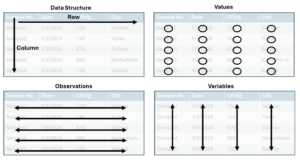
The first concept of clean data is data structure. Datasets are often tables made from columns (top to bottom) and rows (left to right) Within a dataset, we will have three main components, described below and illustrated in Figure 1.  

  • Value: the specific data point recorded for a variable in an observation. It represents the actual measurement or attribute associated with an entity.  
  • Observations: is a single instance or record in a dataset, it contains values for each variable in the dataset. Observations represent the actual data collected from a unique entity or event.  
  • In produce testing, an observation would be an individual sample. 
  • Variables: is a characteristic, property or attribute that is measured or recorded in the dataset. Variables define what kind of information is being collected and can take on different values across observations. 
  • Examples of variables include date, result (numeric or categorical), temperature, location, etc.) 

Now that we have a clear understanding of values, observations and variables, we can focus on how to structure them properly in a clean dataset: 

  • Rows represent observations – Each row corresponds to a single record or instance in the dataset. 
  • Columns represent variables – Each column contains a specific characteristic or attribute measured across all observations. 

Figure 1: Data structure of clean data 

Figure 1 Data structure of clean data

Values: best practices to minimize errors and inconsistencies 

Now that we know how to structure our dataset in a clean format.  We need to think about our individual values. If the values within the dataset are messy, it does not matter if we have a good structure, the data will be nearly impossible to analyze without some data-cleaning magic.  

Below we have identified some best practices for you to minimize errors and avoid inconsistencies in your data for different data types:  

Categorical Data: 

Definition: Represent discrete groups or categories that classify observation without any inherent numerical meaning. These can be names, labels or predefined groups.  

Examples: city names, results (positive and negative), county, water type (Type A, or Type B).  

  • Standardize categories: Use predefined lists or dropdown menus to avoid inconsistencies.  
  • e.g., to avoid situations like “CA” vs. “California” vs. “Cali”. 
  • Avoid free text input: Use controlled vocabularies or predefined options from a dropdown menu. 
  • Be case-insensitive: Convert all values to lowercase or uppercase to prevent mismatches 
  • e.g., “SALINAS” vs. “Salinas”. 
  • Handle missing values appropriately: Use a designated “Unknown” or “N/A” category instead of leaving blanks. 
Numerical Data:

Definition: Numerical data represents measurable quantities and can be used in mathematical calculations.  

Examples: Results (CFU/g or MPN/100 mL), Temperature, Distance, Precipitation amount.  

  • Ensure numerical consistency: Store numbers in a standardized format and units 
  • Temperature in Fahrenheit or Celsius (use one only) or Distance in meters vs inches.  
  • Define numerical validation rules 
  • Microbiological quantitative results cannot be negative 
  • Avoid leading zeros for integers: Example: “007” should be “7” unless it’s an identifier (which would make it a categorical variable). 
Date and Time Data: 

Definitions: Date and time data records temporal information such as timestamps, event dates and durations. It is used for time-based analysis, scheduling and trend detection. 

Example: Sample collection date.  

  • Use a standard date format 
  • 2025-02-20 vs 02/20/2025 
  • Time: Ensure consistent time format and avoid mixing 12-hour (AM/PM) and 24-hour formats. 
Boolean Data:

Definitions: Boolean data represents binary values that indicate the presence or absence of a condition. It is often used in logical operations and decision-making processes. 

Examples: True/False, Yes/No, 1/0 

  • Use a consistent format: Stick to one representation (TRUE/FALSE, YES/NO, or 1/0 but not a mix). 
Free Text:

Definition: Free-text fields contain unstructured text data where users can enter information freely. This type of data is used for comments, descriptions, and open-ended responses. 

  •  Limit text input length: Prevent excessive text  
  • Standardize capitalization: Use proper case for names, and cities (e.g., “Salinas” vs “salinas”). 
  • Remove unnecessary spaces: Trim leading and trailing spaces. 

Examples of a well-structured dataset vs a not well-structured dataset 

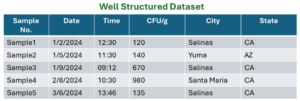
Well Structured Dataset:

Well-structured Dataset

  • Each row represents a unique observation (Sample). 
  • Each column represents a single variable (Date, time, CFU/g, City, State) 
  • Data is formatted consistently (numbers, text and categorical values are in proper fields). 
  • No duplicate or missing values. 


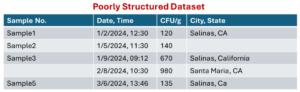
Poorly Structured Dataset:

Poorly structured Dataset

  • Inconsistent formatting – “Date, Time” and “City, State” are combined in one column instead of separate ones. 
  • Missing values – Sample 4 is blank. 
  • Inconsistent text formatting – “California” vs. “CA” vs. “CA” (mixed formats for state). 


Issues and Solutions: 

Problem Data

  • Multiple Variables in One Row – Each row contains multiple samples instead of following a tidy format where each row should represent a single observation. 
  • Repeating Column Headers (Sample, CFU/g) – The same column names (Sample, CFU/g) are repeated, making the dataset harder to analyze systematically. 
  • Inconsistent Data Alignment – Some data points (e.g., “Sample 3”) do not have corresponding values for CFU/g. 
  • Negative CFU/g Value – The value -10 under CFU/g is not valid because colony-forming units (CFU) should always be non-negative. 

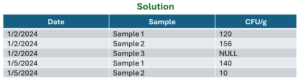
Solution Data

  • Each row represents a single observation (i.e., one date-sample-CFU/g entry). 
  • No repeated column names – Each variable has its own distinct column. 
  • Eliminates missing/ambiguous values – If a sample has no CFU/g, it is explicitly recorded as NULL. 
  • Data validation enforced – CFU/g values are checked to be non-negative. 


Submit Comments for Monarch Butterfly ESA Proposal Impacts on Farming

February 24th, 2025

The U.S. Fish and Wildlife Service (USFWS) released a proposal in December 2024 to list the iconic monarch butterfly as “threatened” under the Endangered Species Act (ESA). Read more about the proposed listing here.

Input from the agricultural community on this proposal is critical for growers who farm within migratory regions and may be put at risk for repercussions from ‘take’ of this species. Growers and farming organizations are highly encouraged to submit comments, particularly on the potential implications carrying out agricultural practices necessary for farming, pesticide use and protecting the establishment and maintenance of pollinator habitat on farm.

USFWS is reopening the public comment period for 60 days, starting on March 19, 2025, and will close May 19, 2025. Comments that were previously submitted do not need to be resubmitted as they are already incorporated into the public record and will be fully considered in the final listing determination.  The comments are in response to this proposal: https://www.regulations.gov/document/FWS-R3-ES-2024-0137-0001

You may upload or type in comments by clicking “comment” in the top left corner, or submit comments here.

The most helpful submissions will include scientifically sound, well-cited factual responses that address support, concerns, and impacts on agriculture. Note that if you submit information via https://www.regulations.gov, your entire submission—including any personal identifying information—will be posted on the website.

A letter template developed by Western Growers for comments is below. Please use this template as your organization sees fit. Western Growers will also be submitting extended comments and can provide additional key points if needed. Please contact Jeana Cadby, Environment and Climate Director, at ([email protected]) for questions regarding submission or for input on additional, detailed points that can be included in your organization’s comment letters.

—————————————–

To:

U.S. Fish and Wildlife Service

PRB/3W, 5275 Leesburg Pike

Falls Church, VA 22041-3803

RE: Federal Register docket number FWS-R3-ES-2024-0137

[Organization Name] appreciates this opportunity to comment on the U.S. Fish and Wildlife’s proposal to list the monarch butterfly as threatened under the Endangered Species Act (Docket No. FWS-R3-ES-2024-0137).

[Describe organization here. For example, Western Growers is a non-profit agricultural trade association that represents farmers growing fresh produce in Arizona, California, Colorado and New Mexico. Our members and their workers provide over half the nation’s fresh fruits, vegetables and tree nuts, including nearly half of America’s fresh organic produce. OR Acme Farms has been growing broccoli and romaine hearts for 15 years in Santa Maria, California, and has been maintaining pollinator habitat on all of our farms for the past 10 years.]

We commend the Service for taking this important step to protect and foster recovery of the monarch butterfly under the Endangered Species Act. We would like to express our support for the listing of the monarch butterfly as a threatened species and the proposed designation of its critical habitat based on both the observed number of monarch butterflies and the recurring seasonal colonization at overwintering sites along the California coast. We also support the exemptions outlined in the Proposed 4(d) Rule, which include, among others, (1) routine agricultural activities and (2) the establishment, restoration, and management of milkweed and nectar habitats

The Service’s proposed exemptions allow for the continued participation in conservation programs as well as routine agricultural activities, such as cultivation and land management. These exemptions ensure working lands remain a vital part of the solution by providing essential habitat for monarchs to feed and reproduce.

As stated in the draft listing proposal, “Private landowner and general public support are crucial because the species is wide-ranging and needs broad conservation action, from small- to large-scale efforts, throughout [the monarch’s] range.” We are eager to collaborate with USFWS to ensure that growers who are conserving pollinator habitat do not fear repercussions and are not forced to remove existing habitat they foster on farm. For the reason that agriculture can provide key resources to support monarch conservation, it is critical that the Service allows farmers to use the necessary tools and practices they need to provide the freshest, safest, and most affordable produce to feed the world. There are several key areas we have summarized below, namely Critical Habitat, Pesticide Use Considerations, and Ag Land and Ag Practices.

Critical Habitat

Regarding the Critical Habitat designation outlined in the Proposed Rule, we support the identification and protection of overwintering sites and believe that farmers’ participation is essential due to the large area of farmland in proximity to its migratory pathways.

The criteria used to identify the selected overwintering sites as critical habitat is reasonable. Regarding the critical habitat designation, we are in agreement that the best available scientific data must be utilized to support the migratory monarch’s critical habitat designation. Further, we agree that there is insufficient jurisdictional authority and data to justify expanding the critical habitat designation to include breeding and migratory areas outside of the overwintering habitat, which are subject to change due to climate change as stated in proposal. We also concur with the Proposed Rule that nonmigratory habitats should be excluded from the critical habitat designation, as “this kind of habitat in North America is broad and spatially diffuse”.

Further, exemptions in the Proposed Rule are crucial to avoid unintended consequences that could discourage the creation and maintenance of monarch habitats. To effectively promote the creation of monarch habitat nationwide, we suggest the inclusion of the statement that (1) farmers’ participation is essential due to the large area of farmland in proximity to its migratory pathways, and that (2) there must not be the threat of harsh penalties under the Endangered Species Act for this voluntary goodwill.

Pesticide Use Considerations

The Service requested feedback on incorporating pesticide considerations in the Proposed Rule and we respectfully request that pesticides applied in accordance with their Environmental Protection Agency (EPA) approved labels be included under the routine agricultural activities’ exemption and guidance from the vast knowledgebase of localized institutions and extension networks for pesticide use best practices rather than creating new regulations via the Proposed Rule. Additionally, we support an exemption for pesticide use under the 4(d) rule.

Particularly for the western region, the California Department of Pesticide Regulation (DPR) is highly restrictive in terms of allowable pesticides and application methods, more restrictive than any other U.S. state. According to the California DPR’s most recent annual Pesticide Use Report, reported pesticide use in California declined by more than 5% between 2021 and 2022, reflecting a longer-term trend. Guidance and resources to reduce pesticide use and drift for farmers via DPR, EPA, and the University of California Agriculture and Natural Resources (UCANR) to reduce pesticide drift are highly recommended localized and well-researched guidance for pesticide use management, rather than new guidance created via the Proposed Rule.

Further, the EPA, which has the authority to register pesticides, has initiated a comprehensive, long-term approach to identify and implement mitigation measures for pesticides that affect listed species. Existing projects and strategies currently in place (or in the process of being created) under EPA “Workplan to Protect Endangered and Threatened Species from Pesticides” fully outline mitigations to protect listed species under FIFRA, allowing EPA to meet its ESA obligations. These EPA strategies are put in place to limit adverse impacts on the environment and protected species. Through current rigorous scientific evaluation, the FIFRA registration standard requires the EPA adequately manages risk(s) to non-target species through pesticide labels. These protections are the basis for our support for an exemption under the 4(d) for pesticide use, according to label instructions, exempting incidental take. Introducing additional regulations would lead to dual authorities and likely cause confusion leading to non-compliance due to misunderstanding.

Ag land and ag practices

Finally, we generally support and agree with the incidental take exemptions associated with “Routine agricultural activities…[on] lands already in use for agricultural production” under the “Activities that may maintain, enhance, remove or establish milkweed and nectar plants within the breeding and migratory range that do not result in conversion of native or naturalized grassland, shrubland, or forested habitats” in the 4(d) rule. It is critical that “routine agriculture” as described in the Proposed Rule includes necessary tools and practices to continue to produce fresh produce for the United States and beyond.

We are proud to work with the Service to collaborate and contribute to conservation of the iconic monarch butterfly. Our growers have demonstrated that agriculture and pollinator conservation work hand in hand, and we are grateful for the U.S. Fish and Wildlife Service support of the agriculture industry. We look forward to continuing our work together as we develop and implement positive solutions to meet our shared goal — thriving pollinator conservation and feeding the world.

Thank you for the opportunity to provide these comments.

Sincerely,

[Name]
[Title]


Salmonella in the Fresh Produce Industry

February 25th, 2025
Understanding Salmonella 

In our first installment of “Meet the Pathogens” we focused on Listeria species. A genus of bacteria that frequently challenge the food industry with their ubiquitous nature (found almost everywhere) and capacity to grow in wet cold environments common in the food industry. While Listeria is often spoken about in the context of wet processing plants (though, it survives perfectly well in dry warm environments too), Salmonella is conversely spoken about regarding their capacity to survive in dry processing plants and hot conditions. Dry processing plants (plants that don’t use water for processing/cleaning) and warmer, if not hot, temperature conditions, are no deterrent to Salmonella and it can survive in these conditions for years.   

Microorganisms are masters of survival and can/will adapt to meet the challenges of their environments. There are many strategies they can apply to persist in the environment, including comprehensive physiologic structure changes that allow Salmonella to stay functional in extreme conditions. For example, Salmonella can modify their cell membranes to remain more fluid at cold temperatures (increased unsaturated fatty acid composition), change protein structures to function at different temperatures (cold shock and heat shock proteins), and activate stress responses to deal with antimicrobials/sanitizers (efflux pumps, membrane modifications, biofilm). If conditions are particularly harsh, Salmonella can even enter a dormant/persister state to enhance survival and ensure the best opportunity to thrive once better conditions come upon them. These dormant/persister states vary based on the stress the cells are encountering, and these reversible physiologic states allow the cells to persist at a reduced metabolic state for protection – staying alive by not actively growing and then reemerging into vibrant states once the stress conditions change.   

Understanding Salmonella is the first step in being able to effectively predict how to manage it when producing food products. As we take a closer look into Salmonella in produce growing and processing, it is important to remember that bacteria in general are masters in survival and have existed much longer on this planet than humans have. In fact, bacteria’s believed origin is 3.5-4 billion years ago while humans are traced back only 6-7 million years ago (500-700 times older than humans). As a result, bacteria have had the advantage of time to figure out how to optimize survival and how to thrive in variable conditions and environments. 

Conditioned for survival 

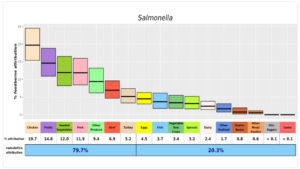
In the food industry, Salmonella is one of the most common pathogens contributing to foodborne illness. Annually, the estimated salmonellosis cases are 1.35 million in the United States, contributing to an estimated 26,500 hospitalizations and 420 deaths. Globally, the numbers are much larger with over 93.8 million cases leading to 155,000 deaths. Within the United States, the Interagency Food Safety Analytics Collaboration calculates the salmonellosis attribution estimates for fruits, seeded vegetables, other produce, and vegetable row crop at 39.4% of all salmonellosis cases in the US per year (Figure 1).  

Graph from the Interagency Food Safety Analytics Collaboration (IFSAC) Foodborne Illness Source Attribution Estimates

Figure 1: Graph from the Interagency Food Safety Analytics Collaboration (IFSAC) Foodborne Illness Source Attribution Estimates – United States, 2022 report found here. Accessed online February 19, 2025.

How does one microbe cause such a large impact? Salmonella has numerous biological strategies for survival, allowing for their successful persistence in the food system. First, they have the capacity to evolve and quickly replicate, with doubling times for many types of Salmonella being only 20-30 min at 35-37C. The capacity to rapidly double means that one cell can turn into one million cells in just over 6.5 hours at ideal temperatures. Rapid replication not only increases their numbers, but in food production, also increases the likelihood of an infectious dose making it into a serving of food (10-100 cells for higher-risk consumers, higher doses for healthier individuals). With growth comes ample opportunities for the cell to mutate as well (either on purpose or accidentally), modifying biological function and capabilities to exploit the environmental conditions it finds itself within. In the following sections some key characteristics about Salmonella are discussed so that the produce industry can better evaluate processes and facilities to control the risk from Salmonella 

Who is Salmonella? 

Salmonella is a gram-negative, motile (flagella), and non-spore forming bacteria in the family Enterobacteriaceae, and with two species, Salmonella enterica and Salmonella bongori. Despite only two species, there are six subspecies of enterica with over 2,600 serotypes. Serotypes/serovars are additional means of differentiating Salmonella (and other bacteria) based on differences in antigens (substance that elicits an immune response) found on the surface of the cell. Unlike Salmonella enterica, Salmonella bongori is most often associated with reptiles and usually not associated with human illness. For foodborne illness, Salmonella enterica is the most common culprit and subsp. Enteritidis, Typhimurium, Newport, Heidelberg, Javiana and Montevideo are common serovars that contribute to foodborne illness. Salmonella enterica subsp. Typhi and Paratyphi cause typhoid fever and paratyphoid fever, respectively, and are not often associated with food contamination but contaminated water instead. 

Salmonella enterica and its 2,600+ serotypes have several characteristics that provide the organism an advantage over other microorganisms within environmental and food production scenarios.  

  • Successful at a broad temperature range: Salmonella enterica is an enteric bacterium living and associated with the intestines of animals and humans. While Salmonella loves to live within the intestine of animals, it is also able to live in the environment such as in ponds, soils, etc. It can survive and grow at a wide range of temperatures, from 5°C all the way to 47°C (or 41°F to 116°F). The speed of growth at those temperatures varies, with the slowest rate of growth being at cold temperatures, and optimal growth temperatures at 35-37°C (95–98.6°F). Unlike Listeria that can grow at cold temperatures, Salmonella will not grow, but it survives for weeks and months at cold temperatures. Salmonella is also particularly heat tolerant, growing well at the hot end of the temperature range as well.  
  • Conditioned for survival: Salmonella has a multitude of stress responses that allow the cells to survive challenging environments. One response is to enter into a dormant state called a persister or Viable But Not Culturable (VBNC) state. The persister state is a physiologic response and leads to cells that are metabolically active but not growing/replicating and therefore less susceptible to threats. These cells are able to revert into actively growing cells as conditions change and the stresses are removed. Salmonella’s toolbox for physiologic modification and adaption allows the cells to survive particularly challenged conditions such as low water activity, temperature and pH (4-9).   
  • Salmonella can live in many, if not most, agricultural and food processing environments: Salmonella is a very common organism in the food system and environment. As such environmental monitoring programs should assess the likelihood of Salmonella being introduced into production areas/fields. Studies have also shown that Salmonella in the environment is impacted by rainfall patterns, increasing temperatures and climate change. 

Salmonella in Fresh Produce 

In fresh produce environments, Salmonella is a common inhabitant. While Salmonella is often spoken about and discussed as coming from the intestines of animals and humans, it is also able to survive in other natural environments like soil and water. Salmonella can move throughout the environment through animal vectors, wind, water, rain, dust, etc. As such, the presence of Salmonella in produce or agricultural environments does not mean direct fecal contamination occurred since Salmonella can naturally reside in numerous ecological niches and move via many means throughout the ecosystem. As examples of the environmental prevalence, two relevant produce environmental studies are briefly discussed below. One study regarding Salmonella in the Salinas Valley, a predominant leafy green growing in the United States, and another study regarding the Eastern Shore of Virgina, a major agricultural area in Virginia.   

Example 1: Salinas Valley Watershed 

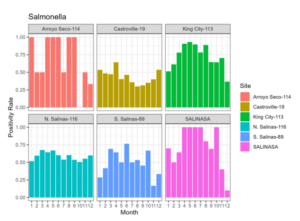
A 2011-2013 longitudinal study of the Salinas Valley Watershed included bi-monthly water samples (Moore swabs w/ 24hr exposure) in 30 locations up and down the valley. The Salinas Valley Watershed water was testing, not irrigation water from wells (the most common agricultural source of water in the valley). This study helped provide insight into how common Salmonella, shiga-toxin producing E.coli, generic E.coli, and Listeria monocytogenes are in this agricultural area. This study found very high positive rates within the six watershed sampling sites in the Salinas Valley – with Salmonella nearly always present in most water sources, and sometimes up to 100% of the time.  

Graph recreated from data from Prevalence of shiga toxin producing E.coli, Salmonella enterica, and Listeria monocytogenes at public access watershed sites in a California Central Coast agricultural region.

Figure 2: Graph recreated from data from Prevalence of shiga toxin producing E.coli, Salmonella enterica, and Listeria monocytogenes at public access watershed sites in a California Central Coast agricultural region. Front. Cell. Infect. Microbiol., 03 March 2014. The positivity rate is displayed to show Salmonella prevalence (positive rate) by month at six sampling locations during 2011-2013.

Example 2: Eastern Shore of Virginia 

The Eastern Shore of Virginia is an agricultural area in Virginia that has historically grown crops such as tomatoes and has been associated with some Salmonella outbreaks. In 2014 and 2015 researchers set out to better understand the prevalence of Salmonella in agricultural settings and the broader environment by taking weekly from pond and well water used in irrigation in the area and sampling environmental water sources (non-agricultural water from creeks and the Chesapeake Bay) in the area.  

The study found the prevalence of Salmonella below:  

Table 1 Recreated with data from Diversity and Dynamics of Salmonella enterica in Water Sources, Poultry Litters, and Field Soils Amended With Poultry Litter in a Major Agricultural Area of Virginia.

Table 1: Recreated with data from Diversity and Dynamics of Salmonella enterica in Water Sources, Poultry Litters, and Field Soils Amended With Poultry Litter in a Major Agricultural Area of Virginia. Front. Microbiol., 16 December 2019.

Environmental Prevalence of Salmonella 

Both research studies provided are just two examples of many that have been completed over the past decades on Salmonella prevalence in agricultural and non-agricultural environments. These types of studies give insight into how common it can be to find microbial pathogens like Salmonella in the world around us. Importantly, it also helps provide a better understanding that environmental prevalence does not immediately mean that there is a produce risk for items grown in these areas – its presence in the environment is clear and generally consistent. However, what is also clear is that we must continue to try to better understand other necessary elements/factors/mechanisms that contribute to produce contamination from these environmental sources. In short, we know that the hazard is present, but we still need means to better understand how/when that translates to produce food safety risk, and then what we can do to manage that risk within our food safety practices. Establishing proactive monitoring of growing and processing environments can provide insight into when risks are increasing by better understanding the non-agricultural areas around produce production fields. These efforts can then help better identify when and where additional risk mitigation efforts may be needed to ensure the safety of the crop or product (in the case of fresh-cut produce processing). 

Within processing plants, controls for Salmonella must constantly be evaluated and monitored. It is common to hear discussions on environmental monitoring to include that Listeria species is what should be looked for in wet environments, and Salmonella in dry ones. However, as was mentioned in the previous article on Listeria, the wet/dry conditions are so simple and, in fact, both Listeria and Salmonella can be found and thrive in both wet and dry facilities. Each organism has the capacity to survive and outwit our cleaning, sanitation and process conditions. For food processing, it is best to remain adaptable and active in evaluating environments for both Listeria and Salmonella since either organism (or both) can make its way into the production facility. 

Conclusion 

Salmonella is the leading bacterial pathogen contributing to foodborne illness worldwide, annually causing almost 100 million infections worldwide. Within the United States, fruits, seeded vegetables, other produce and vegetable row crop are estimated to contribute to 39.4% of all salmonellosis cases in the US per year (Figure 1). Given the ubiquitous nature of Salmonella in both agricultural and non-agricultural environments, the Produce industry has an ongoing and important role to play in identifying means to reduce the risk of Salmonella in the food supply chain. Designing ongoing, effective and efficient means to identify when risks may be increased are important efforts for the fresh produce industry, and for neighboring industries and activities that occur nearby agricultural production areas. Within processing plants, Salmonella should be considered in well-designed environmental monitoring programs (EMPs) as the organism’s capacity to survive a large range of temperatures, pH, desiccation conditions, etc. allow for the bacteria to thrive in facilities where food is produced. Taking the time to understand the capacity for survival of Salmonella (and other foodborne hazards) is important to ensure food safety programs return optimal results and minimize risks to the consumer and the business.  

New Canadian Law Offers Potential Financial Protections for Fresh Produce Suppliers

February 25th, 2025

I am pleased to share a guest contribution from June Monroe and Elise O’Brien of Fennemore Law. Fennemore’s experienced agribusiness law attorneys provide an expansive range of services to clients both domestically and internationally. Their expertise spans many areas of agribusiness and agricultural law including PACA law,  business and finance, business litigation, employment and labor, food and beverage, intellectual property, natural resources/water rights, mergers and acquisitions, real estate, secured transactions and wills and trusts.

As always, I’m available to answer any questions you might have and will try to address them in upcoming blog posts. You may contact me at 949.885.4808 or [email protected].


At long last, Canada passed Bill C-280, the Financial Protection for Fresh Fruit and Vegetable Farmers Act, amending Canada’s Bankruptcy and Insolvency Act and the Companies’ Creditors Arrangement Act to provide new protections for suppliers of perishable fruits and vegetables. The new law was modeled after the trust provisions found in the United States’ Perishable Agricultural Commodities Act (“PACA”), which creates a statutory trust for the benefit of unpaid suppliers of perishable agricultural commodities.

After years of advocating for a PACA-like financial protection mechanism, Canadian fresh produce organizations and industry members believe that this new law will not only provide stability and support to the Canadian fresh produce industry, but also pave the way for the USDA to restore Canadian produce sellers’ preferential access to the USDA’s dispute resolution services. In October 2014, the USDA rescinded “reciprocity” under PACA which previously allowed Canadian produce companies to utilize the USDA’s dispute resolution services in the same manner as U.S. based companies. When reciprocity ended, Canadian produce companies, like other foreign companies, were required to post a surety bond for double the amount of the claim when they made a formal reparation complaint. The USDA previously cited that Canada did not have a “dispute resolution system comparable to the U.S. system” and it was speculated that the lack of a trust protection program in Canada similar to the PACA trust provisions was also a factor in reciprocity revocation.

Under the new law, and subject to a supplier complying with certain notice and payment term requirements, perishable fruits and vegetables and the resulting sales proceeds are to be held in trust by a purchaser for the supplier if a purchaser has not paid the supplier for those perishable fruits and vegetables by the invoice due date and becomes bankrupt, subject to receivership, or applies for court-sanctioned financial arrangements. This ensures that fresh produce suppliers become a priority creditor with beneficial trust ownership of the produce inventory and sales proceeds, reducing financial risk in the agricultural food supply chain. Should the purchaser fail to settle the balance by the due date, the trust comes into effect, preventing these assets from being absorbed into the purchaser’s general or bankrupt estate. Suppliers can also seek court intervention if disputes arise regarding their rights under the new law.

The new law covers sales of perishable fruits and vegetables between a supplier and a purchaser, which includes perishable fruits and vegetables that have been repackaged or minimally transformed by the purchaser to the extent that the nature of the fruits or vegetables remains unchanged. To reap the benefits of the new law and have inventory or sales proceeds deemed to be held in trust, all of the following must occur:

  1. The supplier must include in their invoice to the purchaser a notice, or give a separate notice within 30 days of the receipt of the perishable fruits or vegetables, in the prescribed form and manner, informing the purchaser of their intention to avail themselves of their right as beneficial owner of the perishable fruits or vegetables and the proceeds of sale in case the purchaser becomes bankrupt or subject to a receivership;
  2. The supplier must have payment terms of 30 days or less stated in their invoice requiring a purchaser to pay the entire balance within terms; and
  3. The purchaser, trustee or receiver does not pay to the supplier the entire balance owing when it becomes due as provided in the invoice.

No “prescribed form and manner” has been published or otherwise established by the Office of the Superintendent of Bankruptcy or other designated agency. As a result, the realization of produce suppliers’ trust rights under the new law may be delayed until publication of a prescribed form noticing a purchaser of a produce supplier’s trust rights.

While there is much to celebrate with the passage of C-280, for now, produce suppliers must wait for the fruits of the new law to ripen.  In the meantime, U.S. produce suppliers can join the Canadian Fruit and Vegetable Dispute Resolution Corporation (DRC) to access the DRC’s dispute resolution services with Canadian buyers who, under Canada’s Safe Food for Canadians Regulations, are required to maintain a DRC membership.

UCANR Offering Free Plant Pathogen Testing Opportunity for Growers 

February 19th, 2025

UC Agriculture and Natural Resources (UCANR) is offering free pathogen testing to growers. This program is supported by the California Leafy Greens Research Board and provides no-cost testing for pathogens submitted to the UC Cooperative Extension (UCCE) Monterey County office in Salinas. 

Soilborne pathogens, Pythium and INSV Infections

Soilborne pathogens pose a significant threat to the lettuce industry, causing diseases such as Fusarium wilt, Verticillium wilt, lettuce drop, Botrytis crown rot, black root rot, and others. The increase of pathogens like Pythium and INSV has complicated disease management in the Salinas Valley, especially as these diseases often co-occur. Pythium wilt in lettuce, for example, has become more common in recent years, sometimes complicating the diagnosis since it often occurs alongside INSV. Symptoms of INSV on lettuce include brown to dark brown necrotic spots which sometimes resemble burn damage caused by pesticide or fertilizer. A diagnostic service that provides precise detection of INSV in lettuce is critical. This highlights the need for reliable, rapid diagnostics like those offered through the UCANR program, which helps growers distinguish between different diseases and apply the correct management practices. Read more on Pythium wilt in lettuce here. 

No-Cost Diagnostic Service 

The free testing program aligns with ongoing efforts to better understand and control these diseases. With the support of industry partners, the diagnostic lab continues to innovate and expand its capabilities, offering a valuable resource to the agricultural community. 

For more information on how to submit an anonymous sample for disease diagnostics, please click here. Contact Yu-Chen Wang ([email protected]) at UC Cooperative Extension for more questions.


Calculating the Regular Rate of Pay: Are You Compliant?

February 20th, 2025

The California Supreme Court case Ferra v. Loews Hollywood Hotel, LLC definitively answered a longstanding question of California law: Whether the statutory meaning of the wage and hours terms, “regular rate of compensation” and “regular rate of pay” have the same meaning. The Court’s unanimous decision settled once and for all that the terms “are synonymous and encompass all nondiscretionary payment, not just hourly wages.”  

The Court’s determination that the terms are synonymous means that meal, rest, or recovery period premiums (i.e., one additional hour of pay) must be paid using the current calculation for determining overtime using the “regular rate of pay,” which factors in all nondiscretionary payments (e.g., nondiscretionary bonuses, commissions, etc.).  

To ensure compliance with regular rate of pay mandates, employers should consider the following: 

  • Audit existing payroll records, going back for the entire statute of limitations period of three years, to confirm meal/rest breaks or recovery premiums were paid at the employee’s “regular rate of pay” (i.e., factoring in all nondiscretionary payments).  
  • If the audit shows meal/rest breaks or recovery premiums have been paid based on the employee’s “base hourly rate,” consider the following steps: 
    • Immediately update existing payroll systems (or contacting your current payroll provider) to adjust to the correct rate of pay (i.e., employee’s regular rate of pay).  
    • Initiate a payroll audit process going forward to ensure workers are complying with all wage and hour laws, including meal/rest or recovery requirements. This is especially important for those whose employees are: 
      • Paid on a piece-rate or commission basis 
      • Earn varying wage rates in a workweek; or  
      • Are eligible for non-discretionary bonuses and incentives.  
    • Consult with legal counsel to discuss and determine a strategy to reduce the potential risk of litigation for any possible violations. 

WG Mourns the Passing of Former Board Member Verne Crookshanks

February 24th, 2025

The Western Growers Family of Companies mourns the passing of industry veteran and former WG board member Verne Crookshanks, who passed away on Feb. 15, 2025.

A highly-respected figure in the fresh fruit industry, Verne had a decades-long career marked by leadership and service. Verne co-founded Venida Packing in 1977, where he served as General Manager for 33 years. Under his leadership, Venida Packing became a member of Western Growers in 1981, a relationship that continues today. After his retirement from Venida Packaging, Verne remained deeply engaged and committed to agriculture.

He was an active member of the California Fresh Fruit Association (CFFA) for 50 years, serving on its Board of Directors for four decades and as Chairman from 1986 to 1987. In recognition of his lasting contributions, he was honored with the association’s prestigious Lifetime Achievement Award in 2016.

Verne’s impact extended to Western Growers, where he served on the Board of Directors from 1992-1993 and again from 2007-2008. His dedication to the industry also included roles on the California Department of Food and Agriculture (CDFA) State Standardization Advisory Committee, the Shipping Point Inspection Advisory Committee and the California Kiwifruit Commission.

To honor Verne’s memory, donations may be made to Kaweah Health Hospice or a charity of your choice. Funeral arrangements will be private.

Developing The Next Generation of Tech-Savvy Ag Workers: College of the Desert Event

February 19th, 2025

The Western Growers Center for Innovation & Technology, California Department of Food and Agriculture and College of the Desert have partnered to host AgTechX Ed – a half-day event dedicated to developing the next generation of tech-savvy agricultural workers.

The AgTechX Ed Summit at College of the Desert will include three panel covering the following topics: industry issues and skill identification; education and workforce development strategies; and current and future workforce needs on the farm.

This event is part of the AgTechX Ed Initiative – a statewide effort, led by Western Growers and California Department of Food and Agriculture Secretary Karen Ross, to cultivate a future workforce with the skills and knowledge needed to navigate emerging on-farm technology.

Register now to help us shape the skills of tomorrow!


Event Details:
Thursday, March 27, 2025
1:00 PM- 5:00 PM

College of the Desert
Indio Campus
45524 Oasis St,
Indio, CA 92201

Register Here

NLRB Acting General Counsel Rescinds Guidance Memoranda

February 20th, 2025

Acting National Labor Relations General Counsel William Cowen has rescinded over a dozen Biden-Era guidance memoranda, as the National Labor Relations Board (NLRB) recalibrates from many of its previously union-friendly positions. 

Cowen’s move rescinds several of the NLRB’s more controversial memoranda on positions regarding non-competition and “stay or pay” provisions. The reversal also eliminates previously issued guidance on interpreting employer handbook policies and assessing employer conduct during union organization efforts.  

The NLRB enforces the National Labor Relations Act, which protects union and non-union employees who engage in protected concerted activities for the purposes of mutual aid or protection. While the General Counsel sets the agenda for the NLRB regional offices, which investigate and prosecute unfair labor charges, the General Counsel cannot change existing law, which is set by the NLRB’s five-member board. However, as discussed here, the January firings of NLRB Chair Gwynne Wilcox and General Counsel Jennifer Abruzzo have left the NLRB in limbo with pending cases and policy shifts stalled until new board members are appointed.  

Employers should anticipate further rescissions and the introduction of new policies and memoranda once a Board quorum is restored.  

DPR Releases SprayDays Information Sheet for Growers and Pesticide Applicators

February 20th, 2025

The California Department of Pesticide Regulation (DPR) has released a new resource ahead of the launch of SprayDays California, the state’s restricted material pesticide application notification system. This resource is designed to provide key information to growers and pesticide applicators as they prepare for the system’s rollout.

The SprayDays Information Sheet for Growers and Pesticide Applicators is available for download in both English and Spanish.

It answers common questions, including:

  • Regulatory requirement for growers and applicators
  • Answers to common questions
  • Additional information on what will be included on the final SprayDays California system

The SprayDays California regulations take effect on February 24, 2025, with the public launch of the system scheduled for late March 2025. For more details, visit SprayDays California – Department of Pesticide Regulation.

For additional information, you can contact Matthew Allen, VP, State Government Affairs, at [email protected].

New Voices of the Valley: Agritourism – From Goat Yoga to Pumpkin Patches

February 19th, 2025

In this episode we’re joined by Bailey Myers, the Director of Marketing at Owyhee Produce in Parma, Idaho, to talk about the extensive agritourism offerings she’s set up at her farm. She’s hopeful that her agritourism events – including on-farm AirBnB stays, tours, commodity festivals and farm-to-fork dinners – can help build consumer confidence in how food gets to their table. Much of the American population is now four or five generations removed from the farm, she says, and it’s imperative for growers to educate people in order to bridge that knowledge gap. “People trust farmers, but they don’t trust farming,” Bailey says, as she talks about her goal of giving people a “lightbulb moment” when they visit Owyhee.

You can listen to the full episode here.