
Onion Food Safety FAQs and Resources

October 30th, 2024

Last updated 11/1/2024

According to the 2022 Census of Agriculture, onions rank among the top-produced commodities in the U.S., with 166,000 acres harvested that year. In 2023, 28 percent of onions were produced in Washington State, 26 percent from California and 19 percent from Oregon. (USDA , NASS)
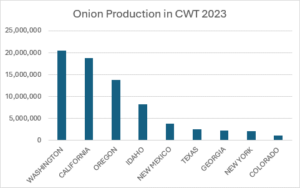
As reported in the Vegetables and Pulses Yearbook Tables, in 2023, 20.8 percent of the domestic availability of onions were imported, while 79.8 percent were from domestic origin. However, of Salmonella outbreaks linked to bulb onions in 2020 and 2021 from both Mexico and the U.S, no definitive root-cause was identified for these two outbreaks.  

At Western Growers, food safety is extremely important, and in response, we have developed this FAQ and resource list to provide guidance and access to essential food safety information for onion production. 

Frequently Asked Questions Related to Onion Food Safety (FAQs) 

Onion Characteristics and Food Safety 

Drier, thicker outer onion skins reduce the likelihood of pathogen growth, however pathogens may still survive in these outer layers. Despite natural antimicrobial compounds (like allicin and quercetin) in onions, these are insufficient alone for pathogen control 

While human pathogens can still survive on cut onions, infection by plant pathogens can make onions more prone to contamination. Maintaining the physical integrity of onions is essential, as decay can create conditions that favor pathogen persistence.   

What are the pathogens that most commonly affect onions? 

Salmonella has been linked to foodborne outbreaks associated with onions, particularly when onions are contaminated during growth or processing. However, contamination from other pathogens such as pathogenic E.coli can occur if onions are exposed to unsafe water sources during irrigation, or contaminated soil amendments. While not frequently associated with onions, Listeria monocytogenes can contaminate and grow on diced or processed onions, especially under improper refrigeration, making it a concern in ready-to-eat onion products. 

Have onions been commonly linked to food safety outbreaks historically? 

From 2009 to 2022, the NORS BEAM Dashboard reports seven multistate outbreak related to onions. Below is a list of those relevant outbreaks. In terms of etiology, one is related to E. coli and the other six are related to Salmonella. Below is a list of these relevant outbreaks.  

  • 2015: An E. coli O157 outbreak was linked to a pre-cut celery and onion blend used in rotisserie chicken salad sold at Costco stores. This outbreak affected 19 people across seven U.S. states. The CDC, in coordination with local health authorities, traced the contamination to celery and onion products supplied by Taylor Farms Pacific.  
  • 2016-2019: From 2016–2019, dry bulb onions were the suspected cause of three multistate outbreaks in the U.S.. These outbreaks varied in size from 29 to 149 ill people and were all identified between August and September of their respective years. No CDC or FDA reports were found regarding these outbreaks.  
  • 2021: A widespread outbreak of Salmonella Oranienburg was associated with whole red, white and yellow onions imported from Chihuahua, Mexico. This outbreak led to over 1,040 cases across 39 states with around 260 hospitalizations.  
  • 2020: Another significant Salmonella Newport outbreak linked to red, yellow and white onions from Thomson International, Inc. affected over 1,000 people in the U.S. and Canada. Tracebacks identified multiple illness clusters at restaurants where red onions were served, prompting a large-scale recall to mitigate risk. 
  • 2023: A Salmonella Thompson outbreak was traced to diced onions from Gills Onions, affecting 80 people across 23 U.S. states, with 18 hospitalizations and one death. Affected products were distributed to both foodservice and retail markets, with a recall issued in October 2023 to prevent further cases. 

What are the recommended practices for handling irrigation water? 

Water used in onion production can be a source of contamination, carrying various microorganisms of public health concern, including Salmonella, pathogenic E. coli and human viruses like hepatitis A. Prior produce-related outbreaks have identified water as a likely vehicle for contamination due to factors like wildlife activity upstream, storm runoff or canal dredging.  

Irrigation water aspects that need to be considered include:  

  • Source of water (Surface, Ground, Municipal) 
  • Timing for irrigation (extended time before harvest allows time for pathogen die-off) 
  • Application (overhead, flood and furrow, or sub-surface) 

Conducting a water assessment for (1) the type of each water source (e.g., ground, surface, or municipal), (2) the grower’s control over the water source, (3) the level of protection around the water source, (4) the uses of nearby and adjacent land, and (5) the chances that upstream water users may introduce hazards. 

Should I be testing my agricultural water? 

Water should be tested to understand the potential for contamination posed by the water source. Commodity Specific Food Safety Guidelines for the Dry Bulb Onion Supply Chain suggests testing for generic E. coli three times, at the start of the season, mid-season and near harvest, with more frequent testing for higher-risk sources like surface water.  

Testing water quality throughout the season helps identify and manage any emerging risk. 

Do whole, unprocessed onions undergo any pathogenic testing prior to harvest, at harvest or during storage? 

Whole, unprocessed onions do not typically undergo routine pathogen testing before or during harvest or storage, as is common with leafy greens. However, some customers or buyers may require testing. Before establishing a testing program for onions evaluate (i) the purpose of the testing, (ii) the ability of current assays/lab method for testing and detecting contamination in onions, (iii) the power of the sampling based on contamination scenarios, (iv) how will the data generated by the testing program will be used and evaluated to maximize learning.  

Does onion farming follow the same risk assessment protocols as leafy greens?
Onion farming is subject to the FSMA Produce Safety Rule (PSR), like leafy greens. However, most leafy greens, green grown in the U.S. are subject to the LGMA standard. Onion growers can adopt voluntary practices established in the (Commodity Specific Food Safety Guidelines for the Dry Bulb Onion Supply Chain). These guidelines provide recommended food safety practices that are intended to minimize the microbiological hazards associated with dry bulb onions. 

What should I consider for the lifting, toping and curing activities?  

The curing process helps protect onions by drying the neck, which minimizes entry points for pathogens. Proper curing in dry conditions aids in reducing potential contamination and supports safe storage by enhancing the protective outer layers. 

Before starting lifting, topping or curing activities, growing areas should be checked for contamination risks, including signs of wildlife, domesticated animals, fecal contamination, flooding or crop damage. Decisions on whether to proceed should consider whether contamination could spread through equipment or worker movement. 

  • Agricultural water must be safe and adequate for all uses, including irrigation, drip tape removal, chemical applications or dust control. 
  • All tools and equipment involved in onion production, like knives and clippers, must be cleaned and sanitized when appropriate. 
  • Inspect harvest totes, bins, bags and transportation equipment to ensure they are clean, debris-free and in good condition before loading onions. 
  • Workers should adhere to health and hygiene policies, such as handwashing, using toilets, avoiding contact with onions when ill and having designated break areas. 
  • Onion storage facilities used for curing and drying must remain clean, dry and well-maintained, with measures in place to prevent and control pest activity. 

Can weather affect the curing process of onions? 

  • Heat: Extremely hot temperatures can cause onion layers to collapse and lead to decay if onions are left exposed for too long.  
  • Cold: Frost can affect onions, causing translucent layers. Frost-affected onions should be stored separately for close monitoring to assess any postharvest deterioration. 
  • Moisture/Drought: Excessive rain near harvest time increases the risk of plant disease and postharvest deterioration. Using drying rooms and improving air circulation in storage and curing areas helps reduce moisture-related losses. If the edible crop portion contacts floodwater, it is deemed adulterated and unsuitable for harvest. 
  • Unusual Weather or Environmental Events: After significant events, growers should assess risks to the crop and water sources. Wildfire smoke, for example, may reduce UV exposure, affecting curing, while severe weather may disrupt septic systems, leading to water contamination. In cases of nearby wildfires, producers should consult local emergency agencies regarding any possible chemical contamination from firefighting efforts. 

What is the risk related to diced/slithered onions? 

While pathogens may not grow yet survive on onion skins, diced or slithered onions present risks, due to the potential contamination, and more favorable conditions for microbial growth: 

  • Fresh-cut onions, including diced forms, provide ideal conditions for pathogens like Listeria monocytogenes and Salmonella Typhimurium, and E coli growth, especially when stored improperly. Temperature control is critical to prevent microbial growth in diced onions (Jayeola, Lieberman) 
  • Cross-Contamination: During slicing, pathogens can transfer between onion slices, creating a risk for contamination of all pieces in bulk processing. This risk underscores the need for strict sanitation protocols during processing 

How do environmental factors, such as weather events, affect onion safety? 

Weather events like flooding or drought can impact onion safety by introducing contaminants from external sources. Floodwaters introduce various pathogens, including Escherichia coli, Salmonella and Listeria monocytogenes, which persist for weeks after flooding, suggesting that produce exposed to floodwater poses a significant health risk. Onions exposed to weather impacts may require adjustments to management practices​.  

What do we know about the Outbreak Investigation of E. coli O157:H7-related to Onions (October 2024)?

The FDA is investigating an E. coli O157 outbreak linked to slivered onions previously served on McDonald’s Quarter Pounder burgers. This outbreak involves 90 cases across 13 states, with illnesses reported from September 27 to October 16, 2024.

Are there concerns about the safety of onions due to the recent McDonald’s outbreak?

As of October 30, 2024, the FDA reports that “The current risk of illness from E. coli contamination is low because onions have been recalled and should no longer be available.” Importantly, the FDA noted on its website that according to available information, it is unlikely that recalled yellow onions were sold to grocery stores or directly to consumers. McDonald’s also has ceased using slivered onions in affected states, including Colorado, Kansas and Wyoming, as well as parts of Iowa, Idaho, Missouri, Montana, Nebraska, New Mexico, Nevada, Oklahoma and Utah. FDA’s investigation is ongoing.

Resources 

Commodity Specific Food Safety Guidelines for the Dry Bulb Onion Supply Chain.
These guidelines provide recommended food safety practices that are intended to minimize the microbiological hazards associated with dry bulb onions. 

FDA’s Strategy to Help Prevent Salmonellosis Outbreaks Associated with Bulb Onions 

The FDA’s strategy to prevent salmonellosis from bulb onions involves enhancing safety inspections, testing and industry collaboration to mitigate contamination risks, especially for imported onions. 

Studies/Articles of Interest 

Survival of Escherichia coli O157:H7 in soil and on carrots and onions grown in fields treated with contaminated manure composts or irrigation water 

This study highlights the significant risk of preharvest contamination of subterranean crops, specifically carrots and onions, by enterohemorrhagic Escherichia coli O157 due to the application of contaminated manure compost and irrigation water. E. coli O157 was found to survive in the soil for 154–196 days and on the vegetables for up to 168 days, indicating that improper manure management and irrigation practices can lead to prolonged contamination of crops. It also emphasized the need for careful handling and monitoring of organic fertilizers. 

Strategic approaches to mitigate Salmonella contamination of bulb onions  

The study highlights the activation of onion innate immunity against Salmonella, revealing that while outer layers inhibit pathogen growth, internal layers allow proliferation, emphasizing the need for improved sanitation practices in the onion supply chain. 

Cross-contamination risks in dry environments
This study found that Salmonella enterica and Enterococcus faecium can survive on food contact surfaces for up to three months in dry conditions, underscoring the need for improved cleaning strategies to prevent cross-contamination in fresh produce handling. 

Assessing the potential for production practices to impact dry bulb onion safety
This study on the 2020 Salmonella Newport outbreak linked to onions revealed significant contamination risks from poor-quality agricultural water used for crop protection sprays and irrigation, particularly from overhead irrigation. 

Survival of generic E. coli and Salmonella during the growth, curing, and storage of dry bulb onions produced with contaminated irrigation water
The study aimed to assess the survival of E. coli and Salmonella on dry bulb onions in Oregon and Idaho, using contaminated irrigation water. Due to high desert conditions, water reuse in irrigation leads to elevated microbial loads. Despite a contamination level of up to 3.5 log CFU/g on onions, the study found that two weeks without irrigation plus a curing process reduced E. coli and Salmonella levels significantly, remaining stable and below 1 CFU/g through curing and storage. 

Conventional curing practices reduce generic Escherichia coli and Salmonella spp. on dry bulb onions produced with contaminated irrigation water 

This study demonstrated that conventional curing practices effectively mitigate microbial risks from non-compliant irrigation water in Treasure Valley’s dry bulb onion production, reducing levels of generic E. coli and Salmonella spp. to less than 1 CFU/g, while also suggesting that generic E. coli can be a reliable indicator for Salmonella behavior in future research. 

Questions 

If you have any questions about onion food safety, please contact us at [email protected].

Appellate Court Says UFW and Wonderful Must Resume Negotiations Amid Ongoing Legal Dispute 

October 31st, 2024

In a recent development, California’s 5th District Court of Appeal has ruled that negotiations between the United Farm Workers (UFW) and Wonderful Company must continue, forcing the two parties to return to the bargaining table. This decision follows a legal dispute in which Wonderful had previously obtained a preliminary injunction from the Kern County Superior Court, temporarily halting all related proceedings with the Agricultural Labor Relations Board (ALRB). 

The ALRB and UFW had challenged this injunction, arguing that ongoing negotiations and administrative proceedings should not be interrupted while the case moves through the courts.  Wonderful Company, however, remains focused on its broader challenge to the constitutionality of California’s card check law, which it argues infringes upon its and its workers’ rights. 

With the Appellate Court’s latest ruling, the ALRB is set to resume its oversight of the ongoing administrative proceedings, including Wonderful’s objections to the UFW’s card check petition and UFW’s alleged unfair labor practice complaints. Additionally, Wonderful may be compelled to resume the mediation and conciliation process. 

ALRB Subcommittee Responds to Public Comments on AB 113 Regulations 

October 31st, 2024

On October 25, 2024, the Agricultural Labor Relations Board (ALRB) Subcommittee released its report addressing public feedback on further regulatory modifications under AB 113, focusing on card check provisions and appeal bonds. Western Growers, along with other agricultural interests, submitted comments, underscoring concerns related to transparency, fairness, and practical compliance with the proposed regulations. 

Key areas of focus included the legitimacy of pre-regulation authorization cards, the ability of employers to challenge labor organizations’ support lists, and procedural requirements for service notifications. The subcommittee recommended retaining most of the proposed language, noting the importance of original documents over electronic submissions for investigating petitions, and upheld the current employer notification process despite objections. 

The subcommittee also recommended preserving requirements for timely original documentation and affirmed the modified 48-hour employer response time, excluding weekends and holidays, to better accommodate agricultural operational realities. Despite objections from agricultural organizations, the subcommittee reinforced restrictions on the scope of employer challenges to maintain balanced and efficient review processes.

It is anticipated that the AB 113 regulations will soon be approved by the Board and submitted to the Office of Administrative Law for approval. 

ALRB’s New Santa Maria Office Decision Raises Impartiality Concerns

October 31st, 2024

At its October 30, 2024, meeting, the California Agricultural Labor Relations Board (ALRB) approved a decision to establish a new office in Santa Maria through a sublease agreement with the Central Coast Alliance United for a Sustainable Economy (CAUSE). This late addition to the Board’s agenda was not made available for public comment, drawing concern over the Board’s procedural transparency. 

During the virtual session, Matthew Allen, Western Growers’ Vice President of State Government Affairs, was the sole representative from the agricultural industry to voice concerns. Allen underscored that the Board’s decision to partner with an organization viewed by many in agriculture as biased against the industry further fuels the perception of the ALRB’s partiality in decision-making. 

“Rarely am I taken by surprise, but today I am genuinely astounded,” Allen stated. He went on to urge Board members to consider the potential backlash if the situation were reversed—if, for instance, the ALRB had chosen to sublease space from Western Growers or another agriculture-industry organization in Santa Maria. 

While the ALRB Chair attempted to reassure attendees of the Board’s neutrality, Allen emphasized that choosing a location associated with an organization perceived as being adversarial to agriculture may only deepen skepticism among industry stakeholders. Allen’s remarks reflect ongoing concerns within the agricultural community that the ALRB may not always act as an impartial arbiter, particularly when decisions affecting the industry are made without the opportunity for public feedback.

The Board unanimously agreed to enter into a sublease agreement with CAUSE, despite concerns voiced by Western Gowers. 

From Orchard to Oil: The Enzo Experience

October 31st, 2024

When Vincenzo Ricchiuti left Italy in 1914, it’s likely that he didn’t expect he’d find the perfect Mediterranean climate for farming in Fresno, California. Yet, the region’s ideal conditions allowed him to explore sustainable farming and crop diversification, eventually expanding into growing grapes and figs. Fast forward to today, the Ricchiuti family farm has grown into a thriving fourth-generation operation, leading the U.S. olive oil market.

After World War II, the farm broadened its operations to include fruits like peaches, plums and apricots. Patrick Ricchiuti, Vincenzo’s grandson, didn’t stop there – he took it a step further by introducing citrus, almonds and olives into the mix.

Vincent Ricchiuti, great-grandson of Vincenzo and COO of P-R Farms and Enzo Olive Oil, always felt a strong connection to the family’s agricultural roots. Like many other kids born into the industry, Vincent spent his summer breaks in the packing house, eager to take on more responsibility on the farm. These long days instilled in him a strong work ethic, problem-solving skills, flexibility and the ability to collaborate with others in a team setting – all of which Vincent credits as essential traits in running a multi-generational family business.

Growing up in the world of fresh produce, he was surrounded by the family business and appreciated the forward-thinking approach his parents and grandparents took in feeding communities and breaking new ground in sustainability. Their mindset inspired him to forge his own path in the industry.

When faced with that all too-familiar fork in the road, Vincent’s appreciation for his family’s relentless pursuit of innovation and quality resulted in a deep-rooted desire to carry on what his great-grandfather started over a century ago. He chose to pursue an Agricultural Business degree from Fresno State and join his family full time.

Today, P-R Farms has embraced significant diversification, growing olives, almonds, grapes and tree fruit, all while maintaining sustainable and ethical growing practices.

With the creation and rapid success of Enzo Olive Oil Company, the Ricchiuti family business has become a California-grown, award-winning leader in organic olive oil. By working closely with the California Olive Oil Council to ensure that every drop of olive oil meets the highest standards, the company reflects the trust consumers place in its products and showcases the dedication of the modern American farmer.

The Ricchiuti family takes pride in handling every step in-house, from planting the olive trees to bottling the oil, ensuring the highest standards of freshness and quality. Their mission is to deliver a true farm-to-table experience, blending exceptional quality control with a deep connection to the community.

New Age Labs: A Partner in Progress

October 31st, 2024

Since its inception in 1998, New Age Labs (NAL) has been a beacon of innovation and support for the agricultural community. With a focus on providing farmers with tangible returns on investment, NAL has become the premier North American laboratory for plant sap analysis, a testament to their commitment to enhancing the quality and yield of crops. Their mission, “to provide analytical data with insight, logic, and trust to elevate agricultural and food production,” is not just a statement but a guiding principle that informs every aspect of their operations.

At the heart of NAL’s services is plant sap analysis (sap analysis), a sophisticated two-dimensional testing method that offers critical insights into available nutrient uptake and mobility without the use of heat or chemicals. This approach allows for a more accurate assessment of a plant’s health and nutritional status, enabling farmers to make informed decisions that can lead to improved crop performance.

The Nitrogen Conversion Efficiency (NCE) score, a unique metric developed by NAL, further aids growers by quantifying nitrogen conversion efficiency, providing insight on how a plant takes up nitrogen and converts it into amino acids and proteins.

The expertise of NAL is embodied by Jenny Garley, the Chief Science Officer, whose dual experience in field and laboratory settings makes her an invaluable asset to Western farmers. Her presence in California bridges the gap between the lab’s physical location in South Haven, Michigan, and the agricultural hotbeds of the West Coast.

“Sap analysis provides insight on the uptake and mobility of available nutrients that are free and not incorporated into the leaf ’s cellular structures,” Garley said.

NAL’s commitment to excellence is further demonstrated by their recent qualification of an APHIS permit, allowing them to extend their services globally. This milestone has sparked international interest, showcasing NAL’s growing influence and reputation in the agricultural sector. To facilitate this expansion, NAL offers significant discounts on overnight shipping, ensuring that samples reach their Michigan lab swiftly for analysis.

Understanding the urgency with which farmers require data, NAL has invested in upgraded state-of-the-art equipment that accelerates the sample processing time, promising results within 24 to 48 hours. This rapid turnaround is crucial for time-sensitive agricultural decisions and reflects NAL’s dedication to supporting farmers’ needs promptly.

Looking to the future, NAL continues to pioneer advancements in agricultural science. Their current project, measuring carbon in the sap analysis samples and creating a proprietary carbon database, is indicative of their forward-thinking approach. This endeavor not only positions NAL at the forefront of agricultural research but also contributes valuable data to the broader scientific community.

The culture of collaboration that Scott Wall, the founder of NAL, has cultivated is perhaps the most significant aspect of the laboratory’s success. By fostering a spirit of cooperation and shared knowledge, NAL has become more than just a service provider; it has become a central hub for the agricultural community to come together, share insights and collectively advance the industry.

New Age Labs stands as a paragon of scientific excellence and collaborative spirit. Its contributions to agriculture go beyond mere data; they empower farmers with the knowledge and tools necessary to thrive in an ever-evolving landscape. For Western growers, NAL is not just a laboratory; it is a partner in their pursuit of agricultural excellence.

A Lasting Gift: Honoring His Late Wife’s Legacy By Creating a Path for Future Nurses

October 31st, 2024

Inside Western Growers
Behind Western Growers are more than 400 employees who are not only dedicated to serving America’s food heroes, but also serving their communities. Here is an inside look at one of Western Growers’ champions, Jeff Gullickson, President of Western Growers Insurance Services.

A mother. A wife. A sister. A daughter. A friend. A tennis player. A nurse. And so much more. Her name was Catherine Gullickson, late wife of Jeff Gullickson, President of Western Growers Insurance Services.

When Jeff created an endowment fund at the University of Portland (UP) in memory of his late wife Catherine, he wasn’t just preserving her legacy—he was embodying her spirit. With this endowment, Jeff created something that allows Catherine’s commitment to both community and service to live on, giving generations of nursing students opportunities in her name.

Nearly a decade has passed since losing Catherine, and Jeff has shared his story with very few people. I recently had the privilege of speaking with Jeff, who shared heartfelt details about Catherine, including her courageous battle with cancer. But before hearing about the generous endowment that was created in her memory, Jeff shared how their journey began.

Jeff and Catherine met on a blind date—Jeff ’s first and last blind date, he joked. After a short engagement, they were married in 1983 and welcomed their first child in 1987. By then, Catherine was settled into her nursing career, initially working the night shift at a nursing home before becoming an ER nurse.

“It was frenetic,” Jeff explained. “Everyone’s understaffed, and there’s a lot of stress and responsibility. But she loved it, and it was her true calling.”

Jeff ’s reflection on the demanding aspects of nursing highlights not only Catherine’s dedication to providing care, but also the unique qualities that make for exceptional nurses.

“If you’ve spent a lot of time around nurses, you know instantly what makes a good nurse and what makes an average nurse—just knowing when you’re cold and you need a blanket or if you need some time, when you want to talk. They have that warm touch, but they’re also very efficient and effective in what they do,” Jeff said.

Over the years, Jeff and Catherine’s family grew to include four wonderful children, with Catherine devoting herself entirely to her most significant role: being a full-time mother.

But the family was hit with devastating news when Catherine was diagnosed with breast cancer. She received care from more than two dozen hospitals, clinics and doctor’s offices nationwide, undergoing countless tests, a double mastectomy, reconstructive surgery and intense rounds of chemotherapy and radiation. “It was brutal,” Jeff recalled. “It took a real warrior to survive that.”

But Catherine endured, and with the support of her family, she overcame. For five years, she received what she had believed to be a clean bill of health. But after developing severe back pain, Catherine was met with more crushing news. Her breast cancer had returned and had migrated to her spine. Catherine went through another bout of surgery to have the cancer removed, but it was too late. The cancer had spread.

“Our oldest daughter became engaged, and we actually moved the wedding date up because it was becoming apparent that Catherine wasn’t going to make it,” Jeff said. “But we had the wedding, and a few weeks later, she was gone.”

Catherine passed away on November 17, 2014, after a brave 11-year battle with cancer. But that’s not how Catherine will be remembered by her loved ones, and certainly not by the many lives she will continue to change for generations to come.

As a mother, wife, sister, daughter, friend and nurse, Catherine touched many lives, and Jeff felt compelled to memorialize that. Since Catherine earned her Bachelor of Nursing degree from the University of Portland, he reached out to the university to establish a scholarship for nursing students in her memory.

Connie Ozyjowski, Assistant VP for Advancement Services at the university, worked closely with Jeff to set up the criteria for the scholarship, known today as the Catherine Bigelow Gullickson Memorial Scholarship.

Candidates must be enrolled in the university’s school of nursing, have a minimum GPA of 3.0 and have a demonstrated drive for inquiry and learning. “They must also be someone who’s well-rounded—someone who’s interested in the arts, sports or other extracurricular activities because Catherine played tennis here,” Ozyjowski said.

The scholarship garnered widespread support from the start and quickly took on a life of its own, eventually evolving into an endowment.
“You don’t see something like this happen every day. There’s a tight community of people who have contributed. In fact, we got a big gift again this year,” Ozyjowski said. “It just keeps growing, and that’s just so unusual. Typically, it’s just the family that keeps giving, but in this case it’s family and friends.”

In other cases, the connections are less obvious. Ozyjowski discovered that a donor from her son’s high school contributed to Catherine’s endowment. When asked about her connection to Catherine, the donor explained there was none, she was simply moved by Catherine’s remarkable story.

“The school has been phenomenal in the students they’ve selected, and the administration has been phenomenal in their stewardship of the money and how it has grown,” Jeff said.

The endowment is now in its tenth year and has supported 20 students since its inception. Jeff and his family receive heartfelt cards and notes from the recipients who have benefited from Catherine’s scholarship, and their personal stories highlight its meaningful impact. One recipient, who was coping with her mother’s illness, discovered a personal connection to Catherine; her mother had attended the university with Catherine.

The endowment will continue in perpetuity, and with it, so will Catherine’s legacy. “I hope this helps a steady stream of nurses who treat their patients the same way Catherine treated hers, and like the nurses we encountered during her illness treated her,” Jeff said.

Jeff joked that Catherine would likely be upset with the attention, as she was never one for the limelight. With the way Catherine lived her life, it was “never about her,” and she put her family first until the very end. How fitting, because when one chooses a career in nursing—one of the most noble professions—it stems from a genuine calling to help others. And even as we’re nearing the 10-year anniversary of her passing, Catherine continues to do just that.

For more information, visit https://giving.up.edu/catherine.

A Comprehensive Approach to Sustainable Food Safety

October 31st, 2024

This is part two of a two-part series on food safety and sustainability. You can read the first part of this series in the September/October edition of the Western Grower & Shipper.

Climate change is rapidly changing ecosystems worldwide, and there are increasing concerns about the long-term impacts that these changes may have on the stability, sustenance and growth of communities.

Agriculture is accelerating efforts to understand and optimize practices to address changing conditions and ensure the security of a safe and nutritious food source. With rising temperatures, destabilized weather patterns and diminishing nonrenewable resources, the food supply chain must consider all factors when developing a food system aimed at long-term resilience.

Overarching environmental pressures are nonselective and impact the entire ecosystem, including bacterial and viral pathogens contributing to human health risks. To be efficient and effective in building a resilient food supply chain, the complexities require a comprehensive and multidisciplinary approach that designs for and balances the needs of sustainability and food safety together.

Efforts for food safety are currently aimed at developing a risk-based management system with the goal of continuous improvement leading to ongoing risk reduction to consumers. Sustainable Food Safety (SFS) prioritizes the interconnectedness of sustainability and food safety efforts to ensure optimal outcomes, leading to the goal of environmental and agricultural resiliency. To ensure both efforts are addressed efficiently, monitoring systems must be developed to characterize the risk from all agronomic, food safety and sustainability practices.

With a measurement process and monitoring system to understand outcomes, growers can align the management of the agronomic system while assembling a multi-step process to mitigate risks for both sustainability and food safety. While the concept is straightforward, it is challenging to build a system for comprehensive farm characterization and monitoring due to the size and scope of all the variables. The direction may be clear, but the question quickly becomes, how would we begin?

When we start to consider whole ecosystems, we must think broadly about measurement systems and targets since we have numerous factors that may have a positive relationship/correlation, a negative relationship/correlation or a neutral relationship (i.e., independent). One of the reasons that food safety and sustainability efforts have sometimes felt at odds with one another is that it is much simpler to consider, in terms of food safety, a practice as either good or bad for food safety. This binary simplification is amenable to simple communication and alignment of actions.

However, the reduction of complex questions to binary outcomes can lead to actions that are misaligned or even opposite of the intended results. For example, following the 2006 spinach outbreak, a common and recommended reaction was to remove non-crop vegetation to reduce interactions between wildlife and crops. Over time, removal of habitat has been shown to have no impact, or even increase the amount of wildlife in a production field due to the need for wildlife to find food, water and shelter. We must be careful of reducing complex questions to binary answers (good/bad) since those decisions can lead to poor unintended outcomes despite even the best of intentions.

Risk-based decision-making and risk management require characterization of risk (e.g., pathogenic E.coli, Salmonella, heavy metals) in an environment, and then identifying the factors that can lead to changes in that risk. To achieve risk-based food safety management, a baseline understanding of the risk(s) is needed to be able to identify when food safety concerns may be increasing or decreasing.

To achieve this, an ongoing measurement system must be in place to compare the expected/historical baseline level with current observations so that appropriate behaviors can be exercised, if needed. An example system that most are aware of is that of weather monitoring. With weather systems, we have established an expected range of temperatures, precipitation and prediction algorithms so that when we compare current data on today’s conditions, we know whether the current conditions are expected or unexpected and the systems provide some predictions on what to expect in the coming hours/days so that we can plan appropriately.

Food safety systems can be designed in the same fashion; using historical data, practices and trends to predict when and how food safety risks may fluctuate, and what practices we may need to adopt to ensure the risks to consumers remain acceptable. With a well-designed monitoring system and means to measure and characterize practices in terms of risk, it is possible to establish a system to use data to achieve any goals whether they be designed for food safety or sustainability purposes.

SFS addresses the fact that all practices in the production of food must account for food safety. A non-safe food is simply not a food. Building a SFS system for fresh produce requires an interdisciplinary approach incorporating all sciences (e.g., microbiology, soil science, agronomy, toxicology, hydrology, geology, engineering, data science, genetics, animal husbandry, ecology, etc.) and the construction of a dynamic system capable of creating a baseline understanding of risk in an environment or system.

Once we broaden the view of the interrelatedness of all factors contributing to our agricultural ecosystem, we recognize the need to approach food safety and agriculture holistically; a way that accommodates a spectrum of needs, considerations for science and the overall economics for a grower.

There is no right or wrong way to produce food, but instead many pathways can be balanced to achieve the outcomes needed to support a resilient food ecosystem. Systems like Western Growers’ GreenLink® data-sharing platform are currently being developed for agricultural food safety to lean into complex data collection, analysis and prediction. With dynamic systems to help define baseline risk and quantification of impacts (positive or negative), we can drive toward a future where there is no good or bad practice, but instead, optimized control of risk and reward of safe products. With a comprehensive view on the relationships in our world, we offer an optimistic ability to help contribute to a resilient food production system, quality nutrition for our communities and a business model sustainable for the growing community.

There is no food without food safety. There is no food without environmental sustainability. There is no food without a grower who can afford to produce the crops. There is no future without a comprehensive approach to food production. SFS is the solution for sustainable, risk-based food production.

Tech’s Role in Feeding the World

October 31st, 2024

Lately, conversations are dominated by the latest gadgets and cutting-edge tech trends. Questions like, ‘Did you get the new iPhone?’ or ‘When are you getting an EV?’ have become standard in our daily conversations. While these innovations undeniably shape our modern world, we rarely turn our attention to the technological breakthroughs that sustain us – figuratively and literally. The technological advancements that revolutionize how we grow and harvest the food that nourishes society often go unnoticed.

For centuries, farmers and agricultural pioneers have relentlessly pushed the boundaries of progress in pest control and harvest technology. In the 1600s, early farmers relied on methods like tobacco infusions, herbs and arsenic to combat pests.

By the 1800s, the arrival of the Colorado potato beetle spurred the development of more sophisticated pest control solutions, leading to the creation of Paris Green, a mixture of arsenic and copper sulfate. These early growers laid the foundation for what would eventually become the field of Integrated Pest Management (IPM), which did not see widespread momentum until the 1970s and 1980s. Meanwhile, the introduction of horse-powered combines in the Pacific Coast wheat fields in the late 1800s revolutionized the harvesting process, paving the way for gas-powered tractors two decades later.

John Deere has become a major player in the ag tech space, particularly within high-value crop (HVC) industries that have yet to experience a full technological revolution. In partnership with GUSS, a leader in HVC autonomy with over 40 years of commercial spraying expertise, John Deere is bringing autonomous solutions to growers worldwide. GUSS sprayers operate fully autonomously and are under constant supervision, reducing the need for multiple tractor operators and support personnel during spray jobs. This innovative technology enables growers to optimize labor management, upskill their employees and improve overall worker safety.

GUSS technology allows operators who are adept at tractor driving to develop skills of field mapping, configuring sprayers for specific tasks and assigning routes to the machine. Having sprayed over 2.2 million acres, GUSS has firmly established itself as a global leader in agricultural autonomy. John Deere complements this with its rigorous engineering and testing processes, ensuring that their partnership continually improves and redefines the ag tech space.

Growers using the John Deere and GUSS partnership to their advantage report promising outcomes, including a 98 percent retention rate and a 65 percent re-order rate.

Looking ahead, John Deere envisions a future where data-driven precision spraying will further enhance safety, efficiency and sustainability in agriculture. With grower margins perpetually under pressure, precision technology and automation provide growers with the tools to control costs without compromising on yield or quality. This technology streamlines the entire process, ensuring no missed or double rows and eliminating human error from the equation.

“GUSS sprayers are fully autonomous, and while under constant supervision, alleviate the need to have dozens of tractor operators and support personnel in the orchard while the spray job is being completed,” says Sean Sundberg, HVC Business Integration Manager at John Deere. “By reducing the number of employees in or near the orchard or vineyard during the spray job, you inherently improve worker safety. Think overnight tractor operation, row after row in the dark, spraying material to protect crops. It is an incredibly important function, but it is difficult to find those that want to do that kind of work.”

One operation embracing this shift toward precision agriculture is Dutton Ranch, a family-run wine grape operation in Sonoma County. Since adopting advanced technology in April 2024, Steve Dutton, a fifth-generation grower, has witnessed firsthand the transformative impact on his operations. The technology, SmartApply® Intelligent Spray Control System from John Deere, significantly reduces spray drift by precisely opening and closing nozzles to target the vines, in turn using less material per acre and extending the lifespan of each tank. Fewer refills and reduced operator exposure to crop protection material have improved both efficiency and safety, minimizing direct contact with potentially harmful agents.

Dutton shares that his team, who uses the technology daily, has consistently provided positive feedback. “Their feedback is that it is working well. There is a user-friendliness to the technology that allows us to work through any potential hiccups. They all like the way the technology is working and really appreciate the information that it gives back to us,” he notes.

One of the most significant advantages Dutton has observed is the reduction in material usage, directly translating to cost savings per acre. For a medium-sized grower like Dutton, controlling costs is critical to maintaining profitability. He emphasizes that reducing material use is one of the most effective, if not the only, ways to boost margins in today’s agricultural landscape.

“The price of production materials will never go down,” Dutton adds. “But if growers can use less while still protecting their crops, they’ll be successful.”

The ability to do more with less is the key to why precision agriculture and advanced technology are so vital to the future of farming, especially for the fresh produce industry. Beyond improving worker safety, these advancements offer substantial cost savings by allowing farmers to cover more land with fewer resources. Dutton remains optimistic, confident that these machines will only continue to become smarter and more resilient as they continue to be integrated into farming operations over time.

He encourages small and mid-sized growers to embrace these advancements, sharing his belief that, “There is no need to fear this technology. You get out of it what you put into it.”

The message is clear: adopting these innovations will not only streamline farming operations but transform how we feed the nation, ensuring a future full of affordable and accessible fruits and vegetables.

FAQ Bonus Clips from the Workplace Violence Prevention Plan Webinar

October 24th, 2024

With the launch of California Senate Bill 553 (SB 553), effective on July 1, 2024, it’s more important than ever to ensure compliance. This new law requires most employers to establish, implement and maintain a Workplace Violence Prevention Plan (WVPP), as seen here. 

During our WVPP webinar on June 25, 2024, Priscila Cisneros, Learning and Development Manager, and Teresa McQueen, Corporate Counsel at Western Growers, shared essential tools for compliance and addressed participant questions in an interactive Q&A session. 

Here are some of the key questions discussed: 

  • Does this law (SB 553) really apply to my business? 
  • If we have multiple work sites, do we need more than one plan? 
  • How should the training plan be provided to employees? 
  • How do we identify potential hazards at the workplace? 
  • Any words of advice when creating a WVPP? 

Employers are strongly encouraged to leverage every available resource to stay informed and compliant with SB 553. If you missed the webinar, don’t worry! The video below features bonus clips that address these vital questions. 

Watch the FAQ Bonus Clips from the webinar here:  

Related Workshop Giveaway Opportunity: 

Western Growers will host a Workplace Violence Prevention Plan Workshop on November 7, 2024, in Bakersfield, California. With compliance more crucial than ever, we’re giving away a limited number of complimentary tickets to this timely event. Don’t miss this opportunity to grow your knowledge—for more details click here. 

If members of your team need to expand their skills and competencies, contact Priscila Cisneros for professional development and tailored training programs at [email protected]. 

Ag Days Are Here Again at Fresno’s Fairmont Elementary

October 31st, 2024

This school is redefining education through an innovative STEM program that brings local agriculture into the classroom.

In his poem “The Tables Turned,” English poet William Wordsworth wrote, “Come forth into the light of things, let Nature be your teacher.”

That declaration is brought to life just 20 minutes outside of Fresno at Fairmont Elementary School, where children can experience something truly unique—perhaps even magical.

From kindergarten to eighth grade, students discover science through the exciting framework of local agriculture, gaining knowledge in areas that include ag tech, ag business, ag marketing and animal science.

The idea took root just eight years ago when Christine Torosian-Klistoff, now the head of the ag program, met with the school’s principal Jared Savage to discuss ways to make Fairmont extraordinary. That’s when they decided to make the school an ag-focused program.

“I said, ‘What if we decided to base our school around agriculture and bring all of the kids their sciences through an ag lens?’ There are so many opportunities with technology and innovation and agriculture that they wouldn’t otherwise know about,” Torosian-Klistoff said.

For Torosian-Klistoff, the idea wasn’t entirely out of nowhere—she had grown up on a farm, where her father grew grapes and alfalfa and raised cattle. Drawing on this deep-rooted knowledge and passion for agriculture, she set out to create practical lessons aimed at providing students with a thorough understanding of agricultural fundamentals and their vital role to the San Joaquin Valley, one of the most productive food-producing regions in the world.

She started small, setting up a chicken coop and several planter boxes in the back of the school. Eventually, she invited the district to view two acres of land that had become available next to the school, and they quickly decided to purchase it.

Soon after, Torosian-Klistoff was introduced to Western Growers member Heather Mulholland, a fourth-generation citrus grower and chief operating officer at Mulholland Citrus in Orange Cove. There, the operation produces a diverse array of products, including citrus, almonds and pistachios, along with nursery trees and beneficial insects.

Mulholland’s eight-year-old daughter Olivia currently attends the Fairmont. In fact, it was Torosian-Klistoff ’s passion and appreciation for agriculture that aided in Mulholland’s decision to enroll her daughter there, she said.

“Christine is the greatest gift. She touches so many students’ lives and impacts them positively with creating love and knowledge for agriculture,” Mulholland said.

Mulholland noted that Olivia has embraced the program enthusiastically, even insisting on attending school on days she’s not feeling well because she doesn’t want to miss Ag Day.

The curriculum is comprehensive—covering a wide range of topics, including soil science, seed germination, pollination, plant sciences, fertilizers, agtech, irrigation, crop cycles and propagation. Engineering, drones and robotics, sustainable energy and 3-D printing are taught by Charlene Greisner and Tisha Jett, two other teachers who are part of Fairmont’s ag team. Students also benefit from field trips to packing plants and engaging lessons from local college students who are enrolled in ag-related programs.

“When I was in third grade, I definitely didn’t learn about irrigation systems or robotics or propagation,” Mulholland joked.

A standout feature of the program is the on-campus market, which not only teaches students about the business side of agriculture but also allows them to compete by selling produce. Torosian-Klistoff notes that the school collaborates with a local produce company, which provides the students with favorable pricing on goods.

“The students get to choose off a list what produce they’d like to sell. They then decide on the price, when to sell their produce and how to best market it on social media. Parents and community members can purchase the produce at the school’s temporary market. The goal of the students is to achieve a good profit,” Torosian-Klistoff said.

The school has seen an increase in enrollees since the start of its ag program, going from 500 students eight years ago to more than 700 today. The program has captured the attention of not only parents from around Fresno, but also other school districts. “This program is the first of its kind in California, and many districts have come to learn more about the program, in and out of California,” Torosian-Klistoff said.

To accommodate its growth, Fairmont has plans to expand its facilities and construct an $8 million, two-acre complex that will house dedicated areas for plant and animal sciences. The expansion also includes a 4,000-square-foot innovation lab, which will focus on water energy and robotics. The agricultural complex will be accessible to all 8,000 elementary school students in the Sanger Unified School District, Torosian-Klistoff said, adding that all of this wouldn’t have been possible without the community and the Grow the Legacy Foundation.

“It’s our goal to expand a program like this to other schools,” Torosian-Klistoff said. “We want to be able to create a blueprint for other schools to implement in classrooms not just in California, but anywhere. No one is putting this kind of focus into their curriculum plans,” she said.

Torosian-Klistoff explains that the program has been a momentous opportunity for students as they transition to high school, offering them additional pathways to agriculture. “Kids have a great opportunity to get their associate’s degree in high school, so now there are 20-year-old students who graduate and are already out in the field working in incredible ag careers,” she said.

Mulholland sees the program as a good way to bring more awareness to high-tech positions in the industry. “Technology has been evolving so quickly, and growers are having a harder time filling specialized roles that require a lot of technical skills. We see a push for ag curriculum in college to attract people with these specialized skills, but at the Fairmont, it’s starting way earlier. It’s not just focused on production agriculture; it’s high-tech and includes the affiliated components that go into agriculture,” she said.

Torosian-Klistoff ’s passion for education is driven by a simple yet powerful goal: to make school a place where students are excited to learn. “I want kids to love school. That’s the hook of what’s going to get them loving it. So that has been my mission,” she said.

And so far, that mission has proven to be fruitful. “Knowing that my child genuinely loves and looks forward to school, finding an additional reason to be excited about learning—it’s a tremendous achievement,” Mulholland said.

“My hope is that each one of these students becomes an advocate for agriculture and gains knowledge about where their food comes from, no matter what path they choose in life. At the very least, they will have learned the fundamentals of agriculture and developed a deep appreciation for it.”

An Update on the Agtech Landscape

October 31st, 2024

The Western Growers Global Harvest Automation Initiative turns four in February, coinciding with the Tulare World Expo, in fact. A lot has happened since the launch. Some of the automation startups the WG Innovation team works with have successfully raised additional funding, others have entered the U.S. market from abroad, and some have partnered with equipment manufacturers and equipment dealers to scale their go-to market and reach more customers. Certain segments have made more progress than others.

Weeding, thinning, harvest assist and spraying robots are already in the market and gaining traction. Our estimates show the U.S. market will make over $100 million in purchases in 2024 and will make over $500 million in purchases from 2024 to 2026. These products range from Carbon Robotics’ $1.4 million LaserWeeders to Stout’s $400,000 mechanical weeders, along with Burro’s harvest assist robots, available in three sizes priced between $15,000 and $30,000 each. Additionally, GUSS offers sprayers in three formats, priced from approximately $220,000 to $350,000.

Capital has declined in the agtech space (and in all tech segments, in fact) for two years in a row. For agtech as a category, the $53 billion in funding in 2021 dropped by 70 percent in two years to $15 billion in 2023 and stayed there with $7 billion in the first half of 2024. There are macro reasons for this – limited partners who write checks to help venture capitalists get their fund tarted are disenchanted with years of poor returns from VCs and are limiting their investments, and there are now more private company unicorns ($1 billion valuation) than public company unicorns.

So the dynamics of getting capital into and out of venture funds has been transformed in a bad way for all of the key players. There are also agtech-specific reasons for capital struggles. Automation startups require a lot of capital to get machines built and iterated and require a lot of time to get the machines fine-tuned and market-ready for customers.

The capital constraints have forced the WG Innovation team to focus on the later stage commercialization efforts for automation startups. While we recognize the potential of startups at every stage of the innovation funnel, we are concentrating our time and financial resources on those with products at the 1.0 stage or beyond, focusing on expanding their market presence and scaling operations.

Specifically, WG is focused on delivering field trials for automation (and our second large initiative, biologicals) across all three stages: case studies to provide examples of grower economics, economic templates that growers can use self-service or DIY style, and WG Assist where WG provides a resource (i.e. a fractional financial analyst) to help growers evaluate automation solutions as they would integrate into their particular growing operations. It turns out that the type of crop (conventional versus organic), the type of labor (domestic versus H-2A) and the type of equipment ownership (buy versus lease) all impact the ROI for automation equipment.

We’ve released our first two case studies featuring Carbon Robotics and Stout Industrial Technology. Our next case study will be on GUSS sprayers. We believe that helping growers understand how the math for each solution will work in their operations is one of the most valuable services we can help our members with, and we are glad to be focused on this process. If you have any questions on field trials, case studies, economic templates or WG Assist, please reach out to anyone on the WG Innovation team.

Over time, we anticipate the number of economic templates will increase and that the templates for different types of automation and biological solutions will vary as we learn more from growers about how to evaluate the solution for their operations. We also anticipate we will add different WG Assist resources to the WG Innovation team, including some with expertise in automation and others with expertise in biologicals.

WG provides multiple late year options for seeing some of these solutions in demo environments. FIRA USA was October 22-24, and this year we were at Yolo County Fairgrounds after one year in Fresno and another in Salinas. We had more international and first-time startups at FIRA USA than the previous events, so by the time you read this growers will have had a chance to see from and talk to over 20 exhibitors in real-world conditions.

Similarly, we are partnering with YCEDA to deliver the Desert Difference in Yuma November 13-14. As with FIRA USA, there will be live demonstrations of automation solutions both days. To those who joined us in Yolo County, we hope you got great value out of attending and that you will share the feedback with other growers who can attend in the future. To those who can join us in Yuma next week, we appreciate your support and have put a great program together for you.

The Four-Legged Ag Heroes Keeping Pests at Bay

October 31st, 2024

Dogs have over 300 million olfactory receptors, 60 times the measly five million of the average human. They can detect even the faintest scents, with precise direction. With this keen sense of smell, detector dog teams throughout California are deployed daily to identify fruits, flowers, soil and unprocessed agricultural materials that cross our borders.

A single dog can clear up to 8,000 parcels a day in shipping terminals and other ports of entry to prevent the introduction of pests and diseases that could harm California’s valuable agricultural system and the farming community.

The Western Growers team recently made a visit to Sacramento to learn more about how the California Department of Food and Agriculture (CDFA) is working to exclude pests from California and protect our local agriculture. We took this opportunity to interview Kernul, an eight year-old, 62-pound chocolate lab, and his handler Michelle King.

Kernul is easily the most handsome government official we’ve ever met. He was adopted from an animal shelter in 2018 and now works full time for the CDFA and Sacramento County, sniffing incoming packages at regional mail partners in Sacramento. Finding and training detector dogs is no easy task, yet Kernul had all the right attributes needed for a good detector dog: even temperament, solid work ethic, physical soundness and the utmost love of treats. Jackpot.

According to United States Department of Agriculture (USDA) – Animal and Plant Health Inspection Service (APHIS), invasive insects and plant diseases cost the U.S. an estimated $40 billion each year. The UC Riverside Center for Invasive Species Research estimates invasive species cost California more than $6.18 billion per year and can cause farmers to lose entire crops. Over the past few decades, the annual rate of detection of established populations of new species in California has been increasing. Some of this is certainly due to improved efficiency via more sophisticated detection tools, including the detector dogs program. However, increased and globalized travel and commerce has been a major contributor to incoming threats. The Invasive Species Council of California (ISCC) estimates that over 1,700 species have been identified as potential threats to California agriculture, ranging from insects, mammals and even viruses, with countless more yet to be analyzed on the horizon. We only anticipate this issue to become more pressing, and it is critical that we find ways to further protect our farmers.

Enhancements in detection and trapping technology, pest and disease modeling and visualization, and public education will be critical tools to continue the fight against invasive species. Currently, California’s fruit-sniffing dogs are flown to and trained at the USDA National Detector Dog Training Center in Newnan, Georgia. While this training center offers a great opportunity to train and deploy detector dogs, capacity is limited, and the long distance is challenging for the dogs and their handlers. If we want to bolster the local capacity to train and deploy detector dogs in California, a local training center would help strengthen efforts to protect our local agriculture.

We also spoke with Jason Leathers, Environmental Program Manager at the CDFA, who is leading the efforts to eradicate invasive fruit flies and other pests from California. “The majority of non-native invertebrate species established in California are insects. CDFA fruit sniffing dogs are able to detect fruits and insects that cross the border into California, potential vectors for pests and diseases that can cause significant damage to our local agriculture,” said Leathers.

“Insects are highly adaptable with a high reproductive rate and a lot of genetic variability. This gives them the ability to quickly colonize and become a major pest. Exclusion is the best defense.”

Maintaining rigorous biosecurity measures to exclude potentially harmful pests and diseases protects California’s agricultural productivity, economic stability, biodiversity and public health. To learn more about our visit with Kernul and the CDFA, you can listen to this episode on Western Growers’ Voices of the Valley podcast.

Maximizing Employer Protections Under New PAGA: “All Reasonable Steps” to Mitigate Risk

October 31st, 2024

California employers have long grappled with the Private Attorneys General Act (PAGA), a law that allows employees to sue on behalf of the state for labor code violations. However, recent reforms to PAGA have introduced significant opportunities for employers to mitigate their risk and reduce penalties—if they take proactive steps to ensure compliance before receiving a Labor and Workforce Development Agency (LWDA) notice or a request for records from an employee.

These reforms place a premium on preparation, which means adopting a consistent cadence of compliance audits, policy reviews, employee training and corrective measures.

PAGA’s New Focus on Remediation

The PAGA reforms, effective July 2024, introduce a key change: penalties can be substantially reduced if employers demonstrate they’ve taken “all reasonable steps” to comply with the law before receiving an LWDA notice or employee request for records. For example, if an employer proactively conducts audits and corrects payroll or wage statement issues, penalties for any subsequent PAGA action can be reduced to 15 percent of the maximum. Even after receiving a notice, employers can reduce penalties to 30 percent if they promptly take corrective action within 60 days.

This creates a powerful incentive for employers to regularly engage in compliance activities that not only meet legal standards but also document these efforts thoroughly. Employers who take these proactive steps will be better positioned to defend themselves and mitigate penalties in any future PAGA claim.

What Are “All Reasonable Steps”?

Under the new law, “all reasonable steps” are determined based on the totality of circumstances, but employers should, at minimum, consider the following:

• Periodic Payroll and Timekeeping Audits: Conducting regular payroll and timekeeping audits can uncover wage violations or non-compliance with meal and rest period rules. Once identified, employers should promptly collaborate with experienced employment law counsel to determine appropriate corrective action. Counsel can even conduct these audits for you.

• Annual Handbook and Policy Reviews: Employers should disseminate compliant written wage and hour policies, including, for example, meal and rest period protocols and employee reimbursements. These policies should be reviewed and updated annually to reflect the most current legal standards.

• Supervisor Training: Training supervisors on wage and hour laws, timekeeping and other compliance issues is essential. Supervisors are on the front lines of labor law compliance and play a critical role in avoiding violations. Documenting these training sessions will help demonstrate the employer’s ongoing commitment to compliance.

• Corrective Action: Employers must be vigilant in addressing violations promptly. For example, if an internal audit reveals that meal and rest breaks are not being consistently provided, the employer should take immediate corrective steps, including potentially paying missed meal and rest break premium pay, retraining supervisors or adjusting work schedules.

A Continuous, Not One-Time Effort
A key takeaway from the PAGA reforms is that these compliance activities cannot be one-time events. Employers should establish a routine cadence for audits, handbook reviews and employee training. This continuous effort demonstrates a culture of compliance and positions the employer favorably in any future PAGA action.

Documentation is Key: Employers should maintain thorough records of every audit, training, policy review
and corrective action taken. This documentation will be critical to showing the employer has consistently taken reasonable steps to comply with labor laws. Records of wage statement reviews, employee notices and payroll corrections should be kept for the applicable statute of limitations—up to four years for wage claims.

The Bottom Line: Prioritize Proactive Compliance
The PAGA reforms have created a significant opportunity for employers to mitigate their risk, especially if they take proactive steps before being served with an LWDA notice or an employee’s records request. The key to unlocking these benefits lies in regularly reviewing and updating policies, conducting audits, training supervisors and documenting every action. These are not just reactive measures—they must be part of an ongoing strategy that embeds compliance into the day-to-day operations of the business.

In a PAGA lawsuit, employers who can show they’ve consistently taken “all reasonable steps” have a powerful defense against the high penalties typically associated with such claims. By embracing this approach, employers can both mitigate their financial exposure and create a more compliant, employee-friendly workplace.

A Look Ahead to 2025

October 31st, 2024

At the time of this writing, we are awaiting Gov. Gavin Newsom’s final action on the bills that have made it to his desk for either a signature or veto. We are crossing our fingers for a few additional vetoes of legislation that would impose unnecessary challenges for our growers. That said, it has still been a very successful legislative year for us. Western Growers has successfully helped to lead wins on the Private Attorneys General Act (PAGA), legislation mandating significant reforms to the California Department of Pesticide Regulation (DPR) and amendments to many bills across a variety of areas that will help mitigate the impact on California agriculture.

Clearly, like our readers, our work is never done. In addition to our continued advocacy on regulatory issues, we will be gearing up later this fall to begin educating the many new California assemblymembers and senators who will be sworn into office on December 2. In December and January, our staff will dedicate much of its time to making rounds at the Capitol, meeting with new legislators and their teams. We’ll introduce them to WG, the growers we represent and the key issues vital to the continued success of our industry. Comprehensive overviews are offered on key topics, such as labor, crop protection, water, packaging, zero-emission mandates, energy policy and land use. These early discussions also assist us in better understanding the legislative goals of the new legislators.

A major focus this year will be raising awareness on the need for key decision-making on scientific matters to remain at the designated agency level. A good example of this is the collaborative work WG spearheaded this year, alongside allied organizations, on the pesticide mill assessment. Our coalition successfully negotiated improved registration timelines as well as other DPR reforms. Ensuring that science remains the key component on crop protection decision-making was the main impetus for WG’s constructive engagement. We also need to have DPR demonstrate that the registration process can and will work in a timely manner to incentivize new product registrations for use by our growers. Educating legislators not only about the issue but also about WG’s involvement is crucial. There are creative ways to address problems; we don’t always say no.

It’s still way too early to decipher the types and number of bills that will be introduced next year. Indeed, there are routine instances where our proactive engagement has resulted in bill proposals being shelved entirely, often due to legislators receiving inaccurate information from bill sponsors or lacking a clear understanding of the issue. That’s why having a dedicated advocacy team that spends time in legislative offices going through the details is essential.

The future is uncertain. What is certain, though, is WG’s unwavering advocacy and commitment to the issues that matter most to you as members. Just like the other departments within the WG Family of Companies, the state government affairs team is standing ready for what lies ahead. Of course, there will be challenges, but there will also be a great deal of opportunities. Here’s to a great close to 2024, and best wishes for a bright outlook in 2025 and beyond.

Western Grower & Shipper November/December 2024 Digital Issue Available Now

October 30th, 2024

The November/December 2024 digital issue of the Western Grower & Shipper magazine is now available online.

This issue features the articles “Think Covid Messed Up Supply Chains?” “Maximizing Employer Protections Under New PAGA,” “Tech’s Role in Feeding the World” and more.

The cover article spotlights Fresno’s Fairmont Elementary School and what it’s doing to redefine education through an innovative STEM program that brings local agriculture into the classroom.

Click here to read more.

CDFA to Host Workshops on Produce Safety Program Portal 

October 30th, 2024

The California Department of Food and Agriculture (CDFA) announced a series of workshops focused on the Produce Safety Program (PSP) and its data repository platform, known as the PSP Portal, a cloud-based platform designed for effective farm data management. This portal is designed as a resource to assist California produce farmers in understanding and complying with the Food Safety Modernization Act’s (FSMA) Produce Safety Rule. 

From November 18 to December 17, 2024, CDFA will conduct five in-person workshops across California, along with a virtual training session on November 19. These sessions will provide farmers with essential insights into navigating the PSP Portal. 

Focus areas of the PSP Portal are: 

  • Access to Farm Data: California farmers will have access to the data collected by the Produce Safety Program on their farms and operations. 
  • Targeted Educational Resources: The portal will offer tailored educational materials and outreach communications that cater to the specific operational needs of California farmers. 
  • Risk-Based Inspection Focus: By leveraging the collected data, the Produce Safety Program can prioritize inspections based on food safety risk factors, thereby enhancing the overall safety and quality of the food supply for consumers. 

For the full workshop schedule, click here. 

For more information about the PSP Portal, please visit https://www.cdfa.ca.gov/producesafety/pspportal/  

Public Hearing Scheduled on Proposed AMA in the Willcox Groundwater Basin

October 29th, 2024

The Arizona Department of Water Resources will hold a public hearing and take public comment on Nov. 22 on the proposed active management area for the Willcox Groundwater Basin.

The hearing will take place at 1 p.m. at the Willcox Community Center at  312 W. Stewart St.  Willcox, Arizona 85643.

The Willcox Groundwater Basin is located in the northern Sulfur Springs Valley and is the entire surface watershed area that contributes to Willcox Playa plus the upper watersheds of Leslie Creek and Rucker Canyon that lie east of the Swisshelm Mountains in the Whitewater Draw watershed. The Willcox Groundwater Basin is located within both Cochise and Graham Counties.

In accordance with current state statute, effective Oct. 23, 2024 irrigation users may irrigate only those acres of land within the Proposed AMA which were irrigated at any time during the five years preceding. This limitation on the acres which may be irrigated will continue in effect until the Director makes a final determination on the Proposed AMA. “Irrigate” means to apply water to two or more acres of land to produce plants or parts of plants for sale or human consumption, or for use as feed for livestock, range livestock or poultry.

The official hearing notice, information regarding virtual participation, and other information are available at: https://www.azwater.gov/find-info-on/how-do-i/willcox-groundwater-basin

California State Water Board’s Irrigated Lands Regulatory Program Expert Panel Questions Now Available Online

October 29th, 2024

Earlier this year, the California State Water Board committed to consider convening a second Agricultural Expert Panel, and on May 13 draft questions were released for public comment. This included a request for areas of expertise and a call for materials for the proposed expert panel to consider.

The final questions to be posed to the second Agricultural Expert Panel, in response to comments received, and a staff report on an analysis of available irrigation and nitrogen management data are now available for review online on the Water Board’s Irrigated Lands Regulatory Program site.

According to the State Water Board, additional information related to the development and convening of the second Agricultural Expert Panel will be posted on that Irrigated Lands Regulatory Program webpage as details become available.

Best Practices: Worker Classification

October 24th, 2024

Classifying workers correctly is crucial for employers. Misclassifying workers as independent contractors can lead to hefty fines and liabilities for unpaid employment taxes and unmet legal obligations like wage and hour requirements. Federal and state agencies have increased audits, and there has been a rise in employee class action and PAGA lawsuits. 

For an individual to be protected by wage and hour laws, they must be classified as an ‘employee.’ Independent contractors or ‘gig workers’ are not considered employees and are therefore not subject to minimum wage, overtime pay, or other legal requirements with respect to employees. 

Under California’s ABC Test, with certain exceptions, to qualify as an independent contractor, the hiring entity must prove the following:  

  • The worker is free from the control and direction of the hirer in connection with the performance of the work;  
  • The worker performs work that is outside the usual course of the hiring entity’s business; and  
  • The worker is customarily engaged in an independently established trade, occupation, or business of the same nature as the work performed for the hiring entity.  

Most importantly, under the ABC Test, workers are presumed to be employees; the burden of proving that an individual is properly classified as an independent contractor falls to the hiring entity.i  

In Arizona, the state law definition of ‘independent contractor’ depends on the circumstances to which it is being applied. There is no one established definition. Instead, various state laws carry their own definitions (e.g., Workers’ Compensation laws, Arizona Civil Rights Act, Legal Arizona Worker’s Act, minimum wage and paid sick time laws). Nonetheless, each statutory scheme typically applies a test that balances factors such as the degree of control the employer exercises over the individual (i.e., “the control test”) and the whole of the circumstances surrounding the work relationship (i.e., “the totality of the circumstances test”). Both of these tests closely align with federal law. 

Given the complex nature of employee classification, employers should seek legal counsel before classifying employees as independent contractors.