Court of Appeal Revives PAGA Claim; Outcome Would Differ Under New PAGA Law

May 30th, 2025

In Osuna v. Spectrum Security Services, Inc.1, the California Court of Appeal reversed a trial court’s dismissal of a representative claim under the Private Attorneys General Act (PAGA), holding that the plaintiff had standing to bring the claim even though he had not worked for the employer during the one-year statute of limitations period preceding his PAGA notice. 

Edgar Osuna worked for Spectrum until February 2022. He filed his PAGA notice with the Labor and Workforce Development Agency (LWDA) in August 2023 – 18 months after his last day of work. The trial court sustained Spectrum’s demurrer to his representative PAGA claim, ruling that Osuna lacked standing because he did not personally suffer a Labor Code violation within the one-year limitations period. 

The appellate court reversed, holding that Osuna met the then-applicable statutory definition of an “aggrieved employee” under Labor Code § 2699(c) because he was employed by the alleged violator and had suffered at least one Labor Code violation during his employment. The court emphasized that the statute of limitations for civil penalties is separate from and does not alter the threshold standing requirement. 

However, the court was careful to note that this outcome is governed by the version of the law in effect at the time Osuna filed suit. Assembly Bill 2288 (AB 2288), part of the 2024 PAGA reform package supported by Western Growers, added a new standing requirement effective June 19, 2024: a plaintiff must have personally suffered a Labor Code violation within the one-year limitations period. Had Osuna’s case been filed after that date, his claim would have been barred. 

What Does it Mean 

This case reinforces the importance of the standing reforms included in AB 2288, also known as “New PAGA,” which Western Growers actively supported during the 2024 legislative session. By ensuring that only employees who have recently experienced alleged Labor Code violations can bring PAGA claims, the law curtails stale or speculative litigation and will effectively reduce the number of meritless claims.  


1 Osuna v. Spectrum Security Services, Inc. (May 27, 2025, No. B338047)


Western Growers Women: Federal Policy Update Webinar 

May 30th, 2025

Join the Western Growers Women program on June 17th at 11am for an insightful federal policy update webinar hosted by Western Growers’ Federal Affairs Director, Tracey Chow. This virtual session will cover critical issues impacting the agriculture industry, including policy developments, tariffs, and other federal actions shaping the landscape for growers and producers. Don’t miss this opportunity to stay informed and engaged on the matters that matter most to the fresh produce industry.


Federal Policy Update Webinar 

Date: Tuesday, June 17, 2025
Time: 11:00 AM to 12:00 PM PT
Location: Online

U.S. Supreme Court Rules in Favor of DHS on Venezuela TPS

May 30th, 2025

On May 19, 2025, the U.S. Supreme Court ruled in favor of the Department of Homeland Security’s (DHS) request to stay a federal district judge’s order, blocking the department from implementing its previously issued April 2025 termination date for Venezuela’s Temporary Protected Status (TPS) designation.  

On January 17, 2025, then-DHS Secretary Alejandro Mayorkas extended Venezuela’s original TPS expiration date through October 2, 2026, for both the 2021 and 2023 designations. On January 28, 2025, newly appointed DHS Secretary Kristi Noem vacated the extension, moving expiration of the 2023 designation to April 2, 2025 (work authorization) and April 7, 2025 (TPS benefits) and retaining the 2021 designation as valid through September 10, 2025. Immediate legal challenges resulted in an order blocking DHS from implementing the termination, followed by a subsequent request to the U.S. Supreme Court for an order staying the blocking order.  

What Does it Mean 

The U.S Supreme Court’s May 19, 2025, decision effectively allows DHS to move forward in terminating Venezuela’s 2023 TPS designation, leaving the eligibility status of those working under the 2023 TPS in limbo. Information released by DHS as of May 28, 2025, states only that “further updates regarding TPS Venezuela” will be posted and that the September 10, 2025, expiration date remains in effect.  

Until further guidance is provided, employers should continue to monitor updates on the U.S. Citizenship and Immigration Services website, consult legal counsel as needed, and remain flexible in response to this evolving compliance landscape.  

Cal/OSHA Reminds Employers to Protect Workers from Heat Illness during High Temperatures 

May 30th, 2025

Cal/OSHA is reminding all employers to protect workers at outdoor and indoor workplaces from heat illness as high temperatures are forecast across California. Heat illness is dangerous and can be deadly. 

A heat advisory is currently in effect across most of California, with temperatures in the following areas expected to reach 92 to 105 degrees Fahrenheit through 8pm, May 30, 2025: 

Redding: 88-93° F Chico: 89-93° F
Palmdale: 90-95° F Riverside: 92-94° F
Modesto: 90-95° F Sacramento: 89-94° F    
Fresno: 90-94° F Bakersfield: 89-94° F 
Stockton: 88-92° F Coachella: 98-105° F 
Los Angeles: 94-95° F    Palmdale: 93-94° F 


Employers are reminded that Cal/OSHA’s Heat Illness Prevention Standards require employers to protect workers from heat illness, especially during periods of high heat. Specific requirements are mandated for both outdoor and indoor workplaces. 

Prevention measures mandate that employers train workers on how to identify and respond to heat illness, as well as provide and encourage the use of enough water, shade, and cool-down rest breaks to keep workers safe. Detailed information, including employer requirements, are posted in English and Spanish at www.99calor.org. 

Under California’s Heat Illness Prevention Standards, employers are legally required to implement protective measures for outdoor workers and must protect workers at indoor workplaces when temperatures reach 82 degrees Fahrenheit. Employers may be covered under both the indoor and outdoor regulations if they have workers in each setting. See Cal/OSHA’s Comparison Chart of Indoor and Outdoor Heat Illness Prevention Standards. 

Employers must also maintain a written prevention plan with effective training for supervisors to recognize the common signs and symptoms of heat illness, and what to do in case of an emergency. 

In certain industries, when the temperature at outdoor worksites reaches or exceeds 95 degrees Fahrenheit, Cal/OSHA’s standards require additional protection. Industries with additional high-heat requirements include agriculture and the transportation of agricultural products. High-heat procedures include ensuring employees are observed regularly for signs of heat illness and establishing effective communication methods so workers can contact a supervisor when needed. 

Additional Resources 

Details on heat illness prevention requirements and training materials are available online on Cal/OSHA’s Heat Illness Prevention web page and the 99calor.org informational website. A Heat Illness Prevention online tool is also available on Cal/OSHA’s website. 

Cal/OSHA has established the Heat Illness Prevention (HIP) Network, a voluntary partnership aimed at increasing awareness among employers and workers about the importance of preventing heat illness in California and the importance of taking steps to prevent work-related illnesses and fatalities. To join the HIP Network, email [email protected]. 

Update on Implementation of CARB’s Zero-Emission Forklift Regulation

May 28th, 2025

The California Air Resources Board (CARB) shared a bulletin this week to notify the public of its implementation of the Zero-Emission Forklift (ZEF) regulation.

The bulletin reads:

“The purpose of this advisory is to notify the public on CARB’s implementation of the ZEF regulation, since CARB has not yet sought authorization from the U.S. Environmental Protection Agency (U.S. EPA) for the Zero Emission Forklift (ZEF) regulation pursuant to section 209(e)(2)(A) of the Clean Air Act. Until U.S. EPA grants such authorization or determines authorization is not necessary, CARB staff will not enforce the ZEF regulation against any privately-owned or operated fleets nor against any manufacturers or dealerships. CARB will not enforce the ZEF regulation for acts or omissions by any party that occur prior to U.S. EPA authorization of the ZEF regulation. Because CARB is committed to reducing air pollution to protect public health, we encourage affected industries to continue reducing their emissions and we look forward to continued partnership in these efforts.

CARB staff encourages all manufacturers and fleets to voluntarily report in the meantime. Zero-Emission Forklifts (ZEFs) are already widely used and often provide fuel and maintenance cost savings compared to tradition spark-ignition forklifts.

The advisory notice contains information on how this directly affects private, state, and local government fleets. Additional information may be found on the ZEF Regulation page.”

For any members with questions, please contact Matthew Allen, Vice President, State Government Affairs, at [email protected].


Protect PAGA Reforms by Voting No on SB 310

May 28th, 2025

Western Growers, along with numerous allied organizations, strongly oppose SB 310 (Wiener), citing its potential to undermine the critical 2024 Private Attorneys General Act (PAGA) reforms enacted in 2024.

These bipartisan reforms—SB 92 (Umberg) and AB 2288 (Kalra)—aimed to curb abuses in PAGA by reducing penalties for employers acting in good faith, expanding the right to cure violations and introducing new processes through the Labor and Workforce Development Agency (LWDA) for early case resolution.

SB 310 would create new private right of action for penalties under the Labor Code Section 2010, which applies to most wage and hour claims. These penalties would bypass the reforms’ protections, such as penalty caps and cure provisions, and treat compliant employers the same as bad actors. Section 210 penalties are currently handled by the Labor Commission or PAGA, which are subject to the reforms’ guardrails. By creating a separate private right of action, SB 310 risks encouraging frivolous lawsuits and litigation abuse.

Now is the time to speak up. Western Growers strongly encourages members to contact their state senator and voice strong opposition to SB 310. Let them know this bill would harm responsible employers and undermine recent PAGA reforms.

Read more about SB 310 here.


Submit Your Comments for the Cantaloupe National Best Practice Guidance Document by May 31  

May 28th, 2025

The Western Growers science team has been leading an industry-wide effort—alongside subject matter experts and key stakeholders—to update the National Best Practice Guidance Document for Cantaloupe and Netted Melons. The draft is focused on growing, packing and post-harvest handling practices designed to help operations serving U.S consumers.

We’re calling on industry members, researchers and stakeholders to review the draft and provide feedback. Your input will help ensure the guidance remains practical, science-based and rooted in real-world food safety. The comment period is open through May 31.

Here’s how to participate:

If you have any questions, feel free to contact Sonia Salas ([email protected]) or Gustavo Reyes ([email protected]). 

The 2024 EEO-1 Component 1 Data Collection is Now Open

May 22nd, 2025

It’s that time of year again. The 2024 EEO-1 Component 1 data collection opened on Tuesday, May 20, 2025. The deadline to file the 2024 EEO-1 Component 1 report is Tuesday, June 24, 2025. 

Under current federal regulations, private employers with 100 or more employees (and federal contractors with 50 or more employees) meeting certain criteria are required to report annually the number of individuals they employ by job category and by sex, and race, or ethnicity. This data is collected electronically by the EEOC through its EEO-1 Component 1 Online Filing System (OFS). 

Important changes taking place this year include:  

  • A shorter collection period during which filers may submit their 2024 reports: 
    • As part of the EEOC’s ongoing cost saving measures, this year’s collection period will not extend beyond the Tuesday, June 24, 2025, “Published Due Date” deadline. 
    • Beginning with the 2024 EEO-1 Component 1 data collection, all communications sent to filers will be electronic. 
    • According to the EEOC, no notifications about the 2024 collection will be sent to filers via postal mail.  
  • The EEOC’s 2024 EEO-1 Component 1 instructions now mandate reporting all employees as either male or female, removing the prior voluntary non-binary option, in response to Executive Order 14168. 

To meet the shorter deadline, the EEOC is strongly encouraging eligible filers to begin the filing process as soon as possible. 

Filers should visit the dedicated EEO-1 Component 1 website at www.eeocdata.org/eeo1 to access the EEO-1 Component 1 OFS to find supplementary resource materials such as the 2024 EEO-1 Component 1 Instruction Booklet, FAQ’s, the2024 EEO-1 Component 1 Data File Upload Specifications and to get the latest updates.  

Filers needing additional assistance can also access the Filer Support Team  Message Center  upon logging into the OFS.

Best Practices: Hand Weeding and Thinning in California Agriculture

May 22nd, 2025

California agricultural employers engaged in hand weeding, thinning, and similar crop preparation activities must comply with specific safety regulations designed to prevent musculoskeletal injuries among agricultural workers. The California Code of Regulations, Title 8, Section 3456, outlines when and how hand labor is permitted and places strict limits on stooped, kneeling, or squatting work positions. Agricultural employers should be mindful of these rules when developing job duties and field practices for their crews. 

Prohibited Practices 

The use of short-handled tools—such as hoes shorter than 48 inches—is prohibited when employees are required to work in stooped, kneeling, or squatting positions. The rule also restricts using long-handled tools in a way that simulates short-handled usage, such as requiring the worker to bend over extensively while using them. 

Hand weeding, hand thinning, and hot-capping (a weeding technique used in some crops) are also generally prohibited when performed in stooped or kneeling position, unless a specific exemption applies. 

When Is Hand Weeding Permitted? 

Hand weeding and thinning while stooped, kneeling, or squatting is permitted only under the following narrowly defined circumstances: 

  • No Suitable Alternative: The employer can demonstrate that there is no reasonable alternative method, including mechanical methods, that is suitable for the particular commodity being grown. This is a high bar and requires careful documentation and justification. 
  • Certified Organic Production: Crops that are certified organic are exempt from the prohibition. Hand labor practices may be allowed if necessary to maintain organic certification requirements. 
  • Seedlings and High-Density Plants: Weeding or thinning seedlings or plants spaced less than two inches apart is allowed, recognizing that mechanical methods may not be effective in such high-density scenarios. 
  • Container-Grown Crops: Crops grown in containers or troughs with openings no greater than 15 inches are exempt from the restriction, as these growing methods often preclude mechanical weeding alternatives. 
  • Occasional or Intermittent Work: Workers may perform these tasks for up to 20% of their weekly work hours without triggering the prohibition. This allowance provides flexibility for spot-weeding and other limited manual interventions. 

Additional Requirements 

For any non-exempt hand weeding, thinning, or hot-capping tasks, the following additional requirements must be met: 

  • Supplemental Rest Breaks: Workers must be provided with one additional paid five-minute rest period during the workday, preferably near the midpoint of their shift. 
  • Training and Protective Equipment: Employers must provide proper training in safe work practices and the use of protective equipment such as gloves, knee pads, or other items that can minimize the strain of stooped labor. 
  • Documentation and Oversight: When asserting that no suitable alternative exists, employers should retain documentation showing why mechanical or other methods are not feasible. This includes crop-specific characteristics, economic considerations, and the effectiveness of available alternatives. 

Compliance Recommendations 

  • Evaluate Alternatives First: Before assigning hand labor tasks, assess mechanical options and new technologies that may reduce or eliminate the need for stooped work. 
  • Monitor Work Hours: Track the duration and frequency of hand weeding and thinning tasks to ensure they stay within the “occasional or intermittent” threshold when relying on that exemption. 
  • Train Supervisors: Field leaders should understand the rules and ensure crews do not exceed regulatory limits on stooped labor. 
  • Prepare for Inspection: Be ready to demonstrate compliance with the rule by maintaining detailed records of worker tasks, training, and alternative method evaluations. 

By understanding and adhering to these rules, agricultural employers not only comply with California law but also promote a safer and more sustainable workplace for their field employees.

Specialty Crops Call on Senate to Maintain Vital Investments in Budget Reconciliation Bill

May 22nd, 2025

WASHINGTON, D.C. (May 22, 2025) – The Specialty Crop Farm Bill Alliance (SCFBA) issued the following statement today in response to the U.S. House of Representatives passage of the budget reconciliation bill:

“Our message could not be simpler: Whenever Congress invests in American agriculture, it must include specialty crops. As the Senate begins its budget reconciliation process and considers its package of investments for American agriculture, we call upon them to include the investments for specialty crops from the House-passed bill.

America’s specialty crop growers produce the safe, nutritious foods that more Americans should be consuming, as well as cultivate the trees, flowers and plants that play a vital role in the nation’s health and wellbeing. They account for half the farm gate value in the U.S., yet receive a small fraction of the farm bill’s resources. Specialty crop growers continue to confront a host of unprecedented challenges impeding their competitiveness, including rising input costs, limited access to labor, unfair trade practices, disruptions to foreign markets and natural disasters ranging from flood to drought. Nothing short of the survival of our domestic industry is at stake.”

The SCFBA is co-chaired by Cathy Burns, CEO of the International Fresh Produce AssociationMike Joyner, President of the Florida Fruit & Vegetable Association; Dave Puglia, President and CEO of Western Growers; and Kam Quarles, CEO of the National Potato Council.

# SCFBA #

The Specialty Crop Farm Bill Alliance is a national coalition of more than 150 organizations representing growers of fruits, vegetables, dried fruit, tree nuts, nursery plants and other products. The Alliance was established to enhance the competitiveness of specialty crop agriculture and improve the health of Americans by broadening the scope of U.S. agricultural public policy. For more information, visit farmbillalliance.com

MEDIA CONTACTS:

Christina Morton, Florida Fruit & Vegetable Association, [email protected]

Sarah Gonzalez, International Fresh Produce Association, [email protected]

Mark Szymanski, National Potato Council, [email protected]

Ann Donahue, Western Growers, [email protected]


New NLRB Guidance Realigns Board’s Settlement Practices  

May 22nd, 2025

The National Labor Relations Board’s (NLRB) top enforcement official, Acting General Counsel, William Cowen, has provided new guidance aimed at simplifying the settlement of unfair labor practice (ULP) charges and limiting expanded remedies. 

From 2021 to 2024, the NLRB enacted changes to its ULP case remedies, seeking broader relief beyond the usual “make whole” compensation. This included reimbursement for costs like increased insurance premiums or relocation expenses. During this same period, former General Counsel Jennifer Abruzzo instructed officials to actively pursue this expanded relief, even requiring settlements to include such reimbursements and other conditions. 

What Does it Mean 

NLRB Acting General Counsel William Cowen has taken steps to revise these prior practices in an attempt to better align with traditional NLRB methods, making it easier to settle disputes.  

These steps include issuing new guidance on February 17 and May 16 directing officials not to automatically seek expanded remedies unless there’s “widespread, egregious, or severe misconduct” and urging NLRB officials to seek internal guidance before pursuing novel remedies. Cowen criticized prior standards, recommending seeking damages only for foreseeable financial harm directly linked to ULP. 

Cowen also expanded discretion for settlement terms to facilitate resolutions, including allowing non-admissions clauses and partial relief awards. This means that NLRB officials can now approve settlements negotiated by parties without Board involvement. 

In response to the increased caseloads, reduced resources, and the absence of a quorum following the removal of Member Gwynne Wilcox, Cowen’s directives should enhance case management efficiency and promote dispute resolution outside of litigation. 

WG Member Discount Available for 2025 Salinas Biological Summit

May 21st, 2025

Tickets for the Salinas Biological Summit, scheduled for June 24-25, 2025, in Woodland, Calif., are available for purchase, and Western Growers members are eligible to purchase tickets at a discounted rate.

Presented by Western Growers and Wharf42, the two-day Summit brings together local and international industry experts, agricultural businesses and innovators to share knowledge, insights and best practices in science-based biological solutions.

This is a must-attend event for those in agriculture wanting to stay at the forefront of advancing biological solutions.

Click here to purchase your tickets today.

Western Growers Member – $345

Non-Western Growers Member – $595

You can view full Summit program here.

Help Share Your Agriculture Story with the USDA

May 20th, 2025

The U.S. Department of Agriculture (USDA) wants to help shine a light on the voices of growers across the country. As part of that effort, the USDA plans to regularly feature short video submissions from agricultural communities on its digital media platforms.

This initiative will be ongoing, giving growers more opportunities to share their stories year-round. Western Growers encourages you to share this message with your networks to help gather authentic, diverse stories from across ag. Let’s showcase the vital role our industry plays in feeding the nation.

More Details

Below are suggested prompts and technical guidelines from the USDA to help you record a compelling, high-quality message. Feel free to be creative—these are simply meant as suggestions.

Video Guidelines

  • Format: Vertical (portrait mode, can be filmed on a phone or camera)
  • Length: Approximately 60 seconds
  • Framing: Speak directly to the camera, looking straight into the lens

Suggested Questions to Guide Your Message

  • Where is your farm located?
  • What do you farm (crops, livestock, etc.)?
  • How long has your family been farming here? What generation are you?
  • Why do you love farming?
  • What are your hopes for the next generation of your farm?

How to Submit Your Video

Please upload your video HERE on a rolling basis. We’ll be featuring submissions on USDA digital channels weekly.

Disclaimer:

By submitting a video, you grant the U.S. Department of Agriculture (USDA) permission to use, reproduce, edit, publish, and distribute the material, in whole or in part, on USDA-owned digital platforms or in official public communications. Submission constitutes full consent for USDA to use the content without compensation or further notice.

Celebrating The Life of Dr. John Palumbo

May 20th, 2025

Western Growers mourns the passing of Dr. John Palumbo, a pillar of Arizona agriculture and a trusted voice in integrated pest management.

John served the University of Arizona and agricultural community for 35 years as an entomology professor and extension specialist based at the Yuma Agricultural Center. He was internationally recognized as one of the foremost experts in the integrated pest management field for vegetable crops. His work made a profound impact in helping growers produce safer, healthier food using fewer pesticides and more sustainable practices.

Some of his most notable achievements include receiving the Entomological Society of America’s highest honors for both Extension and Integrated Pest Management and becoming the first faculty member at the Yuma Agricultural Center to be honored with an endowed chair in integrated pest management.

John was instrumental in the progress and success of fresh produce on the West Coast, overshadowed only by his generous spirit and kindness for all. He will be dearly missed.

A celebration of life for Dr. John Palumbo will be held on Saturday, June 14 from 7-9 p.m. at the University of Arizona Yuma Agricultural Center (6425 W 8th St, Yuma, AZ 85364). Please RSVP by contacting [email protected].


Submit Comments to EPA on Registration of New Insecticide Isocycloseram

May 20th, 2025

The U.S. Environmental Protection Agency (EPA) has announced the proposed registration of new active ingredient isocycloseram.

The new active ingredient isocycloseram (Plinazolin), a broad-spectrum contact insecticide proposed for use on agricultural crops, includes key priority pests and crops such as onions for thrips, citrus fruit for ACP, citrus thrips and mites, stone fruit for mites and oriental fruit moth, brassicas for DBM, cabbage looper, imported cabbage, fruiting vegetables (tomatoes and peppers) for thrips, pepper weevil, leafminer, and leafy greens for thrips and leafminer, among other crop groups and pests. See the full list of crops and pests in the proposal.

Isocycloseram belongs to IRAC Group 30 and will represent the first foliar Group 30 option providing a new mode of action for resistance management.

EPA is opening the comment period for 30 days, starting on May 16, and will close on June 10, 2025, at 11:59 PM EDT (8:59pm PDT). The comments are in response to the proposal: https://www.regulations.gov/document/EPA-HQ-OPP-2021-0641-0006.

You may upload or type in comments by clicking “comment” in the top left corner, or submit comments here.

A letter template developed by Western Growers for comments is below. Please use this template as your organization sees fit.


—————————————–

To:

Charles Smith, Director

Registration Division

Office of Pesticide Programs, Environmental Protection Agency

1200 Pennsylvania Ave., N.W.

Washington, DC 20460-0001

RE: Docket ID No. EPA-HQ-OPP-2021-0641

Dear Director Smith:

[farm name] would like to support the EPA registration of the active ingredient Plinazolin (isocycloseram; IRAC Group 30). [Describe organization here. For example, Acme Farms has been growing broccoli and romaine hearts for 15 years in Santa Maria, California.]

Growers are up against mounting pest and disease challenges intensified by pesticide resistance, reduced efficacy, and diminishing availability of traditional pest control tools. Novel pest control options to address existing and anticipated gaps in pest management are sorely needed to ensure that growers are equipped with the appropriate tools to

address these challenges and we applaud the EPA for its work to facilitate the registration of new chemistries to help fill the void.

[our commodity] has been inundated with [describe pest challenge. For example: Diamondback Moth (DBM) is the single most damaging and problematic pest for brassica crops. Over the past two years, yields per acre on cabbage, cauliflower and broccoli have dropped by over 20% and spray cost have increased 49% per acre due to DBM.]

Isocycloseram will offer growers a new, non-systemic, effective, and efficient option to

control a broad range of economically important pests in many different crops while

supporting IPM strategies and resistance management. There is no known resistance or cross-resistance to isocycloseram and therefore it will serve as a resistance breaker for certain pests that have or can become resistant to currently available registered insecticides. This is exactly the next generation technology that will allow specialty crop growers to continue to produce nutritious food in a sustainable way. Isocycloseram offers a new mode of action that can be rotated with existing chemistries for managing [key pest issue], and other critically important pest challenges for the hundreds of fruits and vegetables grown domestically to feed Americans.

We appreciate the opportunity to support the registration of isocycloseram.

Sincerely,

[Name] [Title]

WG Science Bringing Applied Research Studies to Members

May 20th, 2025

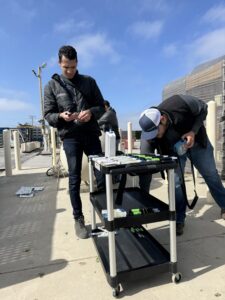
Gustavo Reyes from WG Science testing the CytoQuant

The Western Growers Science team has been working on applied research projects in the produce industry. Most recently, we have worked to evaluate a new technology, the CytoQuant (Romer Labs), on its utility as an additional tool to monitor food contact surface cleanliness and cleaning programs.

CytoQuant is a mobile flow cytometer unit that measures intact microbial cells in as little as 30s. New technologies offer opportunities to improve risk mitigation and monitoring programs.

In coming months, we will be looking to evaluate how approaches and protocols for food safety risk in produce food safety can be augmented and improved. Interested in trying out new technologies in the wild? We are actively building new applied research projects – helping technology companies complete real-world trials and offering the produce industry a chance to redesign monitoring and mitigation solutions in real-world activities.

Western Growers Board Heads to D.C. to Advocate for Ag Policy Priorities

May 19th, 2025

The annual Washington, D.C., fly-in last week took the Western Growers (WG) Board of Directors to Capitol Hill in support of key federal policy priorities, including trade, labor, food safety, water and the farm bill. Significant attention was also given to the anticipated impacts of the Trump Administration’s Make American Healthy Again agenda on WG members and the broader fresh produce industry.

Over three days, directors and participants of the WG Leadership Program met with nearly two dozen Senators and House of Representative members, and top administration officials from the Food and Drug Administration, Department of Labor, Environmental Protection Agency and Department of Agriculture.

Tuesday evening featured an address from Mexican Ambassador Esteban Moctezuma Barragán. Given current tariff uncertainties and the pending review of the United States-Mexico-Canada Agreement, Ambassador Barragán stressed the importance of maintaining the longstanding and mutually beneficial trade relationship between the U.S. and Mexico.

Bruce Summers, who will retire as Administrator for the USDA’s Agricultural Marketing Service at the end of the month, was recognized Wednesday evening for his more than three decades of stellar service to the fresh produce industry, which culminated with Canadian Parliament passage of C-280 in December 2024, which establishes a PACA-like trust for sellers in Canada.

Understanding Prospective Meal Waivers Under California Law

May 16th, 2025

California Labor Code Section 512 provides that employees are entitled to a thirty (30) minute off-duty meal period after five hours of work, with a second 30-minute off-duty meal period required after ten hours of work. Additionally, Section 512 allows for the first meal period to be waived by mutual consent of both the employer and employee if the shift ranges between five and six hours.  Most Wage Orders issued by the Industrial Welfare Commission (IWC) contain similar provisions for meal periods and their potential waiver. 

In the recent case Bradsbery v. Vicar Operating, Inc.i (Bradsbery), the Court addressed a question of first impression: whether an employer and employee can mutually agree to waive a meal period prospectively. 

Plaintiffs, former employees of Vicar Operating, Inc., sued, alleging that the company failed to provide the required meal periods as mandated by Labor Code Section 512 and IWC Wage Order Nos. 4 and 5. The Plaintiffs claimed that Vicar required them to work shifts between five and six hours without a meal period and without waiving their legally mandated meal periods by mutual consent. 

Vicar argued that the Plaintiffs had signed a valid written agreement that prospectively waived all waivable meal periods throughout their employment, and that these waivers were revocable at any time.  

On appeal was the lower court’s decision in favor of Vicar, which found that the waivers signed by Plaintiffs were valid under Section 512 and the wage orders. Despite Plaintiff’s contentions that prospective waivers allowed employers to circumvent statutory meal break requirements and denied employees a meaningful opportunity to exercise their right to meal breaks, the Court of Appeal upheld the lower court’s ruling.  

What Does it Mean 

The Court’s affirmation of the judgment in favor of Vicar means that a prospective written waiver of a 30-minute meal period for shifts between five and six hours is consistent with the text and purpose of Section 512 and Wage Order Nos. 4 and 5.  Particularly persuasive to the Court was the absence of any evidence that the waivers were unconscionable or unduly coercive and the fact that legislative and administrative history confirmed the Legislature and IWC’s determination that such waivers are consistent with the welfare of employees.ii 

However, given the complex nature of wage and hour laws in California, and the fact that Bradsbery is based on two non-agricultural-related Wage Orders, employers operating under agricultural Wage Orders (e.g., Wage Order No. 14) should consult legal counsel before asking employees to sign prospective meal period waivers.  

From the Bay to the Baja: A Journey Rooted in Sustainable Ag

May 12th, 2025

Ever since he can remember, Larry Jacobs has been captivated by the quiet magic of nature. One of his earliest memories is conducting a science experiment in his kindergarten class, where he had to grow a corn seed in a milk carton, “When milk cartons were still around,” Jacobs joked. He recalled the process of planting the seed, caring for it—until finally experiencing the gratifying moment when it sprouted.

“I just couldn’t understand how from this little seed, this plant grew,” Jacobs reflected. “It’s something very special that’s happening there.”

This fascination stuck with Jacobs into young adulthood, despite going off to college to study electrical engineering. However, at just 19 years old, he quickly realized that being stuck inside a fluorescent-lit laboratory was not the life for him, and ultimately, this desire to work in nature led Jacobs down the path of becoming the owner and manager of a wholesale nursery in the San Fernando Valley.

At one point, Jacobs got sick after applying a pesticide to treat an aphid infestation at the nursery, and that’s when he began searching for safer, chemical-free alternatives. He said he wanted to find “a way to grow crops without using the toxic materials that everybody was recommending, despite being told that that was pretty crazy.”

While regenerative and sustainable agriculture are buzzwords for the industry that often don’t have clear definitions, Jacobs has aimed to embody and define them through his life’s work.

At the encouragement of the county inspector, Jacobs went back to college and got a degree in Soil Science with an emphasis on Plant Pathology from California Polytechnic State University, San Luis Obispo.

After graduation, Jacobs married his wife, Sandra, and together, the two went on to run a local nonprofit in the Western Highlands of Guatemala, where they set up a soil testing lab for small-scale farmers.

Fast forward three years later, the couple returned to the U.S. with plans to settle down on farmland. The two decided to move to San Mateo County, buying a piece of land in the small coastal town of Pescadero in 1980, officially establishing Jacobs Farm.

Although Jacobs now had years of soil testing experience under his belt, he admitted, “I always felt it was a little presumptuous to be doing all these soil tests, and recommendations based on the soil tests, without any experience actually growing these crops.”

Jacobs said he and his wife were initially focused on increasing the amount of organic matter in soil and growing cover crops, and this was “before it was popular.” After achieving some good-quality, healthy crops on their eight-acre field, they decided to expand and begin specializing in fresh, organic culinary herbs.

As the Jacobs family continued to grow their business, they were forced to get creative in some respects, saying at one point, “We didn’t have the capital to buy a big truck and refrigeration.” But they didn’t let this speed bump get in the way of deliveries.

“It was a funny story,” Jacobs recalled. “We stripped the seats out of a Honda Civic and loaded it up. We could get about $3,000 worth of boxes in there and still have room for the driver.”

That very Honda Civic later doubled as their getaway car for a vacation to Mexico. (Don’t worry, the seats were put back in.) While making their way up the Baja Peninsula, they spent a few days visiting local farms and talking to people.

“We learned that a lot of these little farms had really beautiful crops that were market gardens,” Larry said. But because of the town’s small population—about 10,000—it didn’t take long to fill up the local market. “It was pretty isolated to get product anyplace else.”

With a need to develop a source of organic fruit and vegetables during their off-season, this inspired the couple to attempt to bridge that gap by partnering with these growers. With the support of the locals and the Mexican government, a fruitful partnership was created and from there, the del Cabo collective was born.

“I think if we had known how challenging and risky it was, we probably wouldn’t have done it. But we were young and naive, so we did it,” Jacobs said.

Initially, their focus was to establish a system where these farmers could be self-sufficient and ultimately make a higher income to support their families. The collective started out with a group of 10 people, and from there, it continued to grow.

“Other communities up and down the Baja became interested as word began spreading,” Jacobs said. “It was hard for us to walk down the beach without somebody asking us how to become a part of this thing.”

Today, the del Cabo collective spans the full length of the Baja California Peninsula and into mainland Mexico, providing organic farming training and lasting quality of life to more than 1,250 farming families in 14 communities.

Beyond their philanthropic work, Larry and Sandra have remained committed to leading their company in sustainable and forward-thinking practices.

In 2020, Jacobs Farm del Cabo introduced its ClimateLab program, a comprehensive initiative to support farmers in adapting to the effects of climate change and reducing environmental impact. This includes efforts to cultivate climate-resilient soils, assess climate risks and cut down on plastic waste.

Through this program, they also recognized the importance of implementing gender-focused initiatives, noting that women have historically been disproportionately affected by the impacts of climate change.

The two were able to identify other challenges unique to their female employees, including some who were new moms and needed a place to breastfeed. The first thing Jacobs thought was “we could implement that.” Many of their farms now offer not just private lactation areas, but also provide a pump and a refrigerator for milk storage.

Reflecting on his decades of experience in the ag industry, Jacobs said with nostalgia, “Sometimes the things that we’re interested in as children stick, and sometimes they don’t.”

For Jacobs, it all goes back to that little seed in the milk carton, and that sense of awe and childlike wonder that stuck with him throughout his life.

“Whether it’s the hillsides along the coast in the spring after the first rains, when the first seeds are sprouting and you see this flush of green on the hillsides, or it’s a roll of parsley, it doesn’t matter. It just always seems magical to me.”

Although Jacobs has spent his life making a positive impact on the ag industry, he has no plans of slowing down. “I’m looking forward to another thousand years. Let’s keep going.”

California Court of Appeal Reversal of $2.1M Verdict Has Significant Implications for Employers 

May 16th, 2025

A recent ruling by the California Court of Appeal in the case of Hearn v. Pacific Gas & Electric Company (PG&E), has significant implications for employers regarding defamation claims tied to employee terminations. The Court’s decision clarifies the standards for defamation claims in the employment context, providing valuable insights for employers to mitigate potential legal risks. 

The Facts 

Plaintiff Todd Hearn (Hearn) sued his former employer for retaliation and defamation claiming wrongful termination in retaliation for his disclosure of suspected safety violations. As part of his claim, Hearn alleged various PG&E employees made false (defamatory) statements (e.g., that he misused company time, misstated his work activities, and fraudulently submitted timecards) in various company reports, emails, and his termination letter.  

Hearn alleged PG&E terminated his employment due to these false statements, and that he was forced to repeat these defamatory statements to prospective employers who asked why he no longer worked for PG&E. Hearn alleged that publication of these statements caused him harm, including harm to his reputation, trade, profession, and occupation. 

In its defense, PG&E argued that the defamation claim was not separately actionable because it was based on the same conduct that led to Hearn’s termination and the damages sought were solely related to his loss of employment.  

Although the jury rejected Hearn’s retaliation claim, it nonetheless found PG&E liable for defamation and awarded Hearn $2.1 million in damages. PG&E appealed, and the Court reversed the verdict.  

What Does it Mean 

The Court of Appeal’s decision makes clear that employees cannot bring defamation claims based solely on the same conduct that led to their termination, if the damages sought are exclusively related to the loss of employment.  

For a defamation claim to be actionable, it must be based on conduct separate from the termination itself, and the damages sought must be distinct from those resulting from the termination. The Court emphasized that claims for defamation must involve harm beyond the ordinary consequences of a wrongful termination claim. 

Below are a few key takeaways for employers to keep in mind when investigating employee complaints and documenting involuntary terminations: 

  • Conduct Thorough and Fair Investigations: Ensure that all investigations into employee misconduct are conducted thoroughly and fairly. Document all findings and maintain clear records to support the basis for any termination decisions. This can help defend against claims that the investigation was retaliatory or defamatory. 
  • Communicate Carefully and Document Accurately: When communicating reasons for termination, be precise and factual. Avoid making statements that could be construed as defamatory. Ensure that all documentation, including investigation reports and termination notices, is accurate and free from unnecessary or inflammatory language. 
  • Seek Legal Counsel for Complex Terminations: Consult with legal counsel when handling factually complex terminations, especially in cases involving potential defamation claims. Legal advice can help ensure that the termination process is compliant with applicable laws and that any communications or documentation are appropriately handled to minimize legal risks.