Western Growers’ GreenLink® Wins the International Association for Food Protection’s 2025 Food Safety Innovation Award

May 15th, 2025

IRVINE, CALIF. (May 15, 2025) – The International Association for Food Protection (IAFP) will present Western Growers with the 2025 Food Safety Innovation Award for its GreenLink® data-sharing platform during IAFP 2025 in Cleveland on July 27-30.

“The selection committee is pleased to recognize the Western Growers Association for GreenLink®, a data-sharing program where growers, shippers and processors can anonymously share their data to visualize their data and obtain insights,” wrote IAFP Executive Director Lisa Garcia.

The award consists of a plaque and a $2,500 honorarium, and is sponsored by Walmart. Past awardees include the Alliance to Stop Foodborne Illness, Vitsab International AB and bioMeriéux.

“We are deeply honored to receive the 2025 Food Safety Innovation Award, a testament to GreenLink’s® commitment to advancing food safety through innovative technology,” said De Ann Davis, Senior Vice President of Science for Western Growers. “By empowering users to harness the power of aggregated data, we’re uniting the industry to identify and design a stronger, safer ecosystem. On behalf of our team, I extend heartfelt gratitude for this recognition and to our dedicated team and industry participants whose expertise, passion and collaboration drive our mission to ensure a safer, healthier food supply.”

More information about GreenLink® can be found here. In 2023, members of the California Leafy Greens Marketing Agreement (LGMA) adopted Western Growers’ proprietary GreenLink® data-sharing platform to collect and analyze food safety data.

Enhancing Food Safety with Testing Program Critical Control Points

May 14th, 2025

The article is now available online, but not yet formally published.

Western Growers led a recent article published in the Journal of Food Protection, introducing Testing Program Critical Control Points (TP-CCP). The TP-CCP framework complements existing food safety systems, such as Hazard Analysis and Critical Control Points (HACCP) and Hazard Analysis and Risk-Based Preventative Controls (HARPC), to identify and mitigate potential risks more effectively.

Highlights:

  • Focuses on the TP-CCP framework and the evaluation and optimization of testing programs.
  • Includes sampling, testing, monitoring and record-keeping principles.
  • Establishes TP-CCP as a feedback loop for critical evaluation of testing programs.
  • Enhances risk assessment with robust evaluation of microbiological methods.
  • Proposes pilot testing for TP-CCP validation across diverse food industries.

By incorporating TP-CCP into current safety protocols, the food industry can enhance its ability to detect and address hazards, mitigate risk and make significant advancements in a healthier and safer food supply.

To read the full article, click here.

Reshaping Regulatory Frameworks: Why Prevention is Essential for Continuous Improvement

May 12th, 2025

In food safety, regulatory frameworks are critical for setting the baseline for compliance, defining clear expectations and ensuring accountability. However, true progress requires fostering a culture of continuous improvement. Frameworks must evolve beyond lists of requirements that encourage a checklist mentality—one that often falls short in driving meaningful, preventive food safety practices.

Prevention is often an afterthought in regulatory discussions, where compliance and enforcement tend to be reactive and focused on what went wrong, after the fact. In contrast, prevention asks, “What could go wrong?” and plans ahead to avoid it. A prevention-based food safety framework is forward-looking, drives lasting change and fosters continuous improvement.

A Shift in Mindset from Compliance to Continuous Improvement

Prevention-driven food safety necessitates a shift in mindset. When companies operate with a mindset that prioritizes prevention above compliance, they move away from just checking boxes to asking, “How can we improve tomorrow, next week/month/year compared to today, this week/month/year?” Just like other business metrics, measuring performance in food safety is foundational for a strong food safety culture—one that looks beyond compliance to continuous improvement.

Before the Food Safety Modernization Act (FSMA) was enacted in 2011, produce safety lacked the regulatory focus given to other food sectors. Yet the industry had already taken the initiative with its first food safety guidance for fresh produce in 1997 and has made significant progress since. Still, food safety is a journey of continuous improvement—one that requires tracking performance. Without knowing where we’ve been or where we are, we can’t measure progress.

Food safety performance can be measured using leading and lagging indicators. Leading indicators are proactive and predictive, for example, tracking the frequency and thoroughness of worker hygiene training (e.g., proper handwashing, glove use or cross-contamination prevention) and adherence to best practices. Well-trained workers are more likely to prevent contamination, making this a leading indicator. Lagging indicators, such as the number of recalls or outbreaks, reflect what has already happened. They show what went wrong by assessing whether the food safety failed, but only after the fact. A regulatory system focused solely on lagging indicators assesses safety based on what went wrong, and a company focused solely on lagging indicators assesses its food safety program by a passed or failed audit.

Unlike lagging indicators, leading indicators are forward-looking and give companies a proactive edge. Both leading and lagging indicators provide valuable insight into long-term strategies, but leading indicators are essential to guide prevention strategies by informing industry and regulators of potential issues.

Rethinking Success—Looking Ahead

This brings me to a crucial point: The number of outbreaks alone is not a sufficient measure of success. Though important, it is a snapshot from the past, not a panoramic video of what is out ahead. A genuine culture of food safety should be evaluated on broader criteria: Are risks being identified early? Are companies adequately investing in training and innovation? Is data being employed to inform decision-making rather than just reacting to failures? When data is transformed into actionable insight, its true value is realized. Data-driven prevention has the power to reshape food safety by enabling smarter technology use and fostering stronger collaboration between public and private sectors to drive continuous improvement.

At Western Growers, we are committed to advancing prevention and data science to transform information into action because continuous improvement isn’t just possible, it’s essential. We believe regulatory frameworks must embed prevention at their core, not treat it as an afterthought. That vision is attainable through a system that supports ongoing improvement, rewards proactive practices, leverages leading indicators and embraces prevention as a foundational strategy for protecting public health.

The Reservoir and Western Growers Open Applications for Agtech Robotics Incubator in the Salinas Valley

May 14th, 2025

First-of-its-kind on-farm incubator offers real-world testing and farmer insight

SALINAS, CALIF. (May 14, 2025) – Reservoir and Western Growers today announced the opening of applications for membership at Reservoir Farms, the pioneering on-farm robotics incubator in California’s Salinas Valley. This first-of-its-kind facility empowers California growers and agtech startups to co-develop, test and scale advanced automation and robotics solutions for specialty crops in real-world farming environments, addressing the industry’s demand for practical, scalable agtech innovation.

Despite increased investment and interest in agricultural technology, many startups struggle to achieve commercial adoption due to a disconnect between technological development and growers’ operational needs. As the world’s first on-farm robotics incubator, Reservoir Farms bridges this gap by connecting startups directly with the 2,500 members of Western Growers. This collaboration ensures that new technologies are shaped by real-world challenges and validated by the farmers who will ultimately use them.

“From the inception of Western Growers’ Agtech Initiative more than a decade ago, our vision to more quickly bring advanced technology to the specialty crop industry rested on the premise that technology startups could only succeed with guidance from growers rather than by making assumptions in the dark about field-level challenges,” said Dave Puglia, President and CEO of Western Growers. “Reservoir Farms represents a new kind of research and development model, putting growers in the driver’s seat and accelerating practical innovation that fits the real-world complexity of our farms. I am excited that we are helping launch the working farm-labs that can deliver on our original vision for agtech in the specialty crop industry.”

Designed to help accelerate innovation from an early stage, Reservoir Farms is now accepting applications for its inaugural Salinas cohort of 12 startups, with a focus on:

  • Robotic harvesters, including strawberry, broccoli, iceberg, and romaine
  • Rugged mobility for uneven terrain
  • Machine vision for crop maturity/quality
  • Lightweight end effectors for delicate crops
  • Modular field robotics components
  • Edge AI for cloud-free autonomy
  • Precision soil & bed analytics

Startups will have access to custom-planted specialty crop fields, fully equipped R&D workshops and flexible shop space without the burden of multi-year leases.

“Our mission is to move breakthrough technologies off whiteboards and out of labs—into the field, where they solve real-world problems. Reservoir Farms accelerates this journey by grounding innovation in the daily realities of production agriculture,” said Danny Bernstein, CEO of The Reservoir. “Our partnership with Western Growers is key—it gives startups early access to grower insights and connects them to WG’s rigorous validation process, which has become the standard for evaluating impact in specialty crop agtech.”

Through the Western Growers’ validation process, participating startups will receive a quantitative “scorecard” measuring scalability, efficacy and financial viability. This rigorous validation provides startups with actionable feedback and a critical stamp of approval, streamlining the path to commercialization and building trust among growers and investors.

The first Reservoir Farms members will be announced in August 2025. Inquiries can be submitted through  https://reservoir.co/contact


For more information, please contact:

Ann Donahue

(949) 302-7600

[email protected]


About The Reservoir:

The Reservoir is a nonprofit startup incubator and venture capital fund focused on helping agtech startups succeed where agriculture happens—in the field. Reservoir Farms is the world’s first on-farm robotics incubator, starting in the Salinas Valley and expanding to other key regions like the Central Valley. Reservoir Ventures backs startups solving real problems in specialty crops. By combining R&D space, hands-on grower input, and early-stage capital, the Reservoir helps turn promising ideas into tools for the growers who feed the world. Learn more at https://reservoir.co

About Western Growers:

Founded in 1926, Western Growers represents local and regional family farmers growing fresh produce in California, Arizona, Colorado and New Mexico. Western Growers’ members and their workers provide over half the nation’s fresh fruits, vegetables and tree nuts, including half of America’s fresh organic produce. Connect and learn more about Western Growers on Twitter and Facebook.

###


Highlights From the Second Annual Western Growers Women Leadership Retreat

May 12th, 2025

In early April, the Western Growers Women (WGW) Program kicked off its Second Annual WGW Leadership Retreat under the sunny skies of California’s Central Coast in beautiful Pismo Beach, Calif.

The program welcomed 35 incredible women from 19 different member companies, each bringing their own unique perspective and experience. Although every attendee had a different background, they all shared one commonality: they were proud members of the agriculture industry.

Growing up in the Imperial Valley, I developed a deep love for agriculture early on. Some of my favorite memories include riding around in the truck with my dad and tagging along with him to meetings. By the time I was in high school, I knew I wanted to be part of this industry. But I also quickly realized how few women leaders and mentors there were to look up to.

Fast forward 10 years, and I was thrilled to be hired to lead the WGW Program – an opportunity that combined my love for agriculture with my passion for empowering women in ag. From the beginning, I knew my goal for the WGW program was not just to provide tools for professional development, but also to create a space where women could connect, relate and grow alongside other women in the industry.

The WGW Leadership Retreat was a great mix of networking, leadership training and a healthy dose of fun. Over the course of three days, we offered eight different leadership sessions, including:

  • “Building Your Internal and External Network for Career Development” presented by Jenny Maloney, Global-Americas Strategic Account Manager, Bayer CropScience Vegetable Seeds
  • “Mastering Public Speaking” presented by Western Growers Corporate Counsel Teresa McQueen
  • “Birkman Leadership: The Interplay Between Ego, Productivity, and Stress” presented by Dr. Tina Huff
  • “How to Ask for a Raise” led by Western Growers SVP of HR, Karen Timmins
  • “Lead with Confidence: A Leader’s Guide to Hiring Right” presented by Western Growers Training and Development Manager, Priscila Cisneros

These sessions sparked meaningful conversations and gave attendees actionable tools to elevate their careers.

We wrapped up our three days of learning with a fun and educational visit to Talley Vineyards in Arroyo Grande. Elizabeth Talley guided us through an in-depth tour of their operations – from the diversity of soil across their vineyards to the intricacies of their in-house bottling process. Of course, the experience wouldn’t have been complete without tasting a few of their delicious wines.

At its core, the WGW Leadership Retreat was about more than just professional development – it was about building lasting connections and fostering a community of confident women leaders in the fresh produce industry.

We are so grateful to the Western Growers Board of Directors for believing in the power of women’s leadership in ag and helping bring the WGW Program to life. If you are a part of a member company and have women in your organization looking for professional growth, I encourage you to get them involved in the WGW Program. The WGW community is growing stronger each year, and the possibilities are endless.

For more information on Western Growers Women, email Cierra Allen at [email protected].

Data’s First Lesson – It’s Not What It Appears.  

May 14th, 2025

The promise of artificial intelligence (AI) and big data is expanding, with stated implications ranging from making our lives a bit easier with automatic orders by our refrigerators for items running low, to the slightly more complex problem of solving climate change and world peace.  As with most things, the truth of what AI will offer us (especially in the foreseeable future) largely lies somewhere in between a fully stocked fridge and fixing the universe.  

Does AI and big data offer solutions to the Produce industry? Most definitely 

Are we there yet? Most certainly not.  

Western Growers Association (WGA), in collaboration with Crème Global, launched GreenLink® in 2022 as an effort to accelerate data-driven solutions for food safety. GreenLink® is a cloud-based platform allowing fresh produce growers to share food safety data confidentially, while structuring their data in formats that make visualization and meaning clearer for the individual participants and for the industry as a whole. For any given participant, GreenLink® unlocks the value of their cumulative dataset, giving insight into years of data collection and investment. Collectively, participants’ data is aggregated and made anonymous to usher in additional opportunities for accelerated and augmented learnings. As an example, if one grower collects 500 tissue samples of leafy greens annually for pathogen testing, they instantly have access to an industry’s worth of sample volume in GreenLink® that now houses years of data equaling over a quarter of a million tissue samples and over six and a half million data points.  

With increasing amounts of data to make decisions , new questions emerge and evolve regarding the most efficient means to manage food safety risk. Do we know enough from the data to recommend change? When and how do you know that you know enough? What if the observations change? Are the findings related to certain practices, areas, or inputs? Is there something else we can measure to give us heads up to risk? Can you quantify the risk reduction from our effort? Are the test methods really the same? Which method should I use? How was my sample actually collected, and are we sure it is representative? Was the system designed to “find” issues? Or, was it collected to provide evidence of compliance?  

While we have a way to go in our effort to completely embrace data and to unlock the promise of finding unrealized solutions, we have already learned some invaluable data lessons.  

The Lesson of Data Humility: Our first lesson is that of data humility – while we may have been collecting data for years, in most cases we are starting at ground zero in our data strategy by working on the structural foundation on which we will build grander data-driven solutions. Despite decades worth of data collection, oftentimes datasets are limited, siloed, biased, missing elements, or generally of low data quality.  In these instances, no quantity of this quality of data can overcome the fractured foundation that it builds, and you must revisit to rebuild it (if available) or start fresh with an intentionally designed structure. High quality data is essential for training effective data models because it shapes the model’s accuracy, reliability, and fairness. Without clean and representative inputs, even the most advanced algorithms can produce inconsistent results. As an easier-to-understand metaphor, think of data sharing and data programs like a mirror with amazing lighting. When glancing in the mirror from afar, the data looks wonderful, but as you approach the mirror and linger gazing into the reflection, you begin to see all the data’s flaws, wrinkles, and limitations.  As such, the first official lesson comes with the realization that what we thought we knew about our process is far more limited than we had hoped.  

The Lesson of Being Honest: Our first lesson from data is, to be honest, somewhat demotivating – we never stop wanting the 100% on the test, and it can be deflating to recognize our data investment didn’t quite hit the mark. Despite this, the gift of the lesson is that with the requirement to slow down long enough to see the flaws in our data and collection system, we are fully equipped to restructure the questions we would like answered from our data. This restructuring happens not just individually, but with data-sharing programs, we can accelerate this restructuring across entire industries. With a good hypothesis of what we would like to know, we can set the foundation for data collection to ensure it can give us the best chance of teaching us what we want to know in the future. With a thoughtful construction of the data system (sampling, testing methodologies, data structure) we can change course and design a path to our intended learning destination. These foundational efforts will ultimately usher in brighter, bigger solutions augmented with AI tools that will offer even greater learnings and models.  

The Lesson of Patience: Working with data in the field of food safety is a long game. Obtaining transformative insights from AI and these large datasets will not happen overnight. The programs and insights are the product of consistent, iterative work. In addition, there needs to be a willingness to refine and revisit what we have done in the past. It is easy to become inpatient or ask us when we will know the outcome of these programs, but progress, especially when building programs, builds slowly and compounds; it is not a straight line. First is having a clean dataset, then adding a few more variables, then designing specific trials. These refinements compound over time, ultimately enabling learning and proving hypotheses.  

Data sharing isn’t just about the data you share – it’s about unearthing the limitations and gaps in existing data points. While it is always nice in retrospect to understand what happened in an adverse food safety event, our goal should be designing systems that prevent those adverse events from ever happening. If we think of most of the data we collect in our processes, manufacturing plants, and in our overall food supply chain, it is safe to say these datapoints most likely were not designed to identify the problem before it happened. Intention matters.  We need a different system. Data and data-driven solutions will always be biased, intentionally or unintentionally, in how we collect the data and the initial questions we ask of it. Through data sharing and transparency amongst and across industries, we can design and standardize what we look for in food safety data. We can recognize that data collection for the sake of data collection is costing us far more than what we spend on the tests, and we can identify the activities of low value that should be deprioritized to free up resources that could be better spent elsewhere.  

Interested in building intentional data collection systems?  

Make your data work as hard as you do. There’s safety in numbers – join us 

Fighting Obesity and Chronic Disease with Agriculture

May 12th, 2025

We’ve all been there. You’ve had a long day, and the couch is calling your name like a long-lost friend. And what better way to settle in than with a giant bag of chips and a soda (or maybe an ice cream sundae)? But what if I told you there’s a way to fight the dreaded couch potato lifestyle and benefit your waistline all at once? Well, buckle up because agriculture has our back in the battle against obesity and chronic disease— and it comes with a side of fresh produce and maybe a shovel.

Fruits, Vegetables and the Heart That Loves Them

We all know that fruits and vegetables are good for us (our parents were right, as usual), but did you know they could actually lower your risk of heart disease? If you eat just one more serving of fruits or veggies daily, you could reduce your risk of heart disease by a whopping 4 percent. According to a study in the American Journal of Public Health, that one extra serving can go a long way. So, what’s holding us back? Well, according to the Centers for Disease Control and Prevention (CDC), only about one in 10 Americans actually eat the recommended daily servings of fruits and veggies. And while we’re on the subject, 42.4 percent of U.S. adults are obese, thanks mostly to processed foods, a sedentary lifestyle and lack of nutrient-dense foods. Yikes.

But here’s the twist: Agriculture can be the superhero in this story. Eating healthier can help us feel better and avoid the trap of obesity and other related health issues.

Get Off the Couch (and into the Garden)

Let’s be honest. Sometimes it feels like climbing Mount Everest to go for a walk. But here’s something you might not have thought about: farming and gardening count as exercise. According to a study published in Preventive Medicine, people involved in community gardening are 1.5 times more likely to meet physical activity guidelines than those who just binge-watch another season of a show.

And let’s talk about exercise: Just 150 minutes of moderate-intensity activity a week can cut your risk of cardiovascular disease by 30 percent, according to the American Heart Association. That’s less than 30 minutes a day—roughly the time it takes to scroll through TikTok. So, why not swap some screen time for some fresh air and gardening?

Nutrition Education: Growing Minds (and Veggies)

It’s not all about what goes into our bodies. Sometimes, it’s about what goes into our brains. Agriculture can also play a major role in educating us about nutrition. Take the U. S. Department of Agriculture’s (USDA) Farm to School program, which connects local farmers with schools to provide fresh produce. The result? A 50 percent increase in fruit and veggie consumption in participating schools.

Studies show that kids who receive nutrition education are 30 percent more likely to make healthier food choices. That’s a huge impact, considering how many of us grew up with a vague idea of what eating healthy actually meant. And in California, a program combining school gardening with nutrition education resulted in a 20 percent drop in childhood obesity rates.

By connecting agricultural education with fresh foods, we’re not just reshaping the way we eat, but we’re also laying the foundation for healthier, happier communities.

The Bottom Line: Get Your Hands Dirty (and Eat Your Veggies)

The next time you’re feeling the pull of the couch or the lure of junk food, remember this: Agriculture isn’t just about growing crops—it’s about growing healthier habits, stronger communities and happier hearts. Whether you’re picking fresh produce from a local market, getting your hands dirty in a community garden or teaching kids how to plant veggies, agriculture is a tool we can all use to fight obesity and chronic diseases.

If you don’t have a Western Growers Assurance Trust (WGAT) plan, which includes a care management program and the added option of a Wellness Program, contact us to see how we can help you better manage your health care costs at (800) 333-4942.

Specialty Crops Grateful for Vital Investments in U.S. House Agriculture Committee’s Reconciliation Draft

May 13th, 2025

WASHINGTON, D.C. (May 13, 2025) – The Specialty Crop Farm Bill Alliance (SCFBA) issued the following statement today reacting to the U.S. House Agriculture Committee’s release of draft text per the House Budget Committee’s reconciliation instructions:


“We are grateful to Chairman GT Thompson and his staff for advancing these vital investments in specialty crops that the Specialty Crop Farm Bill Alliance has been proposing since 2023. Although our strong preference is to enact agriculture policy in the context of a comprehensive bipartisan farm bill, we appreciate the Chairman’s long-standing support of our industry and for seizing this opportunity to support America’s specialty crop growers.


“Our message today is simple: Whenever Congress invests in American agriculture, it must include specialty crops. America’s specialty crop growers produce half the farm gate value in the United States and continue to confront a host of unprecedented challenges, yet specialty crops historically receive a small fraction of the farm bill’s investments. Rising input costs, limited access to labor, unfair trade practices, disruptions to foreign markets and natural disasters ranging from flood to drought all impede their global competitiveness. Nothing short of the survival of our domestic industry is at stake.


“The investments proposed by Chairman Thompson today are a key piece of the puzzle, but even if they survive the entire budget reconciliation process and are enacted into law there is still work to be done. Senate rules prohibit many of the new and innovative policy initiatives we’ve been proposing from being included in this bill, such as investments in mechanization and automation and reforms to crop insurance that would provide many of our growers with an affordable and effective safety net for the very first time.


“We continue to urge Congress to advance a comprehensive, bipartisan farm bill that incorporates our recommendations to bolster the competitiveness of America’s specialty crop growers. They domestically produce the safe, nutritious foods that more Americans should be consuming, as well as cultivate the trees, flowers and plants that play a vital role in the nation’s health and wellbeing.” 


The SCFBA is co-chaired by Cathy Burns, CEO of the International Fresh Produce AssociationMike Joyner, President of the Florida Fruit & Vegetable Association; Dave Puglia, President and CEO of Western Growers; and Kam Quarles, CEO of the National Potato Council.


# SCFBA #


The Specialty Crop Farm Bill Alliance is a national coalition of more than 150 organizations representing growers of fruits, vegetables, dried fruit, tree nuts, nursery plants and other products. The Alliance was established to enhance the competitiveness of specialty crop agriculture and improve the health of Americans by broadening the scope of U.S. agricultural public policy. For more information, visit farmbillalliance.com


MEDIA CONTACTS: 

Christina Morton, Florida Fruit & Vegetable Association, [email protected]  

Sarah Gonzalez, International Fresh Produce Association, [email protected] 

Mark Szymanski, National Potato Council, [email protected]  

Ann Donahue, Western Growers, [email protected]  

Have Pity for Regenerative Agriculture for Inadvertently Fighting a Two-Front War

May 12th, 2025

Regenerative agriculture is heralded by many as the savior of global agriculture. If farmers can adopt regenerative practices like cover cropping, no-till, diverse crop rotations and managed rotational grazing, their soil health would improve and farmers could improve their ag operation’s productivity while fighting climate change.

Who could say no to that? And yet, with the promised panaceas of better farms and less climate change, only about 12 percent of all U.S. farmland incorporates at least one widely accepted regenerative practice. Far fewer have chosen to stack regenerative practices together to increase the aggregate impact of regenerative ag. Why?

It turns out that once you get past bumper sticker slogans, it’s fairly complex to implement regenerative ag practices, and every practice change adds costs to a farmer’s operation. So having gone through some pretty rough patches over the past five years, farmers don’t have a lot of margin left to spend on new practices, no matter how good the alleged benefits.

When they consider practice changes, they generally end up with two options to cover the cost-consumers paying premium price at retail or practice payments from companies that have made ESG commitments.

To date, consumers have shown little interest in paying a premium for regeneratively grown products, particularly in specialty crops. At the same time, recent studies have found only eight percent of companies have made ESG commitments put any actual funds behind the commitments, which makes you wonder how they expect the funding to occur. That combination puts farmers who want to make changes in a difficult position. This is why regenerative ag finds itself in the middle of a two-front war.

The first is the consumer front, where it competes with organic products. Organics have grown to over $228 billion in global sales in 2024 and are forecast to reach $658 billion in sales by 2034 (11 percent annual growth rate). Organics have had nice growth over the last couple of decades even though the definition has not always been clear, consumers have been often confused, and the enforcement of organic labeling was inconsistent and far from perfect.

All that said, it is one of the few words that ring the register with consumers, and it has been doing so for decades. Unlike organic, regenerative does not walk into a blank slate; it has to compete with the $228 billion organic revenue juggernaut. To continue fighting this battle successfully, regenerative agriculture will need to spend large chunks of marketing budgets for years (likely decades) to establish itself as a new player with brand awareness in a crowded landscape (Organic! Locally grown! Hormone-free! Climate-smart! What’s a consumer to do?) It seems like a battle best avoided.

What about the second front? Growers implementing regenerative practices can go to companies with ESG commitments and work with them to secure payments. In exchange, the buyers of the practice change often get things like carbon credits. However, the tools are nascent, not perfect and not infallible at measuring and tracking carbon. Even worse, in many cases if the carbon cannot be found, it’s not very good at identifying the root cause (pun intended) of the missing carbon. And here is the big problem: If a carbon audit is performed years later and the carbon is missing, guess who is almost always left on the hook to write a check and give back the carbon credit cash? Yep, you guessed it, the farmer who sold the credit to the ESG buyer.

That is the big challenge for regenerative agriculture, which wants to be widely adopted but does not yet have the support of many consumers who will pay more or of the ESG committed companies that often do not want to pay at all.

Neither front of this battle is particularly attractive. Consumers are facing years of significant inflation, and their grocery budget doesn’t fill up as much of the shopping cart as it used to. ESG commitments are being questioned for multiple reasons, and that does not make their willingness to bring funding for practice changes any more likely.

The best path forward for regenerative agriculture is to support growers with education, proven practices and local help to make changes easier and more cost-effective. This avoids both fronts mentioned above and creates a slower growth path for regenerative ag. On the plus side, this does two things to improve sustainability; it improves the sustainability of ag operations while improving the sustainability of their finances. That may be the best win-win for regenerative ag currently available.

A New Chapter for Healthcare in Oxnard

May 12th, 2025

Recently, we opened the doors to Western Growers’ brand-new Cedar Health Center in Oxnard, Calif. Like our other Cedar Health Centers, this primary care medical clinic is exclusive for members of Western Growers Assurance Trust and Pinnacle. And while there was a ribbon-cutting ceremony and speeches (and yes, even snacks), what really made the day special was the energy in the room. You could feel it—hope, pride and a deep sense of purpose all coming together.

We’ve listened to our members talk about the challenges of accessing affordable, high-quality care close to home. We knew we needed to do more. Not just for the sake of convenience—but also for the well-being of the folks who power our agricultural community every day.

So, we rolled up our sleeves and got to work. And now, here we are.

Cedar Health Center was built with our members in mind—every detail, every service, every friendly face you’ll see when you walk in. From zero-dollar copays to a bilingual care team that understands the community it serves, this place isn’t just about healthcare. It’s about dignity. It’s about respect. And it’s about showing up for people in a way that really matters.

During the event, I had the pleasure of standing alongside Dr. Raymond Lopez, our Medical Director at Cedar. He said something that stuck with me: “Healthcare isn’t just about treating the body—it’s about caring for the whole person.” That really sums it up. At Cedar, we’re not rushing people in and out the door. We’re taking time to listen, to understand, and to make sure every patient feels seen and valued.

We were also honored to be joined by Oxnard Mayor Luis McArthur, who presented our team with a Certificate of Recognition, and his words echoed what so many of us were feeling: that this clinic is going to make a real difference in people’s lives.

After the ribbon came down, we invited everyone inside for a tour. It was incredible to see our guests meet the healthcare team, explore the beautiful new space and get a firsthand look at what we’ve created together.

This isn’t the finish line—it’s just the beginning. We’re committed to making Cedar Health Center a true resource for our members, their families and the broader Oxnard community. And we’re grateful to everyone who helped bring this vision to life.

If you’re in the area, we’d love for you to stop by and see it for yourself. Until then, thank you for being part of this journey. We’re excited for what’s ahead.

Permission for Risk pt. 2

May 12th, 2025

This is part two of a two-part series on food safety and sustainability. You can read the first part of this series in the March/April edition of the Western Grower & Shipper.

Risk-based management requires that we design systems that consistently and efficiently identify risk so that appropriate measures can be implemented to reduce it. Preventing the first step of identification impedes much hope of executing risk-based management across the food industry.
To illustrate what risk-based management and risk permission in food production could look like, here’s a non-food example. We all accept that sharks are a risk to human health when swimming in the ocean. However, our means to manage that risk is not to set out to remove all sharks from the ocean.

Instead, we as a community, have designed education, alerts, monitoring and sometimes physical barriers like nets to protect humans in the ocean environment from a potentially hazardous encounter. Extending the metaphor, we not only authorize the risk to exist, but we design systems to know when the risk is elevated and when too much risk is seen. If sharks are too close, we take measures to get people out of the water and close beaches.

In agriculture, we grow our food where pathogens live and must accept and authorize that occasional encounters with foodborne pathogens are not unexpected. If we build our pathogen monitoring systems appropriately, we will allow for systems to alert food producers when risks are no longer acceptable (i.e., too many sharks) due to current measurements being above what baseline measurements would expect.

Due to the complexity and diversity in agricultural and in food-producing ecosystems, risk is expected to be variable and needs to be monitored per producer and system. Once established, these risk-based monitoring systems must also be recognized and trusted as functional (i.e., we cannot abandon fields/processes simply because a non-zero-risk baseline is established). With understanding and authorization that the status quo has some inherent risk, we permit the establishment of systems being built to be able to identify and manage risks when they elevate.

Once we can understand the increased risk, science can help design appropriate mitigations to reduce risks back to acceptable levels. True risk-based systems offer the ability to allocate resources where risks are elevated and minimize limited resources being applied inefficiently across supply chains.

Transitioning to risk-based management starts with culture. 

As much as this risk-obsessed microbiologist loves the concept and science of microbial risk management, I have come to recognize that the first system to be built to achieve that goal is dependent on individual and societal psychology. As a collective food industry, we must focus efforts on shifting to a culture of risk acceptance if we want to truly usher in a more sustainable means to reduce foodborne illness. While it does sound somewhat counterintuitive to allow for risk when trying to reduce it, the lack of doing so regrettably leads to situations where far more risk remains unknown and unintentionally accepted. Permission to identify risk without fear of losing customers, ranch land and products is a critical first step to designing sustainable risk-based systems in the future.

Culture is discussed frequently both in business and the food safety community, but rarely do we intentionally collaborate to design systems to cultivate it. This is especially true when building culture requires connecting a diverse community representing different stakeholders and geographies. Any culture-building effort, including one for food safety, takes strategic design and constant support.

These efforts will often take more time and be more difficult than the food safety measures themselves. But, as with all great innovations and efforts, the first step is to truly identify the challenge at hand and to socialize the immediate need across all stakeholders.

The unlock for the food industry on real risk-based management starts with these two related and distinct questions:

1. What actions can we take to curate the culture of our broad food safety community to understand the need and adapt behavior to authorize risk identification and management throughout the supply chain?

2. What monitoring systems can we build to effectively evaluate risks within the industry so preventive and proactive actions are taken to remove pathogens from the food system, ultimately reducing risk to consumers?

With a collective commitment across all stakeholders to truly transition to risk-based management, we offer the opportunity to flip strategies, collaborations and mitigations. We can begin to design the monitoring systems we need to optimize both food safety and business outcomes within and across food segments.

A sustainable system of food production is within our grasp, but we must recognize it will not come to us without our collective efforts to build a bridge between two disparate food safety systems – one of hazard management to one of risk management.

The bridge between where we are at, and where we need to go, relies on the collaborative belief that we can change the food safety paradigm. A truly sustainable food safety system is attainable, but we need to choose to constantly cultivate it.

Reimagining Food Relief: The Power of Home Growers

May 12th, 2025

What if every home gardener in America knew they could donate their surplus produce to a local food pantry? The impact would be transformative. Although achieving 100 percent awareness may not be realistic, even a fraction could move the needle on hunger and health in this country.

Today, an estimated 62 million Americans grow food at home. If more of their surplus harvests found their way into food pantries, the ripple effects would be significant, especially in public health.

Enter AmpleHarvest.org, a one-of-a-kind, nationwide initiative operating in over 5,600 communities across all 50 states. The New Jersey-headquartered nonprofit connects nearly 8,300 food pantries with surplus produce from home gardeners, creating a simple, seamless way to turn surplus harvest into vital food donations.

“In the fight against hunger, AmpleHarvest.org is revolutionizing fresh food access, much like Uber and Lyft transformed transportation,” said CNN Hero and World Food Prize nominee Gary Oppenheimer, Founder and Executive Director of AmpleHarvest.org.

Founded 16 years ago with a simple yet powerful mission—to ensure no homegrown food goes to waste—AmpleHarvest.org quickly proved its value. When the 2010 BP oil spill devastated Gulf Coast communities, Oppenheimer realized the model could be adapted to respond to disasters. With local fisheries shut down and thousands of shrimp fishermen out of work, many families suddenly faced food insecurity. AmpleHarvest.org stepped in.

In the aftermath of the spill, Gary reached out to Louisiana food banks to ask how he could help. The answer was clear: With fishing bans in place, thousands of shrimp fishermen—many of them Vietnamese immigrants—would be out of work for at least a year. This economic ripple effect meant that many families who once made their living from the Gulf waters would now be turning to food pantries for support. And it wasn’t just Louisiana—communities across the Gulf Coast, from Texas to Florida, would feel the impact.

Recognizing that the increased demand would put a heavy strain on food pantries, Gary developed a model tailored to
the unique challenges of the crisis. The response worked. By mobilizing gardeners and volunteers and updating donation logistics in real time, AmpleHarvest.org demonstrated that with determination and collaboration, fresh food can reach those in need, even under the most extreme conditions.

Today, that same model continues to evolve and serves as a vital link between home gardeners and food pantries, ensuring that fresh, nutritious food reaches those who need it most.

A Model for Disaster Response
AmpleHarvest.org has become more than a food donation platform—it’s now a model for disaster response. In the immediate aftermath of a crisis, agencies like the government and the Red Cross are on the front lines. But once those first-responders leave, long-term recovery begins—and families are often left struggling to put food on the table.

After the devastating tornadoes that struck Tuscaloosa, Ala. and Joplin, Mo. in 2011, AmpleHarvest.org sprang into action. The organization worked to determine which food pantries were still operational, temporarily relocated or destroyed. Volunteers called every pantry in the system to update records, ensuring that home gardeners had accurate, up-to-date donation locations. Oppenheimer took a similar approach after Houston’s catastrophic floods, allowing a steady stream of fresh produce to reach affected families.

Most recently, the organization has extended its support to Los Angeles in the wake of severe wildfires. Volunteers contacted more than 60 local food pantries to confirm which ones were open and accepting donations. Once verified, AmpleHarvest.org launched a wide-reaching outreach campaign using Google ads, social media and partnerships with community organizations to inform home gardeners within a 100-mile radius how they could help. Thanks to L.A.’s mild climate, recovery efforts began quickly.

“Gardeners can plant crops like radishes, which are ready to harvest in just three weeks,” said Oppenheimer. “As the season progresses, even more growers will be able to donate surplus fruits and vegetables to nourish their communities.”

Even the food pantry clients themselves are encouraged to participate. If they have a small garden at home, they too can give back—contributing not just as recipients, but as part of the solution.

“The whole point of this is to get healthy, fresh food to people,” said Oppenheimer. “Especially after a crisis, when stress weakens the immune system, good nutrition becomes even more critical. The healthier the food, the healthier you are.”

The Measure of Success
Unlike traditional food programs that measure success by pounds or truckloads, AmpleHarvest.org takes a different approach. Its impact isn’t calculated in crates or calories but in awareness and access.

“In the food industry, donations are typically measured in pounds or units. But how do you compare a watermelon to a bag of parsley? One is heavier, but the other may provide more frequent use in meals. This highlights the challenge of applying standard measurement practices to AmpleHarvest.org’s mission,” Oppenheimer said.

“The counterintuitive part about AmpleHarvest.org is that we’re not about the food,” said Oppenheimer. “Food is the outcome of what we do, but our real focus is making sure people know they can donate—and that they’re able to do so. That awareness is the heart of our education outreach.”

Because AmpleHarvest.org relies on millions of home gardeners, tracking exact donations would be nearly impossible. Just as thrift stores don’t log every shirt or pair of shoes dropped off, gardeners aren’t counting zucchinis. They give simply because they care.

That’s why the organization focuses on three key indicators: how many gardeners know they can donate, how many food pantries are available to receive those donations and how many communities nationwide benefit.

While the initiative has grown tremendously, its mission is far from finished. AmpleHarvest.org is continuing to expand its reach town by town, region by region, working toward a future where every gardener is within driving distance of a food pantry.

And the ripple effects go well beyond feeding families today. Children raised in homes with access to fresh produce are more likely to value nutritious food as adults. Indeed, an analysis from an outside Harvard trained economist concluded that if every gardener in America knew they could donate freshly harvested produce, the nation’s healthcare cost would drop by $58 billion thanks to reductions in diet related diseases such as diabetes, obesity and hypertension.

“We’re not just tackling hunger,” said Oppenheimer. “We’re teaching communities about sustainability, nutrition and even how to prepare produce they may not be familiar with. It’s about dignity, health food sovereignty and self-reliance.”

For more information, visit www.ampleharvest.org.

The SB 54 Carnival Comes to Town with Mandatory Roller Coasters

May 12th, 2025

Senate Bill 54, known as the Plastic Pollution Prevention and Packaging Producer Responsibility Act, was signed into law in 2022 with the goal of drastically reducing single-use plastic waste in California. The law imposes sweeping requirements on producers to ensure that by 2032, 100 percent of packaging in the state is recyclable or compostable, with a mandated 25 percent reduction in single-use plastic packaging and a 65 percent recycling rate. SB 54 also establishes an extended producer responsibility (EPR) program, requiring producers to fund the implementation of the law’s goals, including the collection, recycling and disposal of covered materials through a Producer Responsibility Organization (PRO) overseen by the California Department of Resources Recycling and Recovery (CalRecycle).

Gov. Gavin Newsom directed CalRecycle to halt their regulatory package finalization to address concerns over the costs and negative impacts on businesses. Honestly, there is gratitude for California’s governor and his last-minute emergency brake maneuver, but businesses need so much more than just an e-brake on a steep roller coaster.

The core message echoing at the Capitol this year has been “affordability” and rightfully so. The business and residential departures from the state are far more than just potential outcomes now. The numbers are real, not mere speculation. For the past two decades, the State Legislature and regulatory agencies have operated with an attitude of: “Anything is possible, you simply have to dream it!” This approach to lawmaking has led to the creation of mandates that lack proper support and guidance for how to successfully achieve them. CalRecycle’s current divergence from the statutory language in their regulation has only exacerbated this issue further. All impacted industries have voiced their need for more time and legitimate off-ramps.

California is not alone in this push for packaging Extended Producer Responsibility (EPR) laws. Since 2021, eight states have passed similar laws, and four additional states are grappling with proposed bills this year. However, none of those regulations are as expensive or as aggressive as SB 54. Additionally, California is the only packaging EPR that is solely responsible for infusing environmental justice groups with $500 million annually for a decade. So, while California is not alone in these efforts to develop more “sustainable” packaging and increase recycling rates, this is certainly not a level playing ground.

Next Steps

CalRecycle has stated they will be revising their final regulation, including a “review” of their Standardized Regulatory Impact Assessment (SRIA). The SRIA outlined the speculated costs for businesses to comply with SB 54 as well as the cost to consumers. The validity of this analysis has been called into question by industry and economic experts. CalRecycle has noted its shortcomings with both the SRIA and the Program Environmental Impact Report (PEIR), stating they generated conservative estimates among other issues. The PEIR referenced data and informational sources that were outdated and insufficiently comprehensive to meaningfully inform or support accurate guidance or assessment regarding the actual costs and impacts of SB 54.

With the one-year regulatory process re-initiated, CalRecycle is looking to have their revised regulation out for public comment this summer. If we don’t get this right, SB 54 will be a burden that the entire supply chain will have to bear. The governor is asking CalRecycle to find ways to reduce the total financial impact on businesses and consumers, so a few numbers have been highlighted below to truly appreciate the SB 54 price tag:

  • Industry is responsible for funding SB 54 in its entirety, which CalRecycle estimates to be $36.3 billion dollars in direct costs (shared across the 5,741 regulated “producers” in the state).
  • SB 54 implementation is estimated to cost over a billion more annually than the entire department’s expenditure.
  • The annual $500 million Plastic Pollution Mitigation Fund comprises 21 percent of CalRecycle’s entire annual expenditure.
  • CalRecycle estimates the total cost for revolutionizing the state’s recycling infrastructure to achieve SB 54 recycling rates not seen anywhere else in the world will be $5 billion. That is the exact same price tag put on the Plastic Pollution Mitigation Fund, which aims to help clean up litter. If Californians want to see recycling rates increase and grocery bills stay reasonable, one idea would be a stronger individual commitment to throwing trash away in the trash can and recycling into the recycling bin. By removing the need for the mitigation fund, California businesses might not have to ask if the grass is greener on the other side.
  • At the end of the day, this extra time created by the governor’s actions is a vital opportunity. Western Growers will be engaging in the CalRecycle SB 54 Advisory Board meetings, public comment periods and potentially informational hearings at the Capitol over the next six months. Our continued focus is on ensuring that the agency’s regulation accurately reflects the law with respect to the definition of a producer, statutory exemptions, exemption pathways and feasible off-ramps.

WG will be hosting a detailed webinar on California’s packaging laws later this year, so stay tuned.

H-2A Workers and Taxes: What H-2A Employers Need to Know

May 12th, 2025

Understanding the tax treatment of H-2A agricultural workers can be a source of confusion for employers, even those who have participated in the H-2A program for years. Federal and state tax rules governing H-2A employees differ in significant ways from those that apply to domestic workers—and not all obligations fall on the employer. With spring planting underway and tax season upon us, now is a good time to revisit what you’re responsible for and how best to remain compliant.

Federal Taxes: Exemptions, Not Exceptions

At the federal level, employers can breathe a small sigh of relief. The rules governing H-2A workers are fairly consistent and largely exemption-based:

Federal Income Tax: H-2A workers are not subject to mandatory federal income tax withholding. That said, employers can withhold income tax if both the worker and employer agree to it. This arrangement should be clearly documented using IRS Form W-4. Absent this agreement, no withholding is required, but workers are still expected to file a U.S. federal income tax return if they meet the income thresholds for filing.

Social Security and Medicare (FICA): Wages paid to H-2A workers for labor performed under their seasonal ag worker visa are exempt from Social Security and Medicare taxes. This is a significant savings for both employers and employees, as neither side contributes.

Federal Unemployment Tax (FUTA): Employers do not pay FUTA for H-2A workers. The law specifically excludes them from this tax, further reducing the payroll tax burden associated with hiring these workers.

State-Level Obligations Vary

While federal exemptions are relatively straightforward, state-level tax obligations vary depending on the jurisdiction. States have their own rules. For example, here’s how it works in California:

State Income Tax: Similar to federal law, California does not require income tax withholding for H-2A workers unless there is a mutual agreement to do so. H-2A employers should ensure that any such agreements are in writing to avoid misunderstandings.

State Unemployment Insurance (UI): Unlike FUTA, employers are required to pay into California’s UI system for H-2A workers. This requirement often comes as a surprise and is a common compliance gap. Washington and other states may have similar obligations, so H-2A employers operating outside California should confirm requirements with their state labor or employment tax agency.

State Disability and Other Payroll Taxes: In most cases, H-2A workers are generally not exempt from other state payroll taxes, such as California’s State Disability Insurance (SDI), unless the state specifically mandates otherwise.

Filing Obligations for H-2A Workers

Even though employers are generally not required to withhold federal or state income taxes from H-2A wages, workers themselves are still legally obligated to file U.S. income tax returns if they exceed certain income thresholds. Most H-2A workers are considered nonresident aliens for tax purposes, which means they typically file Form 1040-NR.

Employers can play a helpful role by:

  • Informing workers of their filing obligations.
  • Providing timely and accurate Forms W-2.
  • Clarifying that while taxes may not have been withheld, the income is still reportable.

Practical Steps for Compliance

  1. Know Your State’s Rules: States vary in their treatment of H-2A wages. Be sure to consult your tax advisor or state agency regarding unemployment and other payroll tax obligations.
  2. Educate Your Payroll Team: Misclassifying H-2A wages or mistakenly applying FICA or FUTA taxes can result in unnecessary payments—or worse, audits and penalties.
  3. Document Withholding Agreements: If you agree to withhold federal or state income tax for an H-2A worker, get it in writing. Use IRS Form W-4 as a basis and retain copies for your records.
  4. Coordinate with Tax Professionals: Your accountant or tax advisor can help you understand nuanced state rules and ensure your payroll systems are set up correctly.

Final Thoughts

With the growing reliance on the H-2A program, ensuring compliance with tax obligations—both federal and state—is more important than ever. While the rules offer several exemptions, they are not blanket exclusions. Each state may impose unique responsibilities, especially with respect to unemployment insurance taxes.

Employers who understand these rules and communicate them clearly to workers will avoid costly mistakes and create a more transparent and predictable working environment. As always, consult with your legal or tax advisors to tailor your compliance strategy to the jurisdictions in which you operate.

For additional guidance or to discover how your Western Growers membership can help you access the H-2A program at exclusive member pricing, contact the Western Growers H-2A Services team at [email protected].

Correction: A previous version of this article stated that H-2A workers are “also exempt” from other state payroll taxes, such as California’s State Disability Insurance (SDI). H-2A workers are generally not exempt from SDI.

Making Waves in Ag

May 12th, 2025

Ocean Mist Farms

It’s one thing to be born into a multi-generational ag family, but it’s quite another to carve out your own place in the produce industry. Through perseverance and dedication to his craft, Chris Drew, President and CEO of Ocean Mist® Farms, hasn’t just forged his own path—he’s set the gold standard.

Drew began his journey in 2004 as a production manager at Sea Mist Farms in the Salinas Valley, a division under the Ocean Mist umbrella. He started out on the ranch, where he had the opportunity to really roll up his sleeves, working closely with irrigation and cultural crews while also supervising crop plantings. Drew said it was a very “fast-paced environment to operate within.”

For over a decade, he built strong relationships with the ranch crews and learned how to be a leader in the field. Clearly, he wasn’t afraid to get his hands dirty—but it was the production side of the business that truly captured his passion. “That’s where the rubber meets the road,” he said.

He steadily rose through the ranks, becoming Vice President of Operations, where he oversaw all post-harvest operations. In 2017, he was promoted to Chief Operating Officer, and in 2021, he stepped into his current leadership role. Now at the helm, Drew is focused on delivering the highest quality products to customers, retailers and food service partners.

“We could be the best growers in the world, but if we don’t have anyone to buy our products or believe in what we’re doing, then it makes it very difficult to sustain our business for the future.”

For Drew, honoring the past is as important as looking to the future. Last year, the company celebrated its centennial anniversary. Since 1924, Ocean Mist Farms has been a dedicated steward of the land to protect today’s natural resources for a better tomorrow. Inclusive of efforts to lower its carbon footprint, Drew said Ocean Mist implements strong crop rotation using commodities in its portfolio “to add back organic matter to the soil through incorporating crop residuals that help maintain soil health and allow us to become less dependent on synthetic fertilizers.”

Another main focus has been on aligning the company with modern consumer values—chief among them, convenience. That’s where its new Roastables line comes into play. Designed to simplify meal prep, these chef-inspired meal kits come in a variety of flavors including Sweet Sesame, Zesty Herb and Spicy Buffalo. Each kit includes pre-trimmed, pre-washed vegetables that are oven-ready, eliminating the prep work involved with fresh produce.

“We understand that today’s consumers are busier than ever, with many households balancing two working parents,” he added: “Our goal with these roasting kits is to help busy households put wholesome, flavorful meals on the table in minutes—reclaiming time for what matters most, and without compromising on nutrition or taste.”

Can we expect a new vegetable anytime soon? As the largest grower/shipper of fresh artichokes in North America, headquartered in the heart of “The Artichoke Center of the World,” Drew said he desires to eventually include its signature crop in the line.

When envisioning the next hundred years, Drew emphasizes the company’s focus is to ensure Ocean Mist Farms’ heritage not only endures, but thrives, creating a lasting impact for centuries to come.

Berries, Borders and Business

May 12th, 2025

Soren Bjorn, Driscoll’s

Growing up in Denmark, Soren Bjorn’s path to leading the world’s largest berry company might seem to be quite unexpected. Yet his journey to CEO of Driscoll’s is a testament to his curiosity and deep appreciation for the global food industry.

A golf scholarship to Baylor University in Texas set things in motion—an opportunity made possible by a fellow Dane who had immigrated to the U.S. and built a food business. While studying, Bjorn needed to earn some money, and his mentor suggested he help with exporting California raisins to Denmark. Operating out of his college apartment, he traveled to Fresno to meet with raisin packers and gained his first exposure to international trade.

Bjorn officially joined the food business after college, with his first assignment taking him to Mexico to oversee citrus and tropical fruit operations. “This was on the cusp of the North American Free Trade Agreement (NAFTA), and I witnessed firsthand how trade policies shaped agricultural exports,” Bjorn said. “The dynamic, fast-paced nature of the industry captivated me, and I never looked back.”

His career led him to Unimark Foods in Texas, later acquired by Del Monte Foods in San Francisco. At Del Monte, he managed global sourcing, overseeing contract manufacturing across multiple countries. And then a pivotal moment in his career came when a colleague introduced him to Miles Reiter, then Chairman and CEO of Driscoll’s; he joined the company soon thereafter in 2006.

In his tenure at Driscoll’s, Bjorn has held multiple leadership roles, overseeing international operations in Australia, South America, Europe and Africa. He also led the company’s global R&D and breeding programs before stepping into the role of President of the Americas. When Reiter retired, Bjorn assumed the role of CEO in 2024.

While the company has built a powerful brand, with its label ranking as the second-largest grocery brand in the U.S. last year, according to Circana rankings, its true strength lies in innovation. With labor shortages affecting the industry, the company is breeding berries that are easier to harvest, improving efficiency for workers. Additionally, new growing systems—like substrate farming in China—eliminate soil-related disease pressures, allowing genetic research to focus on flavor and texture.

Reflecting on his journey thus far, Bjorn attributes his success to a competitive spirit honed through sports and a passion for tackling complex challenges. “The perishable nature of berries requires real-time decision-making, much like the fast-paced nature of competitive sports. Every day, we get a scorecard on how we’re doing,” he said.

As a Board Member of Western Growers, Bjorn hopes to drive meaningful conversations that advance the industry’s interests and reinforce agriculture’s vital role.

“Over time, there’s been a disconnect between the public and agriculture, and it’s up to us to bridge that gap,” he explained. To shift the narrative, Bjorn actively participates in media conversations, engaging with major media outlets to provide insights into the industry’s challenges and contributions.

While transparency comes with risks, he argues that consistent engagement overwhelmingly yields positive results. “In agriculture, we sometimes get too inwardly focused or even self-righteous, and that doesn’t serve us well. When it comes to policy and regulation, we’re on a pretty consistent losing streak, and we need to turn that around,” he said.

By embracing a more open approach, Bjorn hopes to inspire other industry members to share their stories and actively participate in advocacy efforts. One of the key messages he hopes to convey is the seasonal nature of the business.

“We still produce most of our berries in the U.S., but we can’t grow them year-round. Importing from Mexico or Peru in the winter doesn’t make us evil—it allows American consumers to enjoy fresh berries all year long. That’s something to be applauded, not punished for,” he said.

Empowering Growers Through Regenerative Farming

May 12th, 2025

WGCIT Resident: Carbon Friendly

Carbon Friendly (CF) is dedicated to supporting growers in being recognized and rewarded for adopting regenerative farming practices under the principle that “sustainability must pay to be sustainable.”

CF establishes value pathways for growers, either through carbon income to fund regenerative practices or by positioning them as differentiated suppliers within the value chain. CF has already initiated group carbon projects in the U.S., where multiple farms implement climate-smart agricultural practices, measure their impact and generate carbon removals that can be monetized on the voluntary carbon market. This approach rewards farmers for their stewardship, enabling them to sustain and scale these practices.

CF’s methods specifically quantify the greenhouse gas (GHG) impacts of cropping systems, which are mitigated by implementing practices, such as cover cropping and composting. By creating value pathways for these practices, farmers play a crucial role in environmental improvement—truly becoming our climate heroes.

Founded in 2017 in Australia, CF actually has more than 15 years of experience in the field. The company is also based at the Western Growers Center for Innovation & Technology (WGCIT) in Salinas, Calif. CF collaborates with farmers in California, Washington, Oregon and Arizona, and is keen to expand into New Mexico and Colorado.

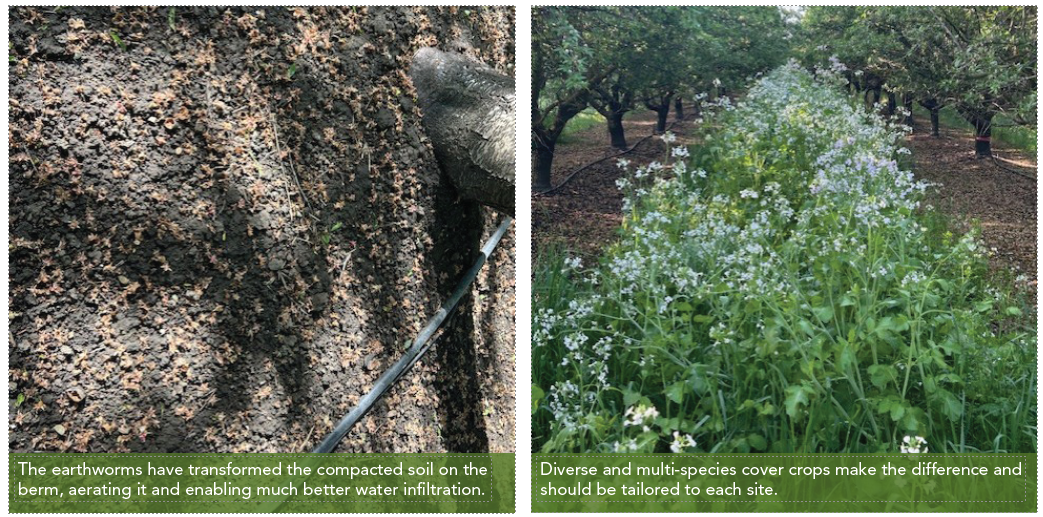
Beyond reducing carbon footprints, growers working with CF have seen tangible improvements. Cover crops have led to better water infiltration and reduced runoff during irrigation. Farmers can now irrigate for 24 hours without runoff, compared to 12 hours previously. Additionally, there is increased biodiversity, including earthworms and pollinators, reduced pest pressure and fewer issues with dust and mites during almond harvests. These benefits are not just environmental but also agronomic and monetary.

CF has received strong engagement from growers in the Western states, particularly those practicing regenerative farming. CF primarily works with specialty and permanent crops but sees opportunities in row crops, dairy and some pastures.

CF’s top priority is selling carbon credits from the 2023 and 2024 vintages. This will be the first sale of its kind, and CF aims to establish a strong market value to ensure farmers are fairly rewarded for their meaningful contributions.

The following images show a large-scale almond grower participating in the CF program. This grower began introducing cover crops in the fall of 2023 and has seen a dramatic improvement in soil organic matter. The cover crops are flourishing and have had a transformative impact on the agro-ecosystem, revitalizing the orchards.

For more information about Carbon Friendly’s technology, please contact the Western Growers Center for Innovation & Technology at [email protected].

Ag Groups File Brief Supporting Supreme Court Hearing Glyphosate Case

May 9th, 2025

Western Growers, along with other groups representing farmers across the United States have filed a  encouraging the U.S. Supreme Court to hear a case on labeling for glyphosate and other pesticides. The groups, which represent a broad swath of agriculture and cover more than 300 million acres, argue glyphosate is a “once-in-a-century” herbicide given its effectiveness at controlling an array of damaging weeds, affordability and low toxicity. However, uncertainty created by inaccurate interpretations of pesticide labeling requirements has risked farmer access to glyphosate and other indispensable tools.

The question at the center of the case, Durnell v. Monsanto, is whether manufacturers of glyphosate or other pesticides are liable under state law for “failure to warn” of alleged cancer or other health risks when federal regulators have thoroughly evaluated the safety of the products and determined their uses are safe. Such state requirements exist despite regulators at EPA and those of the European Union, Canada, Japan, Australia, Korea, and elsewhere repeatedly finding glyphosate does not pose cancer risks. In the brief, the groups argue the Federal Insecticide, Fungicide, and Rodenticide Act has long prevented states from imposing labeling requirements different from EPA findings. Additionally, to require a cancer risk warning label despite such strong evidence to the contrary would be “false or misleading,” which is also prohibited by FIFRA.

American Farm Bureau Federation, American Soybean Association, American Sugarbeet Growers Association, International Fresh Produce Association, National Association of Wheat Growers, National Corn Growers Association, National Cotton Council, National Sorghum Producers, North American Blueberry Council, Western Growers and others are among the groups on the brief.

They discuss the continued risks of misinterpreting FIFRA. Among them, pesticide users will lack clear, accurate labels, which could result in accidental misuse of pesticides and potential harm to the public and the environment. Further, with manufacturers placed in the no-win situation of either disregarding state labeling requirements or making false and misleading statements in violation of FIFRA, these companies may exit the market and leave farmers without much-needed tools. U.S. agriculture would then be vulnerable to weeds and other devastating pests, in turn harming the ability of farmers to sustainably feed, clothe, and fuel our country and the world.

The Supreme Court will review the petition to hear the case, as well as briefs from other interested parties that include farmers. It will then decide whether to hear the case in the weeks ahead.

Western Grower & Shipper Magazine May/June Digital Edition is Available Now

May 12th, 2025

The May/June digital issue of the Western Grower & Shipper Magazine is available for online viewing here.

The issue features the articles, “Mapping MAHA,” “H-2A Workers and Taxes: What H-2A Employers Need to Know,” “Have Pity for Regenerative Agriculture for Inadvertently Fighting a Two-Front War” and more.

The cover article Spotlights Jacobs Farm del Cabo and Co-Founder Larry Jacobs’ journey in sustainable and regenerative agriculture.

Find the full digital edition of the May/June issue here.

Last Chance: Contribute to WG’s 2025 Compensation and Benefits Survey by May 16 for a Free Copy of Report

May 12th, 2025

The 2025 Western Growers Compensation and Benefits Survey is still open for Western Growers member companies to contribute their compensation data. The last day to do this is Friday, May 16.

All members who participate in the survey will not only receive a free copy but will also be entered to win a coveted Western Growers Stanley mug.

The Compensation and Benefits Survey is vital for industry organizations. It contains agriculture-specific data to help you make informed business decisions in the areas of recruitment, retention, employment-related budget and a competitive total reward strategy.

All submitted information will remain completely confidential and will not be associated with any specific organization. The data is captured, analyzed and compiled by Industry Insights, a third-party partner. All data is valid and reliable and distributed in the aggregate.

The Western Growers Compensation and Benefits Survey is the only one of its kind in the agriculture industry.

For more information, visit AgSalary.com.