Western Growers Women: Wearing Multiple Hats Successfully, and Using Stress for Good in the Process

January 16th, 2025

Navigating today’s workforce comes with unprecedented challenges. Many of us wear multiple hats as supervisors, team members, mentors, counselors and friends, all while supporting others through change and stress.

Join Dr. Tina Huff and the Western Growers Women (WGW) Program for an empowering workshop where you’ll learn practical strategies to manage these diverse roles. Discover how to turn stress into a catalyst for success—for yourself and those you support.

Following the workshop, enjoy a lunch provided by WGW, and join us for an exciting farm tour in the local area. Stay tuned for more details about the tour location.

Workshop Details:

Thursday, February 13, 2025

9:00 AM – 3:00 PM

4050 7th Standard Rd, Shafter, Ca 93263

Register Here

For more information about this event or the Western Growers Women Program, please contact Cierra Allen at [email protected].

The Wonderful Company Commits $10 Million to LA Fire Relief Efforts

January 16th, 2025

The Wonderful Company today announced it is committing $10 million to fire relief efforts in the Los Angeles area. Immediate donations will support first responders, with plans to expand to broader relief efforts. The company will also match L.A. fire-related donations made by its 10,000 global employees through its giving program or personal contributions.

“We are profoundly grateful to all of the frontline firefighters and police officers who are working around the clock to protect our communities, even as many of their own families evacuate and homes are threatened,” said Lynda and Stewart Resnick, the company’s owners, in a press release.

“These heroes are putting themselves in harm’s way to protect all of us, and The Wonderful Company will have their back. Los Angeles is The Wonderful Company’s home, and it is our personal home, the place where we met, were married, raised our family, and built our business. The city and region mean everything to us. We will be here for our community and our employees through this crisis and well beyond as this great city rebuilds.”

Click here to read more.

Leafy Green Desert Food Safety Tour

January 15th, 2025

On January 13th, 2025, U.S. Food and Drug Administration (FDA) staff, including the Deputy Commissioner for Human Foods Jim Jones, participated in an informative and collaborative tour of the agricultural regions in Yuma, Arizona, and Imperial Valley, California.  The visit was hosted by the California Leafy Greens Marketing Agreement (LGMA) and brought together industry leaders, trade associations, researchers and regulators to discuss advancements, efforts and challenges in produce safety. Western Growers staff participated in the tour and advanced discussions on the importance of co-existing agricultural operations and the need to advance holistic solutions to address food safety challenges. 

Tour highlights.  

  • Arizona Longitudinal Study and Yuma Agriculture: Participants gained valuable insights into the Southwest Region Longitudinal Study, an overview of Yuma’s agricultural landscape, including production trends and the Desert Food Safety Coalition’s ongoing initiatives to enhance agricultural practices. 
  • Water Treatment Demonstrations: The tour included a demonstration of the water treatment process, sampling and equipment. This highlighted industry efforts in maintaining food safety. 
  • Harvest Equipment Sanitation and Hygienic Design: The visit highlighted advancements in the hygienic design of harvesting equipment as well as a live demonstration of effective cleaning and sanitization techniques for harvest equipment. 
  • CAFO visits: The tour included visits to Concentrated Animal Feeding Operations (CAFOs) in Yuma, Arizona, and Imperial, California, providing a look at practices and interactions with neighboring agricultural operations. They facilitated discussions or minimized potential food safety risks while promoting coexistence between plant and animal agriculture. 

Routable Discussions 

Gustavo Reyes, Food Safety Manager for Western Growers, provided an in-depth overview of data-sharing and collaboration initiatives through the GreenLink® platform and the CA LGMA Test & Learn Program. The presentation included a live demonstration of the GreenLink® system, showcasing its capabilities in enhancing data-driven decision-making for food safety. 

De Ann Davis, SVP of Science for Western Growers, moderated a roundtable featuring academics, industry representatives and government officials. The roundtable focused on critical food safety challenges, including setback distances for adjacent land use, water treatment practices and the impact of external pressures on growers. The participants emphasized the importance of promoting coexistence between plant and animal agriculture while addressing safety risks. The session highlighted the importance of collaboration to drive progress in food safety practices. 

WG to Facilitate IAFP Discussion on Field Flooding Preparedness and Food Safety

January 15th, 2025

On January 30, 2025, Sonia Salas, AVP of Science at Western Growers, will facilitate a panel discussion during the International Association for Food Protection’s webinar on crop field flooding and its impact on food safety. This session will highlight recent research, key food safety considerations and best practices for managing and preparing for flooding events.

Recent and ongoing weather events emphasize the importance of preparedness, this webinar will bring together insights from industry, global partners, academia and extension services to enhance food safety and build resilience. Join us to explore collaborative approaches to addressing these critical challenges.

Click here to register.

The Beagle Brigade Act of 2023 Becomes Law 

January 14th, 2025

Did you know that some of the most vital protectors of U.S. agriculture have four legs, floppy ears and an extraordinary sense of smell? That’s right—these defenders are dogs! Known as the Beagle Brigade, these specially trained detector dogs use their remarkable noses to identify items like fruits, vegetables, meat and plants that could introduce pests or diseases. They intercept these items in passenger baggage, cargo and shipments at ports of entry. 

In December 2024, the Beagle Brigade Act of 2023 officially became law. This bipartisan legislation secures funding and formalizes the operations of the National Detector Dog Training Center (NDDTC), a program managed by the U.S. Department of Agriculture’s (USDA) Animal and Plant Health Inspection Service (APHIS). 

What the Beagle Brigade Act of 2023 does:   

  • Funding Stability: The Act provides long-term financial support for the NDDTC, ensuring uninterrupted training for these critical canine teams. 
  • Enhanced Oversight: APHIS is now required to submit regular reports to Congress on emerging agricultural threats and strategies to improve the detector dog program. 

Every year, invasive pests and diseases pose significant risks to U.S. agriculture, costing billions of dollars in damages and threatening the nation’s food supply. The Beagle Brigade’s work is essential for identifying and stopping some of these threats before they can spread. 

By providing these loyal and hardworking dogs with the resources and training they need, the Beagle Brigade Act of 2023 represents a major step forward in protecting U.S. agriculture and natural resources. 

A Century of Farming, Faith and Family

January 15th, 2025

Nestled in California’s fertile San Joaquin Valley in Fresno, Calif. lies a multi-generational family farm with quite a story. Baloian Farms traces its roots to an incredible journey that began over a century ago, when an immigrant named Charles Baloian fled Armenia during the Armenian genocide in search of a new life in America.

“My grandfather started with nothing but determination,” said Tim Baloian, CEO of Baloian Farms. “He had a vision, and he ran with it.”

After initially settling in Staten Island, New York, Baloian’s grandfather worked tirelessly to make himself a living. He rented 70 acres of ranch land to grow produce, and during harvest, he would load his goods onto a donkey-drawn cart, take the Staten Island Ferry and deliver them to Manhattan for sale.

“He understood and recognized the need to take the product to where the demand was,” Baloian said. “We’ve always been about moving product where the customer wants it.”

This humble operation marked the beginning of the family’s commitment to bringing fresh produce directly to the people.
By 1920, the Baloian family relocated to Fresno. They were inspired by the region’s similarities to Armenia – its Mediterranean climate and fertile soils attracted a wave of Armenian immigrants, explained Baloian. The transition to California farming was far from seamless and required an adjustment period, but the family persevered.

Driven by his innovative spirit, Charles expanded his distribution and ultimately established the Charles Baloian Company. As he refined his business model, the family expanded into wholesale produce and eventually established what we know today as Baloian Farms.

The operation today is supported by a loyal workforce that Baloian fondly refers to as the “Family of Baloian Farms,” which includes both biological relatives and longtime employees.

“We have employees here who’ve been with us for decades,” Baloian said, highlighting the company’s commitment to promoting from within. “Our office manager started on the packing line as a sorter. When opportunities arise, we encourage our people to take them and grow.”

Baloian said the farm’s operations are guided by five core values – dependability, honesty, strong work ethic, respect and determination – developed through introspection and a commitment to sustainability and community. These values influence everything from employee relations to farming practices. “Respect is key,” Baloian said. “We listen to our people—they’re on the front lines and know best how to get things done.”

Baloian Farms not only values its people but is also committed to preserving the land and its resources. It prioritizes sustainability through advanced irrigation techniques, soil monitoring, water conservation and harnessing renewable energy through solar panels.

Beyond the technical aspects of farming and sustainability, the organization is driven by “the miracle of farming,” Baloian said. “There’s something incredibly fulfilling about taking a field of dirt and weeds, creating neat rows of crops and producing beautiful, nutritious food. What better way to spend your life than growing the healthiest food for people?”

As agriculture faces challenges, such as labor shortages and environmental pressures, Baloian Farms is embracing technology. Automation and innovation are high priorities, and Baloian has praised Western Growers for providing a space to support those initiatives and providing invaluable resources.

When asked what keeps him motivated during tough times, Baloian’s answer was simple: faith and family.

“We give all the credit and glory to God,” he said. “We’ve been through ups and downs, but we’re grateful for the opportunity to do what we love.”

FARMX: Revolutionizing Agriculture

January 15th, 2025

Founded in 2014, FarmX emerged with a mission to tackle the pressing issues of irrigation, fertilization and water management in California’s agricultural sector. What began with an innovative soil moisture probe has evolved into a comprehensive suite
of technological tools, thanks to a series of groundbreaking innovations and strategic mergers.

A Trusted Advisor for Growers

Today, FarmX positions itself as a trusted advisor for growers looking to adopt advanced technology. The company’s primary goal is to provide tools that optimize crop yields, conserve resources and mitigate threats, ensuring sustainable and efficient farming practices.

In 2022, FarmX acquired AutoModality, a leader in fully autonomous software for robots and drones. This acquisition has propelled FarmX to the forefront of autonomous farming technology. The robotics team at FarmX is pioneering GPS-denied autonomous navigation for ground vehicles and drones, enabling precise navigation in challenging environments, such as under tree canopies, mountainous terrain and near infrastructure. This innovation marks a significant shift toward mission-driven autonomous technology in agriculture.

Exciting Developments in Autonomous Farming

  • 2025 Pilot Program: FarmX will pilot its first autonomous tractors, showcasing the potential of its advanced technology.
  • Retrofit Kits: The company will offer kits to retrofit existing vehicles, making autonomous technology accessible to more farmers.
  • Perceptive Vision Navigation: This cutting-edge navigation system will be available for drones, rovers and tractors, enhancing their operational capabilities.

On the farm management side, FarmX offers Osmo, a product designed to thrive in all types of soil. Osmo provides real-time data through a mobile app and can sense up to 48 cubic feet, outperforming other sensors on the market. This capability allows farmers to make informed decisions based on accurate and comprehensive soil data.

FarmX’s leadership team comprises visionary innovators driving the company’s mission forward. CEO Tuchar Dave and VP of Robotics Robin Woodby, the founders of FarmX, bring a shared vision for revolutionizing agriculture. Dan Hennage, VP of Robotics, spearheads the autonomy team, focusing on the development of cutting-edge autonomous solutions. Leif Chastaine, Executive VP of Commercialization, serves as the primary contact for growers interested in adopting FarmX’s advanced technologies, ensuring seamless integration and support. Together, this team is shaping the future of agricultural innovation. FarmX continues to push the boundaries of agricultural technology, providing farmers with the tools they need to succeed in an ever-evolving industry. For more information or to connect with FarmX, interested growers can reach out to Leif Chastaine at [email protected].

Making Sustainable Decisions for Today and Tomorrow

January 15th, 2025

Amid the challenges facing small and mid-sized farms today, Deardorff Family Farms stands out as an organization full of resilience and progress. Now led by a fourth generation of family farmers, the operation thrives by seamlessly combining time-honored traditions with innovative practices.

Today, Deardorff Family Farms in Oxnard, Calif., is led by Tom Deardorff II, President, and his cousin Scott Deardorff, Vice President and Treasurer. Founded in 1937, the company is a fully integrated grower, packer and shipper of both conventional and organic row crop vegetables.

For Tom Deardorff II, farming has always been more than just a business; it’s a commitment to community, sustainability and ethical practices. “It all started with my great-grandfather’s focus on good, ethical business practices—treating people fairly, providing insurance and competitive benefits to employees and supporting local communities,” he said. “We felt there was an obligation for our generation to keep carrying that forward.”

These principles have guided the organization’s investments, which include a state-of-the-art facility built more than a decade ago. Designed with sustainability in mind, the 110,000 square-foot facility features solar energy systems and is LEED-certified. “We wanted to build something that not only worked for today but considered our impact on future generations,” Deardorff said.

The organization’s commitment to sustainability is embodied in its mission: ‘Sustainable Farming for a Healthier Life!’ Environmental stewardship is an importance focus of Deardorff Family Farms, demonstrated through practices that include drip irrigation, organic farming, integrated pest management and low-till and no-till methods.

But what makes Deardorff Family Farms unique isn’t just its emphasis on sustainability but also its commitment to preserving a multigenerational legacy. Deardorff graduated from the University of Southern California with a bachelor’s degree in business administration and later received a law degree from Southwestern Law School. After practicing law for five years, he returned to the family farm. For him, the choice was about more than career alignment; it was about working with great people and being part of an industry filled with people he describes as “good, well-intentioned individuals working together to make a healthier world.”

Deardorff is a past chair of the Ventura County Agricultural Association Board, served on the United Fresh Produce Association Board of Directors and was a member of the California State Board of Food and Agriculture. He was elected to the Western Growers Board of Directors in 2001 and served as its Chair in 2011. He is also the fourth generation Deardorff to serve on the Western Growers board.

As a Western Growers board member, Deardorff is passionate about tackling pressing issues facing small and mid-sized farms, which include labor challenges, regulatory hurdles and market pressures. “The sustainability of family farming operations is a huge question mark right now,” he said. “Every year, we see fewer farms like ours continuing on. It’s a reality we need policymakers to address if we want family farms to remain part of the fabric of our country.”

Despite these challenges, Deardorff remains optimistic about the future of ag. He’s particularly excited about advances in water efficiency and long-term automation in harvesting. “These are areas with real potential to transform the way we farm,” he said. “In the next 10, 15 years, there will be some substantial improvements in the way that we harvest, and we can hopefully reduce the labor demands and improve the sustainability of domestic farms.”

Sustainable Data Management: What is it and why does it matter?

January 15th, 2025

In today’s world, data is the driver for progress and innovation. From tracking soil health to assessing water quality, to guiding regulatory decisions and tracking microbiological trends, data helps improve efficiency and decision making. I have recently been polishing my modeling skills by reading a book in modeling techniques by Max Kuhn and Julia Silge. What I was reminded of is that the quality of a model is directly dependent on the quality of the data used to train it. This realization made me think about the concepts of data management with a little twist: How can we make data management sustainable to ensure longevity of our data, and ultimately, our insights?

In exploring this question, I found myself delving into what would be the principles of sustainable data management. Much like environmental organizations’ sustainability, the idea is to approach data management with practices that ensure its longevity, utility and stewardship. So, what would be the pillars for sustainable data management?

1. Data Quality and Integrity: Sustainable data management begins with ensuring data quality at every stage—from collection to analysis. This means focusing on several
key aspects:
a. Accuracy: Data should represent what we are trying to capture. In food safety testing data, this means that sampling and testing is performed as intended. In monitoring programs such as capturing weather data, this means that equipment is correctly calibrated. Poor accuracy could introduce bias that would be unaccounted for when analyzing and using the data in the future.
b. Completeness: Missing data can be a challenge, and sustainable practices involve designing collection programs to minimize missing values and frequently verifying data for completeness. Incomplete data could render observations of little value when performing analysis in the future.
c. Consistency: Uniformity among datasets (within your company or with outside companies) allows for the data to be cohesive. For example, ensuring that the same variable names, formats and units are used across data sources reduces friction when integrating datasets.

2. Effective Storage and Access: As datasets grow, the way data is stored can affect the longevity and utility of the data. Many organizations still rely on adhoc file systems, where data is stored in random folders on individual computers or external drives. While this might seem convenient in the short term, it creates numerous problems in the long run: files can be lost because of a hardware failure, redundancy and duplication increase, and collaboration and tracking changes are nearly impossible. To address these challenges, you can take the following steps:

a. Centralized data repository: allows for automatic organization and retrieval. You can think of this as a file that exists in one shared location. Multiple people can access it, and the system tracks any changes that can be recovered.
b. Cloud-based storage: offers scalability to handle growing datasets but also helps reduce the reliance on physical infrastructure, which can be expensive and difficult to maintain. These support seamless integration with tools for data analysis, visualization and modeling.
c. Consistency in organization: this includes having established nomenclature that includes dates, folder hierarchy for easy access and potential guides or metadata that go with the data.

3. Future proofing through documentation: Documentation serves as the “instruction manual” for your datasets, providing essential information about what the data represents, how it was collected and how it can be used. Without thorough documentation, users (including your future self) may struggle to understand key aspects of the data. Here are a few considerations.

a. Data collection: documentation related to source, methodology and timing
b. Data cleanup: documentation on correction of errors, transformation and additional changes to achieve the final format
c. Use and purpose of the data: Will this data be used for trending analyses, creation of plots, aggregation into other data?
d. A version history ensures that changes to the dataset over time are well-documented. This prevents confusion about which version to use and helps identify how the data evolved.

Sustainable data management is about prioritizing quality and adopting sustainable practices so that we not only enhance the value of our insights but also contribute to a culture of respect for data-driven systems that shape our world. Sustainable data management is a journey we all must embark on and accept to maximize our learnings.

The question I leave with you is: How can we, as stewards and creators of data, implement strategies that ensure its longevity and reliability? Ultimately, how are we paving the way for innovation and future use? Sustainability in data, much like sustainability in the environment, is about building and securing a future that we desire for ourselves and our organizations.

For questions and more information, reach out to Gustavo Reyes at [email protected].

2024 Annual Meeting Highlights

January 15th, 2025

The 98th Western Growers Annual Meeting at the JW Marriott Scottsdale Camelback Inn Resort & Spa in Arizona attracted a record number of attendees, with more than 500 of the specialty crop industry’s top business leaders participating in dynamic networking events, educational breakout sessions, thought-provoking keynote speakers and Wild West-themed parties amid the beauty of the Sonoran Desert.

In recognition of the extraordinary role our record number of sponsors played in supporting the Annual Meeting, every level of sponsor received extensive brand recognition throughout the event, including name or logo placement on signage and in the conference guide and mobile app. In addition, Diamond Sponsors were recognized at each event, and individual event sponsors received mentions in front of their desired key targeted audiences.

The 2024 Annual Meeting began the evening of Sunday, Nov. 3 with a two-hour Welcome Reception at the North Garden, where Western Growers members, industry partners – and Hit Man, the resort’s hawk – mingled and networked at sunset. Even a quick rain shower couldn’t dampen attendee spirits!

Monday, Nov. 4, the first full day of the Annual Meeting, featured Laura Ling as the Kickoff Keynote. Laura, an award-winning journalist, author and media executive, spoke movingly of the 140 days she spent in captivity in North Korea when she and a colleague were detained while reporting on the trafficking of women along the country’s border with China.

The PAC Lunch focused on a conversation between Western Growers President and CEO Dave Puglia and The Free
Press Founder and Editor Bari Weiss. Bari, a winner of the L.A. Press Club’s 2021 Daniel Pearl Award for Courage and Integrity in Journalism, spoke on the current state of American journalism, where contrarian voices are deemed unpalatable and shunted aside.

The business portion of Monday concluded with a Featured Session on Sustainable Packaging, hosted and moderated by Western Growers Senior Vice President, Science Dr. De Ann Davis and Western Growers Vice President, Federal Government Affairs Dennis Nuxoll. Panelists included Jenet De Costa, Senior Director of Public Affairs, Driscoll’s; Kevin Kelly, CEO, Emerald Packaging; Ron Lemaire, President, Canadian Produce Marketing Association; and Dave Podesta, Director of Quality Assurance, Sysco. The panel offered a realistic, science-based look at the usage of plastics in the modern food supply chain and spoke about the regulatory pressures that stand to impact the industry.

Monday night’s parties began with the VIP Sponsor Reception in the North Garden, where Stuart Woolf, Chair of the Western Growers Board of Directors, recognized each sponsor in the Diamond, Platinum and Gold tiers and thanked them for their invaluable support. Sponsors in attendance had the opportunity to network and form key industry relationships with the Western Growers Board of Directors.

Attendees wrapped up the night by heading up to the resort’s Mummy Mountain Old West town for the rip-roarin’ Party with the Partners. Partygoers at the Boots and Roots Hoedown were greeted by Sophie the Beer Burro and then entertained by pig races, a dress-up photo booth and live music. BBQ and specialty cocktails were available until late into the night!

Tuesday, Nov. 5 began with our second invite-only sponsor event, the Diamond Breakfast, where Western Growers President and CEO Dave Puglia honored company representatives from our top level of sponsorship: Bayer, Farm Credit, John Deere, Nutrien Ag Solutions and RDO Equipment. Each Diamond Sponsor gave a brief presentation in front of the Western Growers Board of Directors to highlight the valuable work they do to advance the agriculture industry.

Our second Featured Session of the Annual Meeting, Navigating the Post-Chevron Landscape: Expert Insights on Loper Bright and the Future of the Administrative State in Agriculture, gave attendees an overview of recent actions by the U.S. Supreme Court and how they might impact the regulatory landscape. Moderated by Western Growers Senior Vice President and General Counsel Jason Resnick, panelists included Lynn Jacquez, Of Counsel, JPH Law Firm; Daniel Jarcho, Partner, Alston & Bird and Damien Schiff, Senior Attorney at Pacific Legal Foundation, who provided a peek into the crystal ball of the good – and bad – outcomes that may result from the ruling.

During the Chair’s Lunch and Keynote Western Growers Chair Stuart Woolf took the reins to thank the assembled Western Growers members, the Board of Directors, sponsors and industry VIPs for their dedication to advancing the specialty crop industry. After the remarks and luncheon, Western Growers President and CEO Dave Puglia conducted a Q&A with Amy Trask, former CEO of the Oakland Raiders and the first female team CEO in NFL history. The so-called “Princess of Darkness” regaled listeners with tales from inside the NFL owner meetings and of working with Raiders Owner and Hall of Famer Al Davis. (No 49er fans were harmed during this event.)

Tuesday evening’s activities began with the Award of Honor Reception on the Sonoran Terrace, where attendees networked and mingled over cocktails – and got a sneak peek meet and greet with the evening’s entertainment, mentalist Oz Pearlman. The Award of Honor Dinner Gala focused on the many achievements of Arizona’s own, The Growers Company President Sonny Rodriguez, who became the first non-grower to ever receive Western Growers’ highest honor. After a series of emotional tributes to Sonny, Oz took the stage and proceeded to make everyone in the room question what they thought they knew about…well, everything. (How did Oz know Sonny’s favorite drink?)

After the Award of Honor festivities ended, attendees ended the night at the Election Watch Party, where cocktails, fries and milkshakes were on offer for those celebrating (or wanting to drown their sorrows) at the results shown live on TVs throughout the space.

Annual Meeting activities wrapped up on Wednesday, Nov. 6 with the high-spirited Western Growers Cup Golf Tournament & Lunch at the Camelback Golf Course and the second annual surprisingly competitive Western Growers Pickleball Classic at the JW Marriott Camelback Tennis Courts.

Western Growers prides itself on providing the premier venue for growers and industry partners to connect and celebrate the enduring legacy of the fresh produce industry. We will continue to drive enhanced value for our members and sponsors next year at the Western Growers 99th Annual Meeting, to be held Nov. 9-12, 2025 at the Hotel Del Coronado in Coronado, Calif.

I Can “SEEAG” Clearly Now

January 15th, 2025

How a Ventura Organization Connects the Community to Farms and Fields

For many consumers, a trip to the grocery store is just another errand. How many have the chance to connect with the farmers responsible for growing their food? The answer is only a select few – and that’s not good enough.

Enter Students for Eco Education and Agriculture (SEEAG), an organization in Ventura, Calif. that has been opening eyes
to agriculture since 2008. Over the years, SEEAG has positively impacted more than 100,000 students and community members. The organization provides educational programs across Ventura and Santa Barbara Counties, promoting a greater understanding and appreciation of agriculture for both youth and adults.

Caitlin Paulus-Case, Executive Director of SEEAG, said one of the organization’s core values is making agricultural education accessible to all.

“What makes SEEAG so unique is that all of our programs are offered 100 percent cost-free, so we’ve never charged a student, a teacher, a school or a community member a cent to participate. We believe that agricultural education should be a right and not a privilege and that everyone deserves to know how their food is grown and where it comes from,” she said.

SEEAG educates communities, primarily students, through a variety of engaging programs. These include its Farm-to-Food Lab program, designed for third graders; a STEM Career Pathways in Agriculture Program for middle and high school students; a Youth Wellness Initiative focused on nutrition; and Farm Day, an annual community outreach event that takes place in Ventura and Santa Barbara Counties.

This past November, more than 15 farms and agricultural organizations participated in the 12th Annual Ventura County Farm Day. Attendees spent the day participating in free agricultural activities and tours, gaining valuable insight into the origins of their food and the effort involved in its production.

Farm Day empowers attendees to make more educated decisions about their food, Paulus-Case explained, while also highlighting the growers and innovators who are shaping the future of the food system and working to make it more sustainable.

“There’s so much misinformation and disinformation in our media about food, and there’s this overwhelming idea that big ag doesn’t care about their environment, community or workforce,” Paulus-Case said. “Farm Day allows people to come out and ask questions firsthand from the people who are growing their food, and it gives the farmers and farmworkers the opportunity to answer those questions and combat some of that misinformation.”

Western Growers member Duda Farm Fresh Foods, a leading producer of fresh vegetables and citrus, was a participant in this year’s Ventura County Farm Day. Founded in 1926, the same year as Western Growers, Duda has been a pillar of agricultural excellence for nearly a century and has been a dedicated participant in Farm Day since the start.

“For an organization that’s as large as Duda, recognizing and supporting the impact SEEAG has made over the years has been incredibly valuable and instrumental for our mission,” Paulus-Case said. “It goes a long way in making us reputable and helping other organizations understand the importance of what we do. They get it. They understand.”

Fifth-generation farmer Jackson Duda, Production Manager at Duda, said SEEAG’s Farm Day is an experience that is not only beneficial for the community, but also for growers.

“It’s always good to meet the community and answer people’s questions. You forget how much you know that those outside of ag don’t know, and how much more there is for everyone to learn. It’s great to see their curiosity, and it’s fun to be able to answer them,” Duda said.

Echoing Paulus-Case, Duda emphasized that many misconceptions surround the agriculture industry, and events like Farm Day provide a valuable opportunity for people to gain clarity straight from the source.

“If the community is curious, we need to embrace it,” he said. “They see our signs and trucks everywhere, and it’s good for them to meet us face-to-face. We’re a part of the community, so it’s good to open our doors. If your neighbors are curious about you, you should meet them. The more they know about you, they’ll think of you more favorably.”

Greg Lewis, Vice President of Duda Farm Fresh Foods, highlighted the importance of community connections as a key aspect of the company’s mission.

“Farming is at the very core of what Duda does, from land preparation, nursery production, irrigation, cultivation, fertilization and harvesting and processing of produce,” Lewis said. “That’s our job, but that’s not what we do. What we do is provide healthy fruits and vegetables for the citizens of our country and the world. Duda has been doing it for over 100 years.”

This long-standing commitment has shaped how Lewis views his role in advocating for agriculture. “I don’t consider myself as one who is leading the charge to educate the people, but if I’m put in a position where I can communicate the positive impact agriculture makes, I feel as though it’s a tide that raises all boats, irrespective of what crops you’re raising,” he said.

“We have a story to tell, and I think there is a great opportunity to tell that story,” Lewis said. “The efforts of SEEAG, and more specifically Farm Day, is one way to bridge that gap and educate the public and have them come onto the farm and have them touch and feel the nursery transplants that go into the field, have them walk on the field and observe our tractors preparing the ground for planting, have them watch a transplanter put young celery plants in the field. They say a picture is worth a thousand words, but if you bring someone to the field, you show them a movie in production. It’s worth a billion words.”

Building on this vision of connection and education, SEEAG is working to further its reach by expanding its food and agricultural literacy programs while encouraging more growers to participate and strengthen partnerships within their communities.

The organization is finalizing its Farm Day Every Day initiative, a year-round outreach program designed to deepen public understanding of local agriculture through free food literacy education and support for farms to participate in these vital activities. Through a community of supporters, Farm Day Every Day will keep the conversation about local agriculture alive, in-person and digitally throughout the year, all leading up to the annual Farm Day celebrations.

“The more in front of the community we are, the more we can support growers,” Paulus-Case said.

Improved Efficiency for STEC Risk Mitigation 

January 15th, 2025

Over the past few posts and articles, we have put out a couple of briefs about the considerations for STEC/EHEC testing, and overall risk management in the produce industry. STEC/EHEC is a diverse group of organisms, and a major contributor to outbreaks and recalls. While there are notable serogroups (O157, O26, O45, O103, O111, O121, O145) that most frequently lead to outbreaks and illness, many other pathogenic strains are contributing to disease but are not as well known or studied. While the impact and importance of the pathogen group for human health may be clear due to rising amounts of attributable illnesses, less clear is how to address managing it within the food industry.  

One source of confusion originates from method variability – what defines STEC/EHEC positives (toxin(s) + attachment, toxin alone, toxin(s) + attachment + O serogroups), secondary confirmation processes (secondary PCR, IMS + secondary PCR, ddPCR, cultural confirmation) and what they find, and ultimately, what a food producer should react to. Within food testing, it is fair to say that STEC/EHEC represents somewhat of a “choose your own adventure” decision tree. The decision to use shiga toxin (stx1, stx2) and/or intimin (eae) coupled with various options for secondary molecular and cultural confirmation methods can be complicated to say the least, and the most important point is to make sure that the food producer is comfortable and consistent in their choice. It is also advisable to review those choices annually to ensure it continues to align with internal and external risk management expectations.  

Risk-based monitoring – the opportunity to improve food safety 

In the world of diagnostic testing, STEC/EHEC methodology is being researched to improve the detection of the broad group and increase confidence in what a positive result may mean. Often these new assays include the familiar molecular targets, but new targets and approaches are in development to improve confidence and time to result. Given some of the complexities and uncertainties with STEC/EHEC testing (discussed in prior articles), we should expect that screening methods for this organism group may see more change than other pathogens in the coming years. With these new learnings, and enhanced means to detect and culture these organisms (especially environmentally stressed ones), the food testing segment will offer improved options for detection, and more efficient means to remove STEC/EHEC risk from the food supply chain.  

One of the things that excites me in food microbiology is the blend of cutting-edge science and technology with the applied and practical nature of food production. Ideating innovative solutions to optimize risk reduction for consumers and improve food producers’ ability to produce high-quality nutrition for our communities is a critical and valuable effort. While improving food safety is the goal, we also need to be diligent in designing systems that help us achieve that outcome. Pathogen testing in food should be looked at with an eye toward risk management and not pass/fail mentalities – this isn’t exclusive to STEC/EHEC, but that group of organisms is a great example of where that can be particularly relevant even within the testing methodology itself.  For example, Shiga toxin alone (absent eae/intimin) can cause illness and has led to outbreaks. Shiga toxin with the intimin gene is more likely too, and those genes along with the Top 7 O-serogroups is an even greater predictor that the detection may be of clinical relevance. Throw in some additional options for molecular confirmation and culture confirmation, all with their own considerations and limitations, and we have method-driven example of a scenario where certain risks can be eliminated and others intentionally/unintentionally allowed. The critical importance when using a methodology is to make sure as a food producer that you know what the considerations are, and that they align your company’s business and food safety strategies.    

While there may be uncertainty today about what a STEC/EHEC positive test means in product or environmental testing, remember that clinical definitions are very clear – someone can become ill, sometimes fatally so, and that illness can happen irrespective of whether your chosen detection method deems it negative.  

Navigating Challenges and Opportunities in Transportation and Cold Chain Logistics

January 15th, 2025

By Bryan Nickerson, Commodity and Supply Chain Services Director, in collaboration with C.H. Robinson

The transportation market is undergoing significant disruption, primarily due to a persistent freight recession in the aftermath of COVID-19. Lingering inflation, fluctuating fuel prices and ongoing supply chain turbulence exacerbate these challenges. Despite this, the industry is showing resilience through innovation, such as optimizing routes, investing in fuel-efficient technologies and leveraging data analytics to boost operational efficiency.

Meeting today’s transportation demands requires advanced expertise and capabilities. The Western Growers Transportation Program offers Western Growers members tailored supply chain partnerships, ensuring reliable and efficient service. With deep roots in the produce industry, we connect supply chain providers from farm to consumer, uniquely equipping us to help growers thrive despite market challenges.

“The prolonged transportation recession has unfortunately led to a sense of complacency in addressing supply chain costs, efficiency and innovation. It’s easy to fall into this mindset when market engagement seems straightforward,” said Hunter Winton, Regional Sales Director for C.H. Robinson. “However, the underlying conditions for instability in the marketplace are still present, such as driver shortages, aging concerns, old equipment and high interest rates. These factors will continue to be significant. When demand does return, we can expect markets to react quickly. We must all recognize this tendency and strive to overcome it to ensure resilient and forward-thinking supply chains that are agile and continuously improving.”

The Evolving Landscape for Produce Shippers

Produce shippers face mounting pressures, including market fluctuations, labor shortages and heightened consumer demand for sustainability. Shifting to environmentally friendly practices often demands substantial investments in technology to optimize production and resource management.

Regulative changes, geopolitical uncertainties and competition for market access compound these challenges. Together, these factors increase costs and disrupt shippers’ ability to produce and distribute efficiently. To overcome these obstacles, shippers must enhance operational efficiency through advanced agricultural technologies, improved resource management and streamlined logistics processes.

Addressing Rising OTIF Standards

Retailers’ stringent on-time, in-full (OTIF) standards present another layer of complexity. They require near-perfect delivery performance to maintain relationships and access new markets. These demands often create operational bottlenecks, particularly for suppliers navigating intricate retail shipping requirements.

C.H. Robinson has deep expertise in retail logistics, serving 70 of the top 75 U.S. retailers. With a network of more than 25,000 temperature-controlled carriers, they offer unparalleled coverage to meet OTIF demands while simplifying suppliers’ logistics challenges.

Enhanced Supply Chain Visibility

Supply chain visibility is no longer a luxury—it’s a necessity. Real-time item-level tracking allows suppliers to identify and address potential issues promptly, improving customer service and reducing waste.

Through the Western Growers Transportation Program, members gain access to C.H. Robinson’s proprietary Navisphere® technology platform. As the world’s most connected logistics platform, Navisphere® supports nearly 200,000 companies, offering detailed visibility and seamless supply chain integration.

Maintaining Product Quality in Transit

Optimized transportation services, including the largest temperature-controlled network in North America, are key to maintaining product quality. C.H. Robinson’s vetted contract carriers are Sanitary Transportation of Food (STF) compliant, ensuring proper temperature management throughout each journey. Whether shipping truckload or less-than-truckload, C.H. Robinson’s services are designed to safeguard product integrity and meet increasing consumer expectations for quality.

Integrated Supply Chain Solutions for Efficiency

Disconnected supply chain services can lead to costly disruptions. Integrated solutions are critical to overcoming inefficiencies and improving demand planning. C.H. Robinson and Western Growers utilize 2.3 billion digital market transactions annually to optimize supply chains for members. By consolidating orders at the point of origin, there are reduced costs and improved truckload utilization by an average of 10 percent annually. This ensures efficient use of resources while maintaining the highest standards for product safety during transit.

Western Growers Transportation Program: Your Solution

C.H. Robinson has been a trusted partner to growers for more than a century, delivering fresh produce to retail grocers nationwide. The Western Growers Transportation Program, exclusive to members, leverages C.H. Robinson’s expertise to offer personalized solutions for the most complex supply chain challenges. From mitigating logistical pressures to enhancing operational efficiency, this program is designed to help shippers succeed in today’s demanding market conditions.

CalRecycle to Host SB 54 Public Information Session

January 15th, 2025

The Department of Resources Recycling and Recovery (CalRecycle) will host a public information session on February 3, 2025, at 1 p.m. This session will provide an overview of the recently published updates to the Covered Material Categories (CMC) List, including revised recyclability and compostability determinations, as well as insights from the Source Reduction Baseline Study.

You can find the following workshop materials here:

Public Notice Including Agenda

Covered Materials Categories (CMC) List

Source Reduction Baseline Study

You can participate in the session in person, via Zoom or through the webcast.

In-Person Participation

Location: Sierra Hearing Room, CalEPA Headquarters
Address: 1001 I St, 2nd Floor, Sacramento, CA 95814

No registration is required for in-person attendance. Attendees will have the opportunity to ask questions or provide comments during the session.

Zoom Participation

Zoom participants will also be able to ask questions or provide comments. Click here for the registration link.

Webcast Participation

Webcast participants can view the session but will not have the ability to ask questions or provide comments. If you wish to participate actively, please join via Zoom. No registration is needed to view the webcast. Click here to access the webcast.

Simultaneous Spanish interpretation will be available.

Legislation and the University of California

January 30th, 2025

Anyone familiar with the apps that allow people to rate everything from restaurants to doctors to airlines has seen the tags: “cannot recommend” and “can recommend,” coupled with a rating of zero to four stars.

I don’t think we have an app like that for something as arcane as university research, but maybe we should, especially for research that impacts public policy development and decision making.

The University of California system is a critically important source of research that can inform public policy. Somewhat surprisingly, we recently have been given good reason to apply a four-star rating and a “can recommend” comment to UC research in the area of labor policy.

Specifically, the research from UC Berkeley’s Department of Agriculture and Resource Economics being led by Dr. Alexandra Hill. Dr. Hill’s impressive academic credentials include three degrees in agricultural economics, and she has published several peer-reviewed papers on issues related to ag labor.

Dr. Hill captured our attention with a 2023 extension paper presenting early evidence that California’s ag overtime law (AB 1066) led to decreases in weekly working hours and earnings for California farmworkers.

Dr. Hill estimated that in 2019 and 2020, the first two years under the new overtime requirements, California farmworkers worked between 15,000 to 45,000 fewer hours per week and earned $6 million to $9 million less on their weekly paychecks because of the law’s impacts.

Given the AB 1066 phase-in scheme was not fully implemented for large employers until Jan. 1, 2022, and small employers until this year, expect this downward trend in hours and pay to persist as newer data is released.

None of this should come as a surprise. In 2016, as the overtime bill was working its way through the California Legislature, we commissioned an economic study on the likely impacts of AB 1066. The report from Highland Economics, a reputable and non-partisan economics consulting firm, predicted AB 1066 would reduce farmworkers’ income by 16 percent, or $1.5 billion statewide.

The legislative majority dismissed this research as tainted because it was commissioned and paid for by industry groups like Western Growers. In the Legislature, who funds research determines whether it can be judged on its merits.

Though Dr. Hill’s most recent research findings have been acknowledged – barely – within the state Legislature, her data and conclusions largely have been dismissed. This is troubling for obvious reasons; the economic harm resulting from this statute will continue and perhaps worsen absent a well-informed course correction or mitigation authorized by the Legislature.

But never dismissed or diminished in the Legislature are the voluminous reports that flow from the many “Labor Centers” within the UC system.

Created in the 1960s through an agreement between the UC and the California Labor Federation, the Labor Centers are explicitly directed to conduct research and outreach activities aimed at growing union membership and advancing pro-labor legislation.

Some funding comes from ongoing legislative appropriations – to the tune of $19 million per year – with the rest coming from sources like federal agencies and union-aligned foundation grants.

In 2022, the Labor Centers underwent the largest expansion in their history, going from three to nine UC campuses, and now include almost 240 staff and more than 30 interconnected programs, in addition to scores of affiliated faculty members.

Predictably, the Labor Center advisory boards are dominated by union officials and allies and a high percentage of staff members work for, or have worked for, labor unions.

Given their academic association, one might think the Labor Centers are stacked with doctorate degrees and trained researchers, but only about 10 percent of the staff actually hold research titles, although there are about two dozen Ph.D.’s in the mix. These teams do not report to the central research offices at their respective UC campuses, which are responsible for ensuring the integrity of university research activities.

To be clear: the Labor Centers do not claim to adhere to academic or scholarly research standards. That does not dissuade legislators from embracing their research or using it to validate and enact labor union policy priorities with the helpful imprimatur of the University of California.

On agricultural policy, the UC Merced Community and Labor Center is among the newest of the centers and leapt into action in early 2024 with a purported counter to Dr. Hill’s ag overtime research.

For legislators motivated to understand the real-world consequences of the laws they pass, there is a need to analyze and assess the methodologies, findings and implications of UC research, especially where, as here, there are divergent findings.

There are serious people serving in the California Legislature, though advocates who have been around for a long time privately commiserate all the time about the relative decline in the number of such policy-motivated legislators. Many blame term limits, but that’s another column.

For now, those of us engaged in advocacy for our industry have an opportunity to shed greater light on the role of the university in shaping public policy, and create greater respect for those courageous UC researchers whose adherence to academic rigor and factual analysis remains paramount.

Proceedings from the NAS Workshop: Safeguarding the Food Supply 

January 14th, 2025

As mentioned here, the National Academies of Sciences (NAS) hosted a workshop titled “Safeguarding the Food Supply: Integrating Diverse Risks, Connecting with Consumers, and Protecting Vulnerable Populations” in September 2024. This event explored hazard and risk-based approaches to food safety, covering nutrition, economics and equity implications.  

The workshop proceedings have now been released as a comprehensive publication, summarizing the key presentations and discussions.  

Among the contributors was De Ann Davis, Senior Vice President of Science at Western Growers, who provided valuable insights on fresh produce safety. Her presentation is summarized in this document. 

To read the proceedings, visit the NAS website: Safeguarding the Food Supply: Integrating Diverse Risks, Connecting with Consumers, and Protecting Vulnerable Populations: Proceedings of a Workshop—in Brief

Practical vs. Prudent in Food Safety: A Nuance that Matters.

January 14th, 2025

Practical: focused on actual use or practice rather than theory or ideas; concerned with what is effective, useful or realistic in a given situation.

Prudent: acting with or showing care and thought for the future; being cautious and wise to avoid unnecessary risks while also imparting feasibility.

There’s a complicated relationship with the word practical. Practical is an important term, generally used to emphasize whether an activity/process/change will be efficacious in real-world scenarios. While this is a real factor to consider, practical is also often used as a surrogate for “it’s too expensive,” “it’s too hard,” or “it’s just not necessary.” Practical, when used in this way, can be an excuse for why we cannot implement or pursue something, and it tends to be a conversation-ender. This abrupt closure to a consideration of an idea or option may prevent finding innovative solutions that drive change and improvement. Henry Ford summed up this concept well when he once said, “If I had asked people what they wanted, they would have said faster horses.”

Practical as a term is used frequently in food safety, especially when identifying solutions to manage complex and difficult-to-control factors. One of the unique things about food safety is that our understanding of science is rapidly evolving on microbiological risks, chemical risks, etc. This new understanding has the potential to quickly transform what is acceptable to unacceptable for managing risk in existing processes and practices, even when the pre-existing processes had just been thought of as appropriate.

When new food safety learnings and/or technologies are developed, we must evaluate that new understanding against how the pre-existing system performs. In some cases, the science may tell us that a new control measure (e.g., practices, levels, modifications) to improve food safety may need to be defined and that new level may require modifications from the pre-existing system.

Herein lies a challenge for adoption since if we believe today that what we are doing is 100 percent acceptable, it is not easy to accept or agree that the process needs to change tomorrow. This prior statement highlights a challenge in food safety since sometimes best practices or requirements suddenly change based on evolving science or investigation. Those changes may not feel needed or appropriate (perhaps not even practical) to an operation or business. The fact that the new information or approaches are considered impractical originates from the belief that the current status quo is sufficient. This is a rational conclusion to come to prior to the new science-based learnings, especially for those further removed from the science of the subject (e.g., CEOs, COOs, Operations).

An alternative approach when determining if the adoption of new measures or techniques is needed is to replace the term practical with the term prudent. While this may seem like a slight semantic difference, there is a key distinction between the two terms. Prudent, as opposed to practical, incorporates whether something is feasible and whether the adoption should be taken to lessen future risk. Since food safety goals are to reduce residual risk in the system (i.e., lower the cases of illness per year), comparing potential changes to reduce risk in the status quo system may always seem impractical since it may change overall processes, costs and overall business operations. However, what may be deemed impractical in the current system may be determined to be extremely prudent to adopt to lower risk in the future (i.e., lowers food illness risk, lowers legal liabilities, lowers regulatory risk).

Ag in Arizona and the Future of Transportation

January 14th, 2025

The future of transportation in relation to agriculture in Arizona is poised for transformation as technological advancements, environmental concerns and the need for greater efficiency intersect. Arizona, a state heavily reliant on agriculture—particularly for commodities like cotton, lettuce, citrus and other specialty crops—faces unique challenges and opportunities in aligning its transportation infrastructure with the demands of modern farming. This needed innovation is key to ensuring sustainability, boosting industry productivity and addressing climate concerns.

As the agricultural sector in Arizona becomes increasingly reliant on technology, the transportation systems that support it must evolve as well. One of the primary areas of change will be the use of autonomous vehicles and smart logistics. Arizona highways are already the test range for self-driving trucks, with farm equipment hopefully soon to follow. As a result, adoption could become commonplace, while enhancing the precision and efficiency of transporting crops from farm to market. Autonomous vehicles can work ‘round the clock, reducing transport delays and costs, especially for the perishable produce grown throughout Arizona. With labor challenges found throughout the industry, this offers a partial solution to addressing the growing demand.

In addition, smart transportation networks using sensors, GPS and real-time data analytics could enable farmers to optimize routes, monitor traffic conditions and ensure the safe and timely delivery of goods. These technologies could also assist with fleet management, enabling better scheduling and reducing fuel consumption by choosing the most efficient routes. With the state’s sprawling geography, smart logistics would also help manage the extensive travel distances involved in getting agricultural products to processors, distribution centers and ultimately to consumers.

While the future of transportation in Arizona’s agriculture looks promising, there are several challenges. For instance, the adoption of autonomous vehicles and electric trucks requires significant infrastructure investment, including charging stations, maintenance facilities and regulatory frameworks. Moreover, Arizona’s climate – “it’s a dry heat” – and rugged terrain will prove to a be a challenge, requiring specialized technology for transportation systems to function effectively.

However, the state’s growing interest in renewable energy, coupled with its expansive open spaces ideal for solar and wind farms, provides a unique opportunity to power these transportation systems sustainably. Arizona’s vast agricultural landscape also means that the state is in a prime position to implement cutting-edge transportation technologies that could serve as models for other regions reliant on agriculture.

The future of transportation in Arizona will be shaped by the convergence of innovation in automation, sustainability and smart infrastructure. As agriculture increasingly embraces technology, transportation will become a crucial enabler of growth, efficiency and environmental stewardship. As a policy professional, I am obligated to point out the obvious – the Governor’s administration and legislature will determine the outcome. Arizona could establish itself as a leader in both sustainable agriculture and the transportation systems that support it. It just takes cooperation and vision to get it done.

Growing Relationships with Members: December Site Visit Recap

January 14th, 2025

EEC Member Site Visit 2025

On December 12, 2024, the Employee Engagement Committee (EEC) hosted a jam-packed day to tour, explore and harvest at local member sites in Irvine. The Western Growers team visited Tanaka Farms, Manassero Farms, Harvest Solutions Farm and Second Harvest Food Bank. 

Spirits were high as employees enjoyed a colorful wagon ride led by local legend Glenn Tanaka of Tanaka Farms. Between Farmer Tanaka’s wisecracks and stopping to pick carrots, green onions and lettuce, WG employees learned about Tanaka Farms’ success in agritourism, ag-education and Community Supported Agriculture. 

A.G. Kawamura—third-generation farmer, former secretary of the California Dept. of Food and Agriculture, Western Growers board member, and the visionary founder of Solutions for Urban Agriculture—spent several hours as our guide. He offered an exceptional lunchtime address at Manassero Farms on the state of Western ag, the future of nutrient-dense fruits and vegetables, and the history of produce in Orange County.  

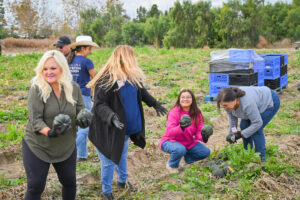
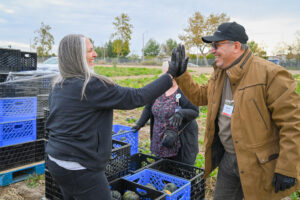
After lunch, we took to the field at Harvest Solutions Farm, where A.G. and his associates taught us how to hand-harvest acorn squash. Our pride was on full display as we worked together to harvest a field of 5,500 pounds of acorn squash—almost three tons. 

We then embarked on a tour of Second Harvest Food Bank, a powerful regional food bank serving the Orange County community. In fiscal year 2024, the non-profit donated 35,781,426 pounds of food to an average of 442,154 people per month. Second Harvest is at the heart of serving our community’s hunger and nutritional needs and is an excellent place to volunteer with family and friends. 

As part of our December visit, Western Growers was proud to donate $500 to support Solutions for Urban Agriculture in their mission to grow nutritious food for local food banks while teaching the methods and importance of local urban agriculture. 

Click here to see the images from the event and get ready to join us for the next Member Site Visit in 2025.  

New California Employment Laws for 2025

January 14th, 2025

California employment-related laws from the 2024 legislative session address several issues impacting agricultural employers. Updates include changes to the Fair Employment & Housing Act (FEHA) and employer-paid sick leave benefits. Prompt action should be taken to assure compliance with all updates. Below is a summary of many of the laws affecting employers in the state, effective January 1, 2025, unless otherwise noted.

Minimum Wage Increase
The minimum wage increases to $16.50 per hour. Exempt employee minimum salary levels increase to $68,640 per year ($5,720 per month).

SB 1137 – Intersectionality
SB 1137 amends FEHA to address claims based on any combination of protected characteristics, or “intersectionality” (i.e., discrimination based on any combination of protected classifications).

AB 2499 – Victims of Violence
AB 2499 prohibits discrimination/retaliation/discharge of employees taking time off for jury service, to appear in court as a witness, as a victim of a qualifying act of violence, for their/their child’s health, safety, welfare and (employers with 25-plus employees) to assist a family member impacted by a qualifying act of violence. AB 2499 provides reasonable accommodation eligibility and paid sick leave benefits for qualified employees.

SB 1100 – Discrimination: Driver’s License
SB 1100 introduces a two-part test governing when employers may require job applicants to possess a driver’s license: 1) Employers must reasonably expect driving to be one of the job functions, and 2) Believe that using an alternative form of transportation would not be comparable in travel time or cost to the employer.

AB 1815 – Discrimination Race/Hairstyles
AB 1815 expands the definition of “race” and “protective hairstyles” across several statutes by removing the term “historically” and including traits associated with race beyond hair texture and protective hairstyles.

SB 1340 – Discrimination: Local Enforcement
SB 1340 allows political subdivisions of the state to enact/enforce anti-discrimination laws that are at least as protective as state law. Local enforcement may occur only after the Civil Rights Department issues a right-to-sue notice and before the expiration of the time to file a civil action.

SB 399 – Worker Freedom from Employer Intimidation Act
SB 399 prohibits “captive audience” meetings discussing religious/political matters, including union-representation discussions. Discrimination/retaliation, threats of discharge, or taking “any other adverse action” against employees who decline to attend captive meetings or refuse to participate in/receive/listen to employer communications regarding religious/political matters are prohibited.

SB 1105 – Paid Sick Leave – Agricultural Employees
SB 1105 expands paid sick leave benefits for agricultural employees under the Healthy Workplaces, Healthy Families Act of 2024. Leave uses now include avoiding smoke, heat or flooding conditions created by a
local/state emergency.

AB 2738 – Alternative Enforcement
AB 2738 authorizes public prosecutors to recover all remedies available under the Labor Code. Recovered remedies go first to workers for unpaid wages, damages or penalties, with the remainder to the state’s General Fund. Recovery of fees/costs to a prevailing plaintiff are also authorized.

Heat Illness Prevention (Indoor)
Cal/OSHA requires indoor workplaces to be cooled below 87°F when employees are present, and below 82°F in areas where workers wear protective clothing or work in high radiant heat areas, if feasible. When temperatures reach 87°F, employers should cool down the work area, implement work-rest schedules and supply personal heat-protective equipment. Regulations apply to all indoor workplaces, including warehouses, restaurants, manufacturing facilities and spaces under a ceiling/overhead covering restricting airflow.

SB 553 – Workplace Violence Prevention Plan (WVPP)
SB 553 mandates employers develop/implement a WVPP meeting specific standards, including maintaining a violent incident log, providing training to all employees and recordkeeping. Look for regulations to be adopted by the Standard Board by December 31, 2026.

AB 2288 and SB 92 – Private Attorneys General Act of 2004 (PAGA)
AB 2288/SB 92 include more restrictive standing requirements for PAGA plaintiffs, a codified need for manageability of claims and a reformed penalty structure, among other provisions. Notable changes include reduced penalties for wage statement errors, default penalty limits and penalty reductions through compliance efforts. Limitations on penalty stacking and enhanced judicial oversight are also included in the amendments.

AB 3234 – Social Compliance Audit
AB 3234 requires an employer voluntarily subjecting itself to a “social compliance audit” relating to labor laws (regardless of whether the audit is to determine if the employer uses child labor) to post a report detailing the findings of its compliance with child labor laws on its website. A “social compliance audit” is a voluntary, nongovernmental inspection or assessment of employer operations/practices evaluating compliance with state/federal labor laws.

SB 988 – Freelance Worker Protection Act
SB 988 mandates hiring parties pay Independent Contractors (IC) by the contract date or within 30 days of service completion if unspecified. It prohibits reducing agreed compensation, demanding extra services, or additional intellectual property rights for timely payment. A written contract, retained for at least four years, is required. The law prohibits discriminating against ICs who assert their rights and provides for injunctive relief, damages, fees and costs.

AB 2299 – Whistleblower Protections
AB 2299 clarifies responsibilities of the Labor Commissioner include developing a model list of employee rights/responsibilities under existing whistleblower laws and codifies its duty to develop the model notice. Employers posting the model list will be considered compliant with notice requirements.

AB 1870 – Workers’ Compensation Notice
AB 1870 requires employers to inform injured employees of their ability to consult an attorney to advise them of their rights and that attorney’s fees may be paid from an injured worker’s award. Look for an updated notice before January 1, 2025.

AB 2123 – Paid Family Leave
AB 2123 eliminates employer’s ability to require employees use earned and unused vacation before the employee’s initial receipt of EDD Paid Family Leave benefits during any 12-month period in which employees are eligible for benefits.

In light of these legislative changes, it is imperative for employers to thoroughly review their existing policies and procedures to ensure they are in full compliance with the new rules. Additionally, training managers and supervisors on these updates is crucial, as their understanding and adherence to the new laws will be instrumental in maintaining compliance. Proactive measures taken now will help mitigate risks and also reduce penalties under the new PAGA amendments.