New Voices of the Valley: Connecting Community to Farms and Fields

January 14th, 2025

In this episode, we talk to Students for Eco-Education and Agriculture (SEEAG) and explore how the organization inspires a deeper connection to the agricultural industry by promoting a greater understanding of how food gets from farm to table.

SEEAG is a nonprofit organization dedicated to bridging the gap between farmers and the community by educating students and the public about the origins of their food. Through interactive programs, farm tours and hands-on activities, SEEAG connects participants with local agriculture, fostering an appreciation for the farmers who grow and harvest the fresh produce that nourishes us.

You can listen to the full episode here.

Growers Urged to Complete 2025 Ag Equipment and Vehicle Survey

January 14th, 2025

The California Air Resources Board (CARB), California Energy Commission (CEC) and California Farm Bureau are conducting the 2025 Agricultural Vehicle, Equipment, and Infrastructure Survey. This survey gathers critical data on on-road vehicles and off-road agricultural equipment across all fuel types, including electric, used by producers, custom operators and processing facilities.

The information will support air quality and energy planning efforts, helping allocate funding and inform grid upgrades for future electrification needs. Participation is essential to ensure accurate and representative results. The survey takes about 30 minutes to complete, and all responses are anonymous and confidential.

The survey is open until February 21, 2025, with a Spanish version available in January. To participate, click here.

Western Grower & Shipper January/February 2025 Digital Issue Available Now

January 13th, 2025

The January/February 2025 digital issue of the Western Grower & Shipper magazine is now available online.

The issue features the articles, “Legislation and the University of California,” “New California Employment Laws for 2025,” and “Sustainable Data Management: What is it and why does it matter?” and more.

The cover article spotlights SEEAG and how it’s working with growers to redefine the connection between community and growers.

Click here to read more.


Join the CDFA Standardization Advisory Committee

January 13th, 2025

The California Department of Food and Agriculture (CDFA) is seeking candidates for vacancies on the Standardization Advisory Committee, which advises on the Standardization Program, proposed regulations, annual budget, assessment rates and fees to provide adequate inspection services.

Vacancies include positions for Fresh Fruit (oranges), Fresh Vegetables (broccoli, tomatoes, or lettuce), and Other Fresh Vegetables. Committee members serve two-year terms. Members receive no compensation but are entitled to payment of necessary travel expenses in accordance with the rules of the California Department of Human Resources.

To apply, complete the Prospective Member Appointment Questionnaire and submit it with a letter of recommendation to Kristi Garcia, CDFA Inspection and Compliance Branch, at [email protected] or mail to 1220 N Street, Sacramento, CA 95814. Applications will be accepted until positions are filled.

For more details, contact Stacey Hughes at (559) 977-5416 or [email protected].

Western Growers Members Appointed to USDA Fruit and Vegetable Industry Advisory Committee

January 14th, 2025

The U.S. Department of Agriculture (USDA) has announced the appointment of 25 industry leaders to the Fruit and Vegetable Industry Advisory Committee (FVIAC), including several members of Western Growers. These appointees will serve two-year terms, advising the Secretary of Agriculture on key issues affecting the fruit and vegetable sector.

Western Growers congratulates the following committee members on their appointments:

Broker/Distributor/Wholesaler/Importer/Exporter

  • Alice Choi-Barrick, President, Tay Shing Corporation of New York
  • Mike Dill, Director of Advocacy & Sustainability, Organically Grown Company
  • Alex DiNovo, President and Chief Operating Officer, DNO Produce
  • Tony Freytag, Executive Vice President, Advisor to Board of Directors and Chief Executive Officer, Crunch Pak LLC
  • Bill Weyland, Vice President Imports, Seven Seas Fruit

Industry/Trade Association

  • Ken Love, Executive Director, Hawaii Tropical Fruit Growers
  • Jenny Maloney, Americas Industry Affairs Director, Bayer Vegetable Seeds

Farmers Market/Food Hub/Retailer/Food Service 

  • Roland R. Harmon II, Senior Director Produce Sourcing-California, Walmart
  • Don Wambles, Division Director, Alabama Department of Agriculture and Industries, Farmers Market Authority Division
  • Eastlyn Marie Wright, Buy Fresh Buy Local Program Coordinator, University of Nebraska-Lincoln

Farm Organization/Grower/Producer/Shipper

  • Stephen Brazeel, Founder/Chief Executive Officer, SunTerra Produce Traders
  • Sarah Davidson Evanega, Vice President of Business Development, Okanagan Specialty Fruits
  • Frank Mazzetti III, Council Member, Rincon Band of Luiseño Indians
  • Neil Nagata, Farmer, Nagata Bros Farms Inc.
  • Takashi Nakamura, Vice President of Research & Development and Global Food Safety for Fresh Del Monte
  • Eric Profitt, Executive Vice President, Grimmway Farms/Cal-Organic

Re-appointed members:

Broker/Distributor/Wholesaler/Importer/Exporter

  • Angel Rafael Santiago, President and Chief Executive Officer, Caribbean Produce Exchange, Inc.

Industry/Trade Association 

  • Karla J. Stockli, Chief Executive Officer, California Fig Advisory Board
  • Kay Swartz Rentzel, Executive Director, Southeastern Food Processors Association, National Peach Council, and U.S. Sweet Potato Council

Farmers Market/Food Hub/Retailer/Food Service 

  • Anthony M. Mirisciotta, Executive Director, Spring Creek Food Hub

Farm Organization/Grower/Producer/Shipper

  • Amy Jeanne Baker, Senior Director, Quality and Regulatory Compliance Management for Peterson Farms
  • James Robert Benson, National Sales Director, Hronis, Inc.
  • Morris Hodges, Owner/Farm Manger, Morris Watermelon Farm LLC
  • Darwin Anthony Inman, Vice President, Sales and Marketing, Horizon Nut Company, LLC
  • Reggie Marshall, Grower, Reggie’s Veggies

Their expertise and leadership will contribute to shaping the future of the fruit and vegetable industry at a national level. For a full version of the USDA press release, click here.


Guidance for Preparing for ICE Visits

January 9th, 2025

Editor’s Note (Updated June 10, 2025): This article has been updated to provide the most current information.

Here are some prudent proactive steps to respond appropriately to potential U.S. Immigration and Customs Enforcement (ICE) and U.S. Customs and Border Protection (Border Patrol) visits.

Proactive Steps for Employers

While employers’ roles in providing direct assistance to employees are limited, they can take several important steps to reassure their workforce and maintain compliance with immigration laws:

1. Educate Employees on Safety and Scams:
o Remind employees to verify the identity of anyone claiming to be a law enforcement officer by requesting proper identification.
o Warn employees about potential scams. In the past, scammers posing as Border Patrol officers have solicited personal information or made fraudulent demands for money under the guise of legal threats.
2. Policy Transparency and Preparedness:
o Share company policies regarding responses to ICE or Border Patrol visits, emphasizing a calm and measured approach.
o Offer general resources for employees seeking information about immigration services for their “friends or family” without singling out specific individuals. Avoid directly referring employees to specific immigration service providers or offering financial assistance related to immigration concerns to avoid legal complications.
3. Support Through Leave Policies:
o Consider accommodating employees who express the need to take time off for personal reasons related to their immigration status or that of a family member by offering a leave of absence. Be mindful to avoid direct involvement in private matters that could have serious consequences for all parties.

Preparation Before an ICE Visit: Best Practices

1. Educate All Employees on Rights:
o Encourage workers to remain calm, remain silent and not carry false documents.
o Provide workers with “Know Your Rights” cards in both English and Spanish. Cards can outline rights such as the ability to remain silent and request legal representation.
o Train workers on how to handle questions from ICE agents politely and assertively, including the right to refuse signing documents without legal advice.
2. Designate a Response Team:
o Assign trained supervisors or legal liaisons to handle any interactions with ICE agents.
o Include bilingual staff in the response team to ensure clear communication with Spanish-speaking employees.
3. Legal and Documentation Readiness:
o Audit I-9 forms to ensure compliance. Correct errors where permissible, ensuring corrections are properly dated and initialed.
o Avoid maintaining additional unnecessary documents related to employee immigration status.
o Secure contact information for immigration attorneys and provide access to these contacts to employees.
4. Emergency Planning:
o Develop an internal protocol for immediate response to ICE visits. Include instructions for securing premises and ensuring legal counsel review before complying with document requests.
o Prepare authorization documents for employees with minor children, designating guardianship in the event of detention.
5. Community and Legal Resources:
o Establish partnerships with local immigration advocacy groups and legal teams.
o Build a rapid response team that includes attorneys and community leaders

During an ICE Visit

1. Handling ICE Entry:
o Verify the identity of ICE agents by requesting credentials and recording their badge numbers and names.
o Politely request and review a copy of any warrants or subpoenas and review them for validity and scope. ICE agents cannot search without a judicial warrant signed by a judge.

  • Monitoring: Designate a representative to observe and document ICE’s activities during the audit. Maintain a cooperative demeanor and avoid any obstructive or confrontational behavior, as it may lead to additional legal consequences.
  • Concealment: Instruct supervisors not to hide employees, destroy documents, or provide false or misleading information to ICE agents. Employees may speak with ICE if they choose but are not required to do so without legal representation.
  • Documentation: Keep a detailed log of any documents, items, or information taken by ICE agents and immediately share that information with legal counsel.

2. Rights and Responsibilities:
o Remind employees they are not obligated to answer questions or sign documents without consulting legal counsel.
o Accompany ICE agents during any authorized searches and take detailed notes of the interactions, including inventorying seized items.
3. Restricting Access:
o Only provide access to records or premises specified in the warrant or subpoena. Deny any voluntary consent to additional searches.
4. Legal Representation:
o Contact your designated legal counsel immediately to manage interactions with ICE agents. Employees also have the right to contact their lawyers.

Post-Visit Actions

1. Documentation:
o Prepare a detailed report of the visit, including the agents’ actions, any items seized and employee interactions.
o Retain copies of any warrants, subpoenas or other official documents presented during the visit.
2. Employee Support:
o Ensure detained employees are connected with legal counsel and their families are informed and supported.
o Offer counseling and reassurance to employees to alleviate post-visit anxiety.
3. Follow-Up:
o Work with legal counsel to address any compliance issues raised during the visit and mitigate risks of fines or penalties.
By implementing these measures, agricultural employers can ensure compliance with immigration laws while safeguarding the rights and well-being of their workforce.

CA Department of Industrial Relations Releases New Whistleblower Notice

January 9th, 2025

California’s recently enacted AB 2299 requires the California Labor Commissioner to create a model notice of rights and protections provided to employees under the state’s whistleblower laws. In compliance with its statutory deadline of January 1, 2025, the Department of Industrial Relations has published its new model notice 

The model notice must be posted in accordance with California Department of Industrial Relations requirements. Information related to wages, hours and working conditions must be posted in an area frequented by employees where it may be easily read during the workday.  

Due to the decrease in the number of workers frequenting the workplace—and a corresponding increase in the number of remote workers—employers are now allowed, “in any instance in which an employer is required to physically post information, [to] also distribute that information to employees by email with the document or documents attached.” It is important for employers to note that the ability to provide notice through electronic distribution does not eliminate the employer’s obligation to physically display required postings within its existing workspace. 

Cal/OSHA Issues $276,425 Citation for Willful-Serious Heat Violations 

January 9th, 2025

The California Division of Occupational Safety and Health (Cal/OSHA) has issued $276,425 in penalties to a Van Nuys landscape maintenance company for willfully violating state heat illness prevention regulations. Cal/OSHA determined that the employer deliberately and knowingly failed to follow heat protection requirements. This marks the agency’s first willful heat violation citation in more than five years. 

According to Cal/OSHA, “This enforcement action underscores our commitment to holding employers accountable and ensuring safe workplaces across California.”  

Cal/OSHA’s investigation began on June 6, 2024, when its local office received a complaint about employees working outdoors without access to water or heat illness training provided by their employer. 

The investigation found that the company had failed to provide employees with required protections, such as access to water, shaded areas, and proper training on preventing heat-related illnesses.  

Additionally, the company failed to maintain written procedures for addressing work conditions in high temperatures, which often exceeded 95° Fahrenheit.  

The employer was also previously cited for violations in 2022, for failing to meet heat safety requirements. Despite being provided with model heat illness prevention procedures, the employer failed to implement the necessary preventive measures to ensure worker safety. 

All employers have a duty to control the risk of heat illness in places of employment. Details on heat illness prevention requirements and training materials are posted on Cal/OSHA’s Heat Illness Prevention web page and the 99calor.org informational website. A Heat Illness Prevention online tool is also available on Cal/OSHA’s website. 

SB 399: Captive Audience Law Faces Federal Lawsuit

January 9th, 2025

Effective January 1, 2025, California’s Senate Bill (SB) 399 joined the ranks of similar laws in states like Illinois, Connecticut, and New York, limiting employers’ ability to hold mandatory “captive audience” meetings on religious or political matters, including labor organization discussions. The statute prohibits employers from requiring employees to attend meetings or engage in communications on these topics. Now a federal lawsuit has been filed challenging its constitutionality. 

Federal Lawsuit Challenges SB 399 

On December 31, 2024, business groups, including the California Chamber of Commerce, with the support of Western Growers, filed a lawsuit in the Eastern District of California seeking to block SB 399’s enforcement. The plaintiffs argue that the law violates employers’ rights under the First and Fourteenth Amendments to the U.S. Constitution, specifically targeting their freedom of speech and equal protection. 

The complaint outlines three primary legal challenges: 

  1. Viewpoint Discrimination: Plaintiffs assert that SB 399 unfairly restricts employer speech on political and labor matters while allowing unions and other groups to advocate freely. 
  2. Preemption by Federal Law: The lawsuit contends that the National Labor Relations Act (NLRA) preempts SB 399. Section 8(c) of the NLRA protects employer speech, provided it does not include threats or coercion. 
  3. Overreach in Content-Based Restrictions: Plaintiffs argue that the law unconstitutionally stifles employers’ ability to communicate with their workforce, violating principles of free speech. 

Implications for California Employers 

As the litigation unfolds, the future of SB 399 remains uncertain. If the court sides with the plaintiffs, the law could be enjoined from enforcement, potentially halting its application in the state. However, until a resolution is reached, employers should tread carefully. 

What Employers Should Consider: 

  • Voluntary Meetings: To mitigate legal risks, employers may opt to make attendance at workplace meetings on religious or political topics voluntary. 
  • NLRA Compliance: Employers should ensure communications adhere to NLRA protections, avoiding any content that could be perceived as coercive. 
  • Policy Review: Reviewing and updating workplace communication policies to align with SB 399’s requirements and NLRA standards may be prudent during this period of uncertainty. 
  • Legal Guidance: Consult with counsel labor law expertise before conducting workplace meetings that could run afoul of the law.  

Western Growers Mourns the Passing of Food Safety Veteran Tony Banegas

January 2nd, 2025

Tony Banegas, Vice President of Quality, Food Safety and Industry Relations at Bonduelle Americas, passed away on Dec. 15, 2024.

A respected 30-year veteran in food safety, Banegas joined Bonduelle Fresh Americas in 2009, then known as Ready Pac Foods, as National Director of Quality Assurance.

Throughout his career, Banegas was deeply involved in numerous Western Growers initiatives and was an active member of the Western Growers Science Food Safety Advisory Subcommittee and the Data Governance Team. He was also a strong advocate for GreenLink® and served on the California Leafy Green Marketing Agreement (LGMA) Advisory Board and Technical Committee.

Banegas was deeply involved with the Center for Produce Safety (CPS) Technical Committee, which reviews and selects research projects to be funded by CPS, and participated in a GFSI working group on Managing Risk in produce and leafy greens to help inform the benchmarking committee on how to make GFSI-recognized audits more relevant for produce. He was a member of the International Fresh Produce Association (IFPA) Food Safety Council. Banegas has also been a part of numerous working groups within IFPA drafting resource documents, white papers and industry guidance on a number of topics.

Western Growers attended the service and extended its heartfelt condolences to Banegas’ family, friends and colleagues.

To honor Banegas, memorial trees are being planted and can be coordinated here.


STEC Positive Now What? What Confirmatory Testing to Choose and Why

January 8th, 2025

In a previous article on Shiga toxin-producing E.coli detection in the food industry, it was discussed how STEC/EHEC is somewhat of a “choose your own adventure” screening test. Since this is a broad group of organisms, variations in the methodology determine what a positive may include regarding both pathogenicity and gene targets. Often, the food industry defaults to the method and approach of their regulator (e.g., FDA, USDA) and/or common offerings at their commercial laboratory. Given that there are differences in assays and end-to-end approaches, screening for STEC/EHEC requires an intentional selection of what a user wants to use and react to within their program. As with all testing, the prudent choice will ensure both acceptability and defensibility as to why those decisions were made.

Unlike many other pathogen detection procedures, the initial molecular detection for STEC/EHEC often includes various gene targets, and in many cases, requires a combination of gene targets of both the Shiga toxin (stx1 or stx2) and attachment gene (eae) to result in a “positive” sample. When a sample has both gene targets, there is an increased likelihood that a pathogenic strain is present. While the presence of both genes increases the chances of knowing that detection is a clinically relevant strain, organisms with shiga-toxin gene presence without intimin can cause (and have) STEC outbreaks. Despite that, most STEC/EHEC food screening in the United States includes multiple gene targets and that makes understanding what a positive means a bit more complicated for the food industry. Transparent design of a testing program is critical to ensure a company knows what they are testing for, and that they realize any caveats or limitations that may exist with the approach. To find out assay options from manufacturers and descriptions on what your primary STEC/EHEC screening may be designed to find, check out AOAC official validation resources here.

Once you have a primary molecular positive/presumptive for a STEC/EHEC screening test, what options do you have next?

What are some common next steps past the primary virulence gene detections?

The initial detection means that there are good reasons to believe that there may be risk from a shiga toxin-producing E.coli in the sample. The next questions asked, and procedures performed, will help inform the food company/grower of the certainty around that initial molecular detection. Ultimately, these questions can help a company determine where in the “choose your own adventure” you want to stop, and what amount of potential risk to remove. It is important to consider what regulatory body you produce food under as their interpretation may differ, and it is advisable to understand how your process aligns with their definition of a positive. See our prior document that goes over the general difference between the FDA vs. USDA method references.

Secondary testing is usually performed on the presumptive positive sample to see if those initial shiga toxin and attachment gene detections come from one living cell as opposed to those genes existing in different cells (living or non-living) within the sample’s microbial enrichment.

Read here for a summary of common options the industry has following a presumptive STEC/EHEC sample, and some general pros and cons of each.

  • Secondary Molecular Screening for Serogroups: Many primary molecular detection kits are validated with the use of secondary molecular assays (e.g., PCR, LAMP) that take an aliquot of the initial enrichment media and run a second molecular assay to look for additional gene targets for the Top 7 serogroups of STEC. The Top 7 (O157, O26, O45, O103, O111, O121, O145) serogroups are often screened for since they commonly contribute the most illnesses associated with the STEC/EHEC group. This secondary screening includes genetic targets for each of the serogroups and provides the end user with more information to know that the virulence genes used in the primary screening (stx1, stx2, eae) are also associated with the presence of the Top 7 serogroups.
    • Pros: This is a very fast secondary option, generally requiring less than two hours for the second assay to be completed. This limits STEC/EHEC reactions to a group of STEC/EHEC that are main contributors to clinical illness.
    • Cons: There are over 400 known types of serogroups for STEC and this is only looking at the Top 7. From a regulation perspective, USDA-regulated entities are directed to ensure the absence of Top 7 serogroups, while FDA-regulated foods include non-Top 7 serogroups. Additionally, the second molecular screening is only confirming that the enrichment culture has these O group genes present, but not that these genes are co-located with the other virulence genes (aka: all genes in one organism). Finally, this molecular screening does not confirm that the organism(s) are living since these are molecular detections based on genetic material (DNA) alone. While there are procedures available to help remove DNA targets from non-living cells before PCR/LAMP testing, this must be discussed with your laboratory regarding availability and compatibility with the assay from a validation perspective. If used, this treatment usually adds 2-3 hours of time to result.
  • Secondary Molecular Screening for alternative STEC pathogenicity targets: A newer genetic target for pathogenic E.coli (PEC) detection has recently been AOAC validated that can be used as a primary screening, or as a secondary molecular confirmation to increase the confidence that a pathogenic E.coli is present in a sample. The PEC assay uses a single target for the initial PCR screening and has been found to correlate strongly with only clinically relevant/pathogenic E.coli. More information can be found here.
    • Pros: If used as a primary screen, this assay only includes one genetic target leaving far more confidence that a pathogenic E.coli is present, and given the single target, no question that the signal originates from one cell. When the PEC assay is used as a secondary screening following the shiga toxin and intimin detection, it is a rapid molecular method to further support the presence of pathogenic E.coli. This testing takes 1 hour when using the existing enrichment culture.
    • Cons: The PEC assay is less known in the Produce industry as it is a new offering from the more commonly used shiga toxin and eae gene targets. The PEC assay, as with all molecular assays, relies on genetic detection of DNA and will not confirm culturability/viability. As previously mentioned in the bullet point above, additional measures can be taken to inform whether a gene detection is from a living cell vs. genetic material from non-living organisms. This additional 2–3-hour step must be discussed with your laboratory regarding availability and compatibility with the assay from a validation perspective.
  • Immunomagnetic separation (IMS) with Secondary Molecular Screening: Another option following an initial screening detection of shiga toxin and eae genes utilizes magnetic beads that are coated with antibodies to attach to surface antigens found on STEC cells. Most commonly in the detection industry, the target STEC surface antigens are the Top 7 O serogroups (O157, O26, O45, O103, O111, O121, O145). When using this approach, an aliquot of the primary enrichment that had tested positive for STEC/EHEC (and often already PCR screened for Top 7 serogroups), is run through an IMS step to capture if those serogroups are present along with the virulence genes in the enrichment. The beads are then separated from the total enrichment culture by using the magnetic nature of the bead, and some preparation/washing leaves the beads separated and, if positive, coated with cells that have the surface O groups. Once separated, these captured cells on the beads have an additional molecular screening that confirms that the initial virulence genes (shiga toxin + eae) are also present with one (or more) of the Top 7 O serogroups. The use of IMS shows that the serogroup is present and that the virulence genes are also present.
    • Pros: This is a relatively quick screening method to separate the Top 7 STEC serogroups from other cells in the enrichment culture. Generally, the whole process can be completed in 3-4 hours. This allows for greater confidence that the presence of the virulence genes is combined with the presence of serogroups of STEC/EHEC that often lead to illness and outbreaks.
    • Cons: The IMS step has the potential to lose target cells in the process, and if a sample is near the limit of detection (104 cells/mL at the end of enrichment) it is possible to fail to capture enough cells for the secondary screening. Additionally, there are not serogroup IMS beads for all STECs, mainly the Top 7 being the only commercially available. Finally, official validations including IMS are usually only addressing these 7 serogroups in their validations.
  • Droplet Digital PCR (ddPCR): ddPCR is a newer technology that was recently AOAC validated for the detection of STEC in enrichment cultures/samples. The primary enrichment that screened positive for stx1 and/or stx2 and eae can be used for a secondary process that involves droplet partitioning. In effect, this technology creates millions of droplets that, through size exclusion, partition individual cells into their own PCR reaction. Then, the instrument performs PCR in these droplets and can determine through fluorescence whether the virulence genes co-exist within one cell. This new method is rapid with results able to be returned within 4-6 hours of the initial detection. More information can be found here.
    • Pros: A rapid method that takes hours from an initial detection to confirm whether virulence genes are co-located in one cell. Additionally, ddPCR screens for all STECs, not those limited to Top 7 serogroups. This method provides a high level of confidence that all genes are in one cell and avoids the pitfalls of culture confirmation discussed later in this document.
    • Cons: This is a new approach, and the ddPCR platform is not available in all laboratories. As such, while the approach is fast, shipping of presumptive enrichments may still be needed. The ddPCR test is more costly than a simple secondary PCR and/or IMS combined with secondary PCR testing. As with all PCR, or assays based on molecular detection, a ddPCR detection does not confirm culturability/viability.
  • Culture confirmation: A long-considered “gold standard” in food pathogen testing is culture confirmation. When paired with a rapid molecular screening, culture confirmation uses traditional microbiological testing approaches that grow and isolate the target pathogen based on biochemical and phenotypic response – or, more simply, culture confirmation grows cells out onto plates. This method is slow, generally taking at least 3-5 days, and for STEC/EHEC, more commonly takes weeks if isolation proves difficult. As mentioned, STEC is a broad group with over 400 different serogroups and the diversity of the group makes culture confirmation very difficult since a common appearance and reactions do not occur for all organisms within the group. This variability can increase the probability that culture confirmation may fail to detect the target. In these instances, this is a false negative that could potentially release STEC/EHEC into commerce. There are numerous culture enrichment methods, with the most commonly applied in the US being that of the FDA BAM Chapter 4a and the USDA MLG 5.0c methods.
    • Pros: Cultural confirmation, when successful, leads to official confirmation that the organism is present, and living. Additionally, the colonies are isolated which offers additional opportunities for Whole Genome Sequencing (WGS) and isolate characterization.
    • Cons: Culture confirmation is very slow, and at best can be completed in 3-5 days but often takes up to 1-2- weeks for STEC/EHEC. Culture confirmation for any/all organisms is influenced by the state of the organism, and highly stressed or adapted cells may not culture past the primary enrichment (and may not be detected in the primary assay to begin with). Additionally, the diversity of the STEC group leads to challenges in isolation and detection using cultural processes. STEC/EHEC culture confirmation is known to have high false negative rates due to the challenge of identifying them from generic E.coli and resuscitating them for isolation. Finally, during lab culturing, it has also been documented while researching STEC/EHEC that when culturing them, STEC/EHEC cells may lose the virulence genes that were originally found to be within one cell.

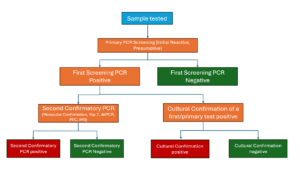
Here is a general flow diagram of commonly used STEC/EHEC detection pathways:

STEC/EHEC detection pathways

Insights from the 2023 Cadmium Food Safety Workshop in Salinas

January 8th, 2025

A peer-reviewed article titled Collaborating to Address Heavy Metals in Fresh Produce Supply – A Case Study on Cadmium in Spinach and Carrots Grown in Arizona and California”, summarizes the proceedings from a pilot workshop convened by the USDA in 2023 to facilitate collaboration between industry, government and academia to benefit food safety and public health.

The Cadmium Food Safety Pilot Workshop, which included about 40 participants, consisted of field tours, a discussion on the health impacts of cadmium, the importance of spinach and carrots to the diet, current production practices in California and Arizona, and a review of research on factors that influence crop uptake of cadmium. The group engaged in open dialogue, acknowledging the need to achieve a common understanding of the challenges as well as strengthening trust between various stakeholders to find solutions together.

The pilot focused on the production of two commodities (spinach and carrots) in two states (California and Arizona) and was aimed at developing a continuous improvement plan for mitigating cadmium, an element of concern.

The peer-reviewed article summarizing the workshop proceedings can be found here. 

2024 FREP/WPH Nutrient Management Conference Recap

January 8th, 2025

The 32nd Annual Fertilizer Research and Education Program (FREP) and Western Plant Health (WPH) Nutrient Management Conference brought together a diverse audience in Seaside, CA, on October 29-30, 2024. 

Key Highlights: 

  • Pre-Conference Tour: A visit to the McFadden Woodchip Bioreactor showcased innovative water treatment methods reducing nutrient pollutants by up to 75%. 
  • Day 1: Discussions on fertilizers, soil sampling and vineyard nutrient management were complemented by panels and workshops on nitrogen removal and sensor calibration. 
  • Day 2: Insights on nutrient management in strawberries, regenerative agriculture and organic systems rounded out the event. 

A detailed recap can be found here. 

FREP project summaries can be found here. 

Leverage PACA and the DRC to Protect Your Business

January 6th, 2025

Shippers, Are You Fully Utilizing The Perishable Agricultural Commodities Act (PACA) and The Fruit and Vegetable Dispute Resolution Corporation (DRC)? 

In my experience, shippers often underutilize the powerful protections, resources, and dispute forums provided by the two primary adjudication services: PACA and DRC. As the Commodity & Supply Chain Services Director for Western Growers, I handle daily calls from growers and shippers navigating  disputes with buyers, both domestic and Canadian. These issues range from arrival problems and quality disputes to contractual issues, slow payments, and even bankruptcies. In nearly all these scenarios, PACA and the DRC offer defined regulations and a wealth of case precedents to address the situation effectively. 

Domestic Disputes: Leveraging PACA 

For domestic disputes, shippers may hesitate to turn to PACA out of concern for customer relationships. However, there are times when utilizing PACA is necessary. PACA helps resolve disputes fairly and equitably. While some customers may not be suitable for involving PACA, in other cases, it can be a crucial tool for protecting your business. 

International Disputes: The Role of the DRC 

The membership-based DRC, based in Ottawa, Canada, offers harmonized international standards and services to prevent commercial disputes with buyers outside of the U.S. and Canada. When disagreements occur, the DRC provides consultation, mediation, and arbitration services to resolve issues promptly and cost-effectively. 

Understanding Jurisdiction: PACA vs. DRC 

Nearly all fresh produce transactions between PACA licensees are subject to regulation, with a few exceptions. For instance, if a PACA licensee sells Chilean table grapes directly from Chile to a Pacific Rim country without the product entering the United States, PACA lacks jurisdiction. However, jurisdiction may fall under the DRC if both entities are current members of the DRC in good standing or if a DRC arbitration clause is stipulated in the contract. The vast majority of domestic transactions fall under PACA’s jurisdiction because most fresh produce is shipped with the expectation of interstate commerce. For example, if you ship from Salinas to Los Angeles, your buyer might redistribute the product out of state, thereby invoking PACA regulations. A 1996 PACA case clarified jurisdiction by ruling that as long as a seller can demonstrate that the commodity in question is regularly moved in interstate commerce and that the buyer’s business involves interstate commerce, PACA can assert jurisdiction. 

The PACA Good Delivery Hotline and The DRC Help Desk: Two Key Resources 

PACA offers a Good Delivery Hotline (800-495-7222) to help verify if your product meets contract specifications upon arrival. This service is available from 5:00 A.M. to 4:30 P.M. PT, providing guidance on domestic Good Delivery standards and contract compliance. 

Similarly, the DRC offers a Help Desk (613-234-0982 x224), with services in English, French, and Spanish. The DRC Help Desk should be your “go-to” resource for timely and informed assistance on a wide range of international produce trade-related matters. This service is available between 4:30 A.M. and 2:00 P.M. PT, or by email at [email protected]. 

Both PACA and DRC are established to protect and assist you in resolving disputes. Neglecting to take advantage of these services can leave your business exposed. It is in your best interest to make use of the benefits that PACA and DRC offer to ensure your business is well-protected. 

For Western Growers’ members, our Commodity & Supply Chain Services Department can assist in processing these types of activities on your behalf. We’re here to help manage contractual issues and ensure you’re fully supported. Don’t hesitate to reach out for assistance by contacting Bryan Nickerson at 949.885.4808 or [email protected]. 

Specialty Crops Secure $650 Million in Additional Funding for USDA Initiative

January 6th, 2025

WASHINGTON, D.C. (Jan. 6, 2025) – The Specialty Crop Farm Bill Alliance (SCFBA) issued the following statement today in response to the U.S. Department of Agriculture’s updates to the Marketing Assistance for Specialty Crops (MASC) initiative, which include an additional $650 million investment.

“Specialty crop growers across the U.S. are facing severe and unique challenges. As we wrote in December, the USDA’s MASC program is an important step in helping growers recover from this economic battering, and with today’s announcement, we are grateful to the USDA for recognizing that even more was needed.

This additional funding will play a critical role in stabilizing farms, ensuring the strength of our industry, and safeguarding the availability of domestically grown specialty crops, including the nutrient-dense fruits, vegetables and tree nuts, which should make up more than half an American’s diet. By also increasing payment limitations and extending the application window, the USDA is providing growers with the much-needed resources and flexibility to navigate these difficult times.”

Updates to the MASC program include:

  • An additional $650 million in funding has been added, bringing the total funds available for specialty crop growers to $2.65 billion.
  • The payment limitation has been increased from $125,000 to $900,000, acknowledging the higher value of specialty crops when compared to other agricultural commodities.
  • The deadline for applications has been extended by two days. Applications will now be accepted through Friday, Jan. 10, 2025.

The USDA announcement follows the SCFBA’s request in December for an additional investment in the MASC program and a modified structure for payment limitations after specialty crop production – which represents nearly half the farm gate value of American agriculture – was left out of the final year-end economic assistance package negotiated by Congressional leaders.

SCFBA is a national coalition of more than 200 specialty crop organizations representing growers of fruits, vegetables, dried fruit, tree nuts, nursery plants and other products. In early 2023, the alliance released a set of key policy priorities as part of its Farm Bill recommendations. Specialty crop production, including fruits, vegetables, tree nuts, nursery and greenhouse commodities, contributes significantly to the U.S economy, accounting for $64.7 billion in farm gate value and 30 percent of farm cash receipts for crops.

The SCFBA is co-chaired by Cathy Burns, CEO of the International Fresh Produce Association; Mike Joyner, President of the Florida Fruit & Vegetable Association; Dave Puglia, President and CEO of Western Growers; and Kam Quarles, CEO of the National Potato Council.

# SCFBA #

The Specialty Crop Farm Bill Alliance is a national coalition of more than 200 organizations representing growers of fruits, vegetables, dried fruit, tree nuts, nursery plants and other products. The Alliance was established to enhance the competitiveness of specialty crop agriculture and improve the health of Americans by broadening the scope of U.S. agricultural public policy. For more information, visit farmbillalliance.com


MEDIA CONTACTS:

Christina Morton, Florida Fruit & Vegetable Association, [email protected]

Siobhan May, International Fresh Produce Association, [email protected]

Mark Szymanski, National Potato Council, [email protected]

Ann Donahue, Western Growers, [email protected]

DOL Proposes Rule to Phase Out Subminimum Wages to Workers with Disabilities

January 3rd, 2025

The U.S. Department of Labor has announced, a proposed rule to phase out the issuance of certificates allowing employers to pay some workers with disabilities less than the federal minimum wage, currently $7.25 per hour, for the work they perform. 

The rule proposes to gradually eliminate certificates employers can apply for under, Section 14(c) of Fair Labor Standards Act that allow them to pay certain workers with disabilities subminimum wages. The department proposes to discontinue the issuance of new certificates and establish a three-year phase-out period for employers with existing certificates once a final rule becomes effective.

With its proposal, the DOL joins other states, including California, in recognizing that in the decades since such rules were enacted there have been significant legal and policy developments that have dramatically expanded employment opportunities and rights for individuals with disabilities. If adopted, the new rule will help ensure that workers with disabilities have access to equal employment opportunities while reinforcing the fundamental belief that all workers deserve fair compensation for their contributions.  

California’s phase-out plan banning subminimum wages for disabled workers was signed into law, September 27, 2023, and becomes effective January 1, 2025. This means an employee with a disability must be paid the state minimum wage or the applicable local minimum wage ordinance, whichever is higher.  

Arizona’s Willcox Groundwater Basin Designated as Active Management Area

January 3rd, 2025

On Dec. 19, 2024, the Arizona Department of Water Resources (ADWR) officially designated the Willcox Groundwater Basin as the state’s seventh Active Management Area (AMA). The date of designation, as defined in A.R.S. § 45-402, took effect on January 1, 2025.

According to the Department, “Pursuant to A.R.S. § 45-416 irrigation users may irrigate only those acres of land within the Willcox AMA which were legally irrigated at any time during the five years preceding October 23, 2024. “Irrigate” is defined in A.R.S. § 45-402 and means to apply water to two or more acres of land to produce plants or parts of plants for sale or human consumption, or for use as feed for livestock, range livestock or poultry.”

To view a copy of the complete Findings, Decision and Order, click here.

Federal Employment Law Updates for 2025 

January 3rd, 2025

It’s a New Year! Are you ready? Significant changes in federal employment laws for 2025 encompass critical aspects of workplace regulations, including new guidelines on harassment, revised rules on employee classification, and evolving interpretations of existing statutes. Understanding these changes is crucial for maintaining compliance and fostering a fair and equitable work environment. Highlighted below are some of the latest developments impacting employers issued by the Equal Employment Opportunity Commission (EEOC) and the Department of Labor (DOL). 

Enforcement Guidance on Harassment in the Workplace (Equal Employment Opportunity Commission’s (“EEOC”)) 

Issued April 29, 2024, the EEOC’s enforcement guidance ‘Guidelines on Harassment in the Workplace’ offers guidance on the standards for harassment and employer liability applicable to claims of harassment under the EEO statutes enforced by the Commission (e.g., Title VII, ADA). The guidance highlights the EEOC’s position on “protected characteristics” and identifies workplace behaviors that rise to the level of harassment. These include prohibitions on work-related harassment based on protected classifications such as race, color, religion, sex (including pregnancy, childbirth, or related medical conditions; sexual orientation; and gender identity), national origin, disability, genetic information, and age (40 or over). 

The updated guidelines provide specific factual examples of what constitutes unlawful harassment in the modern workplace. Examples include common scenarios involving sexual advances at holiday parties and comments regarding an employee’s natural hair. 

While non-binding, the guidelines provide useful insight into EEOC enforcement parameters and serve as a ‘how to’ tool for employers seeking to address and prevent unlawful conduct in the workplace.  

Final Rule on Employee/Independent Contractor Classification (Fair Labor Standards Act) 

Federal law governing the classification of independent contractors under the Fair Labor Standards Act (FLSA) has been in flux for several years, with classification rules being issued, rescinded and replaced on an ongoing basis. Effective March 24, 2024, the U.S. Department of Labor (DOL) published a new final rule revising the Department’s guidance on how employers should analyze whom is an independent contractor under the FLSA.  

The new final rule rescinds the Independent Contractor Status Under the Fair Labor Standards Act (2021 IC Rule), published January 7, 2021, and restores the prior multifactor analysis used by courts for decades. The new rule addresses six factors that guide the analysis of a worker’s relationship with an employer, including: 1) any opportunity for profit or loss a worker might have; 2) the financial stake and nature of any resources a worker has invested in the work; 3) the degree of permanence of the work relationship; 4) the degree of control an employer has over the person’s work; 5) whether the work the person does is essential to the employer’s business; and 6) a factor regarding the worker’s skill and initiative. 

When an employer hires an independent contractor, it avoids many employment and tax requirements inherent to the employer/employee relationship. For this reason, independent contractor relationships are highly scrutinized. Misclassification can result in the employer being responsible for back wages, overtime, tax and insurance, employee benefits and employment law compliance. Employers should consult legal counsel before classifying workers—especially those hired to perform work similar to its current employees—as independent contractors. More information on the new final rule can be found on the DOL’s Final Rule webpage 

NOTE: California’s independent contractors’ laws are not impacted by the DOL’s new final rule. 

Federal Minimum Salary Requirement for the White-Collar Exemptions (Fair Labor Standards Act) 

On April 23, 2024, the Department of Labor (DOL) announced a significant update to the overtime exemption criteria under the Fair Labor Standards Act (FLSA).  

The new rule was intended to increase minimum salary thresholds needed for certain employees to qualify for overtime exemptions. Increases were to be rolled out in two phases, with the first increase occurring on July 1 and a second on January 1, 2025. However, in late November 2024, the rule was vacated by a Texas federal district court judge.  

This means that employers subject to FLSA overtime rules will not be required to comply with the January 1, 2025, increase and that the salary level in effect prior to July 1 ($684 per week, $35,568 per year) is restored and the salary level for the highly compensated employee exemption, $107,432 per year, is reinstated. It also means that, at their discretion, employers may roll back any increases initiated in accordance with the July 1, 2024, deadline. Employers should consult with legal counsel before deciding what changes to make or pull back because of the court’s ruling. 

NOTE: California overtime laws are not impacted by the court’s ruling.  

Noncompete Ban Blocked (Federal Trade Commission (“FTC”)) 

On August 20, 2024, a federal judge blocked the Federal Trade Commission’s (FTC) rule banning nearly all noncompete agreements, which was set to take effect on September 4, 2024. The U.S. District Court for the Northern District of Texas ruled, in Ryan, LLC v. FTC, that the rule is unlawful. The court’s decision not only prevents enforcement of the rule against any company nationwide but also concludes that the FTC lacks substantive rulemaking authority over unfair methods of competition. 

This ruling followed an earlier preliminary injunction that applied specifically to the Plaintiff-Intervenors. The court’s judgment effectively halts the FTC from implementing the noncompete ban across the board. However, it is important to note that this decision does not affect state law bans on noncompete agreements, such as California’s, which remain in place regardless of federal rulings. 

The FTC may still appeal this decision, but any appeal would likely face an uphill battle in the U.S. Court of Appeals for the Fifth Circuit and potentially the U.S. Supreme Court, both of which have issued decisions in recent years limiting federal agencies’ regulatory powers. 

As a result of the court’s ruling, employers are no longer subject to compliance measures related to the FTC’s noncompete rule, though it is important to stay updated on the appellate process in the Ryan case. 

California Employer’s January Checklist

January 3rd, 2025

As the new year begins, it is important for California employers to finalize their efforts in updating company policies and practices to align with the significant legislative changes effective January 1, 2025. Ensuring compliance and proactively addressing these updates will help lower risk and prevent potential penalties. Below is a comprehensive checklist highlighting several key legislative updates and suggested actions that California employers should complete at the start of the new year. 

  • Check California Department of Industrial Relations updated Paid Sick Leave FAQs for answers to questions about changes taking effect January 1, 2025: 
    • AB 2499 creates additional protections for employees who are victims of violence or have family members who are victims. This includes allowing employees to use paid sick leave to lessen any financial hardship associated with addressing the impacts of violence. 
    • SB 1105 expands the allowable use of paid sick leave for agricultural employees to include: Attending to their own health needs, caring for a family member, and addressing issues related to domestic violence, sexual assault, or stalking. 
  • Conduct a wage compliance audit as a means of proactively working to comply with labor laws and reduce PAGA penalties (AB 2288 and SB 92). Compliance measures to consider include:  
    • Conducting regular payroll and compliance audits. 
    • Maintaining clear and lawful written policies. 
    • Training management on labor law requirements. 
    • Correcting any identified issues promptly. 
  • Review existing vendor agreement to ensure compliance with the Freelance Workers Protection Act (FWPA).  Identify any vendors that may be classified as “freelance workers” under the FWPA and, for those identified as qualifying, review existing agreements to ensure they comply with the new requirements and provide updated contracts as needed. Update any existing anti-discrimination and retaliation policies to include protection for freelance workers. (SB 988) 
  • Review existing leave policies to remove any requirement that employees use paid vacation time before receiving paid family leave benefits under EDD’s Paid Family Leave. (AB 2123)  
  • Review existing job descriptions and any currently advertised job postings to ensure compliance with prohibitions against requiring applicants to have a driver’s license unless the employer reasonably expects driving to be one of the job functions and reasonably believes that an alternative form of transportation would not be comparable in travel time or cost to the employer. (SB 1100)  
  • Update existing anti-harassment/discrimination policies to make clear that discrimination is prohibited based on any combination of protected characteristics. (SB 1137) Updates should also reflect updated definitions of race in the Fair Employment and Housing Act that define race as including traits associated with race, rather than traits historically associated with race. (AB 1815) 
  • Update all company training programs/protocols to include information on captive audience meeting prohibitions. Remind all supervisory personnel that as of January 1, 2025, “captive audience meetings” or mandatory employer-sponsored meetings or communications where the purpose is to communicate the employer’s opinion about religious or political matters, including labor organizations, are prohibited. 
  • Audit current Fair Chance hiring practices to ensure compliance with state and local ordinances. San Diego County’s newly enacted ordinance, along with those of the City of Los Angeles and Los Angeles County, generally adheres to existing state Ban the Box provisions. However, there are a few requirements that differ from state mandates. 
  • Ensure Workers’ Compensation notices have been updated to include information related to workers’ compensation rights and benefits, that an injured employee has the right to consult an attorney for advice, and that attorneys’ fees will be paid from the injured worker’s award in most instances. (AB 1870) 
  • Review Cal/OSHA’s Workplace Violence Prevention Guidance and Resources webpage for updates on the agency’s Model Workplace Violence Prevention Plan and proposed regulations.  

California’s 2025 Legislative session will no doubt offer further changes as the year progresses; however, this checklist covers only those taking effect January 1, 2025.  

For more information on changes impacting the workplace in 2025, join Western Growers for our annual Employment Law Update Webinar on January 8, 2025, at 10 a.m. PST.  Western Growers’ legal team will bring you up to speed on important California and federal 2025 legislative changes, including updates to California’s anti-discrimination laws, the latest on the captive audience ban, and reframing of the state’s Victim-of-Violence leave. Best practices guidance and important tips for HR professionals will have you set and ready for a compliant 2025! Register to reserve your spot today. HRCI credits are pending. 

Wonderful Nurseries Challenges ALRB’s Refusal to Delay UFW Certification

January 3rd, 2025

Wonderful Nurseries LLC has filed a federal complaint challenging the California Agricultural Labor Relations Board (ALRB) over its refusal to stay the certification of the United Farm Workers (UFW) union as the exclusive bargaining representative for the company’s agricultural employees. The case centers on alleged due process and equal protection violations under the U.S. Constitution and raises critical questions about the ALRB’s handling of union certifications under California’s controversial Majority Support Petition (MSP) or “card check” system. 

Wonderful argues that the ALRB’s certification process failed to account for significant objections raised by its employees. These include claims that workers were misled into signing union authorization cards, with some employees asserting they were told the cards were necessary to secure federal COVID-19 relief payments rather than union representation. Despite these objections, the ALRB certified the UFW based solely on a comparison of payroll records against submitted authorization cards, a process Wonderful contends lacked transparency and verification safeguards. 

Wonderful also challenges the ALRB’s decision to proceed with mandatory mediation and conciliation (MMC), a process that could result in a state-imposed collective bargaining agreement without employee ratification or employer consent. According to the complaint, the ALRB’s refusal to delay the certification or the MMC process until these objections were fully resolved amounts to an unconstitutional deprivation of due process. 

This lawsuit, filed in the U.S. District Court for the Eastern District of California, could have significant implications for California’s agricultural labor landscape, particularly regarding the use of card check certifications and the ALRB’s regulatory framework. Wonderful’s case seeks not only to protect its constitutional rights but also to highlight procedural flaws in the card check system that undermine both employer and employee autonomy.