Desert Control Looks to Boost Yields and Cut Water Use in American West

March 13th, 2025

Desert Control, an international company headquartered in Norway, has been making waves in the agricultural sector with its groundbreaking Liquid Natural Clay (LNC) technology. Inspired by the fertile region around the Nile River Valley in Egypt that lost its water control capability over time, Desert Control has developed a solution that is now in high demand in the Western U.S., particularly in permanent crop operations. The Yuma Valley, once known as the “Nile of the American West,” is a prime example of where this technology is being effectively utilized already.

Desert Control’s patented LNC technology offers a multitude of benefits for soil management. It significantly reduces irrigation needs, conserves water, preserves essential nutrients and enhances soil performance. The value of soil is intrinsically linked to the value of the crops it can produce, making LNC a vital tool for farmers aiming to maximize their yields.

“With LNC, growers can achieve remarkable water efficiency and financial savings, with the potential for improved soil salinity and reduced nutrient leaching. LNC helps maintain or increase crop yields while minimizing water loss to leaching and soil evaporation, reducing related irrigation expenses and making sustainable agriculture both practical and profitable,” said Marty Weems, Managing Director of the Americas.

When evaluating new land, Desert Control meticulously measures water samples, soil samples and plant health. Each piece of land is scored based on the soil texture triangle, ensuring a comprehensive understanding of its characteristics. The LNC product improves water holding capacity, reduces soil salinity and boosts crop yields, making it an indispensable asset for modern agriculture.

“The OMRI Organic-certified LNC technology uses natural minerals to transform degraded, low-quality soils into high-performance, productive land,” said Evan Hazlett, Program Manager, Sustainability Impact and Analytics. “It has the potential to significantly improve profitability, reduce resource costs, and do so while benefiting the environment.”

In an era where water scarcity and regulatory changes are becoming increasingly prevalent, Desert Control’s solutions are more relevant than ever. Farmers are facing the dual challenges of rising water costs and reduced water availability. Field trials have demonstrated that growers using LNC can reduce their irrigation by 25 percent to 50 percent, while maintaining increased productivity within the root zone, leading to significant yield improvements.

The benefits of Desert Control’s LNC technology extend beyond immediate gains. The product’s effects can last between three to five years, depending on the crop’s tillage rate. This longevity allows farmers to account for these improvements as capital expenses rather than operating expenses, providing long-term value and sustainability. Desert Control is not just a company; it is a partner in sustainable agriculture, helping farmers grow more with less and paving the way for a more resilient agricultural future.

Farmers interested in reducing their irrigation water usage and enhancing their soil’s performance can reach out to Desert Control at [email protected] or the Western Growers Center for Innovation & Technology at [email protected] for more information.

A Commitment to Soil, Water and Wildlife

March 13th, 2025

Bowles Farming Company traces its roots back to the 1850s, when Cannon Michael’s third great-grandfather, Henry Miller, left his small German hometown for the fertile San Joaquin Valley in search of opportunity. But for Michael—now a sixth-generation farmer—the journey to agriculture was not as straightforward.

“In my younger years, I was interested in farming, but I didn’t think it was going to be something that would be an immediate career for me,” Michael said.

Raised in San Francisco, far from the fields of Los Banos, California, Michael spent his early years experiencing the farm as a place of adventure rather than responsibility. Summers were filled with the freedom to explore—riding tractors and learning about the land from his grandfather. It wasn’t until high school, when he took on irrigation tasks, that he genuinely appreciated the complexities of farming.

Despite this, Michael pursued a different path, studying at Berkeley and working in commercial real estate in Atlanta. But in 1998, fate brought him back home to help with the family business after his uncle fell ill. The transition wasn’t easy—he lacked a local social network and had to start from the ground up, managing field operations rather than stepping directly into leadership. But over time, he found his way.

In 2014, Michael became president with a vision to enhance the farm’s profitability through strategic diversification. Under his leadership, Bowles Farming Company expanded beyond its traditional barley, cotton and alfalfa crops by introducing several high-value crops. Today, the farm cultivates over 20 different crops, leveraging both conventional and organic farming practices to drive sustainability and long-term financial success.

Under Michael’s leadership, Bowles Farming Company has made remarkable progress in sustainable agriculture, setting a standard for environmental stewardship. In recognition of these efforts, the farm received the prestigious Leopold Conservation Award last year, an honor given to farmers, ranchers and forestland owners who demonstrate exceptional commitment to soil health, water conservation and wildlife habitat management on working lands.

The farm established an on-site compost center, where it converts six to eight truckloads of green waste from nearby cities into certified organic compost used daily on the farm. “We’re turning that waste into valuable resources for our operations,” Michael said.

Additionally, Bowles benefits from its proximity to the Grasslands Wildlife Management Area, the second-largest contiguous wetlands west of the Mississippi River. “Our farm borders this unique environment,” Michael said. “We’ve dedicated 650 acres to a permanent easement, preserving it as wetlands.”

Bowles also has a deep historical connection to water management, dating back to the 1850s when Michael’s great-grandfather played a key role in shaping the region’s initial water infrastructure and legal rights. As a result, the farm holds senior water rights, giving it relatively stable access to this critical resource.

More than 80 percent of the farm’s land is equipped with drip irrigation, and the farm has also invested in solar energy to offset the electrical demand of modern irrigation systems. While drip irrigation is the primary method, Bowles still uses flood and sprinkler irrigation when necessary. Flood irrigation, for instance, supports local wildlife habitats and contributes to groundwater recharge, reinforcing the farm’s commitment to sustainable agriculture, Michael explained.

Beyond his leadership at Bowles Farming Company, Michael is deeply involved in shaping water policy at a broader level. Thanks to the support of an exceptional team and family who help manage the farm’s day-to-day operations, he is able to dedicate significant time to addressing critical water challenges. As president of the local water district and chairman of the San Luis and Delta-Mendota Water Authority, Michael advocates for balanced water policies that serve the needs of agriculture, urban communities and the environment. “I’m fortunate to have a great team behind me, which allows me to focus on water issues that impact not just our farm, but the entire region,” he explained.

Looking ahead, Michael said the key to long-term success in agriculture lies in collaboration and open-mindedness, and he looks forward to working with accomplished leaders on the Western Growers Board of Directors.

“The next generation of farmers must look beyond their individual operations and engage with diverse perspectives, whether from environmental groups, policymakers or urban communities. Finding common ground and building coalitions can lead to solutions that provide lasting stability, rather than policies that shift with political cycles,” he said.

Owyhee Produce’s Bailey Myers Reveals How to Start an Agritourism Operation on Your Farm

March 13th, 2025

Sure, sure you can do a farm tour. But how about goat yoga? Festivals? Air BnBs? Bailey Myers, the Director of Marketing at Owyhee Produce in Parma, Idaho, appeared on a recent episode of Western Growers’ Voices of the Valley podcast to discuss how she helps diversify her farm’s revenue stream via agritourism offerings.

Ann Donahue, Director of Marketing and Communications at Western Growers: Let’s start out with the basics – what do you guys grow and where are you located?

Bailey Myers, Director of Marketing at Owyhee Produce: We are located right on the border of Idaho and Oregon – we have farmland and packing facilities in both states. We grow around 13 different crops ranging from asparagus, watermelon, sweet corn, all the way down to onion, sugar beets and corn.

Ann: Tell me a bit about your background in agritourism.

Bailey: Agritourism is something that I actually went to school for in Hawaii. I got my degree with an emphasis in agriculture education and hospitality and tourism. I knew from the beginning that that’s where I wanted to focus my attention when I came back to the farm. When we have family who want to come back to work on the farm, we ask them to grow their operation when they come back – bring something new, whether it’s a new way to focus on a crop or a new way to bring revenue in. We’re always working on expanding and challenging our own individuals.

I’ve always been someone who loves education. Give me any course or any class and I’ll take it. But I also am really passionate about agriculture. I spent a year traveling Oregon and teaching in different high schools in ag programs. It sparked this interest of how can I educate in a fun way that’s memorable and how can our farm be a part of that?

Agritourism is pretty simple. You want to bring people to a farm and create something memorable. Something even as simple as going to a pumpkin patch, which most people do nowadays, is agritourism. Farm-to-fork dinners? Agritourism. The goat yoga that’s super trendy? Agritourism.

The industry has grown a lot, especially since the pandemic in 2020. Society just saw this need of ‘I want to know where my food comes from,’ but you also had to find a space to gather that was out in the open. That’s when we started our farm-to-fork dinners.

There’s this whole undercurrent of making sure that experience is as flawless as possible. If it’s a memorable event, whatever they learned from that event is going to be tied with that memory. You want to make sure that they walk away with something that’s beneficial, whether it’s, Oh, I didn’t know that we had bison that was local, or I didn’t know that onions could be cooked in this way. You want them to take away something that’s positive with that memory.

Ann: If a grower is listening to this and is like, ‘You know, I’ve thought about doing this before, but I have no idea where to begin.’ What do you think are the best first steps that growers can take in order to start an agritourism business?

Bailey: Step back and be like, ‘Okay, what can I offer? What are my regulations?’ Those are the first two steps. Once you get an idea, you just have to run with it.

There’s a farm locally where they do field trips and tours where you can go and learn how to set a siphon tube. As a farmer, I don’t care to set another siphon tube. [Laughs.] I’ve done it before. I’m terrible at it. My husband’s great at it. You know, we don’t want to do it, but to most people, that’s a great skill to learn and it’s fun and memorable.

Ann: What are some of the hoops you needed to jump through to set up agritourism programming?

Bailey: A lot of them come from food safety. We opened up our field of asparagus to the public to come and pick it. If you go back to one of [my brother] Shay’s videos [on TikTok], we had an issue getting our labor workers here one year and our crop was just going to go to waste without them, so we were trying to figure out a way to not have so much food waste and benefit the community. We had 6,000 people show up to pick this field. And what most people didn’t understand is we had to train them just like an employee. We had to go through our food safety training. We had to go through how and what not to do and what to wear. And there were people that came that we had to turn away. Like ‘You can’t wear jewelry into the field and you can’t have long nails on’ and all of these different things – and people were like, ‘This is crazy.’

But it’s a great opportunity for them to understand you’ve got to follow these guidelines. We’ve seen the benefit of people having the chance to come and learn from the farm. They buy local, they want to support local, they know why things cost more, they’ve done the labor, they see the labor, so in turn it does equal out, but those hoops are big ones to jump through.

Ann: So tell me about what else you offer as agritourism.

Bailey: We offer year-round tours on the farm. There’s always something happening. We’ll do mint tours. We’ve also done onion shed tours. We do an asparagus festival. We also have Air BnBs on the farm. We’ve had people that come and stay on the farm and they didn’t realize how dark it got at night without street lights, or how quiet it can be without roads. Most of the Air BnBs are actually farmstead houses. They’re houses that we have renovated but it’s a true farm style house. There’s nothing fancy. The one that we have right now that’s really popular is by the river, and we haven’t changed anything, so they still have sulfur water. If you don’t know what that is, it’s water that smells like terrible rotten eggs the first like five minutes that you use it. And we get a lot of comments on that, but our purpose in that is, could we try and fix it? Maybe. It’s pretty hard, but we also want people to understand that when you live in this area, this is what you have.

Ann: But I think authenticity is something that people really need to experience to bridge that gap between their own experience as somebody who drives to the grocery store and magically there’s all this produce in the produce section.

Bailey: Authenticity has become really a hot topic in the last few years. I want to say we’re like four or five generations removed from a farm, on average. Bridging that gap is going to be crucial in having American agriculture survive. We’ve got to educate. We’ve got to get to where people can trust not just the farmers, but the farming. When they can understand that, not only will it be easier for American farmers, but I feel like Americans and the consumers of all these products are going to be grateful that they know where things come from. That education almost gives people peace of mind.

You can listen to the whole interview on our Voices of the Valley podcast by clicking here.

Food Safety and Sustainability: Permission for Risk

March 13th, 2025

Risk-based management has been the on-trend phrase of the past decade within the food safety community. Globally, numerous regulations and food safety standards have adopted language that requires food-producing entities to assess their process and product, and then apply risk-based measures appropriate for the risk. This is a logical and scientifically supported theory – it makes complete sense to apply the most time and resources where gaps are identified and where our opportunity to minimize risk is the greatest.

I have spent my academic and industry career chasing, supporting and helping execute this concept, supported by science and the best-informed guesses when available. I am an ardent believer that when risk-based programs are truly developed and implemented, we will find a more manageable and sustainable system of food production.

The transition to risk-based management is a passion, and I work diligently to support the produce and food industry in incorporating those practices. However, one of the observations I have made throughout my career is that risk-based management and measures are straightforward only in textbooks, and the true application of risk-based management for food safety represents a quagmire of scientific and social complexity.

The shift to risk-based regulations and standards has been rapid from a regulation perspective, leading to numerous updates and forms being produced to aid the industry in assessing and documenting their risk to meet compliance requirements. While new forms and checklists were made and training developed, it appears the root cause impeding the shift to true risk-based management is that no concerted effort to shift to a fundamentally different management or regulation style occurred at the same time.

With the introduction of risk-based language in the regulation, the industry acted effectively the same, albeit with more paperwork and different terms used. Customers required the same information and had the same expectations of suppliers while regulators used similar decision-making and actions reminiscent of the prior regulatory era.

In effect, the transition to risk-based food safety happened on paper, but food safety culture remained more-or-less entrenched in an era of zero-hazard tolerance.

The paradigm shift to true risk-based management ultimately requires some amount of risk to be acceptable, and it recognizes that different systems, producers and products will have variable levels of risk.

In a risk-based system, it does/will not matter how many risk assessment forms are completed since risk-based management only truly begins when we permit the food industry and food regulators to recognize that there is some acceptable amount of risk.

Without acknowledging that not all risks can be eliminated or controlled – especially for fresh produce and foods without microbial kill steps – there will continue to be little incentive or benefit for risks to truly be identified. Risk identification and characterization are generally still perceived as evidence of failure rather than evidence of proactive risk management.

One illness is too much, but zero is unrealistic.

Allowing for risk in the food system seems counterintuitive to our goal to reduce foodborne illnesses. The food industry should have a goal of zero risk to consumers, and that must always be the target. However, while one illness will always be too many, zero illness is also unattainable and building systems that only tolerate pass/fail or good/bad outcomes prevents identifying realistic ways to manage risk.

This binary risk outcome is an enormous roadblock in the path to continuous improvement since there is rarely any advantage for a company to characterize its true risks within the system. For example, while we openly discuss and recognize that seasonal or geographic factors may influence risk in fresh produce production, what benefit do individual growers gain from fully characterizing that risk when customers and regulators view such identification in isolation—often discrediting the fact that sufficient efforts and programs may already be in place to manage it at an acceptable level?

In effect, guilt is easy to prove while evidence of control (or innocence) is almost impossible to defend.

Taking a recent real-life event as an example, a pathogen-positive sample originating from a routine sampling event for Salmonella led to a grower losing a multi-million-dollar customer who chose to terminate a contract due to the pathogen finding. This reactive decision was made despite that this positive was in isolation and not associated with any illnesses or process failure evidence. This isolated pathogen result ultimately led to a drastic reaction by the customer and reinforced for the grower that there is little incentive to build systems to identify and monitor for risk. Additionally, there is even less incentive to be transparent with external stakeholders about when risks may be present.

In the prior example, we saw a customer interpret a pathogen detection incompletely and with what seems a disproportionate reaction. It is understandable that no one wants food/systems with risk and would naturally reject it. However, believing that a successful strategy is to sever ties with any supplier, farm, product or process once a positive is found from a random test is misguided. More importantly, it is counterproductive and destructive since it reinforces to the food producer that a smarter strategy would be to build food safety programs that always return negative results, regardless of whether that outcome truly reflects the situation. As with all risk, the scariest type is the type you do not know you have. If we interpret each finding of a pathogen, and sometimes even indicator/index organisms, to be viewed as evidence of systematic/gross/preventable failure, then that only further reinforces that identifying risk to optimize managing it is not a sustainable food safety or business strategy. Conversely, this supports a strategy opposite of risk-based management since we are not allowing food producers to investigate risk to manage it without then using that same information as evidence against them.

This is part one of a two-part series on food safety and sustainability.

New Year, New Approach: How to Make Your Goals Stick in 2025

March 13th, 2025

We’re well into 2025, and the New Year’s celebrations are behind us—along with many resolutions, like getting in shape, eating healthier or spending more time connecting with ourselves. Even with the best of intentions, it’s easy to get caught up in day-to-day life and let those goals go to the wayside.

Whatever goals or resolutions you set for yourself way back in January, I am excited for you. I am excited because we’re all trying to better ourselves, and even though things perhaps haven’t worked out the way we wanted them to, I know this time it can be different.

If you’re trying to build a new workout habit or change the number on the scale this year, I salute you. Setting a goal to change a behavior is very commendable. But to give ourselves the best chance of accomplishing our goal, we must combine the goal with some self-reflection and self-awareness.

Here are some questions to ask yourself as we creep into spring of 2025:

What’s different this time?

And by the way, I’m proud of you for starting again. But what’s different about this attempt?

If you do what you’ve always done, you’ll get what you’ve always got. The best predictor of future behavior is past behavior. If you pick the same strategy that you tried (unsuccessfully) in the past, the end result will be the same: another lost year of “why can’t I get my act together?”

Instead of jumping into another fad diet, swearing off sugar forever or committing to a triathlon—especially if these approaches haven’t worked for you in the past— consider a more sustainable strategy. Something has to be different this time.

  • Make fewer changes.
  • Pick one goal and focus on it.
  • Pick a different workout routine.
  • Pick a different diet or nutrition change.
  • Pick a different time of day to work out.
  • Recruit a friend to join you so you’re not doing it alone.
  • Make your new desired behavior beneficial or necessary.

Prove to yourself you’ve learned something from your past attempt. Don’t let past failures be in vain—they showed you what doesn’t work.

What are you afraid of?

You’re full of momentum right now, and that’s great. But as we know, life will happen, and something might go wrong. What has been your tendency when this happens in the past?

Before I coach someone, I ask every single client, “What are you most nervous about?” That answer is something they’re aware of as a result of their past attempts.

“Are you going to get busy and decide to take a break until things slow down?”

Now you know when that little voice in your head says this, you can prepare for it, plan to do something differently and decide that you don’t have to listen to it.

“Are you going to have one bad day and go totally off the rails?”

Now you know that when you have one bad day, you can forgive yourself, not look back in anger or guilt and get right back on track.

“Are you going to give up even though you really want to push through?”

This happens to all of us when motivation wanes after a few weeks. Consider guarding against your weaknesses or making a bet with a friend to keep you accountable.

We all set out to change. Even when we’re self-aware, our goals and hopes often exceed the reality that we’re fallible, busy humans living unpredictable lives. And that’s okay.

If we acknowledge these factors and approach things differently, even if the next attempt doesn’t succeed, we can learn from it, eliminate that strategy as a viable option and move forward with a new approach. That’s all life is anyway: try, fail, adjust and restart.

If you don’t have a Western Growers Assurance Trust (WGAT) plan, which includes a care management program and the added option of a Wellness Program, contact us to see how we can help you better manage your health care costs at (800) 333-4942.

Europe’s Green Revolt: A Harbinger of Things to Come in California?

March 28th, 2025

On his first day back in office, President Donald J. Trump wasted little time issuing a series of executive orders overturning regulations restraining U.S. innovation and competitiveness.

European CEOs took notice.

At the World Economic Forum in Davos, Switzerland in late January, Morten Wierod, CEO of the Swiss robotics company ABB, echoed the sentiments of his fellow chief executives: “It needs to be a clear reset on regulation and let business get on with it.”
Wierod went on to state that while each European Union (EU) regulation is set with good intentions, “it’s when you take and you put everything together, it just becomes too much. It gets too complex.”

One set of regulations that has the entire continent reeling is 2019’s European Green Deal, which launched with the goal of making the EU climate-neutral by 2050 through various environmental and agricultural policies.

Among the rules that have posed challenges for local farmers include targets to reduce pesticide use by 50 percent by 2030, policies aimed at reducing nitrogen emissions and mandates that require farmers to allocate a portion of their land to non-productive use to enhance biodiversity. All while mandating a doubling of organic production to 25 percent of EU farmland regardless of market demands.

Farmers in the Netherlands were the first to revolt. You may recall scenes from 2019 when Dutch farmers drove their tractors into the cities, blocking highways and major roads. Other farmers stormed government offices. Some dumped milk on the streets while others blockaded roads and government buildings with manure and hay bales set on fire.

The Dutch insurrection spread across Europe in 2023 as the EU climate and environmental regulations predictably led to rising fuel and production costs coupled with increased competition from cheaper non-EU imports.

Along with the Netherlands, famers in Germany, Belgium, Poland, Spain, Italy and Greece staged coordinated demonstrations in which tractor convoys shut down major transport routes across Europe and manure and produce was dumped in front of government buildings.

“They’re drowning us with all these regulations,” railed one farmer in Spain. “They need to ease up on all the directives and bureaucracy. We can’t compete with other countries when things are like this.”

In response to the widespread rebellion, the European Commission backed off several key pieces of the Green Deal, including its plans to cut pesticide use and set aside land for biodiversity.

Although Europe’s long-term climate plans remain relatively intact, several European countries have experienced a political shift away from the left since the Green Deal was first enacted.

Conservative gains in Italy, Sweeden, Finland, France and Germany between 2022 and 2024 signal widespread desire for a move away from command-and-control government policies.

While not entirely attributable to the Green Deal, the EU’s regulatory-first approach has led to significant dissatisfaction among the continent’s farmers, business leaders and voters. But could the recent events in Europe be a harbinger of things to come in California?
In addition to their broader assault on environmental no-no’s like single-use plastics, oil and gas production and gas-powered vehicles, California’s ruling political class has added even greater weight to the regulatory burden already carried by the state’s farmers.

A widely circulated January 2025 study out of Cal Poly San Luis Obispo documented the cumulative costs of regulatory compliance for California farmers. Compared to its own baseline study in 2006, the report places total regulatory costs at $1,600 per acre in 2024, an increase of nearly 1,400 percent. Over the past 18 years, two dozen major regulations were added in the areas of food safety, air quality, water quality, health and safety and wages, each individual mandate carrying with it another incremental cost.

In addition to rising regulatory costs, production expenses are increasing faster in California than the rest of the country, according to USDA’s Economic Research Service. And gross receipts are rising faster in the rest of the country than in California. Plot both of those lines on a graph and you find that net profits have risen by 59 percent for U.S. farmers over the past 10 years but have fallen by 37 percent for California farmers during the same period.

Consequently, California lost nearly 15,000 farms between 2012 and 2022, a loss of 19 percent, along with 1.4 million acres of farmland. Those are sobering numbers for America’s greatest agricultural state.

Hopefully California’s political pendulum has reached its amplitude and the same course correction we are beginning to see in Europe will soon take hold in the Golden State. But things might need a little nudge.

I can’t remember California farmers ever dumping loads of wasted produce on the State Capitol’s well-kept grounds. But maybe our friends in Europe are on to something.

Saving Gentle Giants: How One Ag Family Turned Their Ranch into a Haven for Draft Horses

March 13th, 2025

In the heart of the Salinas Valley, amid the rolling hills of Chualar, The Canyon House stands as a refuge for draft horses in need. Founded by Sarah Rodriguez, the sanctuary is more than a passion project—it’s a lifelong commitment to rescuing and providing a forever home for these gentle giants, many of whom were once bound for slaughter.

Even with deep roots in Western Growers and agriculture, Sarah never imagined she would one day be at the helm of an equine sanctuary. She is married to Trey Rodriguez, whose family is well known among Western Growers members and the agriculture industry. Trey’s father, Sonny Rodriguez, was the recipient of the 2024 Western Growers Award of Honor. Sarah also has deep ties to the industry through her father, Mike Azzopardi, who operates American Cooling, another proud Western Growers member.

Trey and Sarah both followed in their fathers’ footsteps. They own a three-year-old multi-state cooler management company, Legacy Cooling, and they too are members of Western Growers, with Trey currently in his fifth year serving on the Board of Trustees for Western Growers Assurance Trust.

It was an unexpected moment online that changed everything for Sarah. While browsing through an equine adoption ad, she stumbled upon the heartbreaking reality: countless horses, particularly draft breeds, faced uncertain futures with many destined for kill pens.

For some people, learning about the realities of horse slaughter and equine neglect might lead to a donation, a shared social media post or a passing moment of concern. For Sarah, it became a calling. “I just couldn’t let it go,” she said. “I knew I had horse knowledge. I had energy. I was young and fit, and I could help in some way. I just didn’t know what that role would be yet.”

It became clear in October 2023 when Sarah saw a plea from an equine rescue in Texas, highlighting the urgent need for a draft horse sanctuary in the Western U.S. Unlike smaller breeds, draft horses require more resources. They need three times as much space, they eat twice as much as a regular-sized horse and they require specialized farriers (providers of hoof care) and stock equipment. Often discarded when they are deemed no longer useful, particularly in Amish communities, many aging workhorses are left to a grim fate; shipped to kill pens and sold for slaughter in Mexico.

Sarah had an unwavering love for horses, 87 acres of untouched ranch land and a relentless determination. “I told Trey, ‘I want to start a draft horse sanctuary.’ And he said, ‘I don’t know about that. Where are you going to put them? I think we should think this one through.”

Sarah didn’t wait. Within a week, she purchased six draft horses from a kill pen. “I jumped into the deep end,” she said. “If I was going to do it, I was going all in.”

And thus, The Canyon House was born—a sanctuary where these draft horses, once used for intense farm labor and carriage rides and now cast aside and destined for tragedy—could spend their days in peace.

After those first horses arrived, it became clear that Sarah couldn’t do this alone. This is where having deep agricultural roots made all the difference. Sarah and Trey turned to the network they knew and trusted—longtime industry partners who didn’t hesitate to step up.

It took one call to Coastal Tractors, and within days, a brand-new blue tractor arrived at the ranch. Within 24 hours, Toro Petroleum delivered a red diesel drum straight to the barn, fully equipped for seamless fuel transfers. Now, monthly fill-ups are just a text away.

When the local hay didn’t meet the nutritional needs of the senior draft horses, Sarah reached out to an old friend of Trey’s at Hancock Farms, known for growing the highest-quality hay in the Yuma Valley. Delivering that hay? Another trusted ag family, Harrison Farms Trucking, always ready to navigate a tight delivery with reliability and care.

Although The Canyon House takes in horses of all ages, what makes it so unique is its focus on senior draft horses—those often overlooked because they require lifelong care but are no longer useful for riding or work. Unlike traditional rescues that rehabilitate and adopt out horses, The Canyon House is a sanctuary. That means every horse that arrives stays for life.

“Nobody wants to adopt a senior horse. You want a horse you can ride, that your kids can ride,” Sarah said. “But these seniors still deserve a soft landing.”

Today, The Canyon House is home to 32 equines and two donkeys. The equines include draft Belgians, draft Mules, wild Mustangs rescued from Native American reservations and retired rodeo bucking broncos. Almost all arrive sick, injured, underweight and fearful of humans.

Caring for them isn’t easy. It’s costly, time-consuming and emotionally demanding. But for Sarah, the work is deeply fulfilling. “Every horse that comes here is going to die at some point,” she said. “But here, they get to live their last years with dignity.”

The sanctuary is more than just a place for these horses to land—it’s a place where they learn to trust again, heal and be seen as more than just tools for labor, Sarah explained. Each one of them has a story, a past filled with struggle and a future that, for the first time, is filled with care and security.

And while this work is fulfilling, it is certainly not easy. “You think they’re going to come in and you’re going to bond with them immediately, and they’re going to love you and trust you. And it’s absolutely not like that,” Sarah said.

“They finally get here and they’re like, ‘Where am I? What are you going to do to me?’ And it’s not an immediate connection,” she said. “Sometimes it takes months and months and months to connect and say, ‘Okay, how can I help you? What do you need?’ And I just sit there, and I’ll stare at them and try to figure them out.”

Among the sanctuary’s notable horses are Pete, aka Little Pete, a 2,000-pound, 20-hand-tall draft horse who, despite being only four years old, suffers from a paralyzed larynx and stringhalt, conditions that prevent him from doing any kind of riding work.

Then there are Thunder and Mabel, who were so distrustful of humans that Sarah couldn’t even catch them at first.

And then there’s Bruce, another large draft horse with a severely cracked hoof. “He couldn’t even walk. The people who owned him before just kept working him until he was physically unable to move,” Sarah said.

Bruce required an all-star farrier team. Through Sarah’s networking with other rescues across the country, she was able to connect with Pete May, a renowned farrier who is in such high demand that he is very reluctant to take on new clients. Through their shared devotion to horse care, Sarah was able to convince Pete to help Bruce. Bruce lived at Pete’s ranch in Texas for six months, debriding dead tissue, binding his cracked hoof and creating custom shoes for this 1,800-pound giant so that he could finally make his way to his forever home at The Canyon House.

When people ask how she balances the sanctuary, motherhood to two-year-old Beau and a full-time job, Sarah’s answer is simple: “You just do it. You wake up every day, knowing that lives depend on you, and you keep moving forward. There’s no time to dwell on how overwhelming it can be, because the horses don’t wait. The feedings don’t wait. The medical care, the rehabilitation, the emotional work—it all continues whether you’re ready or not,” Sarah said.

But on days that feel impossible, when Sarah questions if she’s making enough of a difference, there are moments that remind her why she does this: Pete finally allowing her to touch his face without pulling away, Bruce able to gallop for the first time in over a year as his hoof heals and Thunder, after monthly anti-inflammation shots and proper feed, finally running with the herd and as a thank you, showing his trust by standing closer, letting her into his space.

When asked if he ever saw his home turning into a sanctuary, Trey said: “My wife has supported me and our business since day one. When she asked for my support, it felt great to be able to return the favor.”

“I am not an animal person by nature, and I am the textbook definition of a workaholic. Having these amazing creatures here who depend on you, showing up for them for their survival, opened my heart in a way that I never expected,” he said. “You see their soul when you look into their eyes. You see their fear, their hurt and their thanks. It teaches you to slow down and see the beauty in people as well. If I reflect honestly, I must admit, I think the sanctuary rescued me as well.”

The long-term vision for the sanctuary is still evolving. The Canyon House needs more space, more helping hands and more awareness. Right now, the sanctuary is at maximum capacity and that’s a hard reality to face when Sarah knows there are so many more horses out there in need of help. But for now, she will continue to use her platform to educate and advocate for these gentle giants.

If you’d like to support The Canyon House, you can visit canyonhousesanctuary.org to learn more about the sanctuary’s story, meet the horses and make a donation, where 100 percent of contributions go directly to the horses. You can also follow The Canyon House on Instagram at @the.canyonhouse, where Sarah shares heartwarming and inspiring moments of daily life at the sanctuary.

Western Growers Women Advocate for Agriculture in D.C.

March 13th, 2025

In late January, I had the privilege of planning and leading a group of passionate women from the Western Growers Women’s (WGW) Program on an inaugural advocacy trip to Washington, D.C., to advocate on behalf of the agriculture industry. With the expert guidance of Western Growers’ Federal Affairs Director, Tracey Chow, the women’s group took to Capitol Hill for several meetings. We met with Congressional offices, U.S. Department of Agriculture (USDA) officials and industry partners to discuss topics that included the Farm Bill, labor, water, immigration and food safety.

We arrived in D.C. exactly one week after President Donald J. Trump was inaugurated. It was truly a unique time to be in D.C., with new changes and updates happening almost hourly.

The WGW group included: Rosa Bustillos (JV Smith Companies), Sandy Levya (Bonipak Produce), Megan Kavanaugh (Bio S.I. Technologies), Morgan Kelley (3P Partners), Tara Monreal (Westside Produce), Kellie Bauman (Bolthouse Fresh) and Western Growers employees Brittany Thomas, Anna Ramirez-Castro and Michelle Rivera.

We started our day of Hill meetings at the U.S. House of Representatives, where we met with House Committee on Agriculture Majority staff members. The group discussed topics, such as the Farm Bill and crop research. The staffers had a positive attitude and were confident that the Farm Bill would move forward with the new administration.

Our next visit was to the U.S. Senate, where we met with key staff members from Sen. Alex Padilla’s office. The group discussed California-related issues, such as how stricter immigration laws could affect California farmworkers. The staff assured the group that Sen. Padilla is doing all he can to address immigration issues and labor shortages in the agriculture industry. They also spoke about the senator’s current work regarding the California wildfires and water.

The final visit of the day was to the U.S. Department of Agriculture (USDA), where we met with Bruce Summers, Administrator for the USDA’s Agricultural Marketing Service (AMS). The discussion was heavily centered on how the new presidential administration could affect the agriculture industry and the type of work AMS does to support specialty crops. We were then given a special tour that ended with a photo opportunity atop the USDA building, which offered exquisite views of the National Mall.

The group noted that while our meetings ranged from frustrating to exciting due to the recent administration change, they provided a firsthand look at the many facets of our government. We ended the day with an evening reception, giving WGW members the opportunity to network with staffers from various California representatives’ offices and industry partners.

We rounded off our trip the following day with a tour of notable D.C. monuments and landmarks, guided by the company A Tour of Her Own. This tour company specializes in American history and life in D.C., with a focus on women’s stories. A personal favorite stop of mine was the Franklin D. Roosevelt Memorial. This Memorial also honors FDR’s wife and First Lady Eleanor Roosevelt. Eleanor Roosevelt was a champion for women and is famously recognized in FDR’s memorial with a statue of her, accompanied by an inscription that states she was the “First United States Delegate of the United Nations,” rather than simply being referred to as First Lady.

As the group headed home, they left with a deeper appreciation for Western Growers’ advocacy efforts in D.C. and a renewed commitment to championing the agriculture industry in their daily lives.

Western Growers Fights for Farmers: Challenging Unconstitutional Overreach in Court

March 13th, 2025

At Western Growers, we stand firm in our commitment to protecting the rights of the farmers and agribusinesses we represent against burdensome and unconstitutional laws. In recent months, we have engaged in two critical legal battles to push back against legislative overreach: one challenging California’s SB 399, a law restricting employer speech, and another contesting SB 253 and SB 261, which impose costly and impractical climate-related disclosure requirements on businesses.

These cases represent more than just legal disputes— they highlight the growing tension between government regulation and the rights of employers in the agricultural sector and beyond. Here’s where both cases stand today.

Challenging SB 399: Protecting Employers’ Right to Speak

SB 399, also known as the California Worker Freedom from Employer Intimidation Act, took effect on Jan. 1, 2025. The law prohibits employers from requiring employees to attend meetings where political or religious matters—including discussions on unionization—are addressed. While supporters claim the law protects workers from coercion, it simultaneously restricts employers’ ability to communicate with their workforce on critical issues that directly impact their businesses and employees’ rights.

Western Growers joined the California Chamber of Commerce and California Restaurant Association in filing a federal lawsuit in the Eastern District of California challenging SB 399 on constitutional grounds. We argue that the law:

  • Violates the First Amendment by limiting employers’ ability to speak on political and labor-related matters.
  • Is preempted by the National Labor Relations Act (NLRA), which explicitly protects an employer’s right to express opinions about unionization as long as there is no threat or coercion.

The legal battle escalated on Feb. 14, 2025, when the association plaintiffs filed a motion for a preliminary injunction seeking to block enforcement of SB 399 while the case is litigated. If granted, the injunction would prevent the state from enforcing the law until the court reaches a final decision on its constitutionality.

This case is critical for maintaining open and transparent workplace discussions, ensuring that employers can provide employees with the information necessary to make informed decisions about their rights and workplace representation.

Opposing SB 253 and SB 261: Addressing Unconstitutional Climate Disclosure Mandates

In a separate legal action, Western Growers has joined forces with the U.S. Chamber of Commerce, California Chamber of Commerce and other industry groups to challenge California’s new climate reporting laws—SB 253 and SB 261. These laws mandate extensive greenhouse gas emissions reporting and climate-related financial risk disclosures from companies operating in California with revenues exceeding specific thresholds. Notably, SB 253’s mandated Scope 3 emissions disclosures will have a ripple effect across the entire supply chain, requiring even small and mid-sized farms and agribusinesses to provide emissions data to larger companies that are subject to the law, creating substantial compliance burdens industry-wide.

Filed in the U.S. District Court for the Central District of California, the lawsuit contends that SB 253 and SB 261 unconstitutionally compel speech in violation of the First Amendment by forcing companies to disclose information that may be inaccurate or misleading due to the complexities of measuring emissions across extensive supply chains. Moreover, the plaintiffs argue that these laws are precluded by the federal Clean Air Act and violate the Commerce Clause of the U.S. Constitution by attempting to regulate activities beyond California’s borders, thereby imposing burdens on interstate commerce.

Unfortunately, the Court recently dismissed the challenges to SB 253 on federal preemption and extraterritoriality as not yet ripe to file.

For SB 261, the Court dismissed the federal preemption claim with prejudice, barring it from being refiled, while the interstate commerce claim was dismissed without prejudice, allowing plaintiffs to amend their complaint and reassert the challenge.

While this ruling represents a short-term setback, our legal challenge remains active. The case will continue on First Amendment grounds, with summary judgment motions expected later this year. Additionally, because some claims were dismissed without prejudice, we have an opportunity to amend our complaint and reassert those challenges.

Why These Cases Matter for Agriculture

Both SB 399 and SB 253/SB 261 impose significant and unnecessary burdens on agricultural businesses. SB 399 directly undermines employer free speech rights, while SB 253 and SB 261 create costly, complex compliance obligations that unfairly target businesses operating in California.

Western Growers remains committed to fighting these unconstitutional laws and ensuring that our members are not subjected to government overreach that disrupts their ability to operate efficiently and fairly. We will continue to provide updates as these cases progress, standing firm in our mission to protect the agricultural industry from unjust regulation.

Water 411: Understanding California’s Complex Water System

March 13th, 2025

Most of California’s water supply is managed through two major projects: the Central Valley Project (CVP) and the State Water Project (SWP). These systems rely on an intricate network of rivers, dams, reservoirs and pumps to store and distribute water across the state. Understanding how these systems work is key to navigating California’s ongoing water challenges.

The CVP is operated by the U.S. Bureau of Reclamation (BOR) and governed by the U.S. Fish and Wildlife Agency, Endangered Species Act, Biological Opinions, State Water Resources Control Board and the California Department of Fish and Wildlife. It delivers federally managed water from Northern California’s Shasta and Folsom Lakes, primarily for agricultural use.

The SWP is managed by the California Department of Water Resources and governed by the State Water Resources Control Board (State Board), with input from the Department of Fish and Wildlife (DFW), the Endangered Species Act and the Biological Opinions. It supplies water from Lake Oroville to cities, farms and wetlands.

Both projects coordinate water movement through the Sacramento-San Joaquin Delta and the San Luis Reservoir, a crucial storage site shared by state and federal water users.

In the Central Valley is the Friant Dam, located on the upper San Joaquin River in the Sierra Nevada foothills of Fresno County, which forms Millerton Lake. Friant Water Authority manages delivery of San Joaquin River water supplies via the Friant-Kern Canal on behalf of Friant Division Contractors of the federal CVP. These deliveries are subject to the Bureau of Reclamation’s ability to satisfy the senior water rights of the San Joaquin River Exchange Contractors through supplies delivered from the Delta and other sources. Both the San Joaquin River and the Sacramento River flow into the Delta and out to the San Francisco Bay.

The crash of fish species in the Delta and sequent development of the Biological Opinions have severely limited the amount of water the two large pumps are allowed to divert into San Luis Reservoir, which can hold 2,027,840 acre-feet of water of which 1,062,180 acre-feet is the state’s share and 965,660 acre-feet is the federal share for the CVP. According to the BOR, 95 percent of water collected in the Delta was flushed out to sea during the 2024 water year. On Feb. 12, 2025, the total Delta inflow was 177,996 cubic feet per second, or 352,808 acre-feet per day. Only 5.5 percent over a 14-day average was diverted into the San Luis Reservoir. As of mid-February 2025, the Reservoir had 1,601,000 acre-feet (78 percent total capacity) of which 668,000 acre-feet is for CVP contractors.

The two lakes in recent news articles regarding President Donald J. Trump’s Executive Order, Lake Success and Lake Kaweah, are operated by the BOR and are primarily used for flood control. These two lakes, located just south of Fresno, rarely meet full capacity because of the January and February water releases.

When wet weather is predicted for the months of January, February and March, the Army Corps of Engineers will release water, frustrating farmers who use that water in the hot summer months. Both the Kaweah and Success water levels were higher than normal because of early predictions that this will be a dry year and based on our unusually dry January. The unexpected release of 6,700 acre-feet of water from Lake Success and Kaweah was not wasted but used for groundwater storage due to the quick response by farmers. Connecting these systems is the Kern River Intertie, which has been used to move water into the California Aqueduct, which then flows to southern California.

Water rights, water transfers, environmental regulations and state and federal agencies all play a large role in how California manages water. It is our main objective to continue working to move the needle so farmers have a sufficient amount of water to grow the food we eat.

Some Big-Picture Thoughts on Specialty Crop Automation Solutions

March 13th, 2025

I wrote this on the eve of the Tulare World Ag Expo in early February and wanted to share some big-picture insights on the state of specialty crop automation solutions, driven by some major developments in recent weeks.

1) John Deere continues pushing out autonomous solutions at the Consumer Electronics Show (CES) in Las Vegas, this time with new kits for the 9RX and scaled down autonomy in the 5ML Orchard Tractor for Air Blast Spraying. It’s also rolling out nationwide training, and the autonomy options will be available in some regions from select dealers later in 2025. This is about right for a company of John Deere’s size. This launch is not as high impact as the overall autonomous tractor announcement from a couple of years ago, but it is definitely a big move forward as the autonomy solutions are coming downstream (from the 9 series to the 5 series) and starting to get into the dealer channel with a few key dealers like RDO.

2) Recently, Carbon Robotics launched the LaserWeeder G2 product line, which was showcased in Tulare, California. Viewers were introduced to five models varying in size and cost for specialty crops, along with two new products designed for Midwest crops. The specialty crop solutions are built in 2-meter, 4-meter and 6-meter sizes. This raises the bar for all weeding automation providers. Carbon Robotics’ launch introduces a complete product line to compete against. With 100 machines sold and delivered, a $70 million raise last year (including Nvidia as an investor) and a CEO with a $2 billion prior exit, they are well-positioned in the market and setting the pace. Others with weeding robots need to plan their product and messaging in a way that will address the new competitive landscape. If you’ve been selling against Carbon Robotics by claiming that it is too expensive and too heavy, you should begin adjusting your message to the new product family.

3) The automation space is maturing with new products and product extensions. GUSS has gone from the original GUSS sprayer unit to a product set with three sprayers – GUSS, Mini GUSS and Herbicide GUSS. Similarly, Burro has expanded its product family to include the Burro, Burro Verde, Burro Grande and Contador that offer different sizes, ranges, costs and functionality. The larger footprint units provide extra capabilities for its horticulture customers, and Contador adds lawn mower capability to the Burro family. So that’s a three-model (GUSS), a four-model (Burro) and a five-model (Carbon Robotics) set of product families, which is great news for growers because they now have more choices and price points to evaluate.

4) Ecorobotix is one of the recent startups to successfully launch into the U.S. market. It has sold over 60 machines in 60 weeks, and the product and traction are helping it establish a nice foothold on the West Coast of the U.S. Obviously, it has a solid product that had gotten traction and some scale in Europe before coming to the U.S. That always creates the opportunity for a new regional launch, but it’s another thing to execute the launch successfully. The question now is how many more companies can replicate Ecorobotix’s success—and whether any will take on the challenge of entering the U.S. market in 2025.

5) California growers pay $16.3 billion for 850 million hours of farm labor per year – two-thirds for harvest and one-third for non-harvest – at an average cost of $19.25. Venture capital remains limited for all segments, including agtech – both have seen a 50 percent to 70 percent drop in two years with no change in status expected for 2025. VC will remain tough until IPOs or M&A return, and that looks at least a year out. Harvest remains tough for all fresh specialty crops. Weeding is seeing some progress with Carbon Robotics selling and delivering 100 robots into market. Even at 100 machines, the total hours saved by all CR machines is 3 million hours per year. It’s a nice start, but we need it to scale to really have an impact on the 280 million hours of non-harvest labor – it’s really at just over 1 percent of hours saved so far. So while we consider 3 million hours a year to be meaningful, there is still a lot of work to be done to really start addressing the labor challenges of specialty crops.

Sens. Padilla and Tillis Lead Bipartisan Legislation to Improve Access to Agriculture Disaster Relief for Specialty Crop Growers

March 12th, 2025

WASHINGTON, D.C. — As farming communities across the country recover from recent natural disasters, U.S. Senators Alex Padilla (D-Calif.) and Thom Tillis (R-N.C.), along with Representatives Jimmy Panetta (D-Calif.-19), Kat Cammack (R-Fla.-03), Zoe Lofgren (D-Calif.-18), and Austin Scott (R-Ga.-08), announced bipartisan, bicameral legislation to improve access to federal agriculture disaster programs.

Currently, the U.S. Department of Agriculture (USDA) prohibits payments to growers with combined farm and nonfarm adjusted gross income (AGI) above $900,000, which excludes the vast majority of specialty crop growers, such as those growing strawberries in California or apples in North Carolina, from receiving critical disaster relief. The Fair Access to Agriculture Disaster Programs Act would waive the AGI restriction on producers who get 75 percent of their income from farming, ranching, or related farming practices, ensuring producers can access key disaster relief programs.

The legislation comes as the USDA works to deliver $21 billion in agricultural disaster assistance that Congress passed in December for producers impacted by natural disasters in 2023 and 2024, including victims of Tropical Storm Hilary. It also comes ahead of the extended deadlines for Congress to pass the Farm Bill before it expires later this year.

“From wildfires and drought damaging our farmland to storms flooding our fields, growing conditions for farmers in California and across the country are facing unprecedented impacts from natural disasters,” said Senator Padilla. “As we approach the Farm Bill expiration later this year, hundreds of thousands of farmers — including growers devastated by the 2023 Tropical Storm Hilary floods — are still counting on us to make things right. Our bipartisan, bicameral legislation would even the playing field for specialty crop growers hoping to access critical federal agriculture disaster programs.”

“North Carolina farmers are all too familiar with natural disasters and the barriers to access disaster relief programs,” said Senator Tillis. “I am proud to introduce this bipartisan legislation to expand access to critical disaster relief programs for farmers across the state and give them the tools to rebuild when disaster strikes.”

“Barriers to assistance programs for our farmers and ranchers can hold back the recovery of rural economies after natural disasters,” said Representative Panetta. “This bipartisan legislation would ensure that producers who depend on agriculture for their livelihoods can access the resources they need to not only get by during times crisis but also to rebuild stronger. This is a commonsense solution that will strengthen our agricultural safety net and the agriculture of our country.”

“Our farmers, ranchers, and producers work hard every day to feed and clothe our nation.  When disaster strikes, they should be able to access the important programs designed to protect them,” said Representative Cammack. “The AGI limitations set years ago have denied access for producers who truly need it, and the exemption for farms making 75 percent of their income from farming and farming-related practices is much-needed to bolster resilience. I’m glad to join my House and Senate colleagues in leading this effort to ensure fair access to these critical disaster programs.”

“As natural disasters increase in both scope and frequency, the federal government should reform and provide safeguards for local specialty crop producers. The Fair Access to Agriculture Disaster Programs Act does that by revising income limits that often act as barriers to accessing USDA programs. We should all want to make commonsense reforms that help the agriculture industry rebound and stay afloat after disaster strikes,” said Representative Lofgren.

“IFPA commends Sens. Padilla and Tillis for their leadership in advancing the Fair Access to Agriculture Disaster Programs Act. This bipartisan legislation will eliminate unnecessary obstacles for specialty crop growers and expand their access to crucial disaster assistance programs. As economic uncertainty and unpredictable weather continue to challenge the agricultural community, strengthening resilience is more important than ever. This bill represents a significant step toward that goal,” said Cathy Burns, CEO, International Fresh Produce Association.

“We appreciate Sen. Padilla’s dedication to disaster relief for California farmers, who are routinely beset by flooding and wildfires,” said Western Growers President and CEO Dave Puglia. “It is essential that full-time farmers have the ability to access these relief efforts to continue to sustain and support their employees and their communities.”

Catastrophic floods, fires, freezes, and other disasters are disrupting food production and devastating farms across the country, but outdated AGI eligibility requirements disproportionately exclude certain producers from meaningfully participating in USDA disaster programs. The USDA currently prohibits payments to growers with combined farm and nonfarm AGI in excess of $900,000 for most disaster, commodity, and conservation programs, excluding California growers — large and small — who produce higher value specialty crops on expensive land.

These AGI limitations fail to account for high input costs or inflation and leave specialty crop producers without access to critical safety net programs in the wake of disasters. The unique methods utilized in specialty crop production mean these producers generally have fewer effective risk management and relief options than growers of major field crops.

Specifically, the Fair Access to Agriculture Disaster Programs Act waives the AGI limitation for the following disaster programs: Emergency Assistance for Livestock, Honeybees and Farm-Raised Fish Program (ELAP), Livestock Forage Disaster Program (LFP), Livestock Indemnity Program (LIP), Tree Assistance Program (TAP), and Noninsured Crop Disaster Assistance Program (NAP).

The legislation is endorsed by the Almond Alliance, American Honey Producers Association, Blue Diamond, California Aquaculture Association, California Farm Bureau, California Strawberry Commission, East Coast Shellfish Growers Association, Florida Fruit and Vegetable Association, International Fresh Produce Association, National Aquaculture Association, North Carolina Farm Bureau, Northwest Aquaculture Alliance, Specialty Crop Farm Bill Alliance, and Western Growers.

Last year, Senator Padilla led a bipartisan coalition of California members in urging the Senate and House Agriculture Committees to incorporate permanent disaster assistance for agricultural producers and communities in the Farm Bill. The letter called for the inclusion of his bipartisan Agricultural Emergency Relief Act, which would create a permanent structure at the USDA to provide relief for farmers who lost crops due to natural disasters. Padilla also introduced the Disaster Relief for Farm Workers Act alongside Senator Michael Bennet (D-Colo.) to provide compensation for farm workers who lose out on work and pay due to extreme weather, public health emergencies, and other disasters. Previously, Padilla introduced a pair of bills to equip the USDA to better meet the needs of farm workers.

A one-pager on the bill is available here.

Full text of the bill is available here.

###

Facts and FAQs: U.S. Tariffs on Canada, Mexico and China—What You Need to Know

March 5th, 2025

Updated April 10, 2025

President Donald J. Trump has paused the country-specific tariffs for 90 days, except for China. The 10 percent universal baseline tariff on all imports remains in place. This pause until approximately July 9, 2025 allegedly gives the Administration time to negotiate with various countries that have expressed interest in addressing U.S. trade deficit and barrier concerns.

Additional updates specific to China as of April 11, 2025 are available below.

Updated April 9, 2025

The White House has released a list of goods – which can be viewed here – that are not subject to the recently announced tariff increases. Businesses are encouraged to review the list and talk with their input suppliers to determine if relevant products or ingredients are included, as well as potential cost and availability impact.

Updated April 2, 2025

On April 2, President Donald J. Trump announced a 10 percent universal baseline tariff on all imports to the U.S., set to take effect April 5. In addition, the administration indicated that the U.S. will impose higher, country-specific tariffs on approximately 60 countries starting April 9. These tariffs will exceed 10 percent baseline and vary by country. Officials have emphasized that there will be no negotiations to avoid these tariffs.

Updated March 6, 2025
Tariff reversal: President Donald J. Trump wrote on social media that he was suspending new tariffs on most imports from Mexico and Canada until April 2, 2025. The exemptions, covering goods brought into the country under a trade pact Mr. Trump signed in his first term, came just two days after he incited a trade fight by imposing tariffs of 25 percent on two of the nation’s closest economic partners.

On March 3, 2025, President Donald J. Trump announced tariffs would go into effect against Canada, Mexico and China. Beginning on March 4, the U.S. will impose a tariff of 25 percent on all goods entering the U.S. from Mexico and Canada and a heightened rate of 20 percent on all goods from China. The governments of Canada and China have both announced they will retaliate against American exports by levying duties against our products, and the government of Mexico has stated it will announce retaliatory measures over the weekend. Since this announcement, a number of questions have arisen. To help clarify key points, we’ve compiled some Facts and FAQs.

Facts

 What action did President Trump take regarding tariffs? 

President Trump used his national security authority under the International Emergency Economic Powers Act (IEEPA) to implement blanket tariffs on all goods entering the U.S. from Canada, Mexico and China.

Source: https://www.whitehouse.gov/fact-sheets/2025/03/fact-sheet-president-donald-j-trump-proceeds-with-tariffs-on-imports-from-canada-and-mexico/

Is this action legal?  

The IEEPA has never been used in this way before, so the legality of these tariffs is uncertain. While President Trump asserts that this action is legal, its validity may be challenged in court.

How long will these tariffs last?
That is unclear. This action is at the discretion of the President so it could be brief, or it could be prolonged. However, it’s important to note that President Trump has already launched a series of additional trade-related investigations and actions, which may lead to further tariffs against these three countries, as well as others.

What is the Canadian government’s response? 

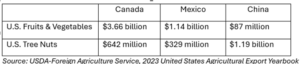
The government of Canada has announced it will immediately impose tariffs of 25 percent on a selection of U.S. goods valued at $30 billion. Included in this Phase 1 list are several U.S. produce items, including melons, cherries, apricots, peaches, citrus, tomatoes and pecans. Click here for a list of U.S. products subject to 25 percent tariffs. The Canadian government has stated that if the U.S. maintains tariffs on Canadian goods, additional U.S. products will face retaliatory measures in the next 21 days. A proposed Phase 2 list of products has been noticed for public comment until March 25 and the list includes almost all fruit, vegetables, and tree nuts. We will continue to provide updates to membership as the situation evolves.

APRIL 9 UPDATE: The Administration has since announced and imposed a separate 10 percent universal baseline tariff, as well as a country-specific reciprocal tariff regime. At this time Canada is not subject a new reciprocal tariff, given the standing IEEPA-related executive order and other tariffs related to steel, aluminum, and autos. The allowance of USMCA-compliant goods to enter at 0 percent tariff – first announced March 6 – remains in effect. As such, USCMA-compliant Canadian fresh produce remains tariff-free, and Canada has not yet announced any new retaliation against additional fresh produce categories beyond what are currently getting hit.

What is the Chinese government’s response?
In response to this announcement, the Chinese government has announced retaliation against U.S. exports into the country beginning March 10, including an additional 10 percent tariff against U.S. fruit, vegetable, and tree nut exports. Click here for a translation of the Chinese release and list of U.S. products subject to 10 percent tariffs. Goods that have been shipped before March 10 and imported into China between March 10 and April 12 shall not be subject to the additional tariffs, according to the release. We will update membership as additional and English-translated information becomes available.

APRIL 11 UPDATE: The Administration has since announced and imposed a separate 10 percent universal baseline tariff, as well as a country-specific reciprocal tariff on China. The tariff level was originally set for 34 percent, but following back-and-forth escalation from both sides, the Administration has set its rate on China to 125 percent. This rate is to be stacked onto the IEEPA-imposed rate of 20 percent, so a total rate of 145 percent is expected on nearly all Chinese (and Hong Kong) imports. For U.S. exporters, China’s retaliation rate is now 125 percent on all U.S. imports – including all fresh produce and tree nut categories.

APRIL 10 UPDATE: The Administration has since announced and imposed a separate 10 percent universal baseline tariff, as well as a country-specific reciprocal tariff on China. The tariff level was originally set for 34 percent, but following China’s retaliatory tariffs on all U.S. imports, the Administration increased it to 125 percent. This rate is to be stacked onto the IEEPA-imposed rate of 20 percent, so a total rate of 145 percent is expected on nearly all Chinese (and Hong Kong) imports. For U.S. exporters, China’s retaliation rate is now 84 percent on all U.S. imports – including all fresh produce and tree nut categories – effective April 10.

APRIL 9 UPDATE: The Administration has since announced and imposed a separate 10 percent universal baseline tariff, as well as a country-specific reciprocal tariff on China. The tariff level was originally set for 34 percent but following China’s response of its own 34 percent tariff increase, the Administration increased it to 84 percent. This rate is to be stacked onto the IEEPA-imposed rate of 20 percent, so a total rate of 104 percent is expected on nearly all Chinese (and Hong Kong) imports. China’s response has been to increase its rate once again to 84 percent on all U.S. imports – including all fresh produce and tree nut categories – effective April 10.

What is the Mexican government response?

Mexican President Claudia Sheinbaum has said Mexico will respond in kind to any U.S. tariffs but has delayed announcing any retaliation until the weekend. We will update membership as we learn more.

APRIL 9 UPDATE: The Administration has since announced and imposed a separate 10 percent universal baseline tariff, as well as a country-specific reciprocal tariff regime. At this time Mexico is not subject a new reciprocal tariff, given the standing IEEPA-related executive order and other tariffs related to steel, aluminum, and autos. The allowance of USMCA-compliant goods to enter at 0% tariff – first announced March 6 – remains in effect. As such, USCMA-compliant Mexican fresh produce remains tariff-free, and Mexico has not yet announced any retaliation.

How much impact might this have?

Canada is the No. 1 market for fresh produce exported from the U.S., Mexico is the No. 2 export market for produce and China is a Top 10 major export market.

FAQs

Are there exemptions to the tariffs for certain goods entering the U.S.?   

At this time, there are no exemptions nor a process to request an exemption waiver for Chinese, Mexican or Canadian goods entering the U.S. Retailers have asked for a waiver for food entering the U.S. Various agricultural producer organizations have requested exemptions for key agricultural inputs like potash. The Administration has thus far only deviated from the tariff action by saying tariffs on Canadian energy exports into the U.S. would receive a 10 percent tariff instead of a 25 percent tariff. Western Growers supports exemptions for all inputs entering the U.S. Over the last few years, we have seen a rise in fertilizer prices, for example, which we would not want exacerbated. We will update membership should exemptions be granted or a waiver process be created.

How are imported goods valued for tariffs?

Congress outlines how goods are to be valued for tariff and duty calculations in 19 USC § 1401a. U.S. Customs has enacted regulations to implement this statute under 19 CFR § 152. How goods are valued may depend on individual circumstances so please contact your customs broker or attorney about how your imported goods should be valued. The U.S., Canada, China and Mexico are all parties to the WTO agreement on Customs Valuation, which essentially creates a universal global methodology to value goods for importation. While we do not have information on Canadian, Chinese and Mexican custom laws, the methodology should be the same for goods being exported into those countries.

Who is responsible for the import duty?

The importer of record is responsible for paying the duty at time of importation. However, you should examine your contract language because by contract, buyers and sellers can alter who is responsible for tariffs.

Are tariffs applied to the entire finished product or only the non-U.S. origin components when exporting U.S. goods to Mexico for processing and re-importing to the U.S.?  

At this time, there is no process by which U.S. origin goods could be segregated from Mexican product in order to change the value of the good before a tariff is applied. Multiple industries have asked the President to exclude the value of U.S. origin goods on products imported from Mexico or Canada. We will update membership should a process to exclude U.S. origin inputs be created.

Will Canada exempt U.S. goods from tariffs if they are processed in Canada and then returned to the U.S.?

We are not aware of Canadian tariff laws allowing for an exclusion from tariffs for U.S. origin produce that enters the country, is processed, and then returns to the U.S. Please contact local counsel to determine if there are Canadian customs provisions that apply.

Will goods imported from Mexico into the U.S. and then shipped to Canada be subject to two tariffs? 

Canada has provided notice that goods that are transshipped from Mexico through the U.S. are exempt from retaliatory tariffs. We do not know, however, what the Canadian Customs service considers “transshipment.” Please contact local Canadian counsel. In addition, there is a process in the U.S. by which goods entering the country might not be charged a tariff. Specifically, if goods are imported only temporarily because they will be exported or incorporated into other goods for export, consider whether tariffs can be avoided through programs such as: temporary importation under bond (TIB), duty drawback or use of a free trade zone. These are fact-specific situations, and we urge engagement with your U.S. attorneys to see if any of them apply.

For any questions, please contact Tracey Chow at [email protected].

Gov. Newsom Sends SB 54 Single-Use Plastic Recycling Regulation Back to Drawing Board

March 11th, 2025

On March 7, 2025, Gov. Gavin Newsom ordered CalRecycle to pull back its final SB 54 regulation and restart the one-year regulatory process. This comes after a lengthy and uphill battle for Western Growers (WG) and other industry leaders to ensure produce safety, protect agricultural businesses and keep fresh food affordable.

In Gov. Newsom’s announcement, he said that the draft regulation would impose unacceptable burdens on businesses and add costs to consumers. In addition to industry voices on the infeasibility of the regulation, the Producer Responsibility Organization contracted by the state and tasked with implementing the regulation, also supported the need for more time to get the regulation right.

There has been a tremendous amount of pressure from the bill author, co-authors and environmental groups to simply push the regulation through without full consideration. WG is pleased by the Governor’s acknowledgement that a tremendous landmark piece of legislation such as SB 54 should prioritize quality regulation development over expediency.

This opportunity allows WG to continue working toward resolving the outstanding issues regarding exemptions and regulatory costs for our members. Stay tuned for updates and future informational webinars on this matter.

Sustainable Produce Packaging Alignment for North America (SPPA)

March 10th, 2025

Sustainable packaging for fresh produce focuses on the functionality of fresh produce packaging. Packaging plays a critical role in enabling the sustainability of fresh produce supply chains – from ensuring food safety and minimizing food waste to mitigating packaging waste.

SPPA is comprised of fresh produce industry members committed to developing comprehensive resources and a guide for fresh produce growers and packers, retailers, and industry stakeholders as well as assessing current alternatives accessibility, sustainability, functionality, and affordability for fresh produce packaging.

Why Alignment?

Alignment on the gaps and opportunities for fresh produce packaging paves the way for a cohesive, industry-wide shift to more sustainable packaging. The current incongruent regulatory and diverging market requirements pose a significant risk to fresh produce supply chains in that viable fresh produce packaging alternatives do not consistently provide the technical functionality and accessibility needed for fresh produce to function as viable options for fresh produce providers.

The objective of SPPA is to align on scientifically sound, achievable, and sustainable fresh produce packaging guidelines for the fresh produce industry and its retail partners in North America. Key drivers for undertaking the work plan include:

Regulatory dissonance: Divergent national, state and provincial-level regulations regarding use of plastic packaging at point of sale for fresh produce, this includes also varying international export destination regulations and rules.

Rapidly evolving policy deployment: More state legislatures are considering new policies and regulations for allowable packaging content and disposal. The ramp up to identify, improve, and deploy new packaging materials for fresh produce is a long cycle, understanding the landscape and providing market-ready alternatives is critical.

Growing buyer expectations and objectives: Buyers are committing to increasingly wide reaching sustainability goals.

Western Growers, the Canadian Fresh Produce Marketing Association, and key fresh produce organizations are committed to addressing the barriers and opportunities to further the development and adoption of sustainable packaging for fresh produce. Together, this group of industry stakeholders is leveraging technical expertise, existing sustainability guidance, and opportunities for sustainable innovation to complete this project.

Losing NACMCF: What it Means for Food Safety

March 10th, 2025

The National Advisory Committee on Microbiological Criteria for Foods (NACMCF) is a U.S. federal advisory committee that provides scientific expertise on microbiological food safety issues. Since 1988, the NACMCF has been instrumental in enhancing food safety standards in the U.S. Experts from various sectors, including government, trade associations, industry and academia, have played a crucial role by:  

  • Assessing microbiological hazards in food. 
  • Developing guidelines for foodborne pathogen detection, prevention and control. 
  • Providing risk assessments to support regulatory decision-making. 
  • Developing reports to improve industry practices and guide food safety standards.  

Western Grower Science team members, SVP of Science, De Ann Davis, and AVP of Science Programs, Joelle Mosso, both served on the NACMCF, contributing to discussions related to Cyclospora cayetanensis and Shiga-toxin producing E. coli (STEC) in fresh produce.  


NACMCF’s Achievements in Cyclospora Guidance and Microbial Testing for RTE products  

NACMCF’s final report on Cyclospora, published in 2023, made several important contributions to improving food safety: 

  • Enhanced Detection Methods: The committee found that existing PCR-based tests often produced false positives, sometimes detecting non-pathogenic species instead of Cyclospora cayetanensis. It recommended using multiple genetic targets and secondary confirmation techniques to improve accuracy. 
  • Identified Weaknesses in Current Monitoring: The report highlighted that current testing procedures were unreliable, and that industry and regulatory agencies needed more rigorous validation methods for environmental and food sample testing. 

The NACMCF published a report titled, “Microbiological Testing by Industry of Ready-to-Eat Foods under FDA’s Jurisdiction for Pathogens (or Appropriate Indicator Organisms): Verification of Preventive Controls” in the Journal of Food Protection (Vol. 85, No. 11, 2022). This report provided guidance on microbial testing as a verification tool for food safety controls in ready-to-eat (RTE) foods. The committee shared findings for the fresh produce industry, including:  

  • For fresh-cut RTE fruits and vegetables, the NACMCF emphasized that a robust Environmental Monitoring Program (EMP) should reduce the reliance on finished product testing. This is because the primary microbial risks—Listeria monocytogenes and Salmonella—originate from environmental contamination rather than inherent product contamination.  
  • However, finished product testing and microbiological testing remain essential in certain situations, such as when there is an indication of loss of process control, including positive findings in food contact surface testing. 


Dissolution of NACMCF 

Despite its critical contributions, the NACMCF was abruptly disbanded on March 7,  2025 under a federal executive order aimed at reducing government committees. Alongside the NACMCF, the National Advisory Committee on Meat and Poultry Inspection (NACMPI) was also eliminated. 

Why Does This Matter? 

  • The NACMCF provided science-based advice to federal agencies, helping shape U.S. food safety policies and practices. 
  • Without the NACMCF, foodborne pathogen improvement may be delayed, impacting significant advances in public health. 
  • The committee’s volunteer-based structure ensured objective and credible scientific recommendations for regulators and the food industry that ultimately impact consumer health. 

For nearly four decades, the NACMCF provided critical, science-driven recommendations to help shape food safety policies and practices and protect America’s food supply. With its absence, the ability to maintain and advance food safety now rests more heavily on the shoulders of industry leaders and researchers. Similarly, without the expertise of this committee, there will be delays in updating food safety guidelines, risk assessment, regulatory standards, and other scientific advancements that will directly impact consumer health.  

USCIS Announces New Alien Registration Requirement

March 11th, 2025

On February 25, 2025, the U.S. Citizenship and Immigration Services (USCIS) announced a new alien registration requirement, mandating that many foreign nationals in the United States register online and undergo fingerprinting. Additionally, individuals over the age of 18 must carry proof of registration at all times. This directive stems from President Trump’s January 20, 2025, executive order, “Protecting the American People Against Invasion,” which calls for compliance with a long-standing but rarely enforced 1952 statute.

Registration Requirements and Exemptions

The new rule applies to foreign nationals who remain in the U.S. for more than 30 days and were not inspected and lawfully admitted upon entry. This includes certain Canadian visitors, Deferred Action for Childhood Arrivals (DACA) and Temporary Protected Status (TPS) applicants without an employment authorization document (EAD), and other undocumented individuals. Those subject to registration must comply within 30 days of their arrival or, for minors, within 30 days of turning 14.

However, several categories of immigrants are exempt, including lawful permanent residents, nonimmigrants issued an I-94 form, individuals granted parole into the U.S., visa holders, those in removal proceedings, and individuals with an EAD.

The new alien registration requirement does not apply to H-2A workers, as they are lawfully admitted into the U.S. with a nonimmigrant visa and issued Form I-94 upon entry. USCIS has clarified that individuals who were inspected and admitted, or who were issued nonimmigrant visas prior to arrival, are already considered “registered” under this rule. However, H-2A employers should remind their workers to carry proof of their legal status at all times, such as their passport, visa, and I-94 form, to comply with the requirement for foreign nationals over 18 to possess evidence of registration.

Enforcement and Compliance Risks

Failure to comply with the registration and proof of legal status requirements could lead to civil and criminal penalties, including misdemeanor prosecution and fines. The order also emphasizes that failure to carry proof of registration could result in enforcement actions, potentially increasing arrests and deportations by Immigration and Customs Enforcement (ICE).

The Department of Homeland Security (DHS) is expected to release a form and procedure for non-citizens to fulfill the registration requirement. In preparation, non-citizens must create a USCIS online account. Once the registration system is in place, individuals will be able to submit their registrations, and parents or guardians can complete the process for children under 14 through their USCIS accounts.

Western Growers Joins Ag Leaders in Urging Science-Based Policies in MAHA Commission Letter

March 11th, 2025

In a letter dated March 7, 2025, representatives of the food and agriculture community addressed Secretary of Health and Human Services Robert F. Kennedy, Secretary of Agriculture Brooke Rollins and Environmental Protection Agency (EPA) Administrator Lee Zeldin, expressing their commitment to working with the Make America Healthy Again Commission to improve health outcomes while safeguarding vulnerable populations.

In the letter, the representatives highlighted concerns about unfounded criticisms of the food and agricultural value chain, emphasizing the importance of adhering to robust, science- and risk-based regulatory systems and rejecting policy changes based on misleading studies.

The letter highlighted the critical role of modern agricultural tools, such as pesticides and biotechnology, in maintaining a healthy food system and robust farm economy. The letter states that without access to these tools, U.S. growers would face increased vulnerability, potentially leading to higher consumer prices and compromised national security due to reliance on foreign food sources.

“Our organizations support and share in the goal of improving health outcomes for Americans, but it is vital that any review efforts of the Commission or individual participant agencies are based on quality data and accept the strong scientific consensus on these topics,” the letter states.

“Further, any assessments must acknowledge the robust science- and risk-based processes our regulatory agencies already have in place and the extensive history of safe use that has resulted therefrom. Failing to maintain these indispensable standards is regrettably likely to result in Americans becoming less healthy. It risks not only harming our nation’s growers, producers, and food processors, but also the consumers we proudly serve.”

Click here to read the full letter and see the complete list of signatories.

Strengthen Your Recall Preparedness – April 4 Meeting 

March 11th, 2025

How confident are you in your facility’s environmental monitoring and sanitation verification? Establishing a defensible clean break is critical in protecting both consumers and your business in the event of a recall. 

Join George Nikolich, Food Safety Consultant and CFFA Strategic Partner, and Joelle Mosso, AVP of Science Programs at Western Growers, for an in-depth presentation and discussion on these important topics.   

How to Establish a Defensible Clean Break: Keys to Successful Environmental Monitoring and Sanitation Verification
Where: Family Tree Farms, Traver Facility
When: Friday, April 4, 2025, | 10 AM – Noon (Lunch provided)
Who Should Attend: QA/Food Safety Managers, Supervisors, and those responsible for food safety programs 

Please RSVP: Courtney Razor, CFFA
[email protected] | (559) 226-6330 

This event is hosted by California Fresh Fruit Association, Western Growers Association, Family Tree Farms and George Nikolich Consulting. Share this event with industry colleagues who may benefit. 

California’s Pay Data Reporting Deadline is Fast Approaching 

March 7th, 2025

California employers with 100 or more payroll or labor contractor employees are required to annually submit pay data – including hours worked and employee demographics – to the California Civil Rights Department (CRD).   

This year’s filing deadline for the 2024 reporting year is May 14, 2025. 

With the deadline fast approaching employers should begin accessing the CRD’s Pay Data Reporting portal to review the required pay data reports. Updated templates to assist in preparing 2024 reports can be found on the portal along with instructions, a User Guide, and helpful FAQs.