Arizona Specialty Crop Block Grant Program Accepting Applications Until March 17, 2025

February 19th, 2025

The Specialty Crop Block Grant Program (SCBGP) is now open for applications. The grant application deadline is 11:59:59 p.m. (MST) Monday, March 17, 2025. All applications must be submitted online.

According to Arizona Department of Agriculture (AZDA), in order to qualify, “projects must enhance specialty crop industry competitiveness. Applications for grant funds should show how the project potentially impacts and produces measurable outcomes for the specialty crop industry and/or the public rather than a single organization, institution, or individual.”

The AZDA anticipates that approximately $1.25 million will be available for distribution to successful applicants in the fiscal year 2025 funding cycle.

There will be a virtual webinar workshop held via Zoom Friday, Feb. 21, 2025 to provide more information. Sign up through SCBGP 2025 Webinar Registration.

Visit Specialty Crop Block Grant Program for more information.

Western Growers at Brisbane Biological Symposium  

February 18th, 2025

On February 17, 2025, Western Growers participated in the 2025 Brisbane Biological Symposium, where Jeana Cadby, Director of Environment and Climate, and Dennis Donohue, Director of the WG Center for Innovation & Technology, contributed to discussions on agricultural biologicals. 

Dennis Donohue joined the “Investment and Development” panel, emphasizing the importance of grower involvement in co-developing new technologies. He noted: 

  •  “Technology is important, but the go-to-market strategy is critical for startups.”  
  • “After shifting to co-development of new technologies with growers, we saw a lot more progress.” 

He emphasized the importance of keeping the grower front of mind, as the growers are central to product development for biologicals.   

Jeana Cadby spoke on the “Research, Development, and Deployment” panel, highlighting the need for collaboration and efficiency in biological product development. 

As biologicals continue to grow as a key segment in agriculture, Western Growers remains engaged in industry advancements, ensuring grower needs are prioritized. 

Western Growers’ Updated 2025 Personnel Procedures Manual Now Available

February 18th, 2025

Staying compliant with agricultural labor laws can be challenging, but the 2025 Personnel Procedures Manual (PPM) is here to help. Designed for HR professionals and managers, this updated guide ensures your organization remains compliant with evolving California and Arizona labor laws.

This comprehensive digital resource includes expert insights, sample forms, checklists and essential employment practices tailored to the agricultural industry. The manual also provides instant access to relevant government websites for the most up-to-date legal information.

The 2025 edition includes the latest updates on:

  • Workplace safety regulations
  • Wage and hour laws
  • Protected leave policies
  • Workplace notices and recordkeeping requirements

WG members receive a discount subscription price for this comprehensive digital resource that provides agricultural-specific guidance and an index with more than 100 forms.

  • WG Members: $100 subscription
  • Non-Members: $200 subscription

To order, please click here.

For additional information on purchasing the PPM, please contact Cheryl Hall at [email protected].

For information on the content of the PPM, please contact Teresa McQueen at [email protected].

Western Growers and Fresh Produce and Floral Council Host Session on Traceability Regulation

February 18th, 2025

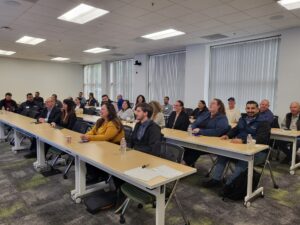
Western Growers and the Fresh Produce and Floral Council meeting

On Friday, February 7, 2025, Western Growers and the Fresh Produce and Floral Council hosted an informational session on traceability regulation. The event offered valuable insights from industry leaders across the supply chain, covering both the progress made and the challenges faced in implementation. Sonia Salas, AVP of Science at Western Growers, presented an overview of FSMA regulations, with a specific focus on the traceability rule.

Western Growers has developed resources to support implementation and compliance with the rule, which can be accessed here. We also continue to support industry efforts, such as the Partnership for Food Traceability, and will provide updates as we approach the January 26, 2026, compliance deadline. Contact us if you have any questions or would like to share feedback on implementation challenges.

Best Practices: Navigating Workplace Romance

February 13th, 2025

Happy Valentine’s Day! Love is in the air, even in the workplace. While office romances can lead to meaningful relationships, they also come with potential risks that employers need to manage carefully. Understanding these risks and implementing best practices can help maintain a professional and safe work environment. 

Some interesting statistics on workplace dating. According to Forbes.com:  

  • Over 60% of adults have had a workplace romance. 
  • 43% of workplace romances have led to marriage. 
  • 57% of employees report that workplace relationships have impacted their work performance. 
  • 40% of workplace romances involve cheating on an existing partner; and 
  • 50% of people have engaged in flirtatious behavior with colleagues. 

With those statistics in mind, it’s easy to see how workplace romances can lead to conflicts of interest, favoritism, and even claims of harassment or discrimination. When relationships sour, the fallout can affect team dynamics and productivity. Additionally, if a relationship involves a supervisor and a subordinate, it can create power imbalances and perceptions of bias.  

Below are a few recommended best practices to help employers navigate the potential complexities associated with workplace romance: 

  • Establish Clear Policies and Expectations: Employer policies should outline acceptable behavior, disclosure requirements, and consequences for non-compliance. 
  • Encourage Transparency: Individuals tasked with HR responsibilities should work to cultivate an atmosphere of trust and transparency when it comes to office relationships. Employees should be encouraged to disclose relationships in an HR setting to assist the company in managing potential conflicts of interest. Transparency helps in addressing any issues proactively. 
  • Provide Training: Regular training on workplace conduct and harassment prevention can help employees understand the boundaries and maintain professionalism. 
  • Maintain Professionalism: All employees, especially those involved in a relationship, should be reminded to keep their personal and professional lives separate. The company’s policies as well as its culture should make clear that public displays of affection and favoritism are to be avoided. 
  • Address Conflicts Promptly: Any issues arising from workplace relationships should be addressed promptly and fairly to prevent escalation. 

While workplace romances can be tricky to navigate, with the right policies and practices in place, employers can foster a safe, respectful and professional environment.  

Status of Cal/OSHA’s Workplace Violence Regulations

February 13th, 2025

California employers should already be aware that as of July 1, 2024, in accordance with California’s SB 553, they must have established, implemented, and be maintaining a comprehensive written Workplace Violence Prevention Plan (WVPP).  

The legislature’s involvement in the Cal/OSHA regulatory process was driven by the fact that Cal/OSHA’s process was moving too slowly. Proposed regulatory changes to address workplace violence in all industries were proposed by the agency in 2018 but not revisited until 2022. In response to rising incidents of workplace violence during that time, the state forced completion of the regulatory process by enacting SB 553.  

Under SB 553, Cal/OSHA is required to develop and submit a workplace violence prevention standard to the Cal/OSHA Standards Board by December 31, 2025. Subsequently, the Standards Board must adopt this standard no later than December 31, 2026. In compliance with this mandate, Cal/OSHA revised its initial draft regulation on workplace violence and opened it for public comment. The public comment period concluded on September 3, 2024, and the agency conducted its first open discussion on the amended draft during an all-day advisory committee meeting on January 24, 2025.   

Broadly summarized, the key changes discussed at the advisory committee meeting included the addition of more specific compliance obligations, hazards, and engineering controls and new requirements aimed at employee conduct (i.e., what employees can and cannot be asked to do). Employer representatives present at the meeting expressed concerns about the timing and feasibility of imposing new obligations. It was generally observed that there has not been sufficient time to effectively assess the impact of existing obligations, making it difficult to determine their effectiveness.  

What Does it Mean 

The status of the revised draft regulations has not changed. In alignment with regulatory administrative procedures, the revision process is expected to continue throughout this year, with an anticipated Standard’s Board final vote by late 2026. 

In the interim, employers should continue to monitor Cal/OSHA’s progress, review current workplace violence prevention plans and training programs to ensure they align with SB 553, and be prepared for potential new requirements. Monitoring will also provide those interested with additional opportunities to provide input on the draft regulations through additional public comment and discussion periods which will also continue throughout the year. Keeping employees informed about potential changes and involving them in discussions about workplace safety will also aid compliance efforts and help foster a collaborative environment as required by SB 533. 

WG’s Jeana Cadby Graduates from CA Ag Leadership Class 53: Advancing Leadership in Agriculture

February 11th, 2025

The California Agricultural Leadership Foundation (CALF) celebrated the commencement of Class 53 on Saturday, February 8, in Fresno, Calif. This event marked the end of an intensive leadership training journey for fellows representing the ag industry throughout California.

Jeana Cadby, Environment and Climate Director at Western Growers, was selected as one of 24 fellows to join the 53rd class of the California Agricultural Leadership Program (CALP).

This program helps young professionals in agriculture develop leadership skills to advance their careers and the industry. It is committed to leadership training and transformational learning experiences in partnership with four California universities: Cal Poly San Luis Obispo; Cal Poly Pomona; California State University, Fresno; and the University of California, Davis.

The program equips future leaders in agriculture with the skills and knowledge needed to drive innovation, policy change and sustainability in one of the nation’s most vital industries.

Jeana Cadby, Western Growers’ Environment and Climate Director and member of Class 53, said, “As California faces challenges like climate change, labor shortages and global competition, the leadership fostered by programs like CALP is essential to ensuring that agriculture remains a resilient and innovative industry for years to come.”

Bryan Nickerson, Commodity & Supply Chain Services Director and Class 48 member said, “I am very proud of Jeana’s dedication to the program. My family and I have been lifelong advocates and supporters of programs, such as the California Agricultural Leadership Foundation Program, recognizing the profound impact these initiatives have on shaping strong, values-driven leaders within the agricultural industry. We deeply appreciate the program’s emphasis on servant leadership, which instills a commitment to ethical decision-making, community service and the development of forward-thinking leadership skills in each participant. The experiences gained through CALP—ranging from immersive learning opportunities to exposure to diverse perspectives—provide invaluable personal and professional growth. Additionally, the extensive network of alumni offers ongoing mentorship, collaboration and support, reinforcing a legacy of leadership that continues to benefit individuals, businesses and the broader agricultural community.”

Learn more about CALF here: https://www.agleaders.org/

Prospective applicants can join the Prospective Applicant & Alumni Gathering in Salinas on March 20 https://www.agleaders.org/events/prospective-applicant-alumni-gathering-3/

Diamondback Moth: Lessons from History and Future Solutions Webinar

February 11th, 2025

Join us for a discussion about Diamondback Moth (DBM), a significant pest of brassica, and what future options show promise for control of this species. In this webinar, we will explore the history of control options development for Codling Moth, a major pest of apples, assess lessons that can be applied to DBM in cole crops, and introduce novel practices and tools that show promise to growers.

Codling moth (Cydia pomonella), is a major pest for apple orchards, causing sting and deep entry fruit damage. Over the past few decades, significant research and intervention practices have been developed to successfully combat this pest, leveraging the unique biology and life cycle of this Lepidoptera species.

Diamondback Moth (Plutella xylostella), the single most damaging and problematic pest threatening California’s $1.4B cole crop industry. Serious damage occurs on crowns or growing points of young plants or Brussels sprouts, severely stunting growth. Caterpillars can bore into flower buds or broccoli and cauliflower heads, causing contamination and economic injury. Managing this pest has become increasingly challenging in many areas, and control options are limited due to increasing pesticide resistance and few novel pest control tools becoming available.

Dr. Matt Grieshop, Director of the Grimm Family Center for Organic Production and Research and entomologist, will present on using Codling Moth control development as a model for DBM control, identifying the barriers and challenges with these species and the role of biological programs to address these pests.

Dr. Ian Grettenberger, Assistant Specialist in CE Entomology at the University of California Davis and entomologist, will present on novel solutions to address DBM and the latest research on biocontrol, farming practices and pest control product development.


Webinar Details:

Effective DBM Control Series Part 1

Presented by the Grimm Family Organic Center and Western Growers Science

Thursday, March 27, 2025
11:00 AM to 12:30 PM PT
Online / Zoom

Register Here

Harvesting Equipment and Hygienic Design: 7 Steps for Cleaning and Sanitation 

February 11th, 2025

Maintaining clean and sanitary harvesting equipment is critical to food safety and operational efficiency. Follow these 7 essential steps to ensure your equipment is properly cleaned and sanitized: 

Step 0: Preparation 

  • Remove all product, supplies and waste from the area. 
  • Relocate equipment to prevent cross-contamination. 
  • Inspect and report any abnormal conditions. 

Step 1: Dry Cleaning 

  • Remove visible soils from food-contact and adjacent surfaces. 
  • Wipe excess grease from motors and bearings. 
  • Run conveyors slowly to assist in soil removal. 

Step 2: Pre-Rinse 

  • Rinse surfaces to remove debris and visible soils. 
  • Focus on hard-to-reach areas. 
  • Slowly run conveyors to ensure thorough rinsing. 

Step 3: Detergent Application 

  • Apply detergent to all food-contact and adjacent surfaces. 
  • Ensure detergent doesn’t dry before scrubbing and rinsing.   

Step 4: Scrubbing 

  • Use color-coded brushes to avoid cross-contamination. 
  • Scrub all areas thoroughly, including hard-to-reach areas. 

Step 5: Detergent Rinse 

  • Rinse top to bottom to remove detergent and debris. 
  • Avoid spraying near the ground to prevent contamination. 

Step 6: Post-Cleaning Inspection 

  • Inspect for cleanliness (no soil, debris, or detergent residue).   
  • Address deficiencies and conduct re-cleaning if necessary.   
  • Document cleaning and inspection results. 

Step 7: Sanitize 

  • Apply sanitizer to food-contact and adjacent surfaces.
  • Reassemble conveyers and other components
  • Release equipment for harvesting
  • Rember to verify strength of sanitizing solution

Employers Urged to Complete Critical Survey to Help Shape the Future of California’s Ag Workforce

February 11th, 2025

The Specialty Crop Ag Workforce Development Program is conducting a critical employer survey to help shape workforce training programs that meet California’s specialty crop industry needs.

California’s agricultural success depends on a skilled workforce to supply the U.S. and global markets with high-quality specialty crops. But the industry is evolving—embracing new technology, refining practices and demanding new skills from the ag workforce.

This survey is part of the Specialty Crop Ag Workforce Development Program, which is designed to unite specialty crop employers, community colleges and other partners to train for the skills needed today and in the future. The program represents a partnership between the Agricultural Council of California, California Department of Food and Agriculture, California Farmworker Foundation, Central Valley Community Foundation and Western Growers.

Individual responses will remain confidential, with only aggregated data included in the final report. The survey takes approximately 15-20 minutes to complete, and you can pause and resume at any time—your progress will be saved automatically.

The survey closes on March 3.

To take the survey, click here.

Testimony of Ryan Talley, of Talley Farms, on behalf of the Specialty Crop Farm Bill Alliance

February 11th, 2025

photo Courtesy of CSPAN

Testimony of Mr. Ryan Talley

House Committee on Agriculture Hearing

February 11, 2025, 10:00 a.m. ET

Thank you, Chairman Thompson, Ranking Member Craig, and members of the Committee.

Although not directly under the jurisdiction of the Agriculture Committee, I cannot testify before Congress without first emphasizing how vital it is to the security of our nation’s food supply, and the future of specialty crop production in the United States, for Congress to enact a bipartisan solution to the workforce crisis in agriculture. Labor represents more than half the cost of producing many specialty crops, and this continually escalating expense is untenable.

I am testifying today, however, on behalf of the Specialty Crop Farm Bill Alliance. A coalition of nearly two-hundred organizations representing the entirety of the specialty crop industry in the United States. We have come together to promote common sense initiatives that Congress should include in the next farm bill.

Let me begin by telling you all a little about myself and my family farm.  My grandfather started our family farm in 1948, and it has been in the family ever since.  I began working on the family farm during the summers at age 12 and have worked on the farm ever since.  Recently we welcomed the fourth generation to full-time positions working on the family farm.  Our farm is located on the Central Coast of California.  While we are not the largest family farm in our area, we are certainly not the smallest.  We produce a wide range of fruits and vegetables on nearly 1,800 conventional acres, including more than 30 different items on 75 acres of certified organic soil.

Members of this Committee, if I leave with you with one thing today, it’s that investing in specialty crops is a good value for the taxpayer’s money that will benefit all Americans. On behalf of the Farm Bill Alliance, thank you Chairman Thompson, the bipartisan committee staff, and members from both sides of the aisle who contributed to so many of our priorities being added to the Farm, Food, and National Security Act of 2024.

Our products account for nearly half the farm gate value in the United States, and the Dietary Guidelines for Americans recommend that fruits and vegetables should comprise at least half of American’s diet. Yet under current law, specialty crops receive a small fraction of their proportional share of farm bill resources. In fact, according to the nonpartisan Congressional Research Service, the Horticulture title of the 2018 farm bill accounted for only one-half of one percent of its funding.

The investments we’re proposing are modest when compared to programs for other commodities, but they could be transformative for our growers. When you invest more in specialty crops – which include nutrient dense fruits, vegetables, and tree nuts – you are also investing in the long-term health and security of the American people. All of us who work in agriculture know that food security is national security.

Specialty crops is a term that consists of different commodities and types of operations that are grown in different seasons and regions in all fifty states. Despite the diversity of our operations, the industry is confronted with common challenges that hinder our ability to compete.

As with other commodities, our input costs are rising at an alarming rate, and our greatest input cost is human labor. For most specialty crops, human labor is a necessary component of nearly every aspect of our operations. According to data from the Department of Agriculture, the cost of labor has risen more than forty percent during the last four years and is projected to continue to climb.

We have increasingly limited access to crop protection tools and there are few replacements for them currently under development.

For those who export, we face great uncertainty in foreign markets. In our domestic markets, competition is rising from imports with significantly lower production-costs. The trade deficit is real and is particularly acute for many specialty crops.

Our growers struggle to adjust to drought, hurricanes, wildfires, and other natural disasters, and that’s all on top of market disruptions, such as those to our supply chains during the pandemic.

Because specialty crops are different than other commodities, USDA has at times struggled to deliver direct economic assistance to our growers when the need has arisen, but that’s been changing in recent years.

The Trump Administration worked with the specialty crop industry during COVID to understand why prior efforts, including CFAP, weren’t working for our growers. This ultimately resulted in the highly successful implementation of CFAP-2 and recently was the basis for the latest round of economic aid when Congress extended the current farm bill at the end of the year.

Although we are grateful for these payments, what we need is a comprehensive, bipartisan farm bill that invests in the long-term competitiveness of our domestic specialty crop industry.

The Alliance is proposing targeted new investments and a suite of innovative tools to support the entire specialty crop industry, including: new funding for research and development, incentives for technologies to supplement and enhance human labor, technical assistance and resources to help our operations become more resilient to extreme weather, and common sense changes to crop insurance that would provide the majority of our growers with a functional safety net for the very first time. We are also proposing needed reforms to federal procurement rules that would increase the availability of the nutritious foods our growers produce and Americans should be consuming in greater quantities.

I don’t have time to walk through each of these detailed proposals, but we have submitted written testimony for the record, which includes a copy of our 2023 recommendations. The Alliance is updating these recommendations for 2025, and we plan to provide those to you in the coming weeks.

We need Congress to enact a comprehensive bipartisan farm bill as soon as possible. The Alliance stands ready to work with each of you on the next farm bill.  Thank you and I look forward to answering your questions.

SCFBA to Congress: Strengthen National Health and Food Security, Prioritize Specialty Crops in Farm Bill

February 11th, 2025

WASHINGTON, Feb. 11, 2025 – The Specialty Crop Farm Bill Alliance (SCFBA) today called on Congress to advance a bipartisan farm bill that prioritizes investments in specialty crops, ensuring the long-term viability and competitiveness of growers.

Ryan Talley, vice president and co-owner of Talley Farms in Arroyo Grande, Calif., testified before the House Agriculture Committee during a hearing on “Examining the Economic Crisis in Farm Country.” Representing SCFBA, Talley emphasized the urgent need for a bipartisan solution to the agriculture workforce crisis and outlined key policy priorities essential for inclusion in the next farm bill.

“Investing in specialty crops is good value for the taxpayer’s money and benefits all Americans,” Talley said. “Our products make up nearly half the farm gate value in the U.S., yet we receive only a fraction of farm bill resources. It’s time for Congress to correct that imbalance.

“When you invest more in specialty crops – which include nutrient-dense fruits, vegetables, and tree nuts – you are also investing in the long-term health and security of the American people.”

Talley’s testimony highlighted key challenges facing the specialty crop industry, including rising input costs, limited access to crop protection tools, market disruptions and natural disasters. Labor remains the largest expense for specialty crop producers, with costs soaring over 40 percent in the past four years.

“Our growers are battling rising labor costs, unpredictable foreign markets, and natural disasters,” Talley noted. “Food security is national security, and ensuring a stable domestic food supply requires strategic investments.”

SCFBA also emphasized the need for a modernized safety net tailored to specialty crop producers. Talley urged Congress to support reforms that make crop insurance more accessible and effective for specialty crop growers.

“We need a safety net that works for all specialty crop growers,” Talley said. “Our 2025 recommendations will include comprehensive reforms to crop insurance, ensuring an adaptable, affordable, and effective system that meets the needs of our industry.”

SCFBA outlined key policy recommendations for the upcoming farm bill, including:

  • Increased funding for research and development, particularly for crop protection and labor-saving technologies.
  • Enhanced federal procurement programs to ensure more nutritious specialty crops reach American consumers.
  • Technical assistance for growers adapting to extreme weather and natural disasters.
  • Reforms to crop insurance to provide meaningful coverage to specialty crop growers for the first time.
  • Increased support for longstanding specialty crops programs that are chronically under-funded and over-subscribed, such as the Specialty Crop Research Initiative, Specialty Crop Block Grants, and trade-related Technical Assistance for Specialty Crops program.

“Specialty crop growers face unique challenges, and our industry needs solutions tailored to our realities,” Talley concluded. “We urge Congress to pass a bipartisan farm bill that invests in the long-term competitiveness of American agriculture.”

SCFBA is a national coalition of more than 200 specialty crop organizations representing growers of fruits, vegetables, dried fruit, tree nuts, nursery plants and other products. In early 2023, the alliance released a set of key policy priorities as part of its Farm Bill recommendations. The Alliance is in the process of updating these recommendations for the new Congress.

The SCFBA is co-chaired by Cathy Burns, CEO of the International Fresh Produce Association; Mike Joyner, President of the Florida Fruit & Vegetable Association; Dave Puglia, President and CEO of Western Growers; and Kam Quarles, CEO of the National Potato Council.


# SCFBA #

The Specialty Crop Farm Bill Alliance is a national coalition of more than 200 organizations representing growers of fruits, vegetables, dried fruit, tree nuts, nursery plants and other products. The Alliance was established to enhance the competitiveness of specialty crop agriculture and improve the health of Americans by broadening the scope of U.S. agricultural public policy. For more information, visit farmbillalliance.com


MEDIA CONTACTS:

Christina Morton, Florida Fruit & Vegetable Association, [email protected]

Sarah Gonzalez, International Fresh Produce Association, [email protected]

Mark Szymanski, National Potato Council, [email protected]

Ann Donahue, Western Growers, [email protected]

Western Growers Selects Leadership Program Class VIII

February 11th, 2025

IRVINE, CALIF. (Feb. 11, 2025) – Western Growers is welcoming the eighth class of its Leadership Program, a group who will be embedded in specialized networking and agricultural leadership development events with the organization for the next two years.

Class VIII includes:

  • Carson Britz, Sr. Manager, Nutrien Ag Solutions
  • Kristen Camarena, VP Farming, Wonderful Orchards
  • Charles Ferini, Harvest Manager, Betteravia Farms
  • James Larson, GM, Owyhee Produce
  • Marisol Moreno, Controller, Allied Potato
  • Patrick Pinkard, Farm Ops Manager, Terranova Ranch
  • Geoffrey Ratto, CEO, Ratto Bros.
  • Freddy Rodriguez, COO, Legacy Cooling

Members of the class will be invited to participate in all regular Western Growers board meeting functions for the next two years, in addition to standalone farm tours with WG board members and trainings with the organization’s subject matter experts.

In 2011, Western Growers welcomed the inaugural class of the Leadership Program. The competitively-selected Leadership Program is designed for the next generation of leaders within Western Growers member companies interested in becoming more informed and effective advocates for the fresh produce industry. These individuals are policy-minded and have expressed a desire to serve the industry – both now and in the future – in volunteer leadership capacities.

For more information, please contact:

Ann Donahue

(949) 302-7600

[email protected]


About Western Growers:

Founded in 1926, Western Growers represents local and regional family farmers growing fresh produce in California, Arizona, Colorado and New Mexico. Western Growers’ members and their workers provide over half the nation’s fresh fruits, vegetables and tree nuts, including half of America’s fresh organic produce. Connect and learn more about Western Growers on Twitter and Facebook.

###

Testimony of Ryan Talley, of Talley Farms, on behalf of the Specialty Crop Farm Bill Alliance

February 11th, 2025

Testimony of Mr. Ryan Talley

House Committee on Agriculture Hearing

February 11, 2025, 10:00 a.m. ET

Thank you, Chairman Thompson, Ranking Member Craig, and members of the Committee.

Although not directly under the jurisdiction of the Agriculture Committee, I cannot testify before Congress without first emphasizing how vital it is to the security of our nation’s food supply, and the future of specialty crop production in the United States, for Congress to enact a bipartisan solution to the workforce crisis in agriculture. Labor represents more than half the cost of producing many specialty crops, and this continually escalating expense is untenable.

I am testifying today, however, on behalf of the Specialty Crop Farm Bill Alliance. A coalition of nearly two-hundred organizations representing the entirety of the specialty crop industry in the United States. We have come together to promote common sense initiatives that Congress should include in the next farm bill.

Let me begin by telling you all a little about myself and my family farm.  My grandfather started our family farm in 1948, and it has been in the family ever since.  I began working on the family farm during the summers at age 12 and have worked on the farm ever since.  Recently we welcomed the fourth generation to full-time positions working on the family farm.  Our farm is located on the Central Coast of California.  While we are not the largest family farm in our area, we are certainly not the smallest.  We produce a wide range of fruits and vegetables on nearly 1,800 conventional acres, including more than 30 different items on 75 acres of certified organic soil.

Members of this Committee, if I leave with you with one thing today, it’s that investing in specialty crops is a good value for the taxpayer’s money that will benefit all Americans. On behalf of the Farm Bill Alliance, thank you Chairman Thompson, the bipartisan committee staff, and members from both sides of the aisle who contributed to so many of our priorities being added to the Farm, Food, and National Security Act of 2024.

Our products account for nearly half the farm gate value in the United States, and the Dietary Guidelines for Americans recommend that fruits and vegetables should comprise at least half of American’s diet. Yet under current law, specialty crops receive a small fraction of their proportional share of farm bill resources. In fact, according to the nonpartisan Congressional Research Service, the Horticulture title of the 2018 farm bill accounted for only one-half of one percent of its funding.

The investments we’re proposing are modest when compared to programs for other commodities, but they could be transformative for our growers. When you invest more in specialty crops – which include nutrient dense fruits, vegetables, and tree nuts – you are also investing in the long-term health and security of the American people. All of us who work in agriculture know that food security is national security.

Specialty crops is a term that consists of different commodities and types of operations that are grown in different seasons and regions in all fifty states. Despite the diversity of our operations, the industry is confronted with common challenges that hinder our ability to compete.

As with other commodities, our input costs are rising at an alarming rate, and our greatest input cost is human labor. For most specialty crops, human labor is a necessary component of nearly every aspect of our operations. According to data from the Department of Agriculture, the cost of labor has risen more than forty percent during the last four years and is projected to continue to climb.

We have increasingly limited access to crop protection tools and there are few replacements for them currently under development.

For those who export, we face great uncertainty in foreign markets. In our domestic markets, competition is rising from imports with significantly lower production-costs. The trade deficit is real and is particularly acute for many specialty crops.

Our growers struggle to adjust to drought, hurricanes, wildfires, and other natural disasters, and that’s all on top of market disruptions, such as those to our supply chains during the pandemic.

Because specialty crops are different than other commodities, USDA has at times struggled to deliver direct economic assistance to our growers when the need has arisen, but that’s been changing in recent years.

The Trump Administration worked with the specialty crop industry during COVID to understand why prior efforts, including CFAP, weren’t working for our growers. This ultimately resulted in the highly successful implementation of CFAP-2 and recently was the basis for the latest round of economic aid when Congress extended the current farm bill at the end of the year.

Although we are grateful for these payments, what we need is a comprehensive, bipartisan farm bill that invests in the long-term competitiveness of our domestic specialty crop industry.

The Alliance is proposing targeted new investments and a suite of innovative tools to support the entire specialty crop industry, including: new funding for research and development, incentives for technologies to supplement and enhance human labor, technical assistance and resources to help our operations become more resilient to extreme weather, and common sense changes to crop insurance that would provide the majority of our growers with a functional safety net for the very first time. We are also proposing needed reforms to federal procurement rules that would increase the availability of the nutritious foods our growers produce and Americans should be consuming in greater quantities.

I don’t have time to walk through each of these detailed proposals, but we have submitted written testimony for the record, which includes a copy of our 2023 recommendations. The Alliance is updating these recommendations for 2025, and we plan to provide those to you in the coming weeks.

We need Congress to enact a comprehensive bipartisan farm bill as soon as possible. The Alliance stands ready to work with each of you on the next farm bill.  Thank you and I look forward to answering your questions.
Environmental and Agronomic Benefits of Cover Crops 

February 7th, 2025

Cover crops offer numerous environmental and agronomic benefits, including improving soil health, enhancing water infiltration, cycling nutrients, boosting yields and providing overwintering habitats for beneficial insects. However, achieving these benefits requires careful management. 

To get the most from cover crops, keep these key factors in mind: 

  • Monitor growth stages to prevent unwanted seed spread. 
  • Allow sufficient growth to add valuable carbon to the soil. 
  • Time termination carefully to ensure cover crops decompose fully before planting the next cash crop. 

Eric Brennan, a USDA Research Horticulturist, has dedicated years to studying cover crops. His insightful YouTube videos offer practical tips and research-based strategies to help growers succeed. Watch his videos here for valuable advice 

Wonderful Nurseries Workers Challenge UFW Unionization in Lawsuit Against ALRB

February 7th, 2025

A group of 20 workers from Wonderful Nurseries has joined a lawsuit challenging the United Farm Workers’ (UFW) union certification at the Wasco-based nursery, alleging coercion and misconduct during the card check authorization process. 

The lawsuit, originally filed by Wonderful Company against the California Agricultural Labor Relations Board (ALRB), claims the union engaged in “fraud, duress, trickery, deceit, misrepresentation, and other unlawful conduct” to secure worker signatures. The workers argue that the card check process that was signed into California law in 2022 deprived them of the right to a secret ballot vote on union representation. 

The National Right to Work Legal Defense Foundation, which is providing legal support to the workers, contends that the ALRB’s decision to certify the UFW imposes union representation on employees without their full and voluntary consent. Under the certification, all workers at Wonderful Nurseries must be represented by the UFW for at least three years, regardless of whether they supported the unionization effort. 

Mark Mix, president of the National Right to Work Foundation, criticized California’s labor policies, stating, “By granting union bosses the authority to sweep workers under their control with suspect ‘card check’ campaigns, then having the government impose a forced-dues contract over the objection of both workers and businesses, California legislators have created an environment where workers’ individual rights are being crushed to promote raw, unchecked union boss power.” 

Wonderful Nurseries employees Claudia Chavez and Maria Guitierrez echoed these concerns. “UFW union officials deceived us just so they could gain power in our workplace,” Chavez and Gutierrez commented after filing the complaint. “Instead of just letting us vote in secret on whether we want a union, they went around lying and threatening to get cards and now are cracking down on anyone who speaks out against the union.” 

Navigating Gender Under the President’s Executive Order on Gender Ideology

February 6th, 2025

On January 20, 2025, the Executive Order titled “Defending Women from Gender Ideology Extremism and Restoring Biological Truth to the Federal Government” (the EO) was issued. The EO mandates that the federal government will now recognize only two sexes, male and female, and reject the concept of gender identity. Key provisions of the EO include: 

  • Defining sex as an immutable biological classification; 
  • Requiring federal policies and identification documents to reflect biological sex; and 
  • Prioritizing investigations to enforce sex-based rights. 

While the EO is expressly limited to federal agencies and contractors, it has nevertheless caused confusion — and in some cases, fear — among private sector employees as it reverses hard-won protections associated with gender and gender identity. It also places employers in a murky grey area when it comes to compliance, as they try to keep up with rapidly changing federal laws and conflicting state protections. At this early stage, only time will tell how these new EO mandates will be administered and enforced.  

To prepare for what the future may hold, employers should anticipate several key developments in the following areas: 

  • Increased Federal Oversight: 
    • Employers can expect to see more rigorous enforcement of federal policies that align with the EO’s definition of sex. This will likely include federal agencies prioritizing investigations into compliance with sex-based rights. 
  • Policy Updates and Guidance: 
    • Federal agencies rushing to comply with the new EO have removed nearly all gender-related resources from their websites. As such, it is anticipated that agencies, such as the EEOC, will begin issuing new guidelines and updates to existing policies to reflect the EO’s mandates.  
  • Litigation and Legal Challenges: 
    • All employers, particularly those with large employee populations, should be prepared for potential legal challenges and litigation related to the EO. This could include disputes over single-sex spaces and other sex-based rights. 
  • State Law Conflicts: 
    • Like California, many states recognize sex, gender (including pregnancy, childbirth, breastfeeding or related medical conditions), sexual orientation, gender identity, and gender expression as protected classifications and have enacted robust anti-discrimination and harassment laws. It is therefore crucial to navigate conflicts associated with gender carefully to ensure compliance with both federal and state regulations. Legal counsel should be consulted prior to implementing any significant changes to existing company policies or practices.  
  • Employee Relations: 
    • Employers should anticipate potential concerns and questions from employees, particularly those in the LGBTQI+ community. Clear communication and support will be essential to maintaining a positive workplace environment. 

There is no denying that the EO presents significant challenges for employers. However, those who stay proactive, remain well-informed, and consult with legal counsel will be well-positioned to navigate and manage this rapidly evolving regulatory landscape effectively. 

Best Practices: Empathy as a Leadership Tool 

February 6th, 2025

Empathy: “The action of understanding, being aware of, being sensitive to, and vicariously experiencing the feels, thoughts, and experience of another….” The ability to take on the role of someone who says: “I may not know how you feel, but I’m here to listen.” A time consuming and potentially messy workplace skill set, but one that is infinitely useful if you are someone who manages people.  

This is especially true in the workplace of today where our front-line company leaders take on such an important role in preserving company culture and providing stewardship of internal policies and procedures. Legal mandates at the state and federal level require employers to protect employees from discriminatory, harassing and retaliatory behaviors based on protected classifications (e.g., race, sex, religion, age). This is a job duty that falls largely on the shoulders of front-line leaders. Below are a few tips for embracing empathy as a useful tool for front-line leaders to use in their efforts to provide innovative support and increase engagement of all company employees.  

Face each situational challenge with a fresh perspective. Embrace the fact that you may not know what the other person is feeling – or even see where they are coming from – and let go of any preconceived notions you may have about the situation. Many feel that leadership is about finding common ground with those around us; best achieved by shared (or sharing) experiences. However, empathy challenges us to recognize that we may in fact not know what the other person is feeling or thinking even if we may have experienced something identical or similar. Step back, open your mind and listen with an unbiased perspective. Show those around you that you are willing to learn and accept a new or different take on an old familiar scenario.  

Commit yourself to addressing the problem or situation head-on. Empathy does not guarantee ‘smooth sailing.’ Empathy challenges leaders to accept the situation at hand – adversarial or not – and commit themselves to working toward resolution. Taking the time to listen and understand (to the best of your ability) the problem at issue and then committing to take the steps necessary to put the individual on the road to resolution is an impressive way to show empathy.  

Observe and learn. Company leaders are an employer’s first line of defense against erosion of company culture and the negative impacts that occur when company policies are not actively monitored and enforced. Observation is a critical component when it comes to leading with empathy. Observation is also critical to risk management – leaders must be able to observe and recognize red-flag behaviors that could lead to all sorts of workplace issues (e.g., allegations of abusive conduct, harassment, discrimination or retaliatory conduct).

Cal/OSHA’s COVID-19 Prevention Standards Expire, but Some Requirements Remain 

February 6th, 2025

As of February 2025, most of Cal/OSHA’s COVID-19 Prevention Non-Emergency Standards have expired. These regulations, which took effect on February 3, 2023, remained in place for two years. However, employers should be aware that COVID-19-related reporting and recordkeeping requirements remain in effect until February 3, 2026. 

While specific COVID-19 prevention rules are no longer in place, California employers are still required to: 

  • Maintain a safe and healthful workplace as mandated by Labor Code section 6400. 
  • Implement and maintain an Injury and Illness Prevention Program (IIPP) in compliance with Title 8, California Code of Regulations, section 3203. 
  • Identify, evaluate, and correct unsafe or unhealthy work conditions, including COVID-19, if it is determined to be a workplace hazard. 

COVID-19 Recordkeeping and Reporting Requirements Continue 

Although broader COVID-19 regulations have ended, Title 8, Subsection 3205(j) still requires employers to: 

  • Track and retain records of all COVID-19 cases, including employee details, work location, last workplace date, and the date of a positive test or diagnosis. These records must be kept for at least two years beyond the required retention period. 
  • Provide COVID-19 case information to local health authorities, the California Department of Public Health (CDPH), Cal/OSHA, and the National Institute for Occupational Safety and Health (NIOSH) upon request or as required by law. 

For additional details, visit Cal/OSHA’s Archived COVID-19 Guidance and Resources webpage. Employers with questions can contact [email protected] or reach out to their local Cal/OSHA Consultation Office. 

Western Growers Women: Effective Employee Performance Management Webinar

February 5th, 2025

With competing demands and constant workplace disruptions, your team looks to you for direction, guidance and inspiration. Discover techniques to coach your team more effectively, shifting them from feeling threatened to feeling challenged and fulfilled. Gain tools to enhance your coaching style, close performance gaps, and build a more competent and efficient workforce. Learn how to ask thoughtful questions, provide constructive feedback, and foster a learning environment where employees thrive and contribute.

If you’re a business owner, HR professional, manager or supervisor, this webinar is for you. 


Webinar Details

Date: Tuesday, March 4, 2025
Time: 9:00 to 10:30 AM PT
Location: Online


Register Here