California Supreme Court Clarifies Arbitration Fee Payment Rules

August 14th, 2025

In Hohenshelt v. Superior Court (Aug. 11, 2025), the California Supreme Court resolved whether California’s arbitration fee payment statute (Code of Civil Procedure §1281.98) is preempted by the Federal Arbitration Act (FAA). 

Section 1281.98 requires the party that drafted an arbitration agreement – typically the employer in employment disputes – to pay required arbitration fees within 30 days of the due date. If payment is late, the drafting party is deemed in “material breach,” waives the right to arbitrate, and the employee may choose to proceed in court. 

The Court held that the statute is not preempted by the FAA. However, it rejected the rigid interpretation used by some lower courts, including the Court of Appeal in this case, that any late payment – no matter the reason – automatically forfeits arbitration rights. Instead, the Court harmonized § 1281.98 with longstanding California contract principles, allowing relief from forfeiture when late payment results from good faith mistake, inadvertence, or excusable neglect, rather than willful, grossly negligent, or fraudulent conduct. The court reversed the Court of Appeal’s order lifting the stay of litigation and remanded for the trial court to determine whether the employer’s late payment was excusable and whether the employee suffered compensable harm. 

The decision emphasizes that the Legislature’s purpose was to deter strategic nonpayment by employers seeking to stall proceedings, not to punish harmless errors. Still, the Court cautioned that employers must be able to fully compensate the other party for any delay and meet the narrow legal standards for excusing late performance. 

Key Takeaways for Employers 

  • Pay arbitration invoices promptly. Even with the Court’s flexible reading, timely payment is the safest way to preserve the right to arbitrate. 
  • No unilateral extensions. Fee deadlines are “due upon receipt” unless all parties agree otherwise in writing. 
  • Relief from forfeiture is limited. Employers must show that any delay was not willful, grossly negligent, or fraudulent– and be prepared to compensate the employee for resulting costs. 
  • Avoid procedural limbo. The law was designed to prevent intentional stalling of arbitration; a pattern of late payments could still result in loss of arbitral rights. 

Bottom line: To ensure enforceability of arbitration agreements, employers should implement procedures to track and pay arbitration invoices immediately upon receipt, avoiding the risk of losing arbitration as a forum altogether. 

Compliance Strategies for Colorado’s New Wage and Hour Law

August 14th, 2025

Colorado’s newly enacted House Bill 25-1001 (HB25-1001) broadens the definition of employer, expands payroll deduction limits to include state and local minimums, and provides for tighter wage payment deadlines. HB25-1001’s increased penalty provisions are discussed here. To stay ahead of compliance pitfalls, here’s what Colorado employers need to know: 

Key Changes  

  • Expanded Definition of “Employer”: The definition of employer now includes each individual who owns at least 25% of the ownership interests in an employer. However, minority owners, who demonstrate full delegation of their authority to control day-to-day operations of the employer, are exempt.  
  • Payroll Deductions: The statute amends existing language governing payroll deductions, making it unlawful for an employer to authorize any deduction that would drop an employee below the applicable prevailing minimum wage under federal, state, or local law.  
  • Wage Payment Requirements: Existing law requires an employer to pay all earned, vested, and determinable wages within 14 days of a written demand or legal claim. As amended, the statute now allows the Director of the Division of Labor Standards and Statistics (the “Division,” which is part of the Colorado Department of Labor and Employment (CDLE)) to waive any associated penalty if: 
    • The employer pays all claimed wages or compensation within 14 days after an administrative claim for the same wage or compensation is sent to or served on the employer; and  
    • The violation is not a second or subsequent offense within five years. 
    • The waiver does not apply to repeat violations. 
  • Legal Remedies & Enforcement: Employers may be awarded attorney fees if the court ultimately finds that the employees pursued an action lacking substantial justification. Expanded enforcement provisions under the statute:  
    • Require the Director, for each willful violation, to publish the employer’s name on the Division’s website; and 
    • Report any employer found to have engaged in a willful violation to any applicable authority with the power to deny, withdraw, or otherwise limit or impose remedial conditions on an employer’s license, permit, registration, or other credential necessary for the lawful operations of the employer’s business. 
    • Raise the current wage claim threshold for the Division from $7,500 or less to $13,000 as of July 1, 2026.  

What Does it Mean 

HB25-1001 increases employer responsibility by banning payroll deductions that lower wages below the legal minimum (be it federal, state, or local), encouraging prompt payment of all earned wages by offering a ‘safe harbor’ failure to pay waiver, and imposing stricter penalties for violations – including publicizing willful offenders and reporting them to licensing authorities. Employers must now be more diligent in their payroll practices and legal compliance to avoid costly repercussions. To comply with the amendment’s stricter enforcement provisions, employers should consider the following: 

  • Audit Payroll Systems and Procedures: Ensure wage payments are timely, accurate, and well-documented. Use automation to flag delays or disputes. Consult with legal counsel before making any payroll deduction that could impact applicable minimum wage requirements.  
  • Update Employment Policies & Contracts: Specific focus should be given to ensuring that the definition of employer, wage payment timelines, and anti-retaliation clauses are aligned with updated statutory mandates. 
  • Train Managers & Supervisors: Ensure that company leaders, including managers and supervisors, are educated on wage laws, retaliation risks, and proper documentation. Encourage a company-wide mindset of being proactive in resolving wage disputes. 

USCIS Confirms Electronic I-94 Satisfies Document-Carrying Requirement

August 14th, 2025

On August 5, 2025, Tyeshia Miller-Williams, Acting Assistant Director of the Office of Partnership and Engagement at USCIS, issued a letter responding to concerns raised by Michael Marsh, President of the National Council of Agricultural Employers (NCAE), regarding the document-carrying obligations of H-2A visa holders under 8 U.S.C. § 1304(e). 

The statute requires all aliens to carry proof of registration “at all times,” which for most H-2A workers means a paper Form I-94. NCAE noted the practical challenges this poses in agricultural settings, particularly given USDA food safety regulations that discourage or prohibit carrying paper documents in the field. 

In her response, Ms. Miller-Williams confirmed that: 

“ICE officers and agents treat an electronic copy of registration as satisfying the alien’s obligation to keep the evidence of registration on his or her person, period. Similarly, ICE officers and agents are to treat an electronic Form I-94 as satisfying an alien’s obligation to carry evidence of registration. If an alien does not have a copy of the registration document on his or her person but it is readily accessible (e.g., the alien is at work and the registration document is in the alien’s car), ICE officers and agents are to treat this as constructive possession and consider the alien to have satisfied his or her obligation to keep the registration form on his or her person.” 

This clarification is welcome news for agricultural employers and H-2A workers, as it provides flexibility while remaining compliant with federal law. Workers can now meet the requirement by keeping an electronic copy on a phone or other device, or by having the document readily accessible nearby, without fear of being found in violation solely for not carrying the paper form in the field. 

We thank NCAE for seeking this guidance on behalf of the industry. A copy of the USCIS letter is available here. 


Third Circuit Limits DOL’s Authority in H-2A Enforcement 

August 14th, 2025

The U.S. Court of Appeals for the Third Circuit’s decision in Sun Valley Orchards v. U.S. Department of Labor could fundamentally change how H-2A violations are prosecuted. 

What Happened
DOL assessed over $580,000 in civil money penalties and back wages against a New Jersey grower for alleged breaches of its H-2A job order. Under current rules, employers must challenge such findings before DOL’s own Administrative Law Judges (ALJs). The Third Circuit, applying the Supreme Court’s 2024 SEC v. Jarkesy precedent, held that these cases involve private rights and legal remedies (civil penalties, deterrent-based back wages) that must be heard by an Article III court – not solely by agency ALJs. 

Key Points 

  • The court rejected DOL’s argument that H-2A enforcement falls within the “public rights” or immigration exceptions. 
  • Employers cannot be deemed to have “consented” to ALJ jurisdiction without a meaningful choice. 
  • At least three similar cases nationwide have been stayed while courts decide whether DOL has the authority to try such cases administratively. 

Why It Matters
If this ruling stands, DOL may have to bring H-2A enforcement actions in federal court, where employers receive full procedural protections, including jury trial rights in cases seeking legal remedies and application of the Federal Rules of Evidence. This could alter settlement dynamics and enforcement strategy. 

Action Steps 

  • Review H-2A compliance, especially housing, meals, transportation, and the three-fourths guarantee. 
  • If cited, consult counsel about invoking Sun Valley to seek an Article III forum. 
  • Monitor ongoing litigation in other jurisdictions, as the Supreme Court may ultimately decide the issue. 

For more information or assistance in evaluating your options under this evolving legal landscape, contact the Western Growers H-2A Services team. 

Alexa Cruz-Nuñez Named 2025 WG Scholarship Recipient

August 14th, 2025

Alexa Cruz-Nuñez, a graduating senior from Yuma Catholic High School in Yuma, Arizona, has been named the 2025 recipient of the Western Growers Scholarship.

Alexa, who will begin her studies at Arizona State University this fall, has already achieved a major milestone by earning her Associate’s Degree before graduating from high school. Driven by a passion for creative design and community well-being, she begins at ASU as an architecture major, envisioning a career dedicated to building places that bring people together.

“Architecture is more than just drawing or the building process—it’s about helping a community grow and making people feel safe and proud of where they live,” Alexa said in her scholarship application. Her vision includes designing homes where families feel secure. She has a strong appreciation for community amenities like parks and schools that foster connection and joy.

Alexa’s values developed in no small part to the dedication and sacrifices of her mother, Marissa Cruz, who raised her and her three siblings in Yuma. Marissa’s years of dedication to farmworkers and community wellbeing in her role as a Client Services Representative for Western Growers Health helped cultivate a community-focused outlook in the Cruz family. Inspired by the deep roots of Arizona and California farming communities, Alexa hopes to one day give back to agricultural families by designing safe, affordable homes.

At the 2025 Western Growers Scholarship Lunch, Alexa shared stories of her experience at Yuma Catholic; her love for Choir, Robotics Club and her friends; and numerous creative and academic achievements. Her volunteer experience includes assembling kits for children in hospitals, preparing food boxes at the Yuma Community Food Bank and singing at community events.

Her teachers and mentors describe Alexa as a thoughtful, determined and service-oriented leader. “Alexa’s work ethic, respectfulness and commitment to excellence make her an outstanding candidate for this educational opportunity,” said Mrs. Cheri Meade, one of her English instructors.

As the 2025 Western Growers Scholarship recipient, Alexa received a $3,000 scholarship to help cover tuition, books and other college expenses.

Western Growers congratulates Alexa on her achievements and looks forward to following her journey as she builds a career that blends creativity, sustainability and community impact.

Cooperative Agreement Programs: How State–Federal Partnerships Strengthen Food Safety for Growers

August 11th, 2025

Working with state departments of agriculture, universities and extension programs has given me a front-row seat to how cooperative agreement programs function in practice. To frame this story, I am starting with a few questions.

What Are Cooperative Agreements?

Cooperative agreements are a powerful tool for strengthening the U.S. food safety system. These partnerships between federal agencies and state departments of agriculture bring resources, technical expertise and local knowledge together to protect public health while supporting growers with practical outreach and education.

Unlike one-time grants, cooperative agreements involve shared responsibility, with federal and state agencies collaborating on both program design and delivery. Funding flows from agencies such as the FDA or USDA to states, universities and other partners, who then carry out programs tailored to local needs.

For growers, this means that training, inspections and compliance assistance aren’t just top-down directives, they are implemented by people who understand the crops, challenges and other regional issues.

Why do Cooperative Agreement Programs (CAP) matter to growers?

Two key aspects of the programs include funding for implementing the Produce Safety Rule, conducting outreach and compliance activities. Below are some clear benefits:

  • Through the FDA’s State Cooperative Agreement Program, states conduct over 90% of produce safety inspections and lead on-farm readiness reviews (OFRR) efforts.
  • State teams work directly with growers to explain Food Safety Modernization Act (FSMA) requirements, answer questions and offer practical solutions.
  • OFRRs are free, voluntary and confidential visits aimed at helping farms assess their readiness for inspections without the pressure of enforcement. They also provide an opportunity for inspector calibration.
  • Calibration programs keep inspectors aligned on interpretations of the Produce Safety Rule.
  • Development of targeted materials, training workshops and multilingual support to address local crops and conditions.
  • Targeted outreach to growers who receive timely updates and invitations to training sessions.
  • Improved coordination between the FDA and state agencies regarding inspection scheduling, which avoids duplication.
  • More consistency in how FSMA rules are applied across jurisdictions.
  • CAPs can provide rapid event response and prevention by allowing coordination among the FDA, local health departments and other partners, addressing public health issues and limiting market disruption.

Have federal fund cuts impacted these programs?

Recent federal funding cuts have prompted several consumer, industry and public health stakeholder groups to urge the Trump Administration to maintain critical funding and staffing for the U.S Food and Drug Administration (FDA). CAPs are programs that serve a critical role. Western Growers is hopeful that funding for critical programs is restored with a focus on prevention, education and outreach so that growers can access technical assistance, outreach and education resources to progress toward compliance and continuous improvement to advance produce safety and public health. After all, the premise of all is to maintain safe, accessible and affordable food is a fundamental public health priority and a key component of the Make America Healthy Again platform.

Call to Action: Restore funding for cooperative agreements and drive efficiency and prevention focus toward produce safety. By strengthening state-federal partnerships, we strengthen and invest in produce safety programs. As funding is reassessed, we support keeping these programs strong and sharpening their focus on prevention.

USDA Opens Public Comment Period on Reorganization Plan

August 13th, 2025

Deadline: August 26, 2025

On August 1, 2025, the U.S. Secretary of Agriculture Brooke L. Rollins announced the opening of a 30-day public comment period on USDA’s proposed reorganization plan.  The plan, outlined in a July 24 memorandum, seeks to consolidate and optimize functions within the Department of Agriculture (USDA) to improve effectiveness, enhance services, reduce bureaucracy and achieve cost savings.

While these goals are well-intended, stakeholder input is critical to ensure that essential functions and programs remain. One notable change includes relocating the USDA Agricultural Research Service (ARS) National Program Staff from Washington, D.C. to five major cities across the U.S. This “phased” move will also close of the Beltsville Agricultural Research Center (BARC) in Beltsville, MD, the nation’s largest agricultural research facility and home to the Environmental Microbial and Food Safety Laboratory (EMFSL). EMFSL, part of the Food Safety and Nutrition program (National Program 108) of ARS, conducts vital food safety research along with 16 other BARC laboratories at BARC. These proposed relocations will disrupt ongoing critical food safety and agronomic research as well as potentially result in loss of scientific expertise.  These are vital programs and technical experts that support the specialty crop industry that are at risk under this re-organization plan.

We encourage all members of the agricultural and food safety community to review the plan and share feedback with USDA. Comments can be sent to [email protected]. no later than August 26, 2025.

Commercial Drivers and English Language Proficiency: What You Need to Know

August 12th, 2025

Under federal law, all commercial motor vehicle (CMV) drivers must be able to “read and speak the English language sufficiently to converse with the general public, understand highway traffic signs and signals, respond to official inquiries, and make entries on reports and records.” In 2023, the U.S. Department of Transportation (DOT) estimated that 3.8 percent of the U.S. interstate commercial driver population (approximately 3.5 million people) lack proficiency in English.

This year the Trump Administration has taken action to strengthen English language proficiency (ELP) enforcement. Effective June 25, roadside inspectors can now place interstate CMV drivers out of service immediately if they are unable to meet the ELP standards. Previously, violations would result in citation only.

Enforcement is largely conducted by states, so Western Growers members should expect timing and scope to vary state by state. Awareness and proactive planning will be crucial during the transition seasons that take many drivers back and forth between California and Arizona.

The WG federal and state government affairs teams are actively in contact with the relevant authorities to ensure we have the best information available for members now and moving forward. Provided below is a list of frequently asked questions with information that is current as of September 19, 2025.

Who must meet English language proficiency standards?

These standards and enhanced enforcement apply to all interstate CMV operators, not just those with commercial driver licenses (CDLs). It is important to note these standards also apply to H-2A and other work visa holders, as well as Mexican and Canadian-domiciled drivers, if they operate a CMV across state borders or borders with the United States.

According to the American Trucking Association, employers responsible for driver compliance (including those employing visa holders) must ensure all drivers meet ELP standards. They are also responsible for ensuring a violation by their driver is corrected before they hit the highway again.

Members should consider including a new section on English proficiency in their hiring, training, and retention policies. Companies should also consider investing in language training to retain drivers and minimize turnover.

Further actions to consider:

  • Update onboarding and qualification: Evaluate English comprehension as part of your road test, in-person interviews or orientation training. Document it.
  • Reassess current drivers: If you suspect someone may struggle with ELP under the new standard, now is the time to coach or reevaluate roles.
  • Plan for accommodations: If you employ drivers with hearing impairments or waivers, work with legal counsel and document that these drivers meet federal exemption standards. Educate your team on how to handle these edge cases at scale.
  • Invest in training tools: Use language improvement programs/apps, or in-house driver coaching, to reinforce English proficiency, road terminology and situational safety. Keep record of training materials, events, or any other action that was taken to prepare drivers.
  • Stay up to date: The executive order and DOT guidance leave room for evolving policies. Bookmark the FMCSA ELD & Safety page and monitor updates to ELP enforcement criteria.

What is a commercial motor vehicle?

A CMV is any self-propelled or towed motor vehicle used on a highway in interstate commerce to transport passengers or property when the vehicle—

(1) Has a gross vehicle weight rating or gross combination weight rating, or gross vehicle weight or gross combination weight, of 4,536 kg (10,001lbs.) or more, whichever is greater; or

(2) Is designed or used to transport more than eight passengers (including the driver) for compensation; or

(3) Is designed or used to transport more than 15 passengers, including the driver, and is not used to transport passengers for compensation; or

This vehicle universe includes reefer trucks, semi-trucks, tank trucks, flatbeds, box trucks, buses, large passenger vans, and generally large combination or pivot joint vehicles.

Who can test drivers for ELP compliance?

Official ELP inquiries can be made by federal and state traffic safety officers (e.g. highway patrol), border patrol, agricultural checkpoints and cargo weight-limit station personnel. Inspectors should be certified by the Commercial Vehicle Safety Alliance, which maintains the North American Standard Inspection Program.

It should be noted that, while the federal order applies only to interstate commerce, there is nothing in the order that bars individual states from broadening their own enforcement to include intrastate transit (i.e. trips within state lines).

How will an ELP test be administered?

Inspectors are to begin all roadside inspections in English, and if they suspect a driver doesn’t understand them, they must then administer a test that includes:

  • An oral interview. Drivers must be able to understand and answer questions to the best of their ability about shipping documents, load type, the origin and destination, how long they’ve been on duty, and the vehicle itself. They cannot use interpreters, smartphones/translation apps, cue cards or other aids during the interview. Hearing-impaired drivers that are capable of reading and writing in English can satisfy the requirement. There should be no questions that are unrelated to the job or driver standards, including questions about immigration status.
  • A highway traffic sign recognition component (both static and electronic). This portion only occurs if the oral interview is sufficient. A driver may explain the meaning of prompted road signs in a language other than English, provided the assessing officer can also communicate in that language. This portion will draw from the Federal Highway Administration’s Manual on Uniform Traffic Control Devices (MUTCD).

If the inspector determines that the driver is proficient (i.e. functional but not fluent), the inspector may conduct the rest of the inspection using the communication methods and techniques best suited to facilitate the safe and effective completion of the inspection.

If the inspector determines that the driver is not proficient, they are to be immediately placed out of service and cannot continue their trip. The vehicle and any accompanying cargo may be towed to a nearby yard. Members should consider reviewing  internal procedures, as well as any contracts with brokers and/or buyers, to confirm responsibility and process in the event a driver and/or cargo is stranded due to an out of service stoppage.

Are there exceptions for farming from these standards?

The executive order does not create any new ag specific exemption or exception from this enhanced enforcement.

There are existing ag exemptions for some federal driver qualification standards (including ELP). Any driver that already meets the existing exemptions’ criteria is not required to meet ELP standards. However, there are still ELP standards for farm drivers of certain CMV types, so it is still a gray area with case-by-case considerations. WG continues to seek clarity if such exceptions would be applicable to this new enforcement.

Are there exceptions for drivers near the U.S.-Mexico border?

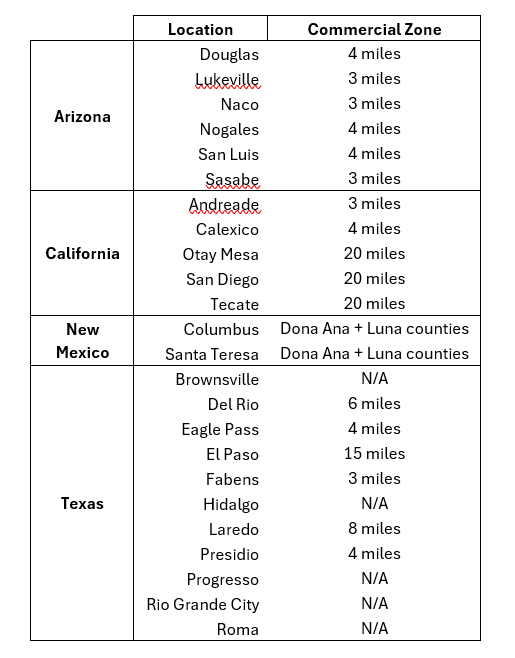
Mexican cross-border/interstate drivers with a valid CDL equivalent are subject to U.S. laws and regulations, including ELP requirements. There are exceptions for designated commercial zones along the U.S.-Mexico border that will be maintained. In these areas, drivers are subject to the ELP requirements and may still receive citations, but they will not be placed out-of-service solely for ELP noncompliance [see chart]. At this time there are no exceptions for areas surrounding the U.S.-Canada border.
Please contact Tracey Chow for additional information: [email protected] or 202-704-7312.

Growers Carry the Burden While Others Check Boxes: Why it’s Time for True Shared Responsibility in Produce Safety

August 21st, 2025

Western Growers Response to Reagan Udall Report: Roadmap to Produce Safety

The Reagan Udall Foundation (RUF) Report: Roadmap to Produce Safety, released July 28, 2025, is centered on the tenet that fresh produce safety is a shared responsibility. If responsibility is truly shared, then so must be the accountability—for both progress and failure.

Despite the rhetoric of shared responsibility, there lies a significant imbalance.  At present, growers of fresh produce bear the responsibility of assuring progress in food safety while also assuming all accountability for lack of progress.

Buyers, suppliers and others in the supply chain impose requirements on growers that may or may not be the best food safety practice for the grower’s field or crop. These mandatory requirements compete with, and/or are in addition to, the best practices for growing, harvesting and handling a fruit or vegetable crop.

Buyer requirements are a notable hindrance to progress in fresh produce safety and are often driven by business objectives rather than food safety. Growers cannot implement prevention-based improvements specific to their operations if their resources are tied to mandates that were not designated to address food safety risk but instead to check a box for a buyer.

For example, there has been significant public discourse regarding the distance of leafy green fields to cattle feeding yards in the southwestern U.S. Did you know that buyer requirements for how far the leafy green field needs to be away from the cattle feeding yard vary anywhere from1.5 miles to 5 miles? These requirements are in place despite science that tells us that distance alone is not the best risk management strategy for addressing potential pathogen contamination.

These arbitrary distance requirements distract from designing more appropriate and dynamic risk management strategies based on each field’s location, condition, crop and agronomic practices. A grower must default to static buyer best guesses of distance. To focus on food safety, a grower should adopt practices based on changing environmental conditions and not be forced to a mandate based on buyer assumptions that may or may not serve food safety. By the way, it would be interesting to know if these same buyers ask the cattle feeding yards (which is likely part of their beef supply chain) to also adopt practices that help to reduce risk for nearby leafy green growers.

To achieve shared responsibility in produce safety, the development and implementation of buyer requirements will need to 1) focus on risk management rather than checking a box; 2) align with known best practices in food safety for the specific crop and region;  3) be developed using transparent, open dialogue, inclusive of growers and other stakeholders; 4) and be based on and respond to input from experts that are absent conflict of interest.

Improvements in produce safety will not be achieved by supply chain participants working in silos and without end-to-end adoption of best practice standards globally for fresh produce production. Buyers should not continue with their status quo, as it is clearly not allowing for needed food safety progress. Consumers deserve better.

Western Growers Wants Your Old Family Photos from the Farm! 

August 12th, 2025

First we came for your pet photos to run in the magazine. Now we want old photos of your family and farm for a year-long party! 

It’s Western Growers’ 100th Anniversary next year – and we want to celebrate the milestone by honoring the legacies of our members. We have a number of projects in the works – a coffeetable book, a short documentary film and some surprises – and we’d love to include your old photos. 

Please send your digital photos to Ann Donahue, Director of Marketing and Communications (and Pet and Family Photos) to [email protected]. Please identify the location and the people in the photo for a caption. 

But wait, there’s more! Do you have a box of old family and farm photos that you don’t know what to do with? Please drop Ann a line or give her a call at 949-302-7600 and we might be able to figure out a way to take them off your hands. (Fair warning …if we come to get them we’re also going to try to interview you for the film we’re working on.) 

Celebrating 100 years of WG and cleaning out that weird corner of the office? Priceless. 


If We’re Going to Tell People to Eat More Produce, We Need to Prioritize Food Safety.

August 26th, 2025

Western Growers Response to Reagan Udall Report: Roadmap to Produce Safety

Increased consumption of fresh fruits and vegetables is key to improved public health. Yet, public investment in produce safety continues to take a backseat in federal funding and policy. Funding to advance fresh produce safety has never matched the vital role fresh fruits and vegetables play in our nation’s nutritional security.

Simply put, there is little government infrastructure supporting food safety for fresh produce, and recent changes in funding only serve to weaken what little infrastructure remains.

Domestic farming has become increasingly complex with extreme weather events, increased regulatory requirements, economic constraints and global trade. To ensure continuous improvement in food safety, technical support and resources are needed for the thousands of fresh produce growers across the country. These boots on the ground needs include education and outreach on food safety best practices, research to resolve specific regional challenges and technical support for food safety events or following natural disasters. The absence of this infrastructure threatens the long-term business sustainability of domestic production.

Today, extension specialists for fresh produce are a scarce and highly valued resource.  They work tirelessly to assure practical strategies to enhance food safety and promote productivity. Much more investment in extension resources is needed and the auxiliary resources necessary to support them.

The solution lies in resolving the following:

  • Long-term consistent federal funding for extension, education and outreach that is supplemented by state, industry and other sources
  • Research that is focused on both advancing general understanding of how to mitigate microbiological and environmental contaminants but also strategies that apply this knowledge at the farm level
  • Technical resources ready to respond to food safety events and following natural disasters to prevent the tragedy of foodborne illness and preserve the economic viability of affected farms.

Failure to improve public investment in fresh produce safety leaves growers without affordable access to the critical information that supports safe production. Ultimately, this leaves growers economically vulnerable to foreign competitors and fresh produce at risk for potential contamination. Consumers deserve to feel confident in the safety of the fruits and vegetables they are encouraged to consume.


Upcoming Rat Control Resources: DPR Workshop on Rodenticides and Informational Sessions for PCAs

August 12th, 2025

The California Department of Pesticide Regulation (DPR) will host an informal public workshop to review proposed mitigation for anticoagulant rodenticides on September 24. See more details here.

Central Valley growers are battling a severe roof rat infestation affecting over 100,000 acres, with reports from Merced, Fresno, Kings and Kern counties indicating a sharp rise in populations. Rats damage crops by eating fruits and nuts, girdling tree limbs and burrowing into root zones. Rats also destroy irrigation systems and farm equipment, leading to significant economic losses.

If you are experiencing rat challenges on the farm, please share your experiences here so that we can better understand the scope of this challenge and how to support our farmers.

A California Department of Food and Agriculture (CDFA) survey revealed high rat densities on farms, with some impacted farmers capturing up to 32 rats per night. Economic on-farm losses are estimated between $109 million and $311 million, driven primarily by damaged drip lines and yield losses. For example, one grower faced a 50 percent crop loss despite exterminating up to 100 rats daily, while another spent $20,000 replacing an entire irrigation system. Researchers from UC ANR recommend an Integrated Pest Management (IPM) strategy focused on rigorous monitoring.

Informative sessions on this rat challenge will be available at the Annual CAPCA Conference in October where UC Cooperative Extension’s Roger Baldwin will be presenting Monday, October 20 in Reno, Nevada.

Western Growers Science Nexus – Putting Risk-Based Management and Community into Action 

August 11th, 2025
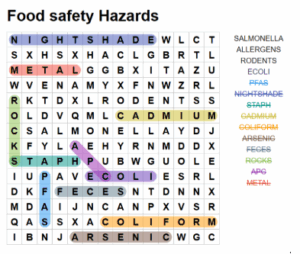
Food Safety Word Search

Image created from: thewordsearchmaker.com

Hazards are easy to identify. They sometimes take a bit of looking, but generally and with time, you begin to see them – much like looking at the word search game shown above. At first glance, there are just letters. Soon, however, your eyes recognize the patterns, and you become more adept at finding the specified word targets.  

Similarly, with practice and focus, food safety practitioners become particularly proficient at finding hazards (chemical, microbial, physical) within the products and systems they manage. We get remarkably efficient at listing them within our food safety plans – cross-referencing them to the preventive controls and perquisite programs we have in place. A well-thought-through plan makes all the difference in risk analysis, and hazard identification is a critical first step. But it is only a step – a foundation for what we build risk characterization, management and communication upon.  

But, with hazards identified and no complete means to eliminate it (i.e., common occurrences within fresh produce), how do we manage the risk?  

This is where things get tricky. Too often, the simplest approach of “get rid of the hazard” isn’t scientifically or practically possible. Here is where the science and art of risk assessment and management come in. The problem is, who teaches us how to manage and communicate a risk that we know isn’t/won’t be zero? Subjectivity and objectivity are poised to collide. The bad news is that learning to manage risks in real-world conditions (variable, fast, complex) doesn’t come with an instruction manual. The good news is that we can practice and learn from each other.  

Where can we learn this? WG Science is launching an educational and professional development program to advance the practice of food safety risk management in fresh produce through collaboration, innovation and scientific learning. This cohort-based program will focus on building produce food safety leaders and teaching applied food safety approaches – leveraging both scientific and social science curricula, all the while enforcing hands-on learning that will immediately be useful in real-world scenarios.  

Applications are required, and enrollment is free for WG members – all levels of food safety professionals are encouraged to apply 

Beyond the Buzz: Rethinking AI (Artificial Intelligence)  

August 11th, 2025

When most people, including myself, think about Artificial Intelligence (AI), we tend to picture Chatbots like ChatGPT, Microsoft Copilot and other generative AI models that search the internet and generate human-like responses. While this is true, AI holds a far more practical role in day-to-day food safety.  

 AI applications in food safety already extend beyond chat interfaces. They include predictive risk modeling, real-time monitoring of Critical Control Points (CCPs), and streamlined documentation systems. So instead of asking, “When will I use AI in my operations?”, a better question might be, “Where am I already using AI, and how can I get more from it?” 

So, what is AI, really?  

AI isn’t a single tool, or futuristic technology. It’s a broad field that combines computer science and statistics to build systems that can sense, learn and make decisions. AI is a layered field with varying levels of complexity and capability. Understanding these layers can help us understand the potential applications: 

  • Artificial Intelligence (AI): Technology that leverages computers to mimic human behavior such as making predictions, recognizing patterns, and making decisions. 
  • Machine Learning (ML): A subset of AI that uses algorithms to learn from data and make predictions. Example: predicting crop yield based on rainfall. 
  • Deep Learning: A subset of ML that uses artificial neural networks with many layers to process complex data, identify patterns, and make predictions. 
  • Generative AI: A subset of deep learning capable of creating new content, such as text, images or code, based on learned patterns from training data. Tools like ChatGPT and co-pilot are clear examples. 

Rethinking AI (Artificial Intelligence) 


In food safety multiple of these AI layers can show up in real, practical ways: 

  • Predictive modeling using machine learning can allow us to detect early signs of contamination using historical testing, weather and location data. 
  • Computer vision (using deep learning for analyzing images) can be used to assess processing lines for foreign objects, or potential animal activity in fields.
  • Natural language processing (Generative- AI) (like ChatGPT) that can sift through audit records or inspection notes to identify patterns, and create plots, tables and analysis that can give us novel insights.

The power of AI lies in the ability of leveraging machines to process more data than any human could ever do and do it in real time.  

From Reaction to Anticipation 

Food safety has long been driven by reaction. A positive result? We disk the field. A contamination event? We issue a recall. These are necessary responses, but they happen after the risk becomes real.   

AI offers something different: the ability to anticipate. 

Imagine “predicting the invisible.” How can you anticipate something you can’t see? AI does this by integrating weather patterns, historical data and seasonal trends to forecast when and where pathogen risks are likely to spike. In essence, AI identifies the conditions that create risk before the risk manifests. 

Is this just theory? Not at all. This isn’t science fiction. At Johns Hopkins, AI models have predicted the onset of sepsis before symptoms appear. The same principle applies in food safety. Closer to home, Dr. Mohit Verma from Purdue University has used machine learning to predict levels of Bacteriodales (a fecal indicator) in the produce field with 77%, just by using weather and farm-specific information.  

The data already exists. The opportunity is to learn how to see the signal in it. 

Why is AI hard to Trust? 

The paradox of AI is that, despite its potential, it’s often hard to trust. Why?  

We (as humans) are trained to trust what we can see, measure, and validate. Audit scores. Pathogen tests. SOP checklists.  

AI doesn’t always provide that level of certainty. Instead, it connects dots we wouldn’t think connect. It identifies weak signals, signals that on their own look meaningless, but that when combined, tell a bigger story. 

This isn’t guesswork. It’s statistics, specifically, inference*. But here’s the kicker: when inference contradicts experience, it creates discomfort. 

So how do I trust AI?  

Trust is earned.  

Trusting does not mean accepting everything AI or statistics give us. It means validating the model’s predictions against reality, understanding the data it was trained on, and knowing its limitations. In practical terms, that could mean using AI outputs to inform our decisions, not replace them.  

Pair predictions with observations and compare model alerts with actual outcomes. If we do this after multiple iterations (repetition) we will start trusting AI. The more we work with it, challenge it and learn from it, the more we’ll stop seeing it as something foreign, but instead seeing it as a tool to maximize our learning.  

Buzz to Value: Start Here 

If you want to move from buzz to value, choose one of these entry points: 

  • Take inventory of your data: AI is only as good as the data it learns from. Before investing in models or tools, you need to understand your data landscape:
    • What do I already collect (lab test results, audits findings, weather records, harvest schedules) 
    • Where is it stored? Is it digital, siloed, or sitting in PDFs and spreadsheets? 
  • Identify your implementation friction points. Ask yourself: Where do we currently rely on subjective feelings or manual processes? These are areas for AI-supported insight. 
    • Are you manually reviewing inspection notes or audit data for trends? 
    • Is field or water data collected but rarely analyzed? 
    • These operational pain points are opportunities to test AI’s value. You’re not replacing your process; you’re supplementing it with a second set of (very fast) eyes. 
  • Start small: You don’t need to change every system to be AI driven. Choose one narrow, high impact use case. 
    • For example, using Natural Language Processing to scan and summarize years of audit findings 
  • Iterate and Improve: Here’s where trust is built. Once a small model is in place, you can compare predictions to outcomes, track accuracy, refine the models or questions when wrong, and optimize the data you are feeding to these models.
  • Collaborate with experts: You don’t have to do this alone, Western Growers, Universities, Extension and Labs can allow you to tap into the AI world by making sense of your data.  

Takeaways:  

AI in food safety isn’t about futuristic robots, it’s about using the data already flowing through your farms, facilities, labs, and compliance systems to learn faster and effectively. We don’t need to wait for AI to arrive. It’s here. The question is whether we’ll use it well enough to stay ahead of risk. 

*Inference: a conclusion reached on the basis of evidence and reasoning. 

DWR Releases Draft Best Management Practices on Managing Land Subsidence in California

August 11th, 2025

SACRAMENTO, Calif. – For almost a century, parts of California have been gradually sinking, impacting critical infrastructure and the communities who rely on it. Recognizing this challenge, the Department of Water Resources has released a draft Best Management Practices document for public comment that will help local water agencies address this growing concern and support groundwater reliant communities.

Known as subsidence, this reaction is caused by various factors including excessive groundwater pumping, which causes the empty spaces between soil particles to collapse and compact the earth. Subsidence poses significant challenges to not only our communities but our state as whole. It damages homes, roads, bridges, levees, wells, and irrigation canals, disrupting water delivery and costing billions in repairs. It is critical that regions experiencing subsidence take action to slow or stop the sinking or be left with the risk of further permanent damage.

Once finalized following public review, the document will serve as a guide for groundwater managers on the basics of subsidence, how to best manage it, and available technical assistance. This document does not replace any existing, local, state, or federal regulations, but serves as a resource that local agencies can add to their water management toolkit.

“Subsidence has significantly impacted our major water conveyance facilities, levees, roads and other land uses affecting water supply reliability and public safety,” said Paul Gosselin, DWR Deputy Director of Sustainable Water Management. “Understanding that conditions and solutions vary by region, it’s critical to hear from our local partners and the public on this draft document to ensure that subsidence is minimized effectively.”

DWR Accepting Public Comments

DWR is accepting public comments on the draft Best Management Practices document until September 22. Interested parties are strongly encouraged to submit comments and attend upcoming in-person meetings held in Delano on September 9th, Clovis on September 10th, and Willows on September 11th. These meetings will include an overview of the draft document and serve as a venue to ask questions and provide public comments. More information can be found on DWR’s Public Notice webpage.

Comments can also be submitted by one of the following methods:

Electronic Mail

Letters should be sent to [email protected]. Electronic files should be PDF or Microsoft Word compatible.

Hard Copy via U.S. Mail

Letters should be addressed to:

Department of Water Resources
Sustainable Groundwater Management Office
ATTN: Subsidence BMP
P.O. Box 942836
Sacramento, CA 94236-0001

Additional Subsidence Support

Today’s efforts help meet objectives set by the Sustainable Groundwater Management Act (SGMA) to avoid or minimize current and future impacts of subsidence. In addition to identifying best management practices, DWR is investing in other methods to further describe and inform subsidence impacts. Projects include the California Aqueduct Subsidence Program, which is designed to address damages to water delivery systems caused by active and anticipated subsidence. The program has allocated $288 million for the California Aqueduct, $582 million for the San Luis Canal, $924 million for the Friant-Kern Canal, and $561 million for the Delta-Mendota Canal.

The support doesn’t stop there. In 2023, California funded $17 million to raise the Corcoran levee, a critical piece of flood protection infrastructure in the Tulare Lake Basin. This is the third time that either the State or federal government intervened to raise the levee due to sinking caused by years of overpumping groundwater. DWR is also installing several subsidence monitoring stations throughout the state to track sinking in the San Joaquin Valley and areas of Northern California. Installation is currently underway, and data collected from the stations will help State and local partners have a better understanding of affected areas.

Understanding that each region is different in their water challenges and needs, changes to groundwater management practices will be site-specific and dependent on existing subsidence conditions and impacts. Regardless of a groundwater basin’s current conditions, the new best management practice document, along with DWR’s assistance team and Region Office staff, will help water managers through their decision-making process to better manage groundwater conditions to avoid or minimize subsidence and achieve their sustainability goals.

For more information:

Western Growers 2025 Compensation and Benefits Survey Now Available for Purchase

August 11th, 2025

The most in-depth look at California and Arizona specialty crop compensation data is here.

The 2025 Compensation and Benefits Survey delivers critical insights for HR professionals and executives focused on attracting and retaining top talent. This year’s report features base pay, bonus and total compensation data for 130 unique job titles and includes data for executive, sales and marketing, field, plant and office jobs. Recognizing the evolving needs of the industry, the 2025 edition now includes positions for food safety professionals.

Purchase your copy today and get access to all this resource has to offer.

The Compensation and Benefits Survey is exclusive to members of Western Growers. If you’d like access to this resource but aren’t yet a member of WG, please contact us at [email protected].

The survey data was compiled and tabulated by a trusted third party, Industry Insights, Dublin, Ohio.

Best Practices: Emoji’s in the Workplace

August 8th, 2025

In today’s fast-paced digital world, emojis have become an integral part of our communication vocabulary, not just in personal conversations but also in professional settings. The ever-expanding ability to use emojis, not only in text messages, but in work productivity tools like Microsoft Teams and Outlook, has seen the use of emojis slowly but surely creeping into our workplace communications. And while emojis can add a touch of personality and emotion to our messages, their ambiguous nature can sometimes lead to misunderstandings, especially in the context of professional communications. 

Understanding the Ambiguity of Emojis 

Emojis are an increasingly popular form of communication in the workplace, but their meanings can be ambiguous. For example, a simple winking face or a fire emoji can be interpreted in multiple ways. While the sender might intend a friendly or playful message, the recipient could perceive it as flirtatious or inappropriate, leading to misunderstandings and potential claims of sexual harassment or discrimination. 

With today’s workforce made up of five generations, the Traditionalists (born before 1946), Baby Boomers, Gen X, Millennials and Gen Z, it’s a safe bet that no two generations will likely interpret an emoji in the same way. For instance, younger employees might use emojis more casually and interpret them as harmless, while older employees might find the same emojis inappropriate or offensive. This type of generational gap can complicate workplace communications and lead to unintended perceptions, the kind that can lead to allegations of harassment or discrimination. 

Here are a few scenarios illustrating how emojis can be misinterpreted in the workplace: 

  • An employee sends a winking face emoji to a colleague after a successful project. The sender intends it as a friendly gesture, but the recipient perceives it as flirtatious and feels uncomfortable. 
  • A manager uses a fire emoji to praise an employee’s work. The employee, however, interprets it as a suggestive comment and feels harassed. 
  • A supervisor sends a group text to field workers praising the team’s hard work and harvesting efforts, including emojis like a thumbs-up, a sun and a corn emoji. A worker on the team, from a different cultural background, interprets the sun and corn emojis as symbols of oppression and stereotyping related to their ethnicity.  
  • A younger employee uses a series of emojis to communicate with an older colleague. The older colleague finds the emojis unprofessional and feels disrespected. 

To mitigate the potential risks associated with the use of emojis in workplace communications, employers should consider the following best practices: 

  • Context Matters: The context in which emojis are used is crucial. HR professionals should consider the entire conversation and the relationship between the parties involved. 
  • Guidelines for Emoji Use: Provide clear guidelines on the appropriate use of emojis in professional communications. Emphasize the importance of context and the potential for misinterpretation. 
  • Training Programs: Different cultural backgrounds may interpret emojis differently. Offer training programs to educate employees about the unforeseen impacts of emoji use and how to communicate effectively and respectfully.
  • Documenting Complaints: Establish a clear process for documenting and addressing complaints related to emoji use. Ensure that employees feel comfortable reporting any concerns they may have. 

Western Growers Helps Sponsor Eighth Safe Fruits and Veggies Farm Tour for Alliance for Food and Farming

August 8th, 2025

The Alliance for Food and Farming (AFF) held its eighth Safe Fruits and Veggies Farm Tour on August 4–6, welcoming a group of registered dietitians, nutrition writers and social media influencers to California’s Salinas Valley. The tour featured visits to strawberry and vegetable farms, including stops at Naturipe Berry Growers and D’Arrigo California, where participants learned about integrated pest management, biodiversity, automated harvesting technologies, food safety and sustainability practices.

“Through these influencers’ social posts and media outreach, these tours have become an important and impactful way to show the daily commitment by farmers and farming companies to provide safe and nutritious produce to consumers,” said Teresa Thorne, Executive Director at AFF, in a press release.

The AFF’s tour guests included:  Laura BurakSamantha CassettyJessica Crandall SnyderGinger HultinCharlotte Martin,  Nijya Noble Sarah Schlichter and Alexandra Turnbull.

Attendees, who contribute to major media outlets like NBC News, The Today Show, WebMD and Women’s Health, gained hands-on experience, including strawberry picking and exploring plant breeding and harvesting technologies. The tour also featured insights from Dr. Tamika Sims of the International Food Information Council, who shared expertise on food safety and regulations.

Since 2017, the AFF has hosted more than 60 influencers to strengthen its mission of promoting science-based information about produce safety.

In addition to Western Growers, sponsors of the tour included the California Strawberry Commission, D’Arrigo California and the International Fresh Produce Association.


CA Certifies Minimum Wage Increase for January 1, 2026 

August 8th, 2025

The California Labor Code mandates the State’s Director of Finance annually (on or before August 1 of each year) determine and certify whether an adjustment for inflation should be applied to the statewide minimum wage once it reaches $15.00 per hour, which occurred on January 1, 2023. California’s minimum wage is currently $16.50 per hour 

This year, the Department of Finance calculates the average U.S. Consumer Price Index for Urban Wage Earners and Clerical Workers (U.S. CPI-W) increased by 2.49% from July 1, 2024 to June 30, 2025. Consequently, the minimum wage will rise by 2.49% to $16.90 per hour, effective January 1, 2026 

Employers should also keep in mind that this increase will also affect the minimum salary requirements for most full-time exempt employees (currently $68,640 per year or $5,720 per month).  Effective January 1, 2026, the minimum salary for a full-time exempt employee will increase to $70,304 per year or $5,858.67 per month.  

To prepare for the upcoming increase employers should: 

  • Update Payroll Systems: Ensure that payroll systems are adjusted to reflect the new minimum wage rate beginning January 1, 2026. 
  • Budget Adjustments: Review and adjust budgets to accommodate the increased labor costs. 
  • Employee Communication: Be prepared to inform employees about the wage increase and how it will affect their pay by posting updated mandatory notices.  
  • Compliance Check: Verify that all wage-related policies and practices comply with the new minimum wage requirements. This includes reviewing and adjusting as necessary premium pay calculations for reporting time, split shifts, and meal/rest period violations.  

APMA H-2A Certificate Program Begins Aug. 13

August 8th, 2025

Classes begin August 13, 2025 - register today! 

APMA is pleased to offer theH-2A Temporary Agricultural Workers Visa Program Certificate Program. Sessions 1–8 will be conducted via Zoom, and Session 9 will be held in person and will include a graduation certificate presentation. The location for the final session will be announced soon. 

Western Growers’ Jason Resnick will be co-instructing three of the sessions.  

Schedule:
All sessions will be held on Wednesdays from 9:00 AM to 12:00 PM (PST) 

Session 1 – August 13, 2025
Deciding if the H-2A Program is Right for You; Preparing the Job Order; Filing the DOL ETA-790 and ETA-9142A 

Session 2 – August 20, 2025
Obligations, Assurances, and Guarantees 

Session 3 – August 27, 2025
Details and Practical Considerations 

Session 4 – September 3, 2025
Housing, Transportation, and Food Service 

Session 5 – September 10, 2025
H-2ALC – Farm Labor Contractor 

Session 6 – September 17, 2025
Accounting, Tax Issues, and Benefits 

Session 7 – September 24, 2025
Workers’ Compensation, Adverse Effect Wage Rates, and Litigation Updates 

Session 8 – October 1, 2025
Audits, Investigations, and Special Circumstances 

Session 9 (In-person) – October 8, 2025
Best Practices, Final Comments, and Graduation Ceremony 

Registration Required:
Participants must pre-register to attend. A certificate will be awarded upon completion of the program. 

Member Discounts Available:
Discounted registration is available to APMA members as well as members and subscribers of supporting organizations. 

APMA reserves the right to restrict participation in any APMA event. 

2025 H-2A Certificate Program Registration