CDFA Accepting Proposals for 2026 Specialty Crop Multi-State Program

June 15th, 2026

SACRAMENTO, June 15, 2026 – The California Department of Food and Agriculture (CDFA) is accepting proposals for the 2026 Specialty Crop Multi-State Program.

2026 SPECIALTY CROP MULTI-STATE PROGRAM

This is a federal grant program offered by the U.S. Department of Agriculture’s Agricultural Marketing Service. The purpose of the program is to competitively award funds to projects that enhance the competitiveness of specialty crops by funding collaborative, multi-state projects that address regional or national level specialty crop issues, including food safety, plant pests and disease, research, crop-specific projects addressing common issues, and marketing and promotion.

Specialty crops include fruits and vegetables, tree nuts, dried fruits, horticulture, and nursery crops (including floriculture). All prospective applicants are encouraged to review the 2026 Notice of Funding Opportunity.

Additional information about the grant program, including application instructions and templates, are available on the CDFA website.

Grant awards will range from $250,000 to $1 million per project and projects may last for up to three years. Specialty crop producer associations and groups, other state agencies, Tribal government entities, universities, non-profits, and other stakeholder groups and organizations are eligible to apply.

All proposals must include at least two partners (referred to as “multi-state partners”) with substantive involvement in the project, and the multi-state partners must be located in two different states to qualify for the program. The 2026 Specialty Crop Multi-State Program requires cost share contributions in an amount equal to 25 percent of the total Federal portion of the grant. Please reference the NOFO for more information on this component.

The deadline to submit proposals is 1:59 p.m. PT on August 31, 2026. Proposals must be submitted electronically to [email protected].

CDFA will conduct a webinar on Tuesday, July 7, 2023, at 10:00 am PDT featuring an overview of the proposal application. There is no cost to attend; however, space is limited and CDFA requests that attendees register in advance.

Webinar registration link: https://attendee.gotowebinar.com/register/5893368487042799452

All questions regarding the Specialty Crop Multi-State Program should be emailed to [email protected]. Please include “SCMP” in the subject line.

CAA Releases PRO Plan for Advisory Board and Public Review

June 15th, 2026

On June 15, 2026, Circular Action Alliance (CAA), the Producer Responsibility Organization (PRO) under the Plastic Pollution Prevention and Packaging Producer Responsibility Act (the Act; Senate Bill 54, Allen, Chapter 75, Statutes of 2022), submitted a proposed PRO plan to the advisory board for review and comment and published the proposed PRO Plan on their website. You can view a copy of the plan here.


The Packaging Producer Responsibility Advisory Board and public have until August 14, 2026, to provide feedback to CAA on the plan, as detailed in Public Resources Code (PRC) 42070(h) 

CAA requests for Advisory Board and public comments via two platforms:

  1. Advisory Board meetings. The first Advisory Board meeting to review the plan is scheduled for June 26, 2026. Additional Advisory Board meetings will be scheduled by the Advisory Board to review the plan. Interested parties can attend meetings in-person or online and submit their comments to CAA.
  2. Submitting comments using the form here.


Attend the Plastic Pollution Prevention and Packaging Producer Responsibility Act Advisory Board Meeting to learn more.

Date: Friday, June 26, 2026
Time: 10 a.m. – 4 p.m.

On June 26, 2026, CalRecycle will host an Advisory Board meeting for the implementation of the Plastic Pollution Prevention and Packaging Producer Responsibility Act (the Act; Senate Bill 54, Allen, Chapter 75, Statutes of 2022). During this meeting, the Advisory Board will discuss: 


  • The Draft Producer Responsibility Plan from Circular Action Alliance


Agenda items are subject to change and the most up-to-date agenda can be found on the Advisory Board Repository.

How to Attend:

In Person
Sierra Hearing Room,
CalEPA Headquarters1001 I St, 2nd floor
Sacramento, CA 95814
No registration is necessary to participate in person. Attendees may submit oral public comments.

Zoom
Registration is required. Zoom participants may submit oral comments and questions via Zoom. Register here.

Webcast
Webcast participants will not be able to ask questions. If you are participating remotely and would like to ask questions or provide feedback, please join through Zoom. No registration is necessary to view the webcast. View meeting.

USDA Seeks Applications for Grants to Build and Improve Rural Water Infrastructure

June 12th, 2026

The U.S. Department of Agriculture (USDA) announced last week it is accepting fiscal year 2026 applications for grants to create revolving loan funds to build and improve water and wastewater disposal systems in rural areas.

USDA is making funds available through the Revolving Funds for Financing Water and Wastewater Projects program. This program helps qualified nonprofit organizations create loans to finance water and wastewater projects. Recipient organizations may use funds to cover pre-development costs for water and wastewater treatment projects. They may also use funds to finance short-term and small capital improvement projects that are not part of regular operation and maintenance costs. Within approved guidelines, program recipients set the loan terms for the individual communities they serve.

Applications must be submitted electronically using Grants.gov no later than midnight Eastern Time on July 3, 2026. Additional information is available on Grants.gov, or you contact your local USDA Rural Development office.

EEOC’s New National Enforcement Plan Signals a Shift in Federal Enforcement Priorities

June 11th, 2026

The U.S. Equal Employment Opportunity Commission (EEOC) has replaced its 2024-2028 Strategic Enforcement Plan with a new National Enforcement Plan (NEP) covering fiscal years 2025-2029. The NEP is intended to guide the agency’s enforcement, litigation, outreach, education, and dispute resolution activities and to provide employers with a clear indication of where the agency plans to focus its resources over the next several years. 

Key Takeaways from the NEP: 

  1. The EEOC is prioritizing intentional discrimination (disparate treatment) claims. The NEP emphasizes the agency’s shift in focus to cases involving alleged intentional discrimination, particularly broad-based employment policies, programs, or practices that may result in disparate treatment of applicants or employees based on protected characteristics. 
  2. DEI-related employment practices are likely to receive heightened scrutiny. The plan also identifies employer policies and programs that may involve consideration of race, sex, or other protected characteristics as potential enforcement priorities. Employers should expect increased attention to recruiting, hiring, promotion, and compensation practices that could be viewed as providing preferences based on protected status.
  3. The agency is de-emphasizing disparate impact enforcement. The NEP directs the EEOC to focus its resources on intentional discrimination (disparate treatment) claims and to limit reliance on disparate impact theories where possible. While this represents a notable federal enforcement shift, employers should remember that disparate impact liability remains recognized as unlawful under federal law and may continue to be pursued by private litigants and state agencies.
  4. Expect more coordinated, nationwide enforcement activity. Section I(C) of the NEP directs the EEOC to function as a “national law enforcement agency” and emphasizes collaboration across headquarters, district offices, and program areas. The plan specifically contemplates deploying staff across district lines, assigning matters to multiple offices, and reallocating investigations based on workload and expertise. For employers, this signals that high-priority investigations may receive coordinated national attention and resources, particularly where the EEOC believes a matter has broader enforcement significance. 

What Does it Mean? 

For employers the NEP does not change existing legal obligations under federal, state, or local employment laws. However, it does provide insight into how the EEOC may prioritize investigations and litigation. Employers operating in multiple states should remain mindful that state enforcement agencies and courts will continue to focus on issues that are receiving less emphasis at the federal level. 

Importantly, employers should not view the NEP as reducing their compliance obligations. States such as California and Colorado maintain robust anti-discrimination laws and enforcement frameworks that may differ from current federal enforcement priorities. Employers should continue to evaluate workplace policies and employment decisions under all applicable federal, state, and local requirements. 

Issuance of the NEP offers employers an opportunity to review employment practices, confirm compliance with applicable laws, and prepare for increased scrutiny of policies that could be perceived as involving intentional discrimination. A few recommended next steps include: 

  1. Review recruiting and hiring practices to ensure employment decisions are based on job-related qualifications and consistently applied criteria. 
  2. Evaluate DEI-related initiatives and employment programs to confirm they do not create preferences, quotas, or decision-making processes tied to protected characteristics. 
  3. Train managers and HR professionals on objective, merit-based employment decisions and documentation practices. 

Colorado Employers Face New State EEO-1 Reporting Requirement

June 11th, 2026

On June 4, 2026, Colorado Governor Jared Polis signed HB26-1207, requiring certain private employers conducting business in Colorado to submit demographic workforce data, commonly known as EEO-1 data, to the Colorado Secretary of State beginning July 1, 2027. The law applies to private-sector employers with 100 or more workers that were required to submit EEO-1 data to the EEOC as of March 1, 2026.  

Importantly, the law specifically requires reporting even if the federal government repeals or discontinues EEO-1 reporting requirements. The timing and the cavate are notable. 

As discussed here, the EEOC recently submitted a regulatory review request to the Office of Information and Regulatory Affairs (OIRA) that could eventually lead to the rescission of certain long-standing EEO data collection requirements, including EEO-1 reporting obligations. Colorado’s new law effectively creates a state-level reporting requirement that remains in place regardless of the outcome of those federal efforts.  

Key Takeaways to keep in mind:  

  1. Colorado is creating its own EEO-1 reporting framework. Beginning July 1, 2027, covered employers must include EEO-1 demographic workforce data in periodic filings with the Colorado Secretary of State. 
  2. Federal changes will not eliminate the Colorado reporting requirement. HB26-1207 expressly requires employers to provide the data even if the federal government repeals or discontinues EEO-1 reporting. 
  3. The reporting standard is tied to the EEO-1 form as it existed on March 1, 2026. The law defines EEO-1 data as demographic workforce information categorized by race, ethnicity, gender, and job category using the federal form in effect on that date. 

What Does It Mean? 

While the EEOC has recently requested rescission and review of its EEO-1 reporting requirements, Colorado lawmakers have moved in the opposite direction by creating a state-level reporting obligation that remains in effect regardless of what happens at the federal level. 

Colorado is not alone. Since 2021, California employers have been subject to the state’s Pay Data Reporting requirements, which require covered employers to submit workforce demographic and compensation information to the California Civil Rights Department. More broadly, Colorado’s new reporting requirement illustrates how states are continuing to build and maintain their own workforce policy frameworks, often filling gaps left by changing federal priorities and enforcement approaches. 

To ensure compliance before the July 2027, effective date, employers should consider these next steps: 

  • Confirm whether your organization meets the coverage threshold. 
  • Continue collecting and maintaining EEO-1 workforce data. 
  • Watch for updated guidance as implementation details and filing procedures are developed ahead of the July 2027 effective date. 

Much Anticipated Ag Labor Reform Bill Now Public, Cosponsors Needed for the Securing Agriculture’s Workforce Act

June 11th, 2026

Western Growers, along with our allied organizations, has worked closely with Congressman GT Thompson on this legislation and is one of over 35 organizations supporting the Securing Agriculture’s Workforce Act.

This legislation would create stability and predictability for employer costs, expand access to the H‑2A program for longer seasons and other sectors including dairy, and streamline program administration to ensure a more predictable and functional labor system for agricultural employers. The bill would also provide a mechanism to stabilize the existing workforce.

Here, you can find a letter from Congressman GT Thompson, who introduced the bill, explaining the importance of this legislation from the agriculture perspective.

Here is the text of the legislation.

We encourage you to share support from your organization by filling out this form.

Litigation Update: Lawsuit Challenges California’s “Truth in Recycling” Law; Environmental Groups Challenge SB 54 Agricultural Commodity Packaging Exclusion

June 11th, 2026

Western Growers and a broad coalition of agricultural, food, packaging and business associations appeared last week before U.S. District Judge William Q. Hayes in the Southern District of California on plaintiffs’ motion for preliminary injunction in California League of Food Producers, et al. v. Bonta. The lawsuit challenges California’s SB 343, the “Truth in Recycling” law, which restricts the use of recyclability claims and the chasing-arrows symbol unless packaging satisfies California’s recyclability criteria. 

At the hearing, Judge Hayes closely questioned the State’s theory that SB 343 will improve recycling by removing recyclability labels from products that do not satisfy the statute’s 60/60 threshold. In a central exchange, the Court asked whether packaging that is currently recycled at a 55 percent rate would lose its recyclability label under SB 343 and, if consumers follow the label, would then go to landfill rather than recycling. The Deputy Attorney General acknowledged that products below the 60/60 threshold could no longer bear the recycling symbol and that, “if people were fully following what’s on the package,” those items would go to landfill. She further conceded that “this law likely would result in a lot fewer things going to the recycling bin” and that it is currently unclear whether SB 343 will increase or decrease landfill volumes. 

Judge Hayes also focused on whether the State had evidence that the law would materially advance its asserted interests. When asked whether the State already possessed the evidence needed to support the law, the Deputy Attorney General acknowledged that the Attorney General’s office did not have “all of the evidence to support the law” and said the State would likely rely on experts to explain the foundation for the Legislature’s determinations. This exchange is significant because, under the First Amendment’s commercial-speech framework, the State bears the burden of showing that the challenged restriction directly and materially advances a substantial governmental interest. 

The Court also pressed the State on vagueness concerns. Judge Hayes questioned whether terms such as “routinely becomes feedstock,” “prevent recyclability,” and “designed to ensure recyclability” give manufacturers adequate notice of what is required. In discussing the Association of Plastic Recyclers design guide, the Court asked about products that are “grudgingly tolerated by recyclers.” The Deputy Attorney General acknowledged that, in some situations, the law “could be vague,” though the State maintained that the challenged provisions are not vague enough to justify an injunction. 

Several concessions may be particularly important to the preliminary injunction analysis. The Deputy Attorney General agreed that, for purposes of the preliminary injunction motion, the State’s position on the Basel Convention provision could be read as a concession that the State lacked sufficient information to enforce that provision. She also acknowledged that private enforcers would not be bound by the Attorney General’s current enforcement position. In another exchange, when Judge Hayes asked how manufacturers would know whether materials that satisfy the 60/60 threshold nevertheless fail to “routinely” become feedstock because downstream markets have changed, the Deputy Attorney General responded: “That’s correct. It would be hard for them to know that.” 

Plaintiffs argued that SB 343 will chill truthful recyclability speech, cause companies to remove useful recycling instructions from packaging nationwide, and ultimately divert more materials to landfills. Plaintiffs also emphasized that qualified claims permitted under the Federal Trade Commission’s Green Guides, such as “check locally” or “not recyclable in all areas,” are less restrictive alternatives that would provide consumers with more useful information while avoiding misleading claims. 

Judge Hayes did not rule from the bench and indicated that he will issue a written decision. Western Growers will continue to monitor the case closely and keep members informed. 

Related SB 54 Litigation Filed by Environmental Groups 

In a separate action, Natural Resources Defense Council, Oceana and Californians Against Waste Foundation filed suit in San Francisco County Superior Court against the California Department of Resources Recycling and Recovery, known as CalRecycle, challenging portions of the final SB 54 regulations. 

The lawsuit challenges two provisions of the final regulations. First, the groups object to the advanced recycling provision which allows the Producer Responsibility Organization to identify certain non-mechanical recycling processes that were not in use in California before January 1, 2023. Those technologies may be considered “recycling” if they satisfy specified requirements, including limits on hazardous waste generation. 

Significant for the fresh produce industry, the lawsuit challenges the food and agricultural commodity exclusion mechanism. That provision allows a producer to exclude specific packaging or packaging components from SB 54 regulation if the producer can show that it is not reasonably possible for the packaging to comply with both SB 54 and applicable USDA or FDA regulations. 

Together, the SB 343 and SB 54 lawsuits underscore the continuing legal uncertainty surrounding California’s rapidly evolving packaging, recyclability-labeling and extended producer responsibility requirements. Western Growers members are encouraged to refer to Western Growers’ SB 54 Resources and Updates page for additional compliance resources and ongoing updates. 

Western Growers Testifies Before Congress in Support of USMCA

June 10th, 2026

Today, Western Growers President and CEO Dave Puglia testified before Congress on the importance of preserving and strengthening the U.S.-Mexico-Canada Agreement (USMCA), while highlighting opportunities to improve transparency and ensure more balanced standards in critical areas such as labor and food safety.

“I think it’s very important that we see USMCA renewed with some important changes so that we don’t go back into the situation where these two most reliable trading partners feel compelled from time to time to slap retaliatory tariffs on U.S. ag products,” Puglia testified.

Canada and Mexico account for nearly two-thirds of all U.S. fresh produce exports, making North American trade a cornerstone of the industry’s success. Strengthening these partnerships and modernizing the agreement where needed will help ensure a competitive, resilient future for U.S. agriculture and the growers who feed communities across North America.

You can watch the full congressional hearing here.

Traceability Requires Accountability Across the Entire Supply Chain

June 10th, 2026

The more I learn about traceability implementation, the more I realize that no single segment of the supply chain can make traceability successful on its own; success depends on coordinated efforts from farm to fork.

Western Growers recently submitted comments highlighting a gap in the Traceability Rule involving entities that coordinate the movement of food but do not take physical possession of the product, such as brokers and certain intermediaries. While these entities may not be subject to the same traceability recordkeeping requirements, Western Growers believes clear expectations for their role in supporting traceback efforts and maintaining the integrity of traceability information throughout the supply chain are critical.

The importance of full-supply-chain accountability and investment is not merely theoretical. Recent outbreak investigations, including the 2025 Salmonella outbreak linked to imported mangoes, demonstrated that even if the FDA identified a strong epidemiological link to a common importer, the investigation was constrained by a lack of lot-level traceability, product commingling, and incomplete records. The lesson extends beyond regulatory compliance.

Successful traceability requires investment from all sectors of the supply chain. As fresh produce growers/shippers continue investing significant resources in systems, software, training, and data management to meet traceability requirements, investment is needed across all supply chain entities. Achieving the goal of the FDA’s Traceability Rule will require both accountability and investment throughout the supply chain. Every participant who contributes to the movement of food must also contribute to the integrity of traceability records.

Ultimately, the effectiveness of the traceability rule will depend not on strong isolated traceability systems, but on whether every link in the chain fulfills its responsibility.

To access WG’s story on traceability gaps, click here.

To register for a webinar on upcoming traceability pilots, click here.

FDA Seeks Input on Traceability Flexibilities

June 10th, 2026

The U.S. Food and Drug Administration (FDA) recently released a discussion paper entitled “Identifying Additional Flexibilities for Satisfying the FTR’s Lot-Level Tracking Requirements” to support stakeholder engagement on potential flexibilities across the supply chain. The document outlines several concepts under consideration and seeks stakeholder feedback to help inform future implementation discussions. Written comments regarding flexibilities are due July 15, 2026. As the FDA evaluates these options for different entities, input from growers and shippers is critical. Western Growers members are invited to share feedback on current traceability issues and potential flexibilities by completing a short questionnaire by June 12, 2026.

To complete the Western Growers survey, click here.

To access the FDA’s discussion paper, click here.

SPPA Farm and Packaging Tour and Workshop Brings Supply Chain Partners Together to Advance Sustainable Packaging

June 10th, 2026

On June 3–4, 2026, the Sustainable Produce Packaging Alignment (SPPA) initiative brought together growers, packaging manufacturers, researchers, retailers and sustainability leaders for a two-day series of farm, manufacturing and research facility tours across California’s Central Coast and San Francisco Bay Area.

The event was hosted by Western Growers, the World Wildlife Fund and the U.S. Food Waste Pact and provided participants with a firsthand look at how packaging decisions impact food loss and waste, product protection, operational efficiency and sustainability throughout the fresh produce supply chain.

The tours allowed the participants to see real-world operations within the supply chain of fresh produce. They were designed to connect the conversations happening within SPPA to real-world operations. By visiting farms, greenhouses, packaging manufacturing facilities and research laboratories, the group was able to gain a deeper understanding of the critical needs for the fresh produce industry and functional requirements packaging must meet before the sustainability aspects can be evaluated.

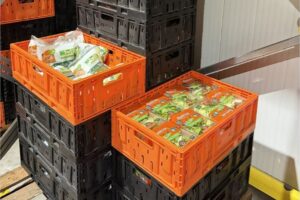
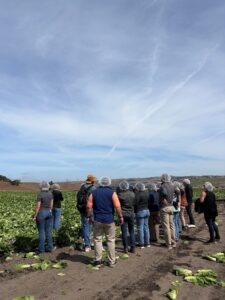
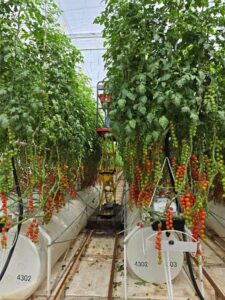
To kick off the event, the group made their way to the Santa Maria area for a visit to Betteravia Farms and BoniPak, where they observed field-pack operations and learned about the application of the Global Farm Loss Tool. The discussions here highlighted the role packaging can play in protecting product quality and reducing losses before produce even leaves the field. The group then toured Windset Farms’ greenhouse operations, gaining insight into controlled-environment agriculture and the unique packaging and handling considerations associated with greenhouse-grown produce.

Following the field visits, the group had a working lunch at Cal Poly, San Luis Obispo, where Gerardo Herrera from the Art Center College of Design, Leigh Prezkop from WWF, and Jeffrey Brandenburg from Qfresh Labs shared educational sessions focused on sustainable design, food loss and waste, and packaging functionality and sustainability. The presentations explored packaging design considerations, findings from the Global Farm Loss Tool and an overview of SPPA’s ongoing efforts to align sustainability goals with packaging performance requirements. Together, the day one discussions reinforced the importance of evaluating packaging through a systems-based lens that considers food safety, food waste prevention, supply chain realities and environmental impacts.

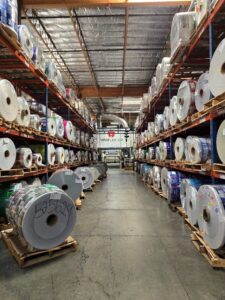
On day two, participants visited Emerald Packaging in Union City, where they toured a flexible packaging manufacturing facility for fresh produce and learned about innovations in

packaging production, material selection and sustainability initiatives. The last stop of the event was at the USDA Albany Laboratory, where researchers shared ongoing work related to compostable price-look-up (PLU) stickers, sustainable materials development, and the challenges associated with developing solutions that meet both operational and environmental goals.
What made this event extremely valuable was how it brought together stakeholders from across the produce supply chain and gave them an opportunity to collaborate and examine packaging challenges from multiple perspectives. Growers, researchers, packaging suppliers and sustainability professionals were able to engage in meaningful conversations about tradeoffs, opportunities and areas where more alignment is needed. In seeing these issues firsthand, they got to have discussions about the operational realities that influence packaging decisions every day. As SPPA continues to develop guidance and resources for the fresh produce industry, events like these play an important role in building shared understanding and advancing solutions that support both sustainability goals and supply chain functionality.


Pesticide Resistance in Diamondback Moth, WG Science Webinar

June 10th, 2026

Diamondback moth (DBM) remains one of the most persistent and economically damaging pests in brassica production. Pesticide resistance to multiple modes of action continues to challenge effective control, making resistance management a top priority for growers and advisors.

This webinar on July 9 at 1pm PT is focused on pesticide resistance, the biology of DBM, and emerging tools in cotton pests resistance development to improve long-term control strategies.

Register for the webinar here: https://go.wga.com/pesticide-resistance-in-diamondback-moth-2026

This webinar will explore the latest in resistance research and life cycle of the diamondback moth, with a focus on resistance development and DBM biology. Understanding these biological drivers is critical for designing effective, sustainable Integrated Pest Management (IPM) programs.

This session will also introduce a novel tool currently being used in Arizona crop production to help prevent pesticide resistance. Learn how the Proactive Resistance Management tool works, its role in resistance management, and what it could mean for future DBM control strategies.

1 hour of DPR CE Credits has been requested

California Local Minimum Wage Increases Take Effect July 1, 2026

June 5th, 2026

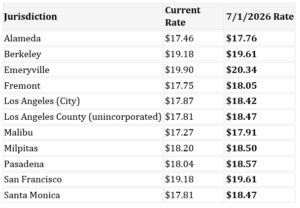
California employers with operations in certain cities and counties should prepare for local minimum wage increases effective July 1, 2026.

Many California jurisdictions adjust their rates annually based on the Consumer Price Index (CPI), and most have now issued official notices confirming their 2026 rates.  

It is important to note that these local rates often exceed the prevailing California statewide minimum wage ($16.90 as of January 1, 2026) and will take precedence, as applicable, where work is performed within city or unincorporated county boundaries. 

These local minimum wage increases take effect on July 1, 2026, and generally apply to employees who perform at least a specified number of hours, typically two or more, within the jurisdiction during a workweek. Employers must also comply with local posting requirements by displaying updated minimum wage notices at affected worksites.  

For those operating in multiple locations it is also important to confirm the applicable rate based on where work is performed; not where the business is headquartered or the employee resides. 

The following California jurisdictions have officially announced increases effective July 1, 2026: 

A few key takeaways to ensure your organization is ready for these increases: 

  • Review your pay practices now. Ensure payroll systems are updated before July 1, especially for employees who travel between jurisdictions. 
  • Confirm geographic coverage. Local minimum wage rules apply if employees work within city boundaries, even if work is performed on a temporary basis. 
  • Update required postings. Each jurisdiction requires updated minimum wage notices to be posted in the workplace (often in multiple languages). 
  • Watch for industry-specific rates. Some jurisdictions (e.g., Los Angeles and Santa Monica) have separate, higher minimum wages for certain sectors (e.g., hotel workers).  
  • Monitor annual adjustments. Most of these rates will increase again on July 1, 2027, based on CPI. 

Local minimum wage compliance remains a high-risk, high-enforcement area in California, particularly for multi-location employers. With double-digit jurisdictions increasing rates simultaneously, now is the time to audit pay practices, update postings, and communicate changes internally. 

Although not yet updated, the University of California Berkely’s Labor Center is a great resource for staying up to date on minimum wage increases. 

Marijuana Rescheduling: What Employers Need to Know Now 

June 5th, 2026

A recent shift in federal policy has changed how marijuana is classified, but not as dramatically as headlines suggest. In April 2026, the Department of Justice reclassified certain marijuana products, specifically FDA-approved drugs and state-licensed medical marijuana, as Schedule III under the Controlled Substances Act.  

This change introduces a new dual framework where some marijuana is now treated as a regulated medication, while most other cannabis, particularly that sold for recreational use, remains federally illegal.  

What Does it Mean? 

For employers, this is an incremental shift, not a wholesale change. This means: 

  • No broad legalization: Recreational marijuana remains illegal under federal law.  
  • Policies are still enforceable: Employers may continue drug testing and prohibit on-the-job impairment.  
  • Federal rules unchanged: DOT and other safety-sensitive testing requirements remain in place.  

However, the reclassification does create new considerations, especially around medical marijuana use. Because certain medical marijuana is no longer categorically “illegal” under federal law, employers may see increased expectations to engage in the interactive process when employees use marijuana for medical purposes. But, keep in mind, this does not require employers to permit impairment at work. It may, nonetheless, require a more thoughtful, case-by-case analysis. 

Most importantly, employers need to keep in mind this federal change does not override state employment laws, which continue to govern most employer obligations. The practical impact will vary by state, including across the states in which Western Growers members operate. 

For California employers, the immediate practical impact is limited but important to watch. Existing California law already restricts certain adverse actions based on off-duty cannabis use and limits reliance on testing methods that detect non-psychoactive metabolites. This federal change does not alter those requirements.  

Multistate employers, including those with operations in Arizona, Colorado, and New Mexico, should also review state-specific rules before changing workplace drug and alcohol policies. Arizona provides protections for registered medical marijuana patients in certain circumstances, while also preserving employer authority to maintain drug-free workplace policies. Colorado generally provides fewer employment protections for cannabis use, and employers may continue to enforce compliant drug-testing and drug-free workplace policies. New Mexico protects medical cannabis status in certain respects, but also preserves employer authority to address impairment, workplace use or possession, safety-sensitive roles, federal compliance obligations, and written zero-tolerance policies. 

In practice, employers should avoid a one-size-fits-all approach. Policies should be reviewed for compliance with each applicable state’s rules on off-duty use, testing methods, impairment standards, safety-sensitive positions, medical marijuana status, federal-contracting or federally regulated obligations. 

Consider these best practices: 

  • Review policies to distinguish between prohibited impairment and off-duty use. 
  • Train HR and managers on handling medical marijuana accommodation requests. 
  • Confirm state law compliance before making policy changes. 
  • Monitor developments, as further federal rulemaking is underway.  

To avoid overcorrecting, employers should stay aware of the federal policy shift while also anticipating increased scrutiny of their policies, accommodation decisions, and consistency in handling marijuana-related issues. 

House Agriculture Chair Proposing Reforms to H-2A Program

June 5th, 2026

House Agriculture Committee Chair G.T. Thompson (R-Pa.) is developing legislation to include significant reforms of the H-2A agricultural guestworker program as part of a broader effort to address ongoing labor challenges in agriculture. 

According to recent news sources, the proposal is expected to include several major modifications to the existing program, including expanding eligibility for H-2A, changing the definition of “temporary” employment to under 350 days, revising how H-2A wages are calculated and creating additional workforce options for agricultural employers. 

For agricultural employers, the proposal is significant because the current H-2A program is generally limited to temporary or seasonal labor needs. That structure has made the program difficult or unavailable for certain operations that require a more continuous workforce. Redefining “temporary need” could provide additional flexibility for employers whose labor needs do not fit neatly within the current seasonal model. 

Changes to the wage structure are also expected to be included. H-2A wage rates remain one of the most consequential compliance and cost issues for agricultural employers. Such changes are expected to hew closely to the program’s current occupational Skill Level 1 and 2 dichotomy and contain more explicit language defining the Department’s obligations to determine whether an adverse effect on domestic workers exists.  

At this stage, the proposal is likely to change before being formally introduced as a bill. Western Growers will continue to track H-2A reform efforts and advocate for practical solutions that help agricultural employers access a legal, stable and economically viable workforce. 

For questions about the House H-2A reform proposal or about the H-2A program in general, please contact the Western Growers H-2A Services Team.

California Unveils Roadmap Aimed to Streamline Food Safety and Water Regulations

June 5th, 2026

SACRAMENTO, June 4, 2026 – The Newsom administration today released the final recommendations from a study that intends to improve food safety and water quality reporting for California’s agricultural community. This interagency collaboration between the California Department of Food and Agriculture (CDFA), California Environmental Protection Agency (CalEPA), and the State Water Resources Control Board was developed with input from farmers, ranchers, and local leaders, and demonstrates California’s continued efforts to build a roadmap for the future.

“California agriculture leads the world, not by standing still but by constantly innovating. This roadmap is about making the regulatory process work better for the people growing our food and sustaining communities across the state, while maintaining the food safety and water quality standards that Californians depend on. We are proving that meaningful protections and a strong agricultural economy can help move our state interests forward together,” said Gov. Gavin Newsom.

“I want to thank the many farmers, ranchers, local leaders and advocates, and agency colleagues who contributed to this work,” CDFA Secretary Karen Ross said. “You have helped us build a roadmap for smarter regulation – one that keeps pace with the complexity of today while preparing for the challenges of tomorrow. We look forward to aligning this report’s recommendations with future opportunities of parallel efforts underway.”

“Innovative regulatory programs at the intersection of agriculture and water quality are critical to the state’s future,” said State Water Board Chair Joaquin Esquivel. “The State Water Board is proud to work alongside Secretary Ross and Secretary Garcia as we consider key recommendations from the agricultural community and other industry experts for these programs. One thing is clear: we must strengthen our data systems to maximize their value to decision makers and the public while minimizing the cost of compliance for growers. I look forward to working together to advance these programs for the benefit of all Californians.”

The study evaluated California’s food safety and water quality regulatory requirements for agriculture as part of an effort to streamline administrative processes and optimize information collected by the state. The study was supported by funding in the 2021-22 budget.

The report identifies 18 recommendations to streamline agency coordination, expand technical assistance, modernize data and reporting systems, and enhance regulatory efficiency while supporting food safety and environmental protection goals.

View the study and its recommendations on the CDFA Regulatory Alignment Study website.

California is moving the agricultural needle

As California’s agriculture continues its dominance, the state has already started to find sustainable ways to ensure farmers and the state are ready to succeed for years to come.

The Sustainable Agricultural Lands Conservation Program (SALC) invests funding from California’s Cap-and-Invest system to protect critical agricultural lands that are at risk of conversion to more energy intensive uses. These efforts support agricultural and tribal food systems and soil health, and help sequester climate change-causing emissions.

Furthermore, California continues to connect farmers with opportunities to expand markets in local communities, increasing access to fresh, nutritious foods through CDFA’s Office of Farm of Fork. For example, the Farm to School program connects local food producers with school cafeteria programs, stimulating regional agricultural economies and teaching kids healthy eating habitats. This program connects the dots between local food purchasing in school cafeterias and hands-on food education opportunities, giving students learning experiences beyond the classroom in school gardens, culinary kitchens, and local farms. This program is a proven way to increase consumption of whole and minimally processed foods, expand the use of climate smart, organic, and regenerative agricultural practices, and connect farmers to a billion-dollar institution market, helping them to diversify markets. Additionally, the CDFA’s Office of Farm to Fork connects community members directly with California’s farmers and ranchers, and provides information and other resources.

Since 2018, the Healthy Soils Program under CDFA has supported farmers and ranchers to help them incorporate new sustainable agricultural practices into their systems, which include projects to increase the resilience of California’s farms and surrounding ecosystems to climate challenges.

House Committee Advances Bill to Expand FDA Authority Over Unsafe Food Imports

June 3rd, 2026

The House Energy and Commerce Committee recently advanced the bipartisan Destruction of Hazardous Imports Act (H.R. 2715) by a unanimous 43–0 vote. If enacted, the legislation would authorize FDA to destroy imported food products that have been refused entry and determined to pose a significant public health concern. Supporters argue the bill would help prevent “port shopping,” or reintroducing products through a different port after FDA has identified safety concerns.

While the legislation was largely driven by concerns related to imported seafood products, it raises an interesting question for the fresh produce industry. Given the highly perishable nature and short shelf life of many produce commodities, we do not typically think of fresh produce being “port shopped.” However, one question that has been raised is whether this type of authority could help prevent rejected products from being diverted to frozen or other minimally processed applications before entering commerce. If you have questions, comments, or perspectives on how this proposal could affect the fresh produce industry, please reach out to us.

Click here to learn more

FDA Seeks Input on Traceability Flexibilities

June 3rd, 2026

The U.S. Food and Drug Administration (FDA) recently released a discussion paper intended to support stakeholder engagement on potential flexibilities related to the Food Traceability Rule’s lot-level tracking requirements. The document outlines several concepts under consideration and seeks stakeholder feedback to help inform future implementation discussions. Comments are due July 15, 2026.

Last-mile entities, including retailers and restaurants, continue to advocate for additional traceability flexibilities. These flexibilities could affect responsibilities throughout the supply chain and impact fresh produce growers and shippers. Domestic growers and shippers have made significant investments in traceability systems to meet regulatory and customer requirements. As FDA considers potential flexibilities, concerns remain about approaches that rely heavily on grower and shipper data without ensuring comparable flexibility, data quality verification, and accountability across the supply chain. Western Growers members’ input is especially important as FDA evaluates these options. Members are invited to share feedback by completing a short questionnaire by June 8, 2026.

To participate in this survey, click here.

To see our previous Traceability Rule Update, click here.

New CALES Dean Announced at University of Arizona

June 2nd, 2026

The University of Arizona has named Dr. George W. Smith as the next Dean of the College of Agriculture, Life and Environmental Sciences (CALES).

Dr. Smith currently serves as a Professor of Animal Science at Michigan State University (MSU), where he also holds leadership roles as Director of AgBioResearch and Senior Associate Dean for Research in the College of Agriculture and Natural Resources. As director, he provides strategic leadership and administrative oversight for AgBioResearch, a university-wide program dedicated to innovative solutions for agriculture, food systems and the environment. The program supports approximately 300 scientists spanning seven MSU colleges, 15 research centers throughout Michigan, and a broad network of on-campus facilities and critical research infrastructure.

Dr. Smith holds a doctorate and master’s degree in animal science from the University of Missouri-Columbia and a bachelor’s degree from the University of Idaho. Since joining the MSU faculty in 1997, he has received sustained funding from the U.S. Department of Agriculture and the National Institutes of Health and authored 143 journal articles and 17 book chapters. As his career evolved toward research administration and college leadership, he has helped grow global research partnerships in more than 50 countries to strengthen agricultural productivity and food security.

His appointment takes effect August 1.

Navigating EPR in California: Source Reduction Plans & SB 54 Reporting Requirements (June 30 Town Hall)

June 2nd, 2026

California’s SB 54 (Plastic Pollution Prevention and Packaging Producer Responsibility Act) continues to introduce critical compliance milestones for producers, with Source Reduction Plans due August 1 rapidly approaching. Join us for a webinar designed to help producers understand and prepare for this key requirement.

This session will provide a practical overview of what a Source Reduction Plan entails, what is required to develop and document one, and how your organization can align with California’s evolving packaging and reporting regulations. Speakers will also walk through the latest guidance on submitting the required packaging data under SB 54.

This session will cover:

  • Source Reduction Plans Explained: What they are, why they matter, and what regulators expect from producers
  • Plan Development: Key components, data inputs, and strategies for building a compliant and defensible plan
  • SB 54 Packaging Data Reporting: What data must be submitted, how to organize it, and common challenges to avoid
  • Compliance Readiness: Practical steps to prepare for the August 1 deadline and align internal teams

Date: Tuesday, June 30, 2026
Time: 10:00 a.m. to 11:00 a.m. PT
Location: Online via Zoom

There will be an opportunity for Q&A.

Register here.