Western Growers Honored in the Congressional Record for its 100th Anniversary

May 13th, 2026

During Western Growers’ annual fly-in to Washington, D.C. this week, members of the Board of Directors met with lawmakers and administration officials to discuss the top issues impacting agriculture.

As part of the visit, Rep. Jim Costa formally recognized Western Growers on the floor of Congress and presented a copy of the Congressional Record (CR) recognizing our 100th anniversary, which was accepted by President and CEO Dave Puglia and the WG Board of Directors.

The recognition highlighted Western Growers’ century of advocacy on behalf of growers across the West, as well as the organization’s continued work advancing and advocating for agriculture.

The annual fly-in brings grower leaders directly to Washington to engage with policymakers on issues affecting the fresh produce industry, reinforcing the importance of agriculture’s voice in federal policy discussions.

Read the full text of the CR below:

HONORING THE 100th ANNIVERSARY OF WESTERN GROWERS

Mr. Speaker, I rise today to recognize and honor the 100th anniversary of Western Growers for a century of commitment to western agriculture through advocacy and support, resulting in stronger unification and resilience for the industry that provides fresh fruits, vegetables, and tree nuts for our nation.

Western Growers was founded on March 6, 1926, with the goal to manage and challenge mounting regulatory and transportation pressures. This kind of advocacy set a precedent of adaptive and robust support designed to keep its members competitive and profitable. For 100 years, Western Growers has been a steadfast voice for agriculture in state and national political arenas¬—championing policies that protect and advance the fresh produce industry.

To bolster its commitment to political alignment and advocacy, Western Growers established a presence in key political centers, opening offices in: Sacramento, California in 1980; Phoenix, Arizona in 1985; and Washington, D.C. in 2007. These offices have enabled Western Growers to develop valuable relationships with state and federal entities and navigate policies impacting the day-to-day farming operations of its members.

By maintaining a constant presence where decisions are made, the organization has positioned itself as both a trusted advisor and a formidable advocate for the agricultural community. Through its persistence, Western Growers can be attributed to years of legislative successes for its industry. This includes expanding the specialty crop share within the Farm Bill, securing millions of dollars toward Western water infrastructure, leading negotiations for agricultural workforce reform, and elevating the need for improved federal pesticide and food safety policies to better account for fresh produce realities.

The century mark is further a testament to a commitment to longevity, and decades of looking ahead to foresee and mitigate challenges. Western Growers has repeatedly strived to match the resiliency and adaptability demonstrated by the agricultural stewards it represents by expanding its expertise and support throughout the organization. The in-house Science and Innovation programs are particular points of pride as they focus on driving practical, scalable solutions in ag technology, sustainability, crop protection science, and food safety. Elsewhere, the H-2A services program provides critical support to growers navigating the complexities of agricultural labor and workforce management. Generations of producers also benefit from Western Growers’ exceptional member services through its health and commercial insurance solutions, retirement security, legal counsel, employee training resources and more.

Growth has not been limited to programs alone. In the past decade, Western Growers expanded its geographic reach by bringing Colorado and New Mexico into its membership footprint, further strengthening its influence across the western United States. This expansion reflects a vision of unifying diverse agricultural regions under a shared mission: advancing the viability and competitiveness of U.S. specialty crop producers.

Mr. Speaker, I ask my colleagues to join me in celebrating Western Growers for 100 years of unwavering support for western agriculture and its goal to champion and strengthen an irreplaceable and vital industry that supplies fresh and healthy food to our population.
A Peer-Reviewed Article Calls for a Re-Evaluation of Handwashing Practices in the Food Industry

May 13th, 2026

peer-reviewed article published in January 2026 in the Journal of Food Protection compared the efficacy of hand-washing durations and application methods for alcohol-based hand sanitizers (ABHSs). The article is authored by scientists from consulting firms, private laboratories, Chick-fil-A, RFG Environmental, and Rutgers University. 

Currently, the food industry generally follows the hand-washing guidelines stipulated by the FDA Food Code, which require a series of steps, including thoroughly rinsing hands with water, using foaming agents, rubbing hands for at least 10 to 15 seconds, and performing handwashing after events such as using the toilet, when working with ready-to-eat food, and after handling soiled equipment, among others. ABHSs are intended for use only after thorough washing, not as a substitute. 

The authors suggest that the current approach may be impractical because it is too time-consuming, and previous assessments have identified low compliance levels among food handlers. Instead, the authors encourage the food industry to rethink this approach and follow guidance established for the healthcare industry by the CDC and the WHO, which promote handwashing when hands are visibly soiled. Additionally, the authors note that, while handwashing duration is considered a critical factor influencing microbial reduction, evidence is mixed, and that the quality of the technique should also be considered. 

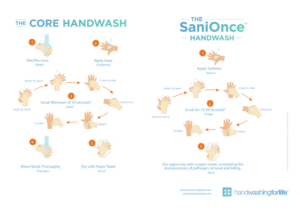
For the study, the researchers assessed the impact of lathering duration during handwashing and the effectiveness of ABHSs as a substitute for handwashing in direct food handling. Briefly, an in vivo experiment was conducted where participants’(n=) hands were contaminated with Escherichia coli, and two hand hygiene techniques were evaluated: the Handwashing for Life (HFL) “Core Handwashing” and the SaniOnce procedure (Figure 1). The study evaluated different variables for each technique. Three lathering times (5, 15, and 20 S) for handwashing, and two-dose applications for the SaniOnce procedure. After handwashing/ sanitizer application, researchers evaluated bacterial load reduction and transfer onto melons. 

Figure 1. The CORE Handwashing vs the SaniOnce Handwash, source: Arbogast et al. 2026. 

Key Findings: 

  • For the core handwashing technique, no significant differences were identified among lathering scrub times (5, 15, and 20 seconds). 
  • ABHS resulted in higher microbial reduction compared to hand washing, with one dose achieving a log reduction of 4.06, and a higher log reduction (5.00) when applied as two doses combined with a paper towel. 
  • Hand washing technique resulted in higher microbial transfer to melons compared to alcohol-based hand sanitizers. 
  •  In instances where hand washing might not be accessible or practical, the use of alcohol-based sanitizers can maintain hand compliance and reduce the risk of food contamination, particularly when hands are not visibly soiled. 

To learn more about the findings of this study, click here. 


Reference: 

Arbogast, J. W., Comstock, C., Beausoleil, C. M., Buckley, D. A., Lyon, S. A., Marsden, J., & Schaffner, D. W. (2026). Comparative Efficacy of Hand Wash Lather Times of 5 to 20 Seconds vs. Alcohol-Based Hand Sanitizer Application Approaches by an In Vivo Cross-Contamination Test Method. Journal of Food Protection, 100698. 

SB 54 Update: Exclusion Pathway for Fresh Produce Packaging

May 6th, 2026

California’s SB 54 is set to significantly reshape packaging requirements for fresh produce operations, bringing new compliance obligations—but also potential opportunities for exclusion may apply to your fresh produce packaging.

What This Means for You

Under SB 54, most packaging used for fresh or fresh-cut produce (including plastic bags, films, and clamshells) is considered “covered material” and must:

  • Meet recyclability or compostability requirements, and
  • Pay associated compliance fees

However, some fresh produce operations may qualify for an exclusion from these requirements.

Potential Exclusion Opportunity

Pursuant to SB 54 and its implementing regulations, your operation may be eligible to submit a notice asserting that your packaging qualifies for an exclusion.

Western Growers has developed draft templates to help members prepare:

Additional resource: CAA CA 2026 Fees

These materials are intended to help you start gathering information now.

Please note:

  • Submission instructions are still being finalized
  • These documents are for informational purposes only and not legal advice
  • Updates will be provided as additional guidance becomes available from CalRecycle
  • You may need to reach out to you packaging supplier/manufacturer for detailed information

Possible Bases for Exclusion

You may qualify under one or more of the following:

  1. Agricultural Exclusion
    Packaging may qualify if you produce, harvest, and package your commodity on the same site where it is grown (Public Resources Code §42041(a)(4)).
  2. Federal Food Safety Requirement
    Packaging may qualify if it is necessary to comply with federal food safety laws and no reasonably feasible recyclable or compostable alternative exists (Section 18980.2 – Categorically Excluded Materials).

Where to Find Official Guidance

Guidance for Submitting a Categorically Excluded Materials Notice for Food and Agricultural Packaging

CalRecycle will post additional instructions and submission details here:
https://calrecycle.ca.gov/packaging/packaging-epr/producerguidance/

Where to Register (If You Are a Producer)

If you determine you are a producer, registration is required through:
https://secure.calrecycle.ca.gov/PEPRS/Account/SignIn

Important Deadlines

  • Within 30 days of final regulations – Submit Exclusion or Exemption notices to
    Circular Action Alliance
  • June 1, 2026 – Producer registration deadline (to avoid penalties)
  • August 1, 2026 – Source Reduction Plan due

Not Sure If You’re a Producer?

Use our decision tool here:
https://wga.mediavalet.com/portals/epr

Learn More

Join our upcoming webinar:

Navigating EPR in the U.S.: Deadlines, Reporting, and the Fresh Produce Focus
(SB 54 Town Hall – registration available through Western Growers)

Other Resources

If you have questions or would like help determining whether your packaging may qualify for an exclusion, please contact:

Gail Delihant – [email protected]
Jeana Cadby – [email protected]

We encourage all members to begin reviewing their packaging and gathering documentation now to determine whether an exclusion may apply.

CAPCA Expands Support and Resources for Rodent Management

May 13th, 2026

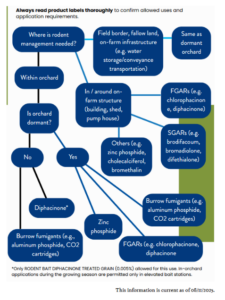
Severe rodent infestations in the California’s Central Valley have caused damage and agricultural loss to a growing number of crops. CDFA and CAPCA have developed resources for growers to navigate control tools and better understand the scope of the challenge.  

New Crop Steward Rodent Monitoring Feature 

Using anonymized county-level data streams, CAPCA has developed a one-of-a-kind, comprehensive pest-monitoring map in the Crop Steward app to track rat infestation levels across the state. This tool aims to provide PCAs and growers with current reported levels, potential early warning, and the tools and strategic framework needed to combat emerging pest challenges, ensuring the agricultural community remains informed and ready.  

Insights gained from current rat monitoring efforts are already informing the development of a broader blueprint to guide responses to maintenance-rated pests. CAPCA plans to expand data integration beyond rats for enhanced real-time pest monitoring and early detection, so that solutions can be found promptly. PCAs can sign up for Crop Steward for free at cropsteward.com.  

CAPCA will share more detailed information about the Crop Steward rat map and future pest management strategies at the CAPCA Annual Conference in October. Attendees will have the opportunity to learn about new developments and participate in discussions to shape the industry’s response to maintenance-level pests. 

Other Resources 

WG Best Practices for Managing Rodents

CDFA resources on rodents 

CAPCA resources on rodents 

CAPCA article on pg 51  

Learn more about the new Crop Steward Rodent Monitoring Feature at the Western Growers field day on May 27th, in Soledad, CA, highlighting vegetated ditches, sediment basins, and cover crops can help to meet Ag order 4.0 requirements, potential food safety concerns of these practices and other benefits of non-crop vegetation on farms. Register for the field day here.

What’s New in the Literature This Week (5/11/2026)

May 13th, 2026

This week’s food safety literature highlights several topics for the fresh produce industry, including PFAS mitigation, pathogen survival on strawberries, emerging sanitation technologies for fresh-cut lettuce, and decision-support tools for evaluating microbial hazards in ready-to-eat fresh produce. 

PFAS mitigation in soil, water, fruits, and vegetables
A new scoping review in the Journal of Food Protection evaluated the available literature on strategies to reduce PFAS contamination in water, agricultural soil, fruits and vegetables. The authors found that the current evidence base is still limited and highly variable across study designs, commodities, PFAS compounds, and mitigation approaches. The main takeaway is that while mitigation strategies are being explored, standardized methods and more field-relevant studies are needed before broad recommendations can be made for produce systems.  

Pathogen survival on strawberries at different maturity stages
A study in Food Safety and Health examined the survival of Escherichia coli and Listeria monocytogenes on unripe, semiripe, and ripe strawberries stored at 15°C, 25°C, and 37°C. Both pathogens survived across all maturity stages and storage temperatures. The greatest reductions were observed on unripe strawberries stored at 15°C over five days, while E. coli increased on semiripe strawberries at 37°C over two days. These findings reinforce that postharvest handling conditions, maturity stage, and temperature can influence pathogen persistence on berries. The study also used Weibull modeling to describe how temperature and strawberry maturity affected pathogen behavior. These findings reinforce the importance of temperature control, proper handling, washing before consumption, and continued evaluation of nonthermal interventions for berries. The authors noted that additional research using pathogenic Salmonella would be valuable to strengthen predictive models and better understand food safety risks during strawberry storage and distribution. 

A decision-support tool for microbial hazards in ready-to-eat fresh produce
A new Food Control article presents a spreadsheet-based qualitative risk assessment tool for evaluating microbial hazards in ready-to-eat fresh produce. The tool uses preharvest and postharvest questionnaires, allows risk factors to be weighted equally, by expert opinion, or by user-defined weighting, and calculates final risk scores using a probability-impact matrix. The authors demonstrated the tool using two production scenarios. This type of approach may be useful for identifying key risk factors, comparing mitigation options, and highlighting knowledge gaps in produce safety management.  

What 2.5 Years of Working on GreenLink® Have Taught Me About Data Science in Produce Safety

May 13th, 2026

Last week, the Western Growers Science staff had the opportunity to present on GreenLink® during the Western Food Safety Conference. The presentation focused on how data science is transforming produce food safety and how GreenLink® is helping the industry move from compliance snapshots toward a more practical, data-driven food safety culture.  

For me, developing this presentation was also a good moment to reflect, as I presented many of the concepts that will be highlighted below.  

I have now been working on GreenLink® and food safety data sharing for about 30 months. During that time, I have had the opportunity to work with you, the LGMAs, and researchers, and many others across the produce safety community. I have learned a lot about data management, analytics, and data communication. But more importantly, I have learned that successful data programs are not really about technology first. They are about people, trust, context, and the ability to turn information into action. 

GreenLink® was built around a simple but important idea: the produce industry already generates a tremendous amount of food safety data, but much of that information remains fragmented. Individual datasets can be useful, but when data is structured, protected, aggregated, and interpreted correctly, it can help us see broader patterns, ask better questions, and support smarter risk management decisions. 

These are my 3 learnings: 

Learning 1: Data quality is key 

The first lesson is probably the most obvious, but also the most important: data quality is VERY important. 

A phrase I shared during the presentation was: “The quality of your decisions will never exceed the quality of your data.”  

In food safety, we often talk about testing results, observations, corrective actions, and verification activities. But the value of all of those data points depends on how consistently and completely they are recorded. The same output and variable can be documented in multiple ways across different organizations, programs, labs, or even individuals within the same company. Site names, sample descriptions, adjacent land conditions, sampling timing, weather, and production context can all vary in how they are captured. 

That variability matters. 

  • Free-text fields may feel flexible, but they can make aggregation and comparison difficult. 
  • Missing metadata can limit interpretation.  
  • Two identical test results (Negatives/Positives) can mean very different things depending on timing, environmental conditions, water source, commodity, region, or sampling information. 
  • Without the right context, data can tell us what happened, but not necessarily why it happened or what should be done next. 

One of the biggest lessons from GreenLink® is that data quality is not just a data problem. It is a process problem. Even well-trained teams can produce inconsistent data if the process does not support them. For our work with GreenLink®, this has meant focusing not only on collecting data, but also on identifying which parameters matter, building better submission systems, creating verification steps, and working toward higher completion and consistency across key data fields. The goal is not just to have more data. The goal is to have usable data. 

For more information on data quality you can access my article on clean data: https://www.wga.com/news/data-101-is-your-data-dirty/

Learning 2: Data governance builds trust, and trust drives participation

The second lesson is that data programs succeed when people trust how their data will be used.

This is especially important in food safety. The data we are discussing can be sensitive. It may relate to pathogen testing or practices that companies do not want to be used out of context. That concern is real, and it has been respected.

One thing I have learned from working with many of you is that hesitation around data sharing is often not because people do not see the value. Most people understand the potential. The hesitation usually comes from uncertainty: Who will see the data? How will it be used? Will it be de-identified? Will individual companies be exposed? Will the findings be communicated correctly?

That is where data governance becomes essential. Data governance is the structure that allows participation to happen, it defines how data is protected, how it is aggregated, who has access, what level of information can be displayed, and how results should be interpreted. Concepts like de-identification, anonymization, aggregation thresholds, and role-based access are not just technical details. They are trust-building tools.

But governance alone is not enough. Communication also matters. Through GreenLink®, we have seen how important regular communication is. Participant meetings, interpretation of findings, and direct conversations help reduce misunderstanding. It is not enough to show a dashboard or send a summary. We have to explain what the data means, what it does not mean, and how it can be used responsibly.

Relationships drive participation more than tools do. The technology matters, but people participate when they believe the program is being managed responsibly, when they understand the value, and when they feel that their data is protected. Trust is not built once. It is built over time through transparency, consistency, and continued engagement.

Learning 3: Data analytics evolves from descriptive to predictive to prescriptive, and it is here.

The third lesson is that analytics is a process.

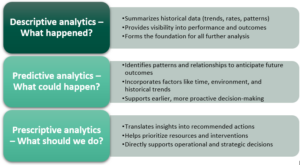
Many data programs begin with descriptive analytics. That means answering the question: What happened? This is where dashboards, summaries, trends, rates, and historical comparisons are useful. Descriptive analytics gives visibility. It helps us understand performance, identify gaps, and see patterns that may not be obvious when looking at one record or one event at a time.

The next step is predictive analytics: What could happen? This is where we begin to combine historical data with environmental, operational, and contextual factors. For example, risk may be influenced by adjacency, land cover, nearby operations, water data, wildlife movement, flooding potential, weather, seasonality, or other environmental conditions. When those data streams are brought together, we can begin to identify patterns and relationships that help anticipate future outcomes.

The long-term goal is prescriptive analytics: What should we do? This is where data becomes most actionable. Prescriptive analytics can help prioritize resources, identify where additional verification may be needed, support grower-level forecasting, improve dashboards, and eventually contribute to early warning systems or risk-based management tools.

What this means for the future

After two and a half years of working on GreenLink®, I am more convinced than ever that the produce industry has an opportunity to lead in data-driven food safety. That is where I believe GreenLink® can create real value. The goal is not to collect data for the sake of collecting data. The goal is to help the industry make better decisions, prioritize food safety resources, and support continuous improvement in a measurable way. Over time, data sharing can help us move from reacting to individual findings toward understanding systems, identifying risk patterns, and designing better interventions.


Western Growers Doubles Down on Reservoir Farms with a $1.5 million, Three-Year Partnership Agreement

May 12th, 2026

I am very excited to share the news that Western Growers and Reservoir Farms have signed a three-year agreement that extends the strategic partnership and raises the capital commitment from $250,000 to $1.5 million. This is the largest investment the WG Innovation team has made in automation, and the Reservoir Farms partnership is the most strategic relationship for the WG Innovation team and for Western Growers.
What Danny Bernstein and the team at Reservoir have put together in about two and a half years has been amazing and impressive to watch, from the first location in Salinas that is now open to the second location in Sonoma (also already open) and the upcoming Merced launch later this year. These facilities are not trivial to build or operate. Capital and expertise is required on several fronts to pull all of this together.
The deliverables are aligned with Western Growers key objectives: demo days, tech validation, and sponsored residencies at Reservoir Farms all line up with the WG Innovation team’s objective of reducing the capital and time needed for startups to get to MVP (minimum viable product) or Product 1.0. Current estimates are that for many automation startups it takes $50-100M to get to early stage commercialization. With the 70% drop in AgriFoodTech VC from 2021 ($54B to $16B) and the shift to 78% on B round and later, the need for significant improvement in capital efficiency (and doing things faster helps you need less money) is becoming ever more clear.
Reservoir Farms helps by providing 15-20 startups at each location with shared R&D space for developing automation solutions, shared ag equipment including John Deere tractors to test the equipment as it is getting build, and shared acreage to run trials on when the equipment is ready. Each Reservoir Farms member should get to the next product stage faster and cheaper than if they had not joined Reservoir Farms. When Reservoir Farms gets to three locations later this year in Salinas, Sonoma, and Modesto, that will be roughly 50 startups across three different sets of crops and regions that are saving time and money on R&D and trials.
This deal is a win for startups that get things built cheaper and faster. It’s a win for Reservoir Farms because they establish themselves as the preferred location for commercializing specialty crop automation solutions. It’s a win for Western Growers because we have partners at Reservoir Farms and John Deere that share our vision of having regular field day events on site to show off the tech around ag operations narratives. Look for us to up-level the field day events space with a lot more math and a consistent set of narratives that goes through the entire process of a growing season, the economics involved, and the improved economics that AgTech solutions can deliver.
In addition to field days, we are adding a new technology validation tool to the specialty crop toolkit. The WG Case Studies that Ben Palone has developed working with some of our largest Western Growers members and their operations team in coordination with startup teams at Carbon Robotics, Stout Industrial, and Cal.NET are the gold standard for AgTech evaluation, and we have three more in the hopper to release this summer. For those startups that are not yet ready for that level of detail and economic analysis, Reservoir Farms is going to conduct Tech Validation studies for feedback to Reservoir Farms members based on Reservoir and WG member feedback. These reports will be tremendously useful in getting the startups focused on the right stuff to push hard for commercialization and scale.
There is much more to be done in the tech validation space. Every Accelerator and Incubator can be doing more in this space to help their investment portfolio deliver returns. Every investor in the space can be working on items like this to help the 700+ automation startups prove they can commercialize or understand why they are not ready and what they need to change.
Finally, Western Growers has a number of sponsored Reservoir Farms membership slots that we will use strategically when we identify automation startups that could benefit from the sponsored slots. We will be opportunistic on this and are always on the lookout for startups that are approaching a break-out moment. Ideally, our sponsored spots can help be a catalyst that pushes some startups further faster. That’s why we built them into the agreement.
The Reservoir Farms marks a big double down on the existing Western Growers, Reservoir Farms, John Deere three-way partnership and goals are completely aligned among all three parties. Now that the agreement is done, it’s time to get back to work and start doing the grind to help the startups … so they can help the growers!

May 15 Deadline Nears for HSP and SWEEP Block Grant Concept Proposals

May 12th, 2026

Concept Proposals are currently being accepted for the Healthy Soils Program (HSP) and State Water Efficiency and Enhancement Program (SWEEP) Block Grants.

HSP Block Grant recipients work directly with producers in their region by providing outreach, technical assistance and support throughout project implementation. These organizations manage the local application process, recommend projects for funding to CDFA, establish agreements with producers who carry out soil-health practices on their operations and manage funded on-farm projects.

SWEEP Block Grant recipients work directly with producers in their region by providing outreach, technical assistance and support throughout project implementation. These organizations manage the local application process, recommend projects for funding to CDFA and establish agreements with producers who carry out water and energy efficient strategies on their operations.

Both applications have a submission deadline of May 15, 2026, at 5 p.m. PST.  

An informational webinar was held to help guide applicants through the Concept Proposal application process and address applicant questions, which can be viewed here.

If you have any other questions, please reach out to [email protected].

Best Practices: The Cost of Reactive Rulemaking

May 7th, 2026

Implementing or amending workplace policies as a reaction to a single event, without conducting a thorough compliance review, can expose employers to considerable liability. This is best illustrated by the California Civil Rights Department’s recent settlement of $255,000 regarding an individual claim involving allegations of harassment, discrimination, and retaliation based on national origin or ancestry. 

The SMUD Museum of Science and Curiosity (MOSAC) instructed an employee of Arab ancestry not to wear a keffiyeh (a traditional Palestinian scarf) to work, deeming it a “political” item, which constituted harassment and retaliation. After management repeatedly pressured the employee to stop wearing the keffiyeh and made derogatory comments about what they perceived it to represent, a new policy was implemented prohibiting political symbols at work. The keffiyeh was the only item banned as a political symbol under the policy.  

After submitting an internal complaint, the employee was subjected to a campaign of harassment and retaliation, including an instance of being sent home early for perceived insubordination for wearing a different type of scarf. Ultimately, the employee was placed on indefinite unpaid administrative leave solely because of their alleged violations of the new policy. 

Following an investigation, CRD found MOSAC discriminated against, harassed, and retaliated against the employee and offered mediation. Under the settlement, without admitting wrongdoing, the museum agreed to: 

  • Rescind the policy banning political symbols and allow cultural clothing, accessories, tattoos, and hairstyles. 
  • Provide annual anti-discrimination training for three years for museum leadership. 
  • Update internal civil-rights complaint policies and submit them to CRD for review. 
  • Notify staff and board members of CRD’s findings. 
  • Issue a formal apology to the complainant. 
  • Pay $255,000 for lost wages and other damages. 


What Does it Mean? 

California law prohibits employers from disciplining workers for speaking out against discrimination or treating employees differently because of protected categories, such as their national origin or ancestry. Ultimately, the principal compliance lesson here is that workplace policies should be developed through a neutral, business-based process and reviewed for consistency with applicable anti-discrimination, anti-harassment, and anti-retaliation requirements.  

Policies adopted in reaction to a specific employee or workplace complaint can create significant exposure if they are framed or enforced in a way that targets, or has a disproportionate impact on, conduct associated with a protected characteristic such as national origin or ancestry. The MOSAC settlement also underscores the importance of maintaining a clear non-retaliation framework when employees raise internal concerns. 

A key compliance-related takeaway includes ensuring that handbook policies are not drafted in the heat of the moment. Before implementing a new rule: 

  • Evaluate the underlying business justification; 
  • Assess whether the proposed language could implicate protected categories or protected activity; 
  • Confirm that the rule can be applied consistently in practice; and 
  • Seek legal counsel and review where appropriate. 

The MOSAC settlement is also a great reminder that there is no better time than the present to conduct an internal audit of your workplace policies and procedures. Here are a few suggestions: 

  1. Conduct a targeted review of handbook provisions governing dress, expression, workplace conduct, and complaint reporting to confirm they are supported by legitimate business objectives and do not single out protected characteristics or protected activity. 
  2. Implement a policy-development protocol requiring HR and, where appropriate, employment counsel to review proposed policy changes before rollout, particularly when the change is prompted by a specific workplace incident or complaint. 
  3. Train managers and HR personnel on consistent policy enforcement, accommodation and complaint-escalation obligations, and the prohibition on retaliation when employees raise internal concerns or request clarification about workplace rules. 

Western Growers Announces $1.5 Million, Three-Year Partnership with Reservoir Farms

May 8th, 2026

Deal will help WG members evaluate agtech solutions for their toughest challenges

IRVINE, CALIF. (May 8, 2026) – Western Growers today unveiled the details behind its three-year, $1.5 million partnership with on-farm agtech robotics innovation center Reservoir Farms, a commitment that gives WG members and affiliated startups exclusive access and opportunities for robotics field trials.

“This commitment confirms our confidence in Reservoir Farms and particularly our strategic alignment with Danny Bernstein and his team,” said Western Growers President and CEO Dave Puglia. “Western Growers members will be in the driver’s seat to prioritize companies with workable automation and efficiency solutions that can address escalating labor and other food production input costs threatening domestic farm viability.”

Reservoir Farms helps startups get to the first viable product in less time and for less capital by providing shared R&D space; shared commercially grown field acreage; shared equipment from partners like John Deere and real-world grower feedback on products they are building.

Western Growers will provide Reservoir Farms $500,000 in partnership funding each year for the next three years in addition to the $250,000 the organization previously provided. In return, Western Growers will have:

    • WG-branded demonstration days every year at any Reservoir Farms location, including Salinas, Calif.; California Wine Country and a soon-to-be launched Central Valley location. These events will allow growers to evaluate performance, scalability and ROI in real production environments. Demonstrations will focus on solving key challenges, such as labor constraints, input efficiency and operational scalability.
    • In coordination with the Western Growers Center for Innovation & Technology, select agtech startups will receive a sponsored residency at Reservoir Farms. Startups will test and refine technologies alongside growers in real-world conditions to ensure practical application.
    • The WG Innovation Committee will receive exclusive insight from Reservoir Farms’ structured technology and business evaluation of emerging agtech solutions; this will serve to inform and guide member engagement.

“This partnership with Western Growers formalizes a direct line between the problems growers are facing and the technologies being built to solve them,” said Danny Bernstein, CEO of Reservoir. “By aligning startup development with WG member priorities and validating those solutions in real farm environments, Reservoir can accelerate the path from prototype to commercial adoption. This is technology as resilience.”

For more information, please contact:
Ann Donahue
(949) 302-7600
[email protected]

About Western Growers: Founded in 1926, Western Growers represents local and regional family farmers growing fresh produce in California, Arizona, Colorado and New Mexico. Western Growers’ members and their workers provide over half the nation’s fresh fruits, vegetables and tree nuts, including half of America’s fresh organic produce.

About Reservoir: Reservoir is an agricultural innovation center and venture capital fund focused on helping agtech startups succeed where agriculture happens—in the field. Reservoir Farms are the world’s first on-farm robotics innovation centers, starting in the Salinas Valley and expanding to other key regions across California and the American West. Reservoir VC backs startups solving real problems in high-value crops and the rugged physical AI stack. By combining R&D space, hands-on grower input, and early-stage capital, Reservoir helps turn promising ideas into tools for the growers who feed the world. Learn more at https://reservoir.co.

Summer Heat Is Coming: What Agricultural Employers Should Do Now

May 7th, 2026

With summer approaching, California agricultural employers should begin preparing now for heat-related risks in the workplace. Cal/OSHA continues to prioritize heat illness prevention through enforcement, outreach, and education, including the work of its Agricultural Enforcement Task Force. 

California’s heat illness prevention rules remain among the most rigorous in the nation. Outdoor heat illness prevention requirements apply when temperatures exceed 80°F, while indoor heat standards generally apply when temperatures reach 82°F. For many agricultural operations, that means both field and facility worksites may be subject to separate but overlapping obligations during the summer months. 

Employers should use the weeks ahead to review and update their Heat Illness Prevention Plan, confirm supervisor training is current, and ensure employees know how to recognize and report symptoms of heat illness. Water, shade, cool-down rest procedures, emergency response protocols, and high-heat practices should all be revisited before temperatures spike. 

Operations with packinghouses, warehouses, or other indoor environments should also assess ventilation, cooling methods, temperature monitoring, and employee access to recovery areas. Employers conducting nighttime agricultural operations should confirm compliance with any applicable safety requirements tied to those shifts. 

Cal/OSHA’s Agricultural Enforcement Task Force focuses on agricultural workplace safety and enforcement, with heat illness prevention remaining a key seasonal priority. Employers should expect active enforcement during the summer, particularly during high-heat events. 

To support compliance, Cal/OSHA offers a broad suite of free resources, including model written programs, guidance materials, multilingual education tools, comparison charts for indoor and outdoor heat standards, and statewide trainings offered in English and Spanish. Additional materials are available through 99calor, which provides worker-focused heat safety resources. 

Agricultural employers with questions or who want proactive assistance may contact Cal/OSHA Consultation Services at 800-963-9424. Taking preventive steps now can help reduce risk, avoid citations, and protect employees during the hottest months of the year. 

New Voices of the Valley Podcast Available: Exploring Regenerative Ag

May 7th, 2026

In this episode of Voices of the Valley, we explore the future of regenerative agriculture through the lens of stewardship, conservation and long-term resilience. Hosted by Western Growers’ Jeana Cadby, the conversation features Craig McNamara, founder of Sierra Orchards, who shares his decades-long journey in farming and his vision for farming for the next 100 years.

From integrating sheep into orchard systems and restoring Chinook salmon habitat to investing in farmworker well-being and the next generation of farmers, McNamara shares how regenerative agriculture can support both the land and the people who depend on it. The conversation also explores water conservation, biodiversity and the importance of long-term stewardship in California agriculture.

Listen to the episode here.

Register Today for U.S. Labor Policies: Rhetoric vs. Reality Webinar on May 27

May 7th, 2026

How are the Trump administration’s labor policies shaping the landscape for agricultural employers? As labor policy debates continue to dominate headlines, agriculture employers need real-world guidance to protect their workforce and operations.

The California Farm Labor Contractor Association’s upcoming webinar, “U.S. Labor Policies: Rhetoric vs. Reality,” will provide members with practical insights into how current labor and immigration policies may truly impact agriculture. This timely session is designed to help ag employers better understand evolving regulations, workforce challenges and compliance risks.

Join Jason Resnick (Western Growers, Senior Vice President and General Counsel) and Teresa McQueen (Corporate Counsel) for a breakdown of H-2A program updates, I-9 procedures and penalties, immigration enforcement priorities and the prospects for broader reform. Learn about the challenges facing the agricultural industry, what these critical changes mean for your business, and look towards the future to prepare for what’s next.

Don’t miss this opportunity to gain clear, actionable labor insights that matter.

Register today by clicking here.

What: U.S. Labor Policies: Rhetoric vs. Reality
Date: Wednesday, May 27, 2026
Time: 1:30 PM – 2:30 PM (PDT)
Format: Webinar
Cost: Free for WG Members, $25 for Non-Members (Western Grower members can reach out to Jordan Long at [email protected] for their code.)

Western Growers Joins Amicus Brief in California Supreme Court Water Case

May 6th, 2026

Western Growers recently joined a coalition amicus brief filed with the California Supreme Court in Bring Back the Kern v. City of Bakersfield, a closely watched case addressing the intersection of fishery protection requirements and California’s constitutional reasonable use doctrine.

The case centers on Fish & Game Code section 5937, which requires dam operators to release sufficient water downstream to keep fish “in good condition.” The California Supreme Court is now considering whether courts must independently evaluate the constitutional reasonableness of court-ordered water uses under Article X, section 2 of the California Constitution, even when a statute directs a particular use of water.

Western Growers joined agricultural, business and water organizations in support of the water districts involved in the case. The coalition brief emphasizes that California’s water system is deeply interconnected, and that judicially mandated reallocations of surface water can have significant downstream impacts on groundwater sustainability, agricultural operations, and regional economies, particularly under the Sustainable Groundwater Management Act (SGMA).

The coalition urged the Court to recognize that any court-directed water allocation should account for the full hydrologic system and competing beneficial uses of water, including food production and groundwater sustainability.

The California Attorney General and Department of Fish and Wildlife filed a separate amicus brief supporting the plaintiffs, arguing that section 5937 reflects a legislative determination that fish-protective flows are presumptively reasonable and should generally be enforced as written unless shown to be manifestly unreasonable in a particular application.

The Court’s decision could have broad implications for future water allocation disputes throughout California and may significantly influence how courts balance environmental, agricultural and groundwater interests moving forward.

In addition to Western Growers, the following organizations signed onto the Amicus Brief:

California Chamber of Commerce

California Farm Bureau Federation

Kern County Farm Bureau

California Fresh Fruit Association

California Cotton Ginners and Growers Association

American Pistachio Growers

California Citrus Mutual

Western Tree Nut Association

Milk Producers Council

Westlands Water District

California Cattlemen’s Association


The amicus brief was authored by Douglas J. Evertz, Jennifer Riel McClure, and Emily L. Madueno with the Law Offices of Murphy & Evertz.

LGMA Metrics Comment Period Extended for 2026 Agricultural Water Metrics Update 

May 6th, 2026

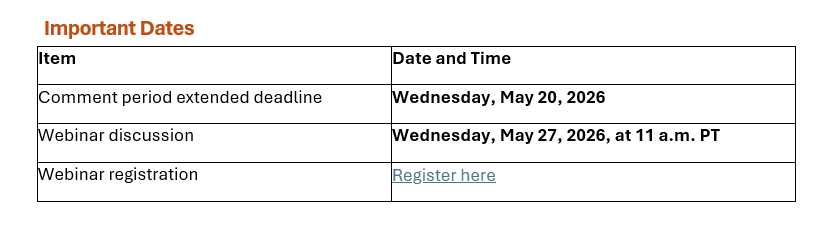
The comment period for proposed changes to the California Leafy Greens Marketing Agreement-approved metrics related to agricultural water metrics has been extended from May 13, 2026, to May 20, 2026, due to requests for additional time from stakeholders. 

The comment period originally opened on Monday, April 13, 2026, to provide stakeholders an opportunity to review the proposed changes and submit feedback as part of the LGMA metrics update process. The extension provides additional time for leafy greens industry members and other stakeholders to review the working drafts and provide thoughtful, rationale-based comments. 

Western Growers will now host the web discussion on Wednesday, May 27, 2026, at 11 a.m. PT. During the webinar, proposed changes to the LGMA-approved metrics will be publicly presented by the corresponding submitter, with open dialogue allowed for attendees. Participants will also have the opportunity to provide feedback on submitted comments and share additional input with the working group. 

Those who submit comments will be given the opportunity to participate in the webinar and provide brief remarks or additional information. 

To submit comments: 

  1. Visit the leafy green guidance website.  
  1. In the Home tab, scroll down to the “Submit Comments” section.  
  1. Download the “Working Drafts” under Important Documents.  
  1. Use the Word function “New Comment” to provide detailed feedback, including how the comment will enhance food safety and the rationale behind the comment. Comments submitted without rationale will not be considered.  
  1. When ready to submit, upload the revised working draft by clicking the “Submit a Comment” button.  

For questions, please contact Gustavo Reyes at [email protected].

Reminder to Everyone in AgTech: The main problem you are solving is still grower economics

May 5th, 2026

Chris Kroger put a great article together in Vision Magazine that should remind everyone in AgTech (yet again) of an important truth: the problem you are solving must be one the grower recognizes and agrees must be solved. If not, it is much harder to get them to do trials with you and even harder to get them to write a check for the solution. The article’s premise is that AI is influencing the buying process in multiple ways, including research on the space and competitive research, comparing similar products, and doing cost analysis (likely for a total cost of ownership style analysis). It’s worth noting that the use cases for AI for ag and AgTech practitioners have some high overlap because the research is useful for both groups.

The nuances of integrating AI into a supply chain process, an automation process, or an analysis process are often the real reason for failure. The tech can be fine, but it has to be delivered to the user in a way that is fine for them, and depending on how tops down the approach is and how well thought out the roll out was, things can go sideways. Lots of fancy AgTech had plenty of AI in it over the last several years (remember that AI for hardware and software R&D and development was a thing way before ChatGPT launched about three and a half years ago) sits dormant in equipment graveyards on farms all over the place. And in many cases, that’s after extensive testing was completed, lots (no – really, lots) of math was done, lots of time in spreadsheets doing analysis of before and after costs and then working with the operations team to get it all integrated.

The machine was evaluated, purchased, and rolled out. So there are some huge costs in those automation tools that sit idly by and are not getting used at all – not the least of which is that all future automation solution providers have to get growers past the concern that they’re the next piece of equipment in the equipment graveyard. In some cases, harvest crews have chosen not to use a Burro where ROI for the farm workers was clearly shown (i.e. you will make money for your harvesting work because the Burro will take the product back to the truck for you automatically). This was after extensive work by growers and Burro to confirm the math and the best way to integrate the machines into the operation. Where on the startup risk factors is “workers may not use the machine even after successful trial and ROI math is confirmed” – that is a bullet point that does not go on many Board Meeting decks. The best AI in the world doing the best job of helping the automation solutions move around and do their job thwarted by a human factors decision that was made at the last mile – the interface between the automation solution and the people doing the work (and that is almost always the right place for that decision to be made).

The first half of the article talks about retailers and tech, including Walmart’s roll out of RFID tags to track fresh product shipments. Traceability is a big deal, and retailers have invested plenty in helping to make it happen. How you integrate AI solutions that are embedded directly into solutions or AI tools that are used directly by the team internally will have an impact on how teams work and the results they can deliver. At this point, it’s almost strategic malpractice not to at least be exploring potential AI use cases ­– and maybe even worse strategy to not have a plan B if something goes wrong and something is going to go wrong or at the very least unexpected things will happen. It’s technology.

The second half of the article covers the automation space generally, including the commonly stated refrain that growers like to see a payback on automation investments of less than three years (and fewer than two AgTech solution moves up in interest level). The Western Growers Center for Innovation and Technology is now 11 years old, and the team has been focused on enabling startups and growers to work together more effectively since before the WGIT’s launch. The current focus for Ben Palone, Emily Lyons, and me is to help startups improve their understanding of grower challenges and reduce the cost and time they need to get to first product. A huge focus of the last two years has been the partnership with Danny Bernstein at Reservoir Farms and Sean Sundberg and Greg Christensen at John Deere. Together, we have built a partnership that all three organizations feel is vitally important and strategically built around the notion of having on-farm robotics incubators in different regions with different crops supported, shared R&D space, and shared John Deere equipment to keep both time and dollars lower for startups.

In addition, the technology validation space is heating up. Ben Palone has delivered Carbon Robotics, Stout Industrial, and Cal.NET WG Case Studies with detailed analysis that shows how the ROI is determined and then templates to help growers do their math (because the math varies depending on labor source, whether the labor is H-2A or not, and whether you lease or buy tractors, among other factors). Reservoir Farms is going to help startups with tech validation feedback as well, and we are working with other partners on helping. The reality is there are 700+ automation startups and all need several tests, so there is room to go around for testing work and write ups. As I say often, it takes a village to raise AgTech startups – and some capital.

Arizona Grown Relaunch: Share Your Input

May 5th, 2026

The Arizona Department of Agriculture (AZDA) is reviving Arizona Grown, the state’s official “Buy Local” program, and they’re looking to industry stakeholders to help shape what comes next. After nearly a decade of dormancy, the goal is to build a robust, market-driven tool that strengthens connections between growers, retailers and consumers. To ensure the program reflects the needs of today’s industry, the department is seeking feedback directly from agricultural industry professionals.

Take the survey here. It should take approximately 5–8 minutes to complete.

If you have questions, please reach out to [email protected].

SB 54 Regulations Approved and in Effect; Registration Deadline for Producers Updated to June 1

May 4th, 2026

Packaging Regulation in CA SB 54 approved by the California Office of Administrative Law (OAL) with early effective date; Obligated companies must register with the Circular Action Alliance (CAA) by June 1 to avoid penalties

As of May 1, 2026, the California Department of Resources Recycling and Recovery (CalRecycle) officially approved and implemented the permanent regulations for the Plastic Pollution Prevention and Packaging Producer Responsibility Act (SB 54). The registration deadline for Producers has been updated to June 1, 2026.

This accelerates the compliance timeline for companies that sell, distribute or import covered materials into and within California.

See Western Growers’ resource page for more information about Extended Producer Responsibility (EPR) and navigating if your organization is an Obligated Producer.

Under SB 54, producers of single‑use packaging and plastic single‑use food service ware must participate in a statewide EPR system. The law shifts end‑of‑life management costs from consumers and local governments to the companies that place these materials into the California market. The program requires producers to join a Producer Responsibility Organization (PRO), and the state has designated the Circular Action Alliance (CAA) as the PRO responsible for administering the system.

The Packaging Extended Producer Responsibility System (PEPRS) is designed to support producer registration, reporting, document submittals and compliance monitoring.

To assist entities with transitioning into program implementation, CalRecycle published a new webpage for Producers, and plans to publish new guidance materials soon.

Mandatory Registration: 30 Days to Act

All obligated producers must now register with the CAA by June 1. Failure to do so could result in enforcement actions and penalties. This update does not constitute legal advice.

CAA is responsible for submitting lists of registered producers to state agencies under multiple EPR laws. Producers who do not register risk being excluded from compliance support, data reporting guidance and other required program functions.

If you have any questions, please contact  [email protected].

LEARN MORE

Navigating EPR in the U.S.: Deadlines, Reporting, and the Fresh Produce Focus Town Hall 

Date:  Wednesday, May 13, 2026
Time: 11:00 a.m. to 12:00 p.m. PT
Format: Virtual
Register here.

*This event is exclusive to members of Western Growers.


FDA Fresh Cucumber Sampling Assignment: Important Update for Members

May 4th, 2026

Western Growers staff has learned the U.S. Food and Drug Administration (FDA) will be conducting a cucumber sampling assignment over the next few months, impacting both domestic and foreign raw whole fresh cucumbers. Sampling is expected to take place at the retail and distribution supply chain level and at ports of entry from May 4, 2026 to Sept. 30, 2026. This assignment will focus on Salmonella testing at retail stores, distribution centers and ports of entry. We will share more information as we learn more.

Earlier this year, Western Growers developed a Q&A document in addition to our FDA sampling assignments manual. Links to both documents are provided below. Although sampling is not anticipated at the farm level, these resources may still be useful for reference.

Q& A Sampling Assignments

FDA Sampling Manual

Western Growers will continue to monitor additional information. For concerns, comments or questions, please reach out to Lianna Kelly,
Produce Safety Expert, FDA, at [email protected].


New Report Warns California’s Pest Prevention System Is Falling Behind Growing Threats

May 1st, 2026

California’s pest prevention system—critical to protecting the nation’s food supply, natural landscapes, and urban environments—is under increasing strain, according to a new comprehensive report released today.

The report finds that while many elements of California’s system remain highly effective, they are being outpaced by a sharp rise in invasive pest threats driven by global trade and travel. At the same time, funding and investment have failed to keep pace with both the growing risks and the increasing value of what the system protects.

“California is essentially trying to protect more valuable assets with fewer real resources,” said Lindsey Carter, Executive Director of the California Agricultural Commissioners and Sealers Association (CACASA).

The study—the Comprehensive Pest Prevention Program Analysis Project (C3PA)—is a joint effort between the California Department of Food and Agriculture (CDFA) and CACASA. It includes contributions from experts at the University of California, California State University, and other academic and state partners. Notably, this is the first comprehensive evaluation of the system since 1996.

“Over the past three decades, the scale and complexity of pest threats have increased dramatically,” Carter said. “But instead of keeping up, the system has been strained by budget cuts, staffing shortages, and outdated infrastructure and technology.”

The report identifies more than $90 million in immediate one-time funding needs and $25 million in annual investments to strengthen infrastructure, staffing, and pest exclusion programs. These figures reflect urgent gaps—not the long-term investment required to keep the system effective.

What’s at Stake

California plays an outsized role in feeding the nation and the world. The state produces:

  • 99% of U.S. nectarines
  • 95% of plums
  • 90% of strawberries
  • 70% of lettuce
  • 40% of all U.S. vegetables
  • One-third of the world’s tomato paste

Protecting this production is essential not only for the economy, but for public health.

“If we’re serious about improving nutrition and access to healthy foods, protecting California agriculture is non-negotiable,” Carter said.

The economic case is equally compelling. Since the last system review in 1996, California’s agricultural value has grown by 24%, exceeding $59 billion in 2023.

“The return on investment for pest prevention is already high,” Carter noted. “But when you factor in the potential losses—not just to agriculture, but to natural ecosystems and urban environments—the case for increased funding becomes overwhelming.”

A Critical Link to Reducing Pesticide Use

The report also highlights a key but often overlooked benefit: effective pest prevention reduces reliance on pesticides.

“When invasive pests establish, pesticide use rises,” Carter explained. “When eradication is successful, it drops back down. But when eradication fails, elevated pesticide use becomes the new normal.”

At the same time, California has phased out several key pest-control tools, leaving growers with fewer options when new threats emerge.

The report identifies several high-impact investments, including:

  • Modernizing sterile insect rearing facilities, a proven, pesticide-free method of controlling invasive species
  • Expanding Detector Dog Teams, which significantly improve pest detection at shipping facilities

Currently, dog teams inspect facilities only about 5% of operating days. Expanding coverage to major postal hubs could dramatically improve interception rates.

Conclusion

Overall, the report concludes that California’s pest prevention system delivers strong value—but is constrained by chronic underfunding relative to the scale of risk.

“The system works,” Carter said. “But it’s being asked to do more with less, and that’s not sustainable.”

CACASA plans to launch an education campaign to raise awareness among policymakers and build support for increased investment.

“With a gubernatorial election approaching, this is the right moment to address an issue that receives little attention but has enormous consequences,” Carter said. “California has the opportunity to lead the world in modern pest prevention—but only if we invest in the system that protects it.”

You can read the full report here.